Skip to content

Key Takeaways
- Stock hand-carved as the premium tier at 2-3x laser-cut retail; the tool marks are the value signal.
- Use laser-cut for volume, consistency, and sharp geometric designs that hand-carving cannot replicate.
- Source both from one supplier to keep wood species, finish, and packaging consistent across the wall.
When sourcing holiday stock, understanding the differences between hand carved vs laser cut christmas ornaments is crucial for optimizing your assortment. The Christmas ornament wall is not a monolith; it is a comparison between two manufacturing methods that produce two different products at two different price points. This is the single most important assortment decision a holiday buyer makes, because it determines the cost structure, the price ladder, the margin profile, and the customer who buys. This guide compares the two methods on cost, quality, retail positioning, and channel fit.
The two methods are not competitors; they are complements. Hand-carved ornaments serve the premium gift market where the visible tool marks and the slight asymmetry are the value. Laser-cut ornaments serve the volume and design market where consistency, sharp geometry, and a lower price point drive the sale. The buyer who stocks both in a carefully managed and data-driven ratio, and adjusts that ratio each season based on what the sell-through numbers tell them, captures the full holiday market from the impulse buy to the keepsake gift.
Hand-Carved: The Craft Premium
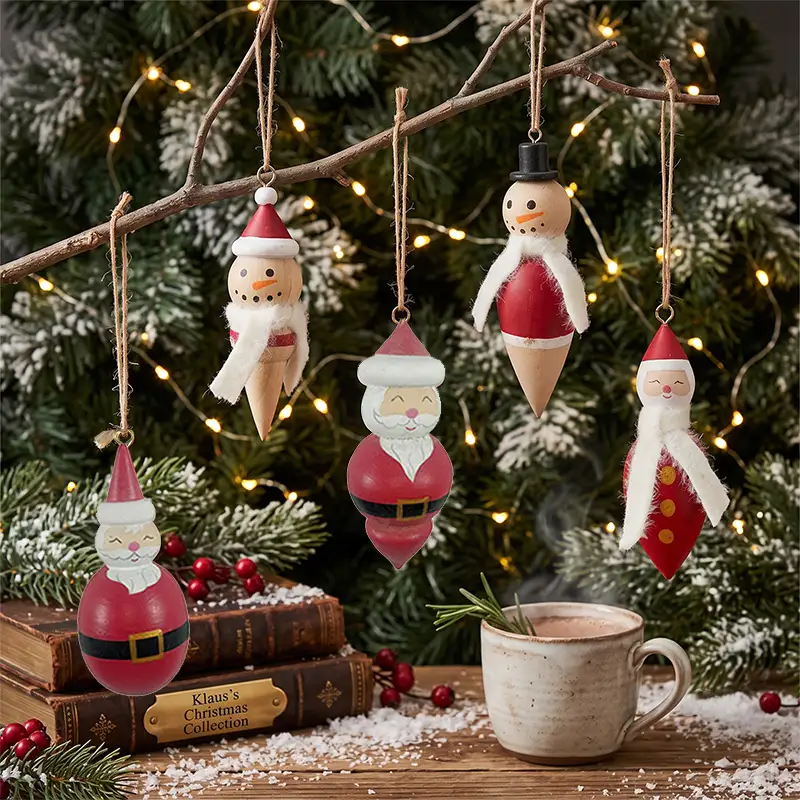
A hand-carved ornament is made by a skilled artisan using chisels and knives on a basswood blank. Each piece carries visible tool marks, slight asymmetry, and grain variation that prove it passed through human hands. The production is slower, the per-unit cost is higher, and the retail price commands a significant premium over laser-cut. Hand-carved ornaments are the right choice for the premium tier of the holiday wall, for the commemorative gift market, and for the customer who values craft over price. The wooden Christmas ornaments catalog positions hand-carved pieces as the top of the price ladder, where the margin lives. The key quality risk on hand-carved pieces is finish consistency between batches, and the QC plan should include a colour-match pass against the golden sample and an adhesion test on every production lot.
Laser-Cut: Precision and Volume
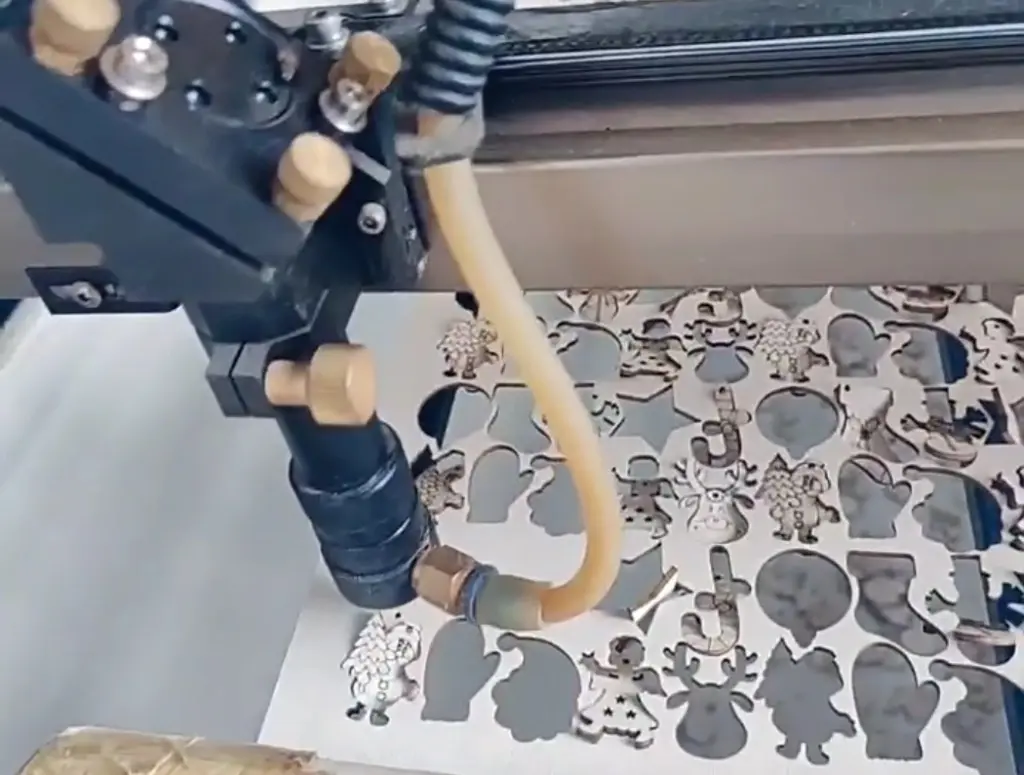
A laser-cut ornament is made by a laser beam that cuts and engraves a flat sheet of wood to a precise digital design. The production is fast, the per-unit cost is low, and the output is perfectly consistent because the laser follows a digital file, not a human hand. Laser-cut ornaments excel at sharp geometric patterns, intricate snowflakes, layered city skylines, and text engraving that a hand carver cannot reproduce. They are the right choice for the volume tier of the holiday wall, for the promotional and corporate channel, and for the customer who values design consistency over craft. The trade-off is that laser-cut ornaments lack the warmth and individuality of hand-carved, so they cannot command the same premium. The wooden Christmas crafts range should include both methods as standard options, with the supplier able to produce each from the same basswood stock.
Cost, Margin & the Price Ladder
When evaluating hand carved vs laser cut christmas ornaments, the cost structure of the two methods is fundamentally different. Hand-carved production is labour-driven: each piece consumes skilled artisan time, and the production capacity is limited by the number of painters and carvers on the line. Laser-cut production is machine-driven: the laser runs from a file, and the per-unit cost drops with volume.
The wholesale buyer should position hand-carved ornaments at the premium tier with a retail price that reflects the craft, and laser-cut ornaments at the entry and mid tiers where the price is accessible and the volume drives the margin. The two tiers together create a complete price ladder: laser-cut at the entry, laser-engraved at the mid, and hand-carved at the premium. The custom manufacturing programme should support both methods, so the buyer can order both from one purchase order. Verify the production capacity and the quality systems on a factory tour before committing to volume.
Production Capacity & Lead Time
The two methods have different production lead times and capacity constraints. Hand-carved production is limited by the number of skilled artisans on the line; each piece takes minutes to carve and paint, and the painting step is the bottleneck. Laser-cut production is limited by machine time; the laser runs from a file and can produce hundreds of pieces per day.
The buyer who orders hand-carved ornaments for the holiday season must book capacity months in advance, because the hand-carving and painting slots fill fast. The buyer who orders laser-cut can place the order closer to the season because the production is faster and more scalable. The wooden Christmas crafts supplier should be able to provide lead-time estimates for both methods and should reserve capacity when the order is confirmed. The capacity planning also affects the reorder cycle. A hand-carved ornament that sells out in November cannot be reordered for December because the painting line is already committed to the next season’s orders.
A laser-cut ornament that sells out can be reordered and produced quickly, because the laser runs from the stored digital file. The buyer who plans for reorders on the laser-cut tier and treats the hand-carved tier as a one-time seasonal purchase will manage the holiday inventory more effectively. The production method decision is also a capacity decision, and the buyer who understands the capacity constraints of each method will order the right quantities at the right time. The Christmas ornament wall rewards the buyer who plans the production six months ahead and locks the capacity with a confirmed purchase order.
Design Fit: Which Designs Work for Which Method
The design determines the method more often than the buyer realises. Organic shapes such as Santa figures, snowmen, reindeer, and nativity scenes are best suited to hand-carving because the curves, the three-dimensional relief, and the painted detail are what the hand carver does best. Geometric shapes such as snowflakes, stars, skylines, and text-based designs are best suited to laser cutting because the laser can reproduce sharp angles and fine lines that a chisel cannot match. The buyer should not try to force a hand-carved design into a laser-cut process, or a laser-cut design into a hand-carved one. The supplier should advise which method best serves each design.
For retailers looking to maximize the appeal of hand carved vs laser cut christmas ornaments, some designs can be produced using both methods. The buyer can offer the same design at two price points: the laser-cut version at the accessible entry price and the hand-carved version at the premium price. The dual-method design is the most effective way to serve both the impulse buyer and the keepsake buyer with one design concept. The wholesale wooden crafts range should include dual-method designs where the design concept supports both productions.
Ultimately, the Christmas ornament category rewards the wholesale buyer who masters the hand carved vs laser cut christmas ornaments comparison. By stocking both premium pieces and laser-cut volume designs in a data-driven ratio, you capture the full holiday market—from the impulse buy to the keepsake gift. The buyers who secure production capacity early and adjust their assortment based on sell-through data will own the holiday wall season after season.
Frequently Asked Questions
Which method produces the higher-quality ornament?
Quality depends on the customer. Hand-carved is higher-quality in terms of craft and individuality. Laser-cut is higher-quality in terms of precision and design consistency.
Which is cheaper to produce?
Laser-cut is cheaper per unit at volume. Hand-carved has higher labour cost per piece but commands a higher retail price that more than covers the difference.
Can I stock both from one supplier?
Yes. One supplier should be able to produce both from the same wood stock, with the same finish and packaging. This keeps the wall coherent.
What designs work best for each method?
Hand-carved excels at organic shapes, animals, and figures. Laser-cut excels at geometric patterns, snowflakes, skylines, and text engraving.
How should I arrange the two methods on the shelf?
Laser-cut at the entry and mid tiers where the price is accessible. Hand-carved at the premium tier where the craft commands the higher price.
Stock Both Hand-Carved and Laser-Cut Christmas Ornaments
Source both methods from one factory, with a deliberate price ladder, consistent finishes, and the full range of designs from organic to geometric.
Explore Christmas Crafts →