Skip to content
Before you wire a deposit or lock in a production slot, securing a perfect pre-production sample for wholesale wooden ducks is the absolute first checkpoint you must clear. Last October, a Portland boutique owner watched $17,000 in inventory sit unsellable in her stockroom. Not because her customers didn’t want hand-carved decor, but because she fell into a classic sourcing trap. The sample she approved featured a soft, matte finish with meticulously detailed feathers. But the 1,200-unit mass production run arrived slathered in cheap, glossy paint with blurred wing lines. The factory just shrugged and blamed “acceptable manual variance.” She learned the hard way: when selling to an eco-luxury audience, the sample is not a formality—it is your entire brand promise.
Many buyers try to avoid this “variance” by switching to resin. Resin ducks arrive identical and highly predictable. But here is the reality: resin is a cold, petroleum-based polymer. Whether it is hollow (which feels like a cheap, disposable trinket) or solid (which feels artificially dense and unnatural), it completely lacks the warmth and organic texture of real wood. More importantly, resin manufacturing is a highly polluting, chemically intensive process that directly contradicts the eco-friendly ethos today’s consumers demand. A resin mallard struggles to move at $24.99 on a discount shelf. Meanwhile, a hand-carved basswood duck—where every natural grain line tells a unique story—effortlessly commands $38 to $55 in a boutique. The retail markup gap can exceed $20 per unit. Add in the fact that resin requires a $2,000 to $5,000 upfront mold fee, while wood carving requires zero mold fees and only a 300-piece MOQ. Wood allows you to pilot three new designs for less than the cost of a single resin mold. As long as your supplier kiln-dries the wood to 8-10% moisture content and seals it properly, you eliminate the risk of cracking during sea freight. Choosing resin because it feels “safer” simply means you are surrendering your profit margins and alienating your eco-conscious customers.
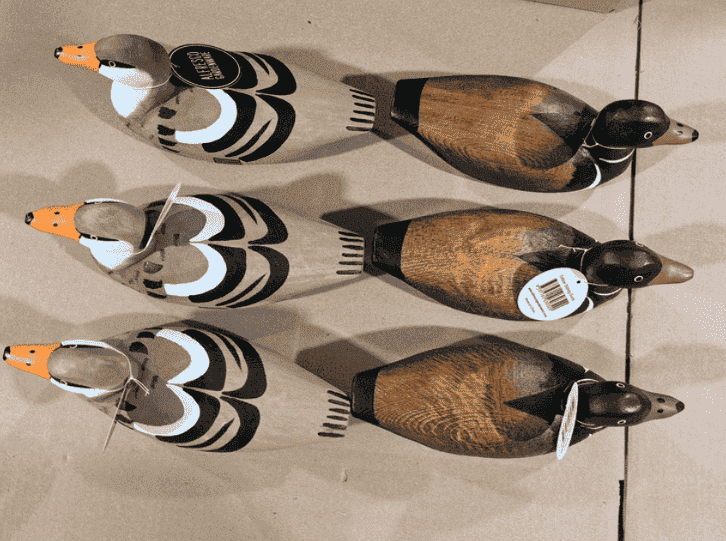
The Misunderstood “Quiet Luxury” Trend
Stop chasing minimalism. True quiet luxury is about material honesty and environmental integrity.
Retail blogs constantly push the narrative that “quiet luxury” means beige, logo-free, and unadorned. That theory collapses the second a customer picks up a handcrafted object. Quiet luxury is actually about stripping away everything fake. A resin duck painted with artificial “wood grain” fails the test the moment human hands touch it. A real basswood duck with natural grain passes the test subconsciously before the customer even registers why they trust it.
- What buyers actually pay for: Genuine basswood with a verified 8–10% moisture content, carved by artisans with a decade of experience. They want actual wood and human craftsmanship, not “wood-look” plastic.
- What kills the luxury illusion: The cold, dead touch of synthetic resin. Consumers instantly recognize plastic, and it shatters any premium brand positioning you’ve built.
- The sustainability mandate: Eco-luxury buyers demand eco-friendly origins. Wood is renewable and biodegradable. Polyresin is an environmental nightmare. Brands that can verify legally harvested wood origins capture the high-margin demographic.
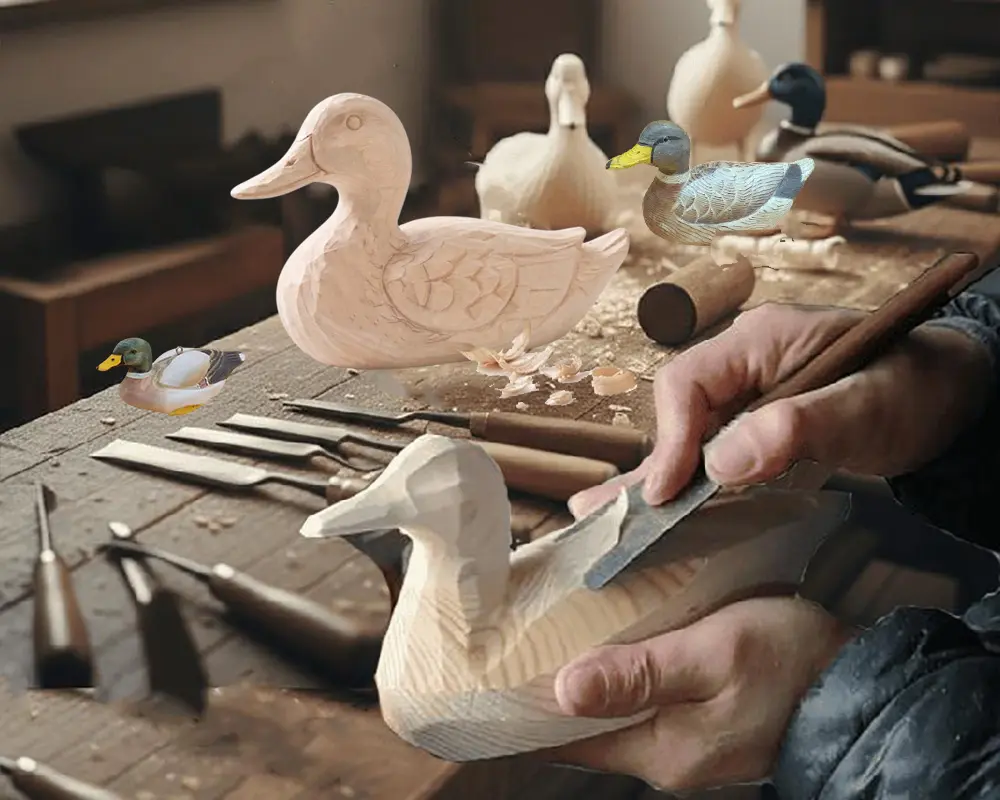
Mass-Produced Resin vs. Hand-Carved Wood: The Sourcing Reality
The real difference isn’t just on the shelf—it’s in your cash flow and brand reputation.
Resin makes sense for cheap, high-volume novelty items. But in the premium decor channel, it is a massive financial risk. To produce a resin duck, a factory must create a steel mold that costs between $2,000 and $5,000. To amortize that cost, they will force you into a 5,000-unit Minimum Order Quantity (MOQ). This forces your brand to bet all its cash flow on a single design. If that specific mallard pose doesn’t sell, your warehouse becomes a graveyard for 4,700 plastic birds.
Factory-direct hand-carved basswood completely flips this risk. With zero mold fees and an accessible 300-piece MOQ, you can test three different designs (e.g., a mallard, a wood duck, and a pintail) for less than the cost of a single resin mold. If one pose underperforms, you simply drop it from the next order. No sunk tooling costs, no dead inventory.
- Artisanal variance as a sales tool: Resin copies are identical clones. A hand-carved basswood duck uses the wood’s natural grain as a unique identifier. This is not a “defect”—it is a feature. Every unit is a one-of-a-kind collectible, allowing boutique retailers to justify a 40–60% higher shelf price.
- A cleaner supply chain: Resin supply chains involve chemical compounders, mold fabricators, casting workshops, and painting sub-contractors. Every handoff degrades quality. A direct wood-carving factory consolidates timber inspection, carving, painting, and packaging under one ISO9001-certified roof. If there’s an issue, there is only one point of accountability.
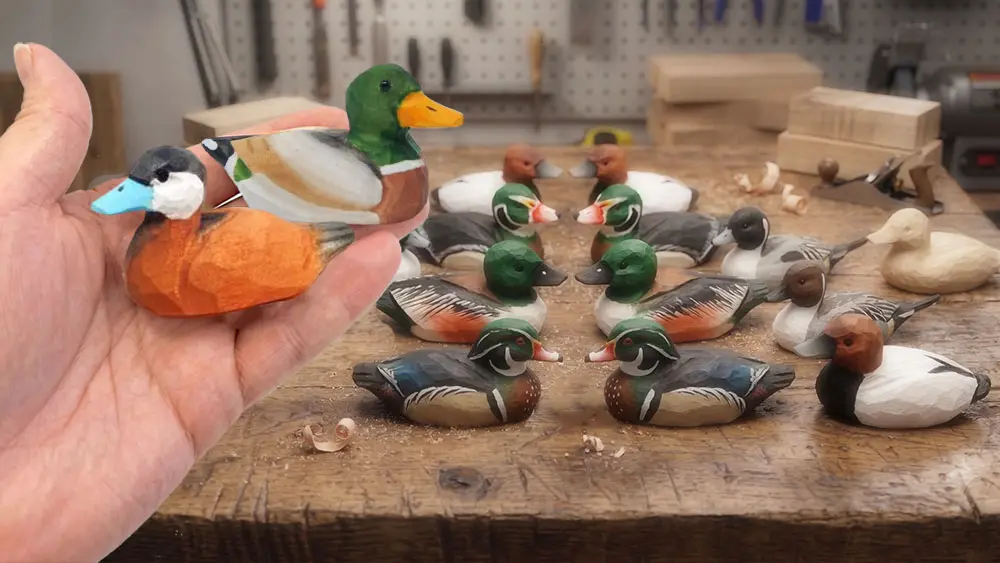
Tactile Feel and Environmental Impact
Buyers are rejecting toxic plastics disguised as luxury. Natural warmth and eco-friendly origins command the highest margins.
The fundamental flaw of resin isn’t its weight; it’s its soul. Haptic research shows that tactile contact with natural wood surfaces reduces stress markers and increases purchase intent by up to 28%. Wood feels warm, organic, and authentic. Resin feels like cold, lifeless plastic. When a customer picks up a decor item, that immediate sensory gap determines whether they will pay full price or wait for a clearance sale.
Furthermore, the production of polyresin involves toxic chemicals, heavy emissions, and non-biodegradable waste. It is entirely incompatible with modern eco-luxury branding. Basswood, on the other hand, is a highly renewable resource. When sourced responsibly, kiln-dried properly to 8-10% MC, and finished with non-toxic water-based paints, it tells a compelling green story that justifies a premium price tag.

| Factor | Hand-Carved Basswood | Resin Equivalent |
|---|---|---|
| Craftsmanship | 100% hand-carved; artisan detailed | Machine-injected mold; mass-produced |
| Uniqueness | Natural grain makes every piece a unique collectible | Identical clones with zero collectible appeal |
| Tactile Feel | Warm, organic, and natural in the hand | Cold, synthetic, and plastic-like |
| Eco-Impact | Renewable, biodegradable, natural timber | Highly polluting production; non-biodegradable |
| Sourcing Risk | Zero mold cost; 300 MOQ | $2,000–$5,000 mold fee; 5,000+ MOQ |
Conclusion
Removing resin molds from your sourcing equation fundamentally improves your business’s financial health. Zero tooling costs mean you can pilot new designs with incredibly low risk, keeping your cash flow agile and your inventory fresh. As long as your factory rigorously controls moisture content (8-10%) and applies proper sealing, you completely bypass the cracking issues associated with cheap wood products. More importantly, you deliver a warm, eco-friendly, unique piece of art that easily commands a 40–60% higher retail premium over toxic, mass-produced plastic. Next time you talk to a supplier, skip the pleasantries and ask for their moisture logs and minimums. If they can’t provide data, find a factory that can.
Frequently Asked Questions (FAQs)
What is the typical MOQ for custom hand-carved wooden ducks?
Our standard Minimum Order Quantity (MOQ) for custom OEM/ODM orders is 300 pieces. There are zero mold fees, making it highly accessible for market testing.
How do you ensure consistency across a batch of 300 handcrafted pieces?
Consistency relies entirely on a strict pre-production sample approval. We set up rigorous QC checkpoints (moisture testing, sanding, and painting) during mass production to ensure every piece matches your approved reference sample.
What are the standard payment terms for wholesale buyers?
The industry standard is a 30% deposit upon order confirmation, with the remaining 70% balance due before shipment. We generally follow this structure for new clients, though terms can be negotiated for larger volume contracts.
Will solid wood ducks warp or crack during ocean freight?
Not if they are processed correctly. We strictly kiln-dry our basswood to an 8-10% moisture content and apply protective sealants before shipping. This process effectively neutralizes the risk of warping and cracking during trans-oceanic climate shifts.
How long does it take to create a custom 10-inch wooden duck sample?
Producing a custom pre-production sample typically takes 2 to 3 weeks. The exact timeline depends on the complexity of your design, the carving details required, and the specific painting techniques specified in your blueprints.