Skip to content

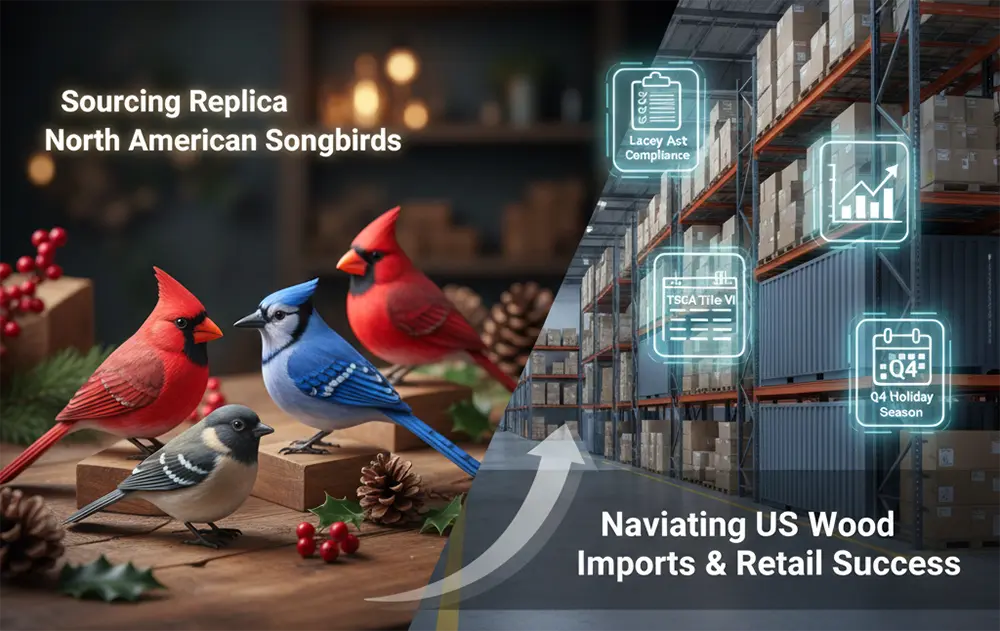
Sourcing replica North American species among wholesale wooden songbirds for the US giftware market offers high profit margins, but a single misstep with Lacey Act compliance can lead to seized shipments and canceled retail contracts. The demand for species like Cardinals and Blue Jays is consistent, yet importers often fail to align their supply chain with the complex wood-sourcing regulations required for entry into the United States.
This guide provides a technical framework for stocking these products successfully. We will cover the specific documentation needed to navigate US Customs, how to scale production for peak holiday seasons, material durability for various climate zones, and the operational capacity required to fulfill 10,000+ unit orders for major retail chains.

Key Takeaways
- The cardinal is the official state bird in 7 US states, which keeps commemorative and regional lines reordering it.
- Trial orders start at 100 pieces with a USD 500 minimum order amount; wholesale wooden songbirds begin at 300 pieces with a USD 3,000 minimum.
- Sea freight runs 60-90 days to port, so Q4 shelf space has to be committed by late Q2.
- Restocks from in-stock inventory close the gap in 20-30 days on air express DDP.
- Each shipment carries the timber scientific name and 1 country-of-harvest record for the Lacey Act declaration.
- Regional colour is controlled by 1 agreed physical standard, checked at 2 stages: semi-finished and finished.
In This Guide
- Why Cardinals Dominate the US Gift Bird Market
- How to scale inventory for US holiday…
- Is Basswood durable enough for various US…
- How to navigate US Customs and Lacey…
- Can you handle 10,000+ unit orders for…
- What is the profit margin on “Gift…
- How to customize colors for regional North…
- Conclusion: stocking wholesale wooden songbirds
- Frequently Asked Questions
Why Cardinals Dominate the US Gift Bird Market
The Northern Cardinal’s commercial success hinges on a powerful combination of its holiday-aligned red plumage, deep cultural symbolism, and consistent year-round visibility across major US markets.
Symbolic Color and Holiday Alignment
The cardinal’s vibrant red plumage is its primary commercial asset. This color aligns perfectly with traditional Christmas themes, making it a default choice for festive merchandise and seasonal giftware. The visual impact of bright red against a winter backdrop is a key driver for its use in decorative products, where it provides a strong, eye-catching appeal that resonates with holiday shoppers.
- The distinctive red color is directly linked to holiday symbolism, making cardinal-themed products a natural fit for seasonal decor and gift collections.
- Its strong visual appeal ensures products stand out in retail environments, particularly during the competitive Q4 holiday season.
Cultural and Emotional Significance
Beyond simple aesthetics, the cardinal holds significant cultural weight across the United States. For many, it symbolizes hope, love, and spiritual connections, often associated with messages from deceased loved ones. This deep emotional resonance elevates cardinal-themed items from simple decorations to meaningful gifts that convey personal sentiments.
- The bird’s link to positive feelings and remembrance adds a layer of depth that drives purchasing decisions beyond visual appeal.
- This emotional connection makes it a powerful choice for products intended to convey personal meaning, such as sympathy gifts or tokens of love.
Year-Round Presence and Regional Identity
As a non-migratory species, the cardinal is a familiar, year-round sight for a large portion of the US population. This constant presence reinforces its status as a beloved bird and ensures high brand recognition in local markets. Its visibility is not limited to one season, giving it sustained market relevance throughout the year.
- Its expanding geographic range means more consumers recognize it, strengthening its market position.
- The cardinal is the official state bird in seven states, cementing its role in American identity and increasing its value in commemorative and regional product lines.
 How to scale inventory for US holiday seasons like Christmas?
Effective holiday inventory scaling in the US market hinges on data-driven demand analysis and strategic supplier partnerships to manage long lead times and protect margins.
Data-Driven Demand Forecasting
Accurate holiday forecasting isn’t guesswork; it’s a discipline built on historical sales data and real-time inventory visibility. Analyzing past performance reveals peak buying windows and top-selling products, which allows you to prepare for the Q4 2026 rush without tying up capital in overstock or risking stockouts on key items.
- Analyze sales data from prior holiday seasons to pinpoint peak periods and product velocity.
- Maintain real-time inventory visibility across all sales channels using a centralized management system.
- Leverage our factory’s historical order data to refine your projections and improve forecast accuracy.
| Procurement Strategy | Trial Order (Market Testing) | Wholesale Order (Scaling) |
|---|---|---|
| Commitment | MOQ: 100 pcs / MOA: USD $500 | MOQ: 300 pcs / MOA: USD $3,000 |
| Shipping Method | Air Express (DDP) | Sea Freight (Optimized for Margin) |
| Lead Time | 15-20 days (Ready-to-Ship Stock) | 60-90 days (Full Production Cycle) |
| Product Access | In-stock inventory only | Full catalog & OEM/ODM services |
Strategic Partnerships and Early Ordering
Long production lead times are a reality in the handcrafted goods sector. A 60–90 day manufacturing window for sea freight orders means that Q4 inventory planning must be finalized by late Q2. Placing large-volume holiday orders early isn’t just a suggestion—it’s the only way to secure production capacity and avoid the supply chain bottlenecks and expedited shipping fees that erode profit margins.
- Finalize large-volume holiday orders well before Q3 to lock in production schedules and shipping timelines.
- Maintain direct communication with our team to build in buffer capacity for unexpected demand spikes.
- Plan logistics to utilize sea freight, as last-minute air shipping can neutralize profits on bulk orders.
Post-Holiday Inventory Liquidation
What you do with unsold inventory in January is just as important as what you sold in December. A clear liquidation strategy protects your margins and prevents carrying costs from eating into profits. The goal is to move seasonal stock efficiently without devaluing your core product line.
- Plan for post-holiday campaigns, such as bundling slower-moving items with popular sellers or offering targeted discounts.
- Assess which seasonal items, like certain wooden ornaments, can be repositioned for year-round sales.
- Collaborate with us to develop products with timeless designs that are less exposed to heavy seasonal markdowns.
Source High-Margin Hand-Carved Songbirds Directly

Is Basswood durable enough for various US climate zones?
The living Basswood tree is resilient across most of the continental US, but its processed wood is soft and non-durable, making it ideal for indoor carving but unsuitable for outdoor use without a protective finish.
A common question from US wholesalers is whether our premium Basswood products can withstand the country’s diverse climates. It’s crucial to distinguish between the adaptability of the living tree and the durability of the processed wood used in our handcrafted songbirds. The tree itself is quite hardy, but the wood has specific properties that define its best application.
Performance Across USDA Hardiness Zones
The American Basswood tree grows across a wide portion of the United States, from the northeastern states down through the Great Lakes region and into the Midwest. That is the same climate belt our own supply sits in, defined by cold winters and four distinct seasons. The species is well-adapted to environments with four distinct seasons.
- The tree shows strong resilience to late spring frosts, a key survival trait in regions with variable spring weather.
- Its adaptability is highest in continental climates with cold winters and defined seasonal changes.
Durability of Processed Wood for Outdoor Use
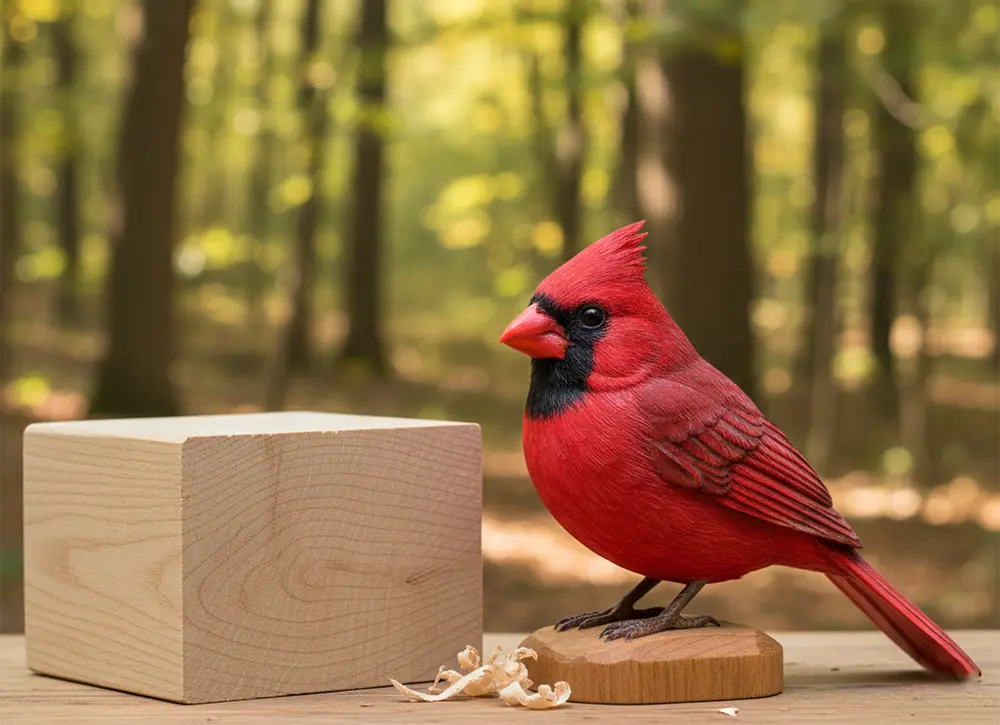
While the tree is adaptable, its processed wood is soft and not naturally durable for outdoor applications. Without proper treatment, basswood is susceptible to decay when exposed to moisture and UV radiation. This same softness is precisely what makes it the preferred material for master craftsmanship, allowing for the meticulous detailing seen in our hand-sculpted songbirds.
- For any outdoor display, our basswood products require a protective finish like a quality exterior paint or sealant to ensure structural resilience.
- Its primary and best use is for indoor crafts, carving, and decorative items where it is protected from the elements.
 How to navigate US Customs and Lacey Act for wood imports?
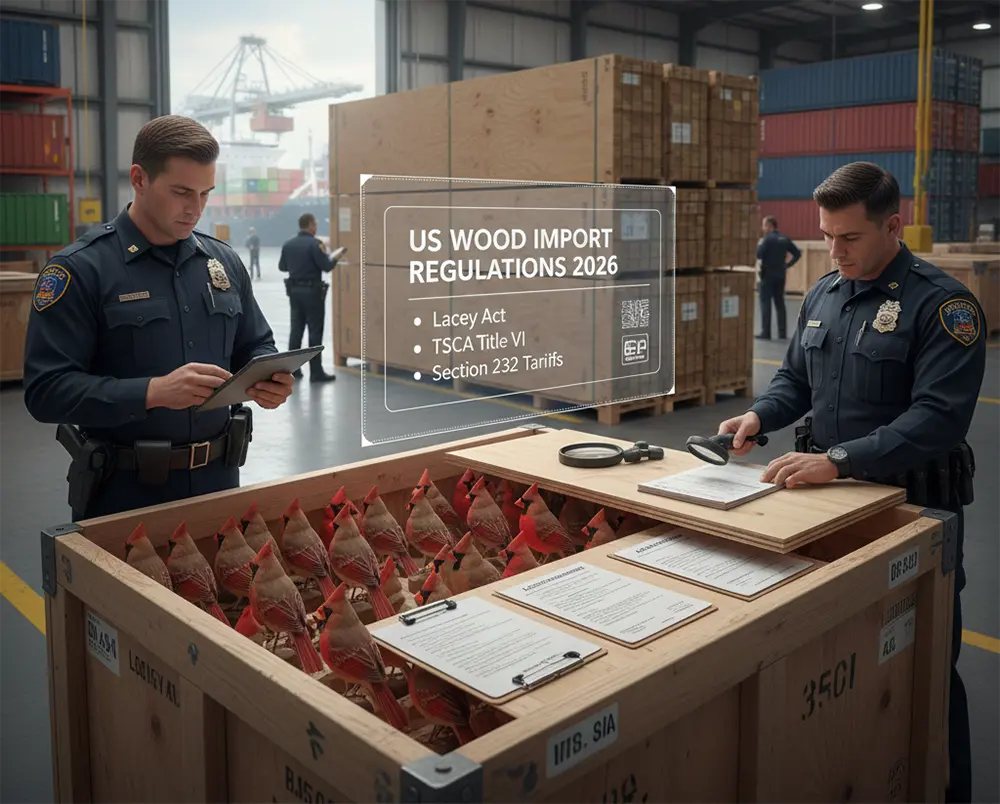
Navigating US wood imports in 2026 requires a coordinated strategy across multiple agencies—CBP, USDA, EPA, and Fish & Wildlife—to manage a complex web of regulations including the Lacey Act, TSCA Title VI, and Section 232 tariffs.
Lacey Act Documentation Requirements
By 2026, compliance with the Lacey Act is a non-negotiable part of importing wood products into the United States. This federal law requires importers to provide meticulous documentation that verifies the legal and sustainable origin of all wood materials. Failure to comply can lead to significant operational and financial penalties.
- A formal declaration is required for every shipment containing wood, detailing the scientific name (genus and species) of the timber and its country of harvest.
- Accurate documentation prevents shipment delays, fines, and potential confiscation of goods by US Customs and Border Protection (CBP).
- We manage all necessary declarations and ensure our supply chain provides the required data for complete sourcing verification.
Compliance with TSCA Title VI for Formaldehyde
The US Environmental Protection Agency (EPA) strictly enforces the Toxic Substances Control Act (TSCA) Title VI rule, which establishes limits on formaldehyde emissions from composite wood products; the rule text and importer obligations are published on the EPA formaldehyde site. This regulation is a critical checkpoint for ensuring product safety and gaining access to the US market.
- All composite wood materials, such as MDF or plywood, must be certified as compliant with TSCA Title VI emission standards.
- We maintain complete certification records from our suppliers, which are available for inspection by customs officials at any time.
- Adhering to this rule is not just about compliance; it demonstrates a commitment to consumer safety and product integrity.
| Regulatory Framework | Primary Agency | Key Requirement |
|---|---|---|
| Lacey Act | USDA APHIS / CBP | Declaration of species scientific name and country of harvest. |
| TSCA Title VI | EPA | Formaldehyde emissions certification for composite wood. |
| Section 232 Tariffs | CBP | Duty rate depends on the classification assigned to your shipment; confirm the current rate before pricing. |
| APHIS Permits | USDA | Permits for pest prevention, often requiring heat treatment. |
Navigating Tariffs and Additional Permits
Beyond core regulations, importing wood involves managing specific tariffs and environmental permits. These rules can change based on trade policy and conservation efforts, requiring constant vigilance to maintain compliance and manage costs effectively.
- We track Section 232 tariff actions and re-confirm the classification assigned to each product line before you price a season, because the rate applicable to a carving depends on that classification rather than on a fixed percentage.
- Our logistics team secures the necessary APHIS (Animal and Plant Health Inspection Service) permits to certify that our wood materials are free from pests.
- We also verify if any wood species require a CITES (Convention on International Trade in Endangered Species) permit, which governs the trade of protected species.
 Can you handle 10,000+ unit orders for US retail chains?
Executing high-volume orders for major US retailers requires a synchronized system of scalable production, rigorous multi-stage quality control, and coordinated logistical support.
Yes, our operational framework is engineered specifically to accommodate large-scale production for major retail partners. We have proven systems in place to manage the volume, quality, and logistical demands required to supply national chains, ensuring source-to-shelf integrity for every shipment.
Scalable Manufacturing Infrastructure
Jilin Ever Creation’s facilities are structured for high-volume manufacturing without sacrificing the artisan precision of our handcrafted products. We combine traditional carving techniques with modern, efficient production lines to maintain detail and consistency at scale. This blended approach allows us to deliver the hand-sculpted authenticity retailers expect, even on massive orders.
- Our production capacity is designed to manage orders exceeding 10,000 units per style.
- We have established production schedules that align directly with key US retail seasons and inventory replenishment cycles.
- Our processes ensure that even with increased volume, the unique artisanal variance of each piece is preserved while meeting strict quality specifications.
Multi-Stage Quality Control for Mass Production
Maintaining consistency across thousands of units is non-negotiable for retail success. Our rigorous quality control is not a final step but a continuous process integrated throughout the production line. This guarantees that every item in a large shipment meets the same high standard, protecting your brand reputation and minimizing returns.
- We begin with a strict inspection of all raw materials, including ethically sourced, fine-grained basswood from Changbai Mountain.
- In-line checks are performed at multiple carving, painting, and assembly stages to identify and correct any deviations immediately.
- A final inspection verifies that all finished products meet client specifications and our own documented standards, with BSCI and ISO 9001 audits on the factory and EN71 testing on finished goods.
End-to-End Logistical and Compliance Support
We provide end-to-end support to manage the complexities of shipping high-volume orders to the United States. Our experienced logistics team handles the entire process from packaging and documentation to final delivery, ensuring a smooth transit from our factory floor to your distribution center.
- We accommodate a full range of Incoterms, including FOB, CFR, DDU, and DDP, to match your specific logistical and financial requirements.
- Our team has direct experience navigating US customs requirements for wood products, including all necessary Lacey Act documentation.
- We partner with established, reliable freight forwarders to guarantee timely and secure delivery for container-level shipments.
 What is the profit margin on “Gift Boxed” bird sets in the US?
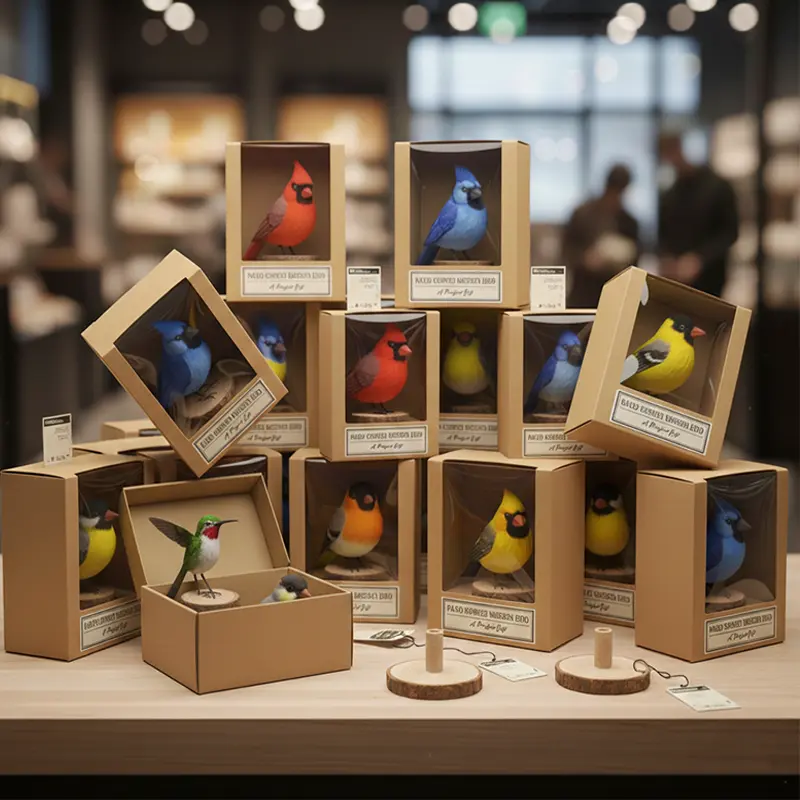
Retail prices for gift-boxed bird sets are usually built as a multiple of landed cost. How much of that multiple survives depends on the channel, the freight term and the duty line your shipment is classified under.
US Market Context for Gift Boxes
Gift boxing is a serious business in the United States. American consumers buy presents around fixed calendar dates, and a boxed pair or family set photographs and shelves better than a loose carving, which is why US retailers keep asking for it. E-commerce has shortened the route between our bench and those buyers: a niche retailer can now list a regional bird set directly to collectors instead of waiting on a wholesale buyer.
General Pricing Models for Gift Products
Exact margins on a niche item are not something we can quote for you, because they depend on your own rent, payroll and ad spend. What we can control is the number the calculation starts from: landed cost. When partners ask us how to price a boxed gift set, we model it as a multiple over landed cost, because that figure has to absorb materials, labour, freight, duty and the marketing that moves the box. The multiple you can hold then shifts with the channel: selling wholesale into a national chain leaves a different margin than shipping direct to a collector who found you through a search.
 How to customize colors for regional North American species?
Authentic bird models for the North American market require ornithologically accurate color variations that reflect specific geography and climate, not just a single species template.
Understanding North American Regional Color Variation
Coloration in North American birds is not uniform; it varies significantly by region due to local geography and climate. This color polymorphism is driven by ecological factors. The Dark-eyed Junco is a prime example, with distinct morphs like the western ‘Oregon’ variant and the eastern ‘Slate-colored’ variant showing completely different plumage. Our research and development team analyzes these patterns, along with variations influenced by molting cycles, age, and sexual dimorphism. This allows us to produce hand-carved bird models that accurately reflect the local wildlife for specific US markets.
Our Customization Process for Authentic Bird Models
We provide a complete OEM/ODM service to create regionally specific bird models for your brand. The process is straightforward and collaborative. Clients supply artwork or reference images for the desired regional species, from the Pacific Northwest to the Atlantic coast. Our senior carving and painting team then applies its time-honored skills to replicate the intricate details with precision. This master craftsmanship ensures each model captures the unique characteristics of its regional counterpart.
- Clients provide artwork or reference images for specific regional bird species.
- Our artisans apply traditional carving and painting skills to replicate intricate details.
- With a minimum order quantity of 300 pieces, we can support both niche retailers and large-scale distributors.
Ensuring Accuracy: From Design to Final Inspection
Every custom-colored bird model undergoes rigorous quality control. We establish precise color standards with the client during the initial design phase to create a clear benchmark. Our inspectors then check for color accuracy and application quality on both semi-finished and finished products. This multi-stage verification process guarantees that each piece perfectly matches the approved design specifications. It ensures consistency and authenticity across the entire order, meeting the high standards expected by collectors and gift buyers in 2026.
 Conclusion: stocking wholesale wooden songbirds
Stocking popular North American species like Cardinals and Blue Jays requires more than just a quality product. A successful strategy depends on managing seasonal inventory, ensuring basswood durability across climates, and navigating import regulations like the Lacey Act. Working with an experienced manufacturing partner simplifies these supply chain complexities from production to final delivery.
If you are ready to scale your inventory for the US market, contact our team to discuss your specific volume and customization needs. We can provide a complete catalog of our artisan-carved songbirds and help you plan your next order.
If those single species go out as presents rather than shelf decor, our wooden bird gift sets page covers the Kraft, white and full-colour box options and the 500-piece box minimum behind them.
We also carve outside the songbird family: the same wooden bird factory runs owls, ducks and robins to the standards described above.
Frequently Asked Questions
What documentation do you supply for a US Lacey Act declaration?
Every shipment carries the scientific name of the timber we used and the country of harvest, together with the felling and transport permits behind that purchase. Your broker files the declaration with those documents, so nothing about the sourcing has to be reconstructed after the container is already at the port.
Can a single order mix several species, or is it one species per SKU?
A 300-piece wholesale order can be split across species and sizes, as long as each individual carving design reaches its own tooling and painting minimum. Partners typically run cardinal, blue jay and robin within one consolidated shipment so a single sea freight booking covers the whole gift shelf.
How do you keep the cardinal red consistent across a large production run?
We agree a physical colour standard with you during the design phase and keep that reference at the painting bench. Inspectors check colour accuracy on semi-finished and finished pieces against it, so a 3,000-unit run matches the sample you approved instead of drifting shade by shade.
Why are Northern cardinals so prevalent in the holiday and gift market?
Cardinals dominate the holiday and gift market due to their vibrant red plumage, which strongly aligns with traditional Christmas colors and symbolism. Their year-round visibility and expanding geographic range make them a familiar and accessible subject for regional markets, while their status as an official state bird in seven states enhances their premium appeal in commemorative products.
Besides color, what makes cardinals a meaningful symbol for consumers?
Beyond their striking appearance, cardinals hold significant cultural resonance for consumers. They are widely seen as symbols of hope, love, and spiritual connection, making them an emotionally meaningful choice for gifts. This symbolic weight, combined with their established role in American identity, allows them to connect with a broad demographic on a deeper level.