Skip to content

Introduction
Wooden handicrafts can be made from various types of wood, and the characteristics of woods are what decide how each piece carves, how it takes a finish, and whether it arrives at your warehouse still straight. The surface of the wood has a wide variety of grain patterns and natural shapes. Engaging in wood carving art requires understanding the appropriate use of different materials and having the skill to “match the wood.”

Key Takeaways
- Basswood, birch, pine and rubberwood each decide tool wear, finish behaviour, shipping weight and defect rate before design does.
- Green or freshly dried stock warps and checks; kiln-dried, rested timber with sealed end grain is what survives a container.
- Movement runs across the grain, which is why a round blank turns more safely than a thin square one.
- Supply is documented with official timber felling and transport permits; the company holds an FSC certificate but we do not supply FSC-certified basswood.
- Order tiers: 100 pieces trial (MOA USD 500), 300 pieces wholesale and custom (MOA USD 3,000), 500 pieces for colour-box retail packaging.
- Transit runs 20-30 days by air or 60-90 days by sea to port, scheduled from artwork approval rather than from the first enquiry.
Contents
Discussion of criteria for choosing sustainable woods
Wood carvings involve considering the shape, quality, and grain of the wood. The goal is to harmonize the overall aesthetics and decorative beauty with the natural texture and grain of the material. This approach not only enhances the overall integrity of the wood but also preserves its inherent dynamic qualities, resulting in an ideal artistic effect. It is also worth noting that freshly cut, untreated wet wood is not suitable for immediate carving. Otherwise, it may warp, crack, or undergo other deformations before the carving is completed, affecting the overall outcome.
Detailed exploration of the unique characteristics of different woods
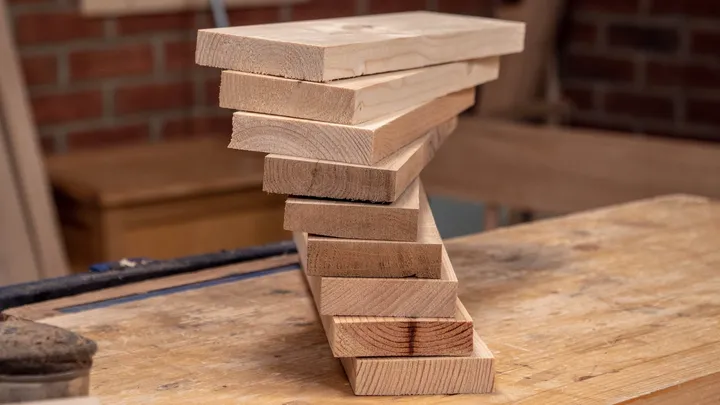
Common types of wood used in making wooden crafts include basswood, pine, birch, rubberwood, and some hardwoods.
1. Basswood :The scientific name for basswood is Tilia . Found in the northern regions of our country, it is a superior wood, yellow-white in color, slightly light and soft, with a fine, even texture and vague straight grain. It has a slight silk gloss and a soft feel, making it very easy to carve. It is known for not deforming or cracking, with stable dimensions and good internal qualities.
2. Birch: Found in the northern regions of our country, it is yellow-white to slightly brown with a pure and even grain and beautiful spots. The wood is hard, dense, and shiny, slightly heavy and prone to cracking, suitable for carving small works and practical crafts.
3. Pine: Found in the northeast of our country, it is a coniferous plant with a pine scent, light yellow color, and many knots. Pine is known for its coarse and beautiful grain due to clear annual rings and many resin channels, which give it a strong decorative appeal.
4. Rubber wood: It is light brown, with an open-pore structure, and has a uniform material. The grain is straight, with loose lines, many random black spots, and no unique wood grain.
Insights into the artistic considerations that the choice of wood for each product type

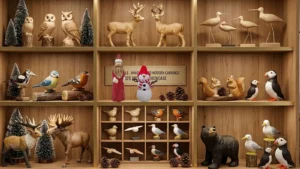
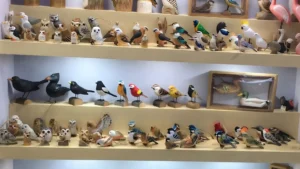
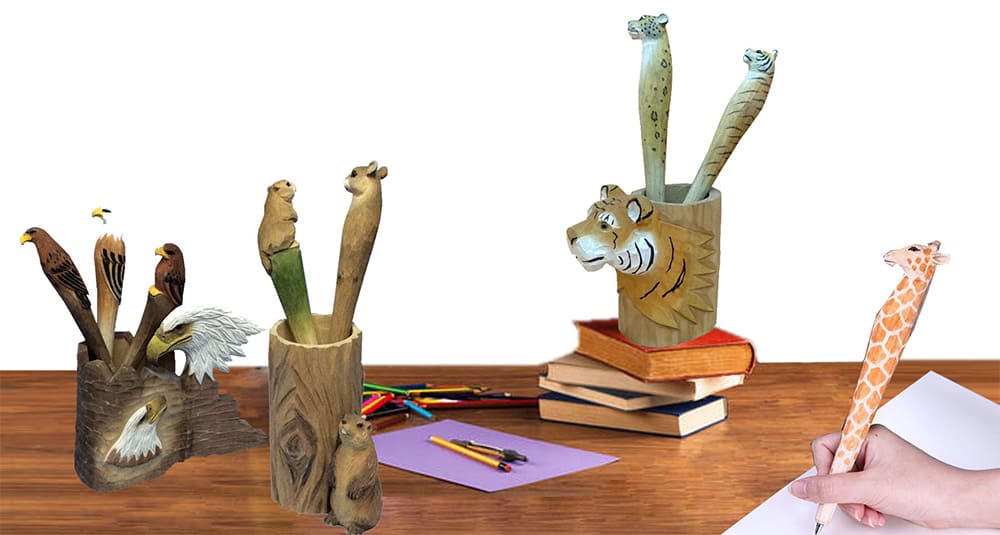
1. Basswood is suitable for carving various small animal pendants, decorations,wooden carving birds, keychains, carved animal pen, etc., with sizes ranging from about 5-20 cm. Basswood has a delicate and vague grain, not very pronounced, with generally bright colors.
2. Pine is generally used to carve larger decorative products, about 15-25 cm in size. After processing, pine has a more pronounced grain due to its clear annual rings. The overall color has an aged effect, giving it a vintage look. As it is natural wood, the texture varies, so each product has a different wood grain effect.
3. Birch is a harder wood, usually used to make simple and rugged products, such as Wooden Xmas Decor, Santa Claus figures, pine trees, wooden moose, etc.
4. Rubber wood is generally used for piggy banks, wall hooks, or plates, and other products.
What a Species Decision Actually Changes
Choosing between basswood, birch, pine and rubberwood is not a styling choice. It moves four things at once: how the tool behaves, how the surface accepts paint or laser, how the finished piece survives a container, and what the defect rate looks like when the carton is opened. A soft, fine-grained wood lets a carving hand hold a thin detail without tearing the fibre around it. A hard, dense wood holds an edge on a coaster but demands more from the cutter and leaves a darker burn line under laser. A resinous softwood looks warm and honest on a rustic sign and can bleed through a paint film years later if it was kiln-dried too fast.
Buyers who specify by appearance alone usually discover the difference on the second order, when the same artwork on the same machine produces a different result from a different log batch. Specifying by behaviour instead – hardness, grain openness, movement, resin content, how the species takes a stain – is what makes a product line repeatable.
Matching the Characteristics of Woods to a Product Line
The table below is how we read our own four working species when a buyer brings us a drawing rather than a wood name.
| Product family | Species we mill it in | Why it works | What to watch |
|---|---|---|---|
| Carved birds and small animals | Basswood | Pale, fine and even; holds a thin detail and takes hand paint cleanly. | Dents if a carved wing is not padded in the carton. |
| Coasters, desk sets, flat engraved goods | Birch plywood, rubberwood | Stable across the face, so an engraving file stays true over a long run. | Thin birch plies can splinter at the edge unless the cut is scored. |
| Rustic wall decor and larger signs | Pine | Visible annual rings give an aged look without a stain. | Knots move as humidity changes; resin can shadow a pale finish. |
| Children’s items and painted solids | Rubberwood | Uniform, low-cost, machines without tearing; good base for EN71-tested paint. | Random black spots show through a light colour and need an opaque coat. |
If you are weighing a moulded ply against a solid blank rather than choosing a colour, our breakdown of plywood versus solid wood covers where each one wins on cost, movement and finish. For the flat, engraved end of the range, the wholesale wooden coasters line is the clearest example of species chosen for stability rather than looks.
Moisture, Acclimatisation and Movement
Species is only half the specification; the moisture content at the moment of cutting is the other half. Green or freshly sawn timber is plastic under a chisel and dries into a different shape afterwards. Stock is kiln-dried and then rested so the case moisture settles near the level it will live at in the destination market, which is why a piece that behaves in a Hebei winter can still cup in a Rotterdam spring if it never acclimatised.
Movement runs across the grain, not along it. That single fact decides most joinery and thickness choices in our catalogue: a round blank turns more safely than a thin square one, a coaster is cut so the face is the stable direction, and a painted panel gets a back relief cut so both sides dry evenly. When a buyer asks us to thin a design down for freight savings, this is usually the real reason we push back.
End grain is where trouble starts. Sealing the ends slows the escape of moisture, which keeps the surface from checking while the interior catches up. For shipping, this matters more than the finish on the face, because a hairline check at the base of a carved bird becomes a return claim in a retail shop.
Traceability, Compliance and Export Paperwork
Timber is documented before it is carved. Our supply is covered by official timber felling and transport permits for the logs we buy, and the mill runs under a BSCI-audited social compliance framework with an ISO9001 quality system behind it. Electrical items such as salt lamps and LED-mounted decor ship CE marked and RoHS compliant, with UKCA for Great Britain. Painted children’s pieces are tested to EN71 rather than declared safe on a datasheet.
One boundary is worth stating plainly: our FSC certificate covers the company, and we do not hold FSC-certified basswood supply. If a programme requires certified chain-of-custody material, that has to be sourced separately and priced as its own line, because we will not put a product-level FSC claim on a blank we cannot trace to a certified forest. Forestry trade documentation and legality schemes are set out by agencies such as the FAO forestry programme, and buyers writing a supplier code can start from there.
Ordering Realities: MOQ, Samples and Transit
The numbers below are our published tiers, not a negotiating position. A trial order opens at 100 pieces with a minimum order amount of USD 500, which is how a new buyer checks grain, paint adhesion and packing before committing. Wholesale and custom production starts at 300 pieces with a minimum order amount of USD 3,000. Retail-ready colour-box packaging starts at 500 pieces; below that, goods ship in plain bulk cartons with an inner divider.
Transit is scheduled from the artwork approval date, not from the enquiry. Air freight runs 20-30 days door to port territory, sea freight 60-90 days to port, and a seasonal programme should be quoted and approved a full quarter before the shelf date it is meant to fill.
Where Each Species Fails, and What That Costs You
Every species in this post has a failure mode, and knowing it is cheaper than discovering it on a pallet. Basswood takes a dent from a tight carton, so carved wings and beaks need padding between rows. Birch plywood splinters on a thin edge and shows the ply line if the profile is too aggressive. Pine bleeds resin through pale paint where a knot was, and its colour varies between boards, so a vintage-stained run is never uniform. Rubberwood carries random black spots that a light colour will not hide, and its open pores need more coats to look even.
None of these rule a species out. They decide which one carries which SKU, and how much packaging a design needs. A line that puts its delicate basswood carving next to its dense rubberwood piggy bank in the same unpadded carton will lose money on the basswood alone.
Mill your line from the right species
Send the drawing and the target quantity and we will tell you which of basswood, birch plywood, rubberwood or pine holds that detail, and what it costs in each.
See the carved bird ranges →Frequently Asked Questions
Which wood is easiest for a first carving order?
Basswood. It is soft enough to cut without tearing fine detail, pale enough that a hand-painted finish reads clearly, and stable enough that a small animal blank arrives in the shape it left the bench with. Most of our sample programmes start here for exactly that reason.
Can you supply FSC-certified basswood blanks?
Not as a standard line. Our FSC certificate covers the company, but we do not have certified basswood supply, so we document the log instead with official timber felling and transport permits. If a programme truly needs chain-of-custody material, we quote it as a separate sourced line rather than claiming it on the blank.
Why does the same design cost more in hardwood?
Denser fibre is slower to cut, dulls tooling faster and needs a different feed rate, so a shift produces fewer pieces. Hardwood also arrives heavier, which shows up in the freight line. The material price is often the smallest part of the gap.
Which species should I avoid for painted children’s products?
Resinous softwoods such as pine, because sap can shadow a pale paint film later. Rubberwood is the practical choice there, provided the paint system is tested to EN71 and the base coat is opaque enough to cover the natural black spots.
How do I stop a wooden piece from checking in transit?
Specify sealed end grain and a rested blank rather than kiln-fresh stock, and give thicker solids a relief cut on the back so both faces dry evenly. Packing matters too: a dense carving should not share a carton row with a heavier item that presses on it.
Conclusion

It’s preferable to use wood that has been dried (with a moisture content of about 10%) or naturally air-dried for over a year. Wood with knots or blemishes from insects or mold should be avoided or placed on the back or less significant parts of the work to not affect the quality of the product.However, it’s important to note that knots and wood grain variations are inherent characteristics of natural wood and cannot be entirely avoided.