Skip to content
Choosing between a Himalayan salt block and a cast iron pan for searing involves balancing flavor, performance, and practicality. A salt block imparts a subtle mineral salinity and striking visual appeal, while cast iron delivers reliable, high-heat searing for consistent results. This article compares their heat retention, flavor impact, care requirements, and versatility to help you select the surface that aligns best with your cooking goals.
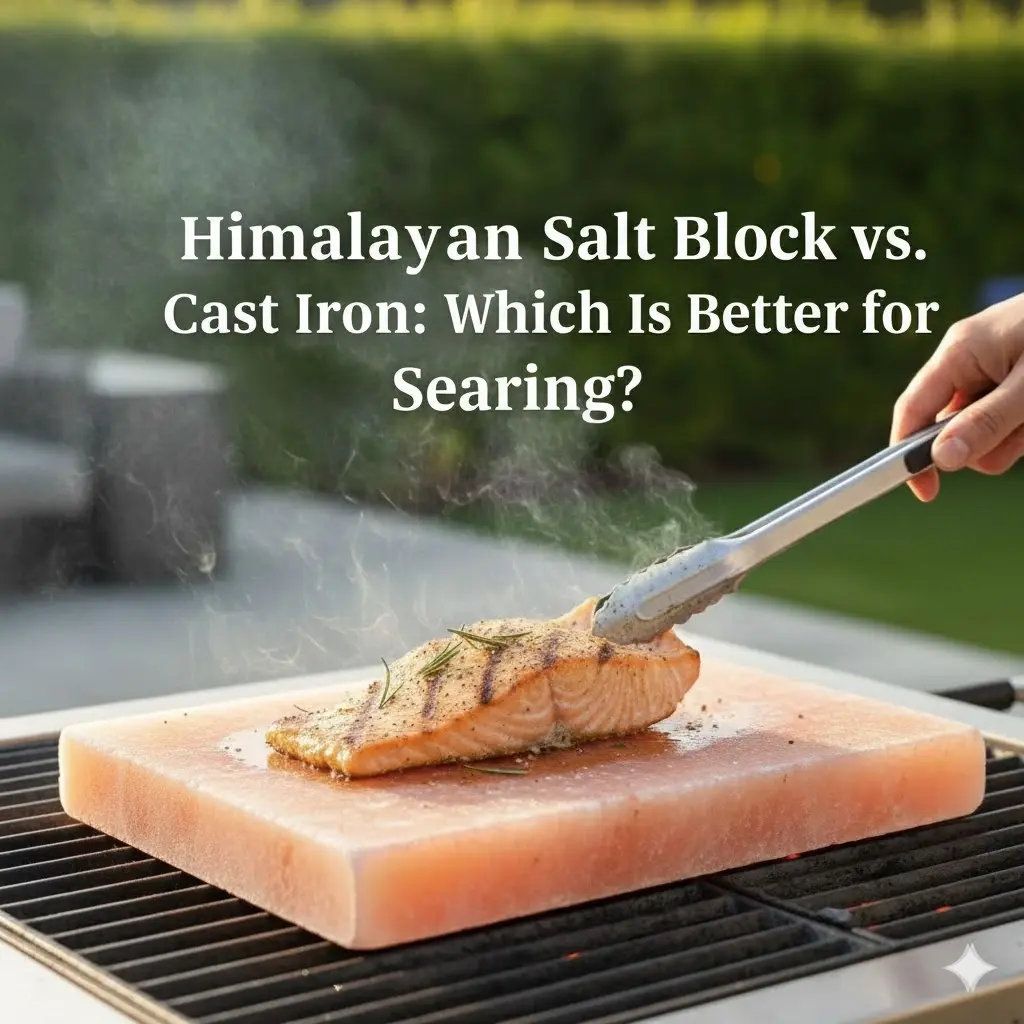
Himalayan Salt Block vs. Cast Iron: Key Differences at a Glance
Choosing between a Himalayan salt block and a cast iron pan for searing depends on your priorities—flavor, durability, and ease of care. The comparison below summarizes how each material performs in heat retention, maintenance, and cooking versatility, helping you identify which best suits your culinary workflow.
| Feature | Himalayan Salt Block | Cast Iron Pan or Griddle |
|---|---|---|
| Primary Use / Function | Cooking surface that imparts a natural salt flavor | Cooking and searing tool with superior heat retention |
| Design & Coverage | Flat, rectangular slab with limited surface area | Available in diverse shapes and sizes to fit most cooktops or grills |
| Heat Retention | Excellent retention but requires gradual preheating | Outstanding retention; can be preheated quickly and reused easily |
| Durability | Fragile; susceptible to cracking or chipping under thermal shock | Extremely durable; withstands high heat and mechanical impact |
| Flavor Contribution | Adds a subtle, natural saltiness to food | Neutral; flavor depends on pan seasoning and applied spices |
| Maintenance | High—clean without water and air-dry thoroughly | Moderate—requires seasoning but can be cleaned with water |
| Versatility | Ideal for presentation and light searing; limited cooking applications | Adaptable for multiple methods including searing, frying, and baking |
What Is a Himalayan Salt Block? Composition and Culinary Uses
Himalayan salt blocks are dense, flat slabs carved from pink halite mined in the Khewra Salt Mine of Punjab, Pakistan. Their pale rose color results from trace minerals such as iron, calcium, and magnesium, which also influence their mild salinity and distinct appearance. These naturally mineralized properties make the blocks both functional cooking tools and striking presentation pieces.
When heated gradually, a salt block absorbs and distributes heat uniformly, creating a surface hot enough to sear meat, poultry, or seafood while imparting a delicate seasoning. They are typically used at 450–500°F (230–260°C) for quick searing or chilled to serve cold dishes, offering a seamless transition between cooking and presentation with refined visual appeal.
Because salt reacts to moisture, careful maintenance is essential. The block should never be submerged or washed under running water. Instead, allow it to cool, then gently scrape or wipe away residue before air drying completely. When cared for properly, a Himalayan salt block maintains excellent heat performance and flavor quality, remaining a durable and conversation-worthy addition to any kitchen.
What Is Cast Iron? Characteristics and Culinary Advantages
Cast iron cookware is crafted from a dense iron alloy prized for its exceptional heat retention, strength, and longevity. It’s a staple in both home and professional kitchens because it performs reliably across a range of techniques—from intense searing to slow, gentle braising—without warping or cracking. The material distributes heat uniformly, promoting even cooking and producing a well-defined crust on meats and vegetables alike.
When properly seasoned, cast iron forms a natural non-stick surface that prevents food from adhering while maintaining a smooth texture. This seasoning remains flavor-neutral, allowing spices, marinades, and ingredients to shine without interference. With continued use, the cookware becomes increasingly resilient and refined, improving its performance over time.
Unlike more delicate materials, cast iron withstands thermal shock and physical wear. It can be cleaned with water, mild soap, or abrasives without damage, provided it is thoroughly dried and lightly oiled afterward. This simple maintenance routine allows cast iron pans to endure for generations while preserving their performance and classic appeal.
Beyond searing, cast iron excels in nearly every culinary method—sautéing, roasting, baking, and even grilling over open flame. Its versatility and unwavering stability make it one of the most dependable and enduring tools in any kitchen.
Premium Himalayan Salt Blocks for Culinary & Hospitality
Partner with Jilin Ever Creation for authentic pink Himalayan salt blocks engineered to enhance both flavor and presentation. Our customizable salt solutions meet strict safety and quality standards, serving diverse B2B sectors—from fine-dining establishments and gourmet retailers to innovative hospitality concepts.
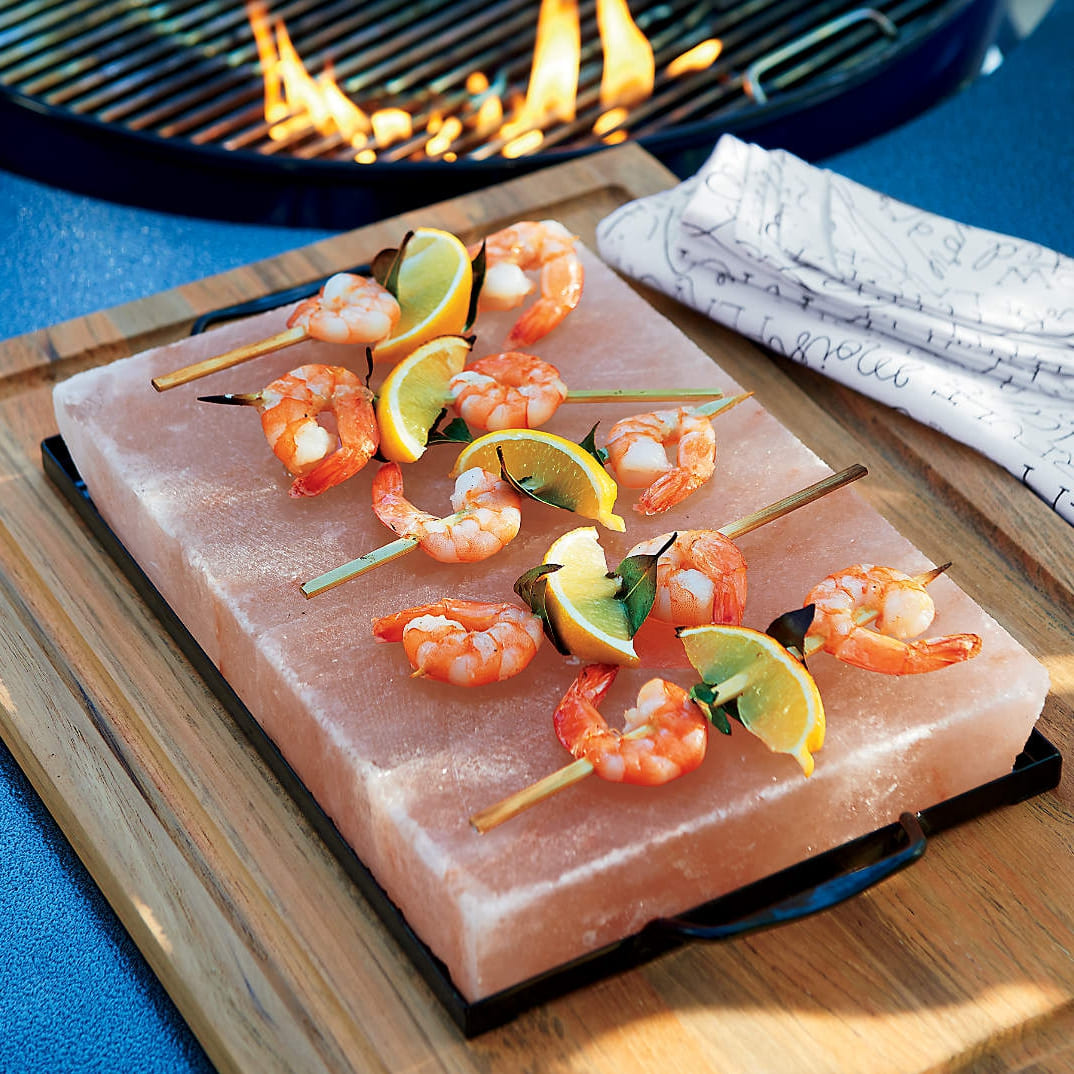
Head-to-Head Showdown: Performance, Maintenance, and Versatility
Searing Performance and Heat Management
Cast iron remains the standard for dependable, high-heat searing. Its dense alloy retains and distributes heat evenly, enabling deep, uniform crusts without compromising the cookware. It can sustain extremely high temperatures without damage, making it ideal for repeated use in professional or home kitchens.
Himalayan salt blocks, by contrast, offer a softer approach. When preheated gradually, they impart a delicate layer of salinity while producing a gentle sear on proteins or vegetables. Their sensitivity to rapid temperature changes makes them better suited to intentional, slower-paced cooking sessions. Cast iron supports a broader temperature range, while the salt block provides a distinctive aesthetic and flavor profile few materials can match.
Cleaning and Maintenance Needs
Cast iron requires moderate care. After cooking, it can be rinsed or lightly scrubbed with water, thoroughly dried, and coated with a thin layer of oil to preserve its protective seasoning. This layer prevents rust and maintains a naturally non-stick surface that improves with use.
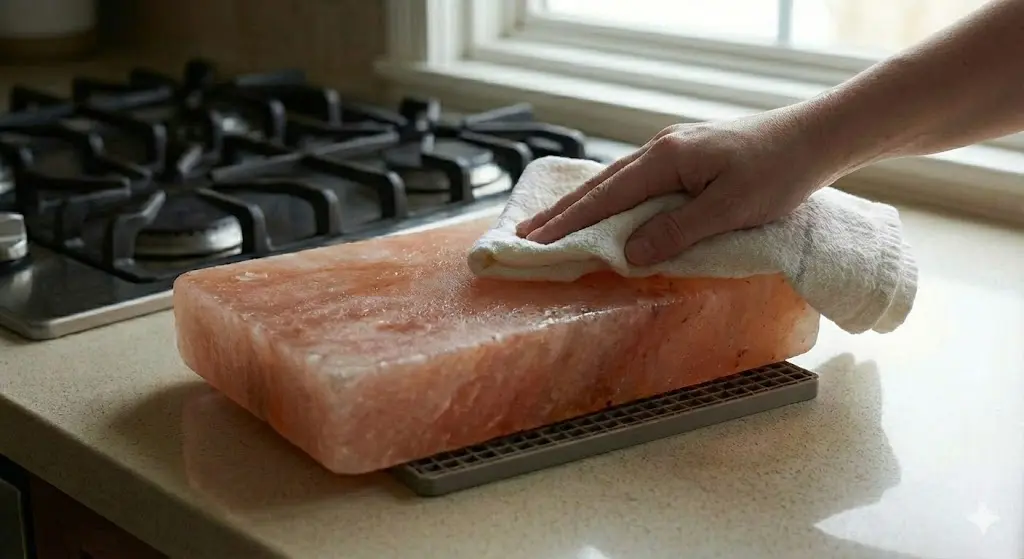
Salt blocks demand careful handling. They should never come into contact with running water, as moisture can dissolve or fracture the surface. Instead, allow the block to cool completely, then scrape away residue with a soft tool before air-drying. With consistent care, cast iron can last for generations, whereas a salt block gradually wears down and may need replacement after multiple heating cycles or accidental drops.
Versatility and Usage Scenarios
Cast iron’s reliability lies in its versatility. It performs seamlessly across cooking methods—stovetop searing, oven roasting, baking, or outdoor grilling—maintaining stable heat in any environment. This adaptability makes it a cornerstone of both professional and recreational cooking.
Salt blocks excel in specialized applications that emphasize presentation and subtle seasoning. They function as both a cooking surface and an elegant serving vessel for hot or cold dishes, enhancing the overall dining experience. The choice ultimately depends on intent: the practical range and durability of cast iron versus the refined visual and flavor advantages of pure Himalayan salt.
Frequently Asked Questions: Himalayan Salt Block vs. Cast Iron
Which material heats hotter and retains heat longer?
Cast iron reaches higher peak temperatures and sustains them longer. Salt blocks heat evenly but must warm gradually to avoid cracking. Once heated, both perform well for searing, though iron delivers the most consistent results under intense heat.
Which produces a better crust on steak?
Cast iron forms a firmer, more uniform crust because it tolerates sustained high heat. A salt block imparts mild salinity and a lighter crust but cannot reach or recover from heat spikes as efficiently as cast iron.
Which option is better for everyday cooking?
Cast iron excels in daily use. It suits all heat sources, handles varied recipes, and transitions seamlessly from stovetop to oven to grill. Salt blocks are best for distinctive dishes or presentation, not routine cooking.
How do the cleaning and maintenance requirements differ?
Salt blocks require careful handling—no water, only gentle scraping, followed by air drying. Cast iron needs periodic seasoning but can be washed or scrubbed when necessary. Over time, cast iron becomes easier to maintain, while salt blocks gradually wear down with use.
Can a salt block fully replace cast iron?
No. A salt block complements rather than replaces cast iron. It’s excellent for light searing and presentation but not for deep frying, baking, or high-volume cooking. For durability and versatility, cast iron remains the standard choice.
Final Thoughts
Both Himalayan salt blocks and cast iron pans excel in distinct ways, depending on the result you aim to achieve. A salt block offers refined presentation and a gentle, natural salt infusion that enhances ingredient flavor. Because it requires gradual heating and careful handling, it’s best reserved for specialty dishes or interactive dining experiences.
Cast iron, by contrast, provides consistent performance and resilience. It withstands high heat, supports every major cooking method, and endures for years with minimal upkeep. For most kitchens, it remains the reliable standard for searing, frying, and baking.
Ideally, integrate both tools into your cooking repertoire. The salt block adds artistry and subtle flavor complexity, while cast iron delivers everyday dependability and power—together creating a balanced, versatile kitchen lineup.
Experience the quality firsthand with our trial order – an easy way to test these high-margin products with just a $500 investment. Get in touch to start your trial order today!