Skip to content
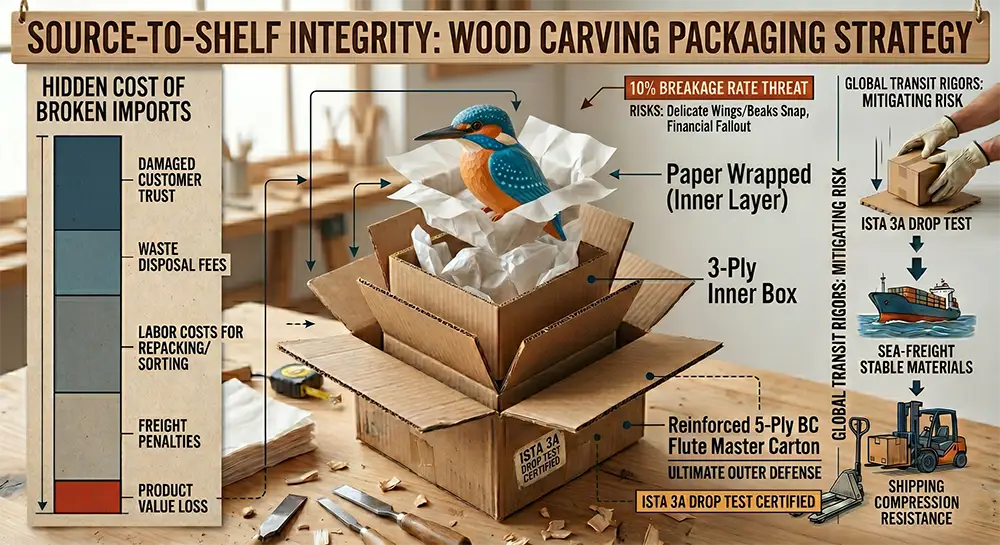
For B2B buyers and importers, shipping handcrafted wood carvings always comes with one big fear: arriving with broken beaks or snapped wings. In international wholesale, a 10% transit breakage rate doesn’t just mean losing damaged items—it eats your profit margins, triggers customer claim disputes, and delays seasonal retail launches.
To keep your wholesale inventory arriving in 100% intact condition, we build our export packaging around high-density 5-ply BC flute master cartons, rigid 3-ply inner protection boxes, and protective tissue wrapping. Every order is packed to meet strict international transit safety rules, fully compliant with ISTA 1A packaging drop test standards to ensure your inventory survives ocean freight and courier handling.
The Real Financial Impact of Shipping Damage
When a shipment arrives with cracked wood carvings, the loss goes far beyond the FOB unit cost of the item itself.
Where Broken Shipments Secretly Drain Your Profit
When container cartons collapse or inner boxes shift during sea freight, you face a ripple effect of hidden expenses that don’t show up until the shipment lands at your warehouse:
- Direct Replacements & Labor Costs: Issuing refunds or air-shipping replacement stock is expensive. Worse, your warehouse staff spends extra billable hours opening, inspecting, sorting, and documenting damaged master cartons.
- Logistics Bottlenecks: Damaged or non-standard outer packaging causes pallet instability. This leads to extra handling fees, repalletization charges at port warehouses, and potential demurrage delays.
- Retailer Dissatisfaction: If you supply boutique shops, garden centers, or e-commerce brands, delivering broken products destroys buyer trust and leads to cancelled repeat orders.
Preventing Damage at the Factory Origin
The most cost-effective way to avoid shipping loss is proper packaging engineering before the container doors close. We eliminate damage risks right on our factory floor in Jilin Province by controlling kiln-drying wood moisture levels (preventing transit warping) and enforcing multi-layer protective packaging.
All cargo is packed inside export-grade 5-Ply Master Cartons designed specifically for ocean humdity and heavy stacking. Our protective methods ensure your order passes rigorous ISTA drop tests, giving you total peace of mind from our factory floor to your warehouse shelves.
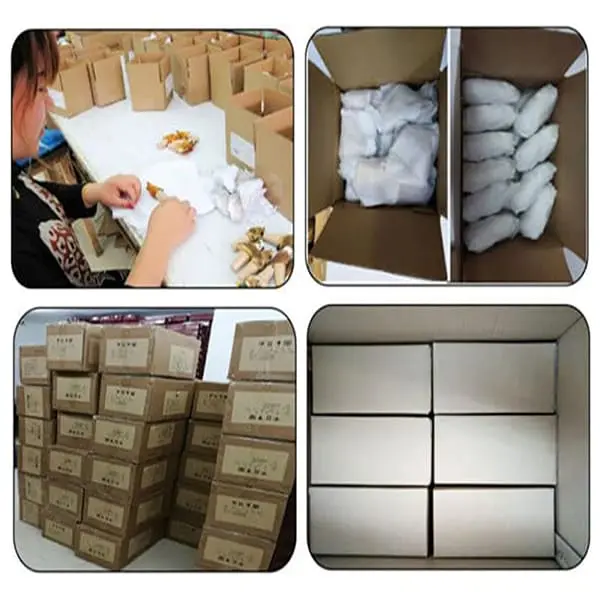
Protecting High-Risk Points: Wings, Beaks, and Paint
Hand-carved birds feature delicate extended wings, thin beaks, and fine tail feathers. Without dedicated inner support, these protruding details are the first to snap under pressure.
Why Standard Bulk Packing Fails Wood Sculptures
When wooden carvings are thrown loosely into a single box without inner division, vibrations during transit cause them to constantly grind against one another. The sharp tips of beaks can easily chip delicate tail feathers, while pressure from box compression snaps hand-carved wing joints.
Furthermore, rough cardboard rubbing directly against painted wood ruins hand-painted details, leaving ugly scuffs that make premium craft items unsellable at full retail price.
Silk Tissue & Inner Box Layering
To prevent point-to-point contact, every single carving is first wrapped individually in soft protective silk paper. This creates a non-abrasive barrier that protects delicate paintwork and absorbs micro-vibrations.
Wrapped items are then fitted securely into sturdy 3-ply inner white boxes (typically 2 pieces per inner box for 20cm birds). This double-cushion design ensures that even if an outer carton takes a hit, zero shock force reaches the wooden sculpture inside.
Looking for Reliable Hand-Carved Wood Supplies?
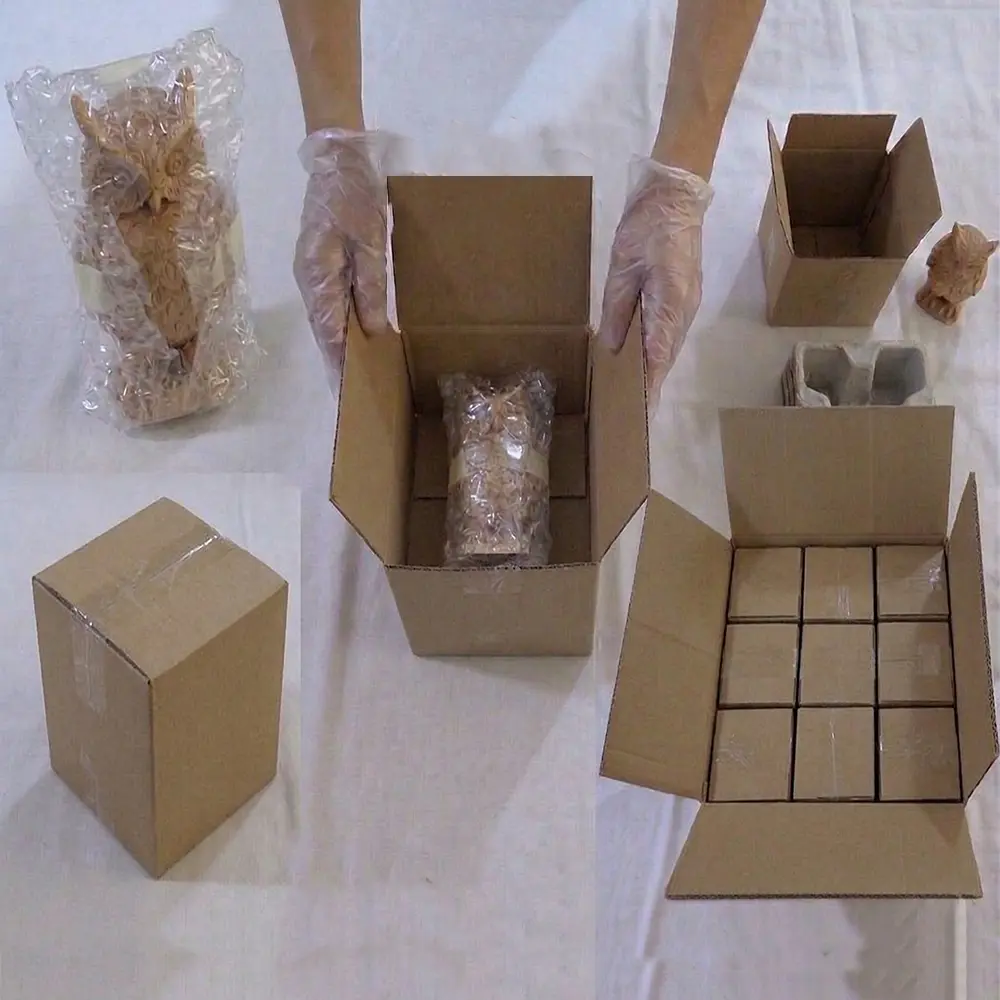
Engineered 5-Ply Master Carton Defense
We use reinforced 5-ply BC flute double-wall corrugated cartons to handle heavy stacking loads inside ocean containers.
Cheap single-wall boxes might save a few pennies during production, but they collapse when stacked 5–6 layers high in a sea freight container. Once the bottom box buckles, the entire pallet tips over. That’s why master carton engineering is a non-negotiable standard for our factory exports.
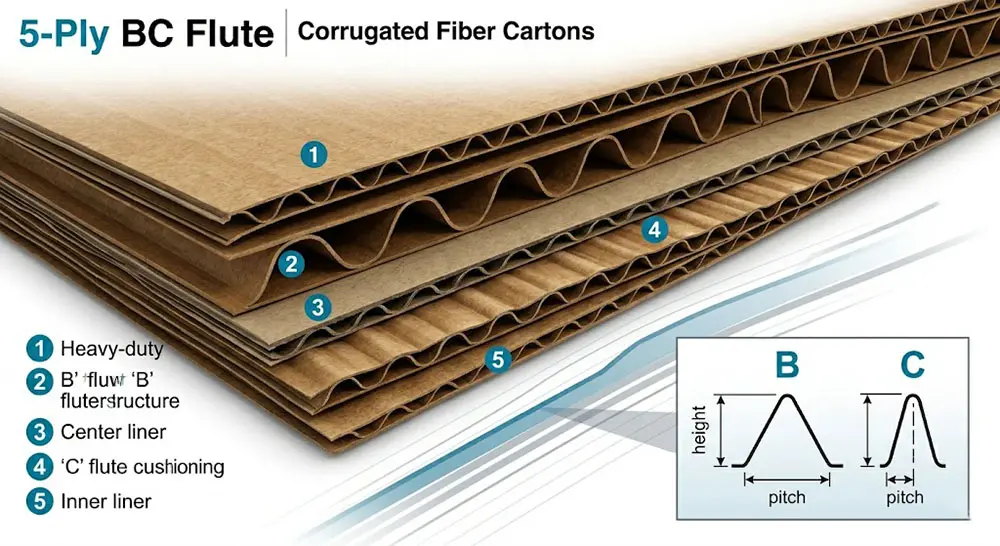
Anatomy of a BC Flute Double-Wall Carton
Our master cartons combine two different flute profiles to maximize both puncture resistance and vertical stacking strength:
- 5-Layer Composite Build: Features an outer liner, B-flute layer, middle liner, C-flute layer, and inner liner.
- B-Flute + C-Flute Synergy: The thick C-flute offers high compression resistance against heavy vertical weight, while the denser B-flute resists side punctures, box crushing, and corner impacts.
- Moisture-Resistant Finish: The outer Kraft linerboard is treated to withstand high humidity conditions during multi-week ocean transit.
Factory Standard Export Box Specifications
- Carton Type: Heavy-duty 5-Ply BC Flute Export Corrugated Carton.
- Gross Weight Limit: Strictly maintained between 6.0 kg and 15.0 kg per carton for safe manual handling and stack stability.
- Transit Safety Compliance: Engineered to pass standard drop tests and severe vibration simulations.
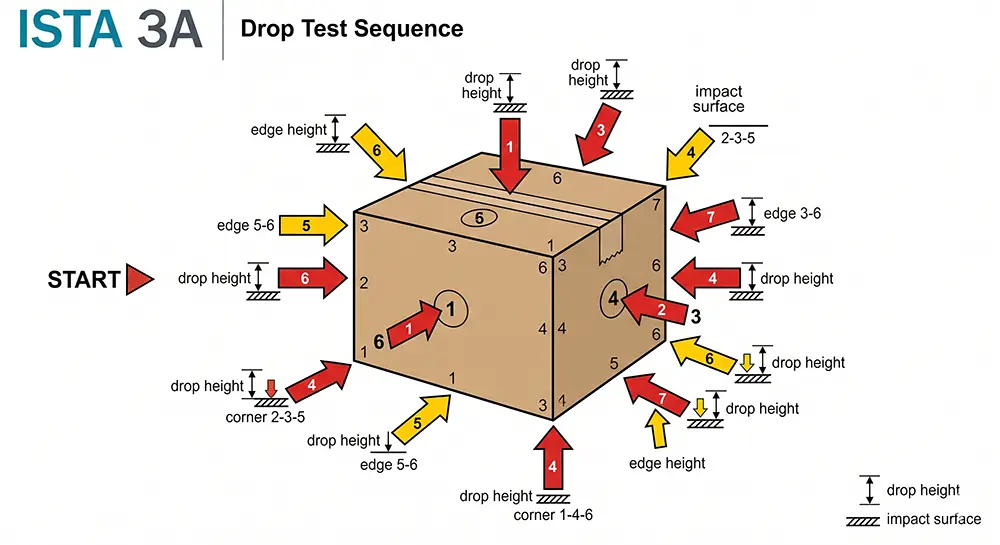
Passing Strict Drop Test Standards
Whether your order moves via full container sea freight or express parcel delivery, our drop-tested packaging keeps your wood carvings intact.
| Transit Stress Challenge | Our Packaging Protection Solution |
|---|---|
| Corner, edge, and flat surface impact drops during truck loading. | 5-Ply BC double-wall cartons absorb heavy impact forces, preventing box deformation. |
| Continuous engine & road vibrations during long-distance transit. | Individual silk paper wrapping and fitted 3-ply inner boxes hold each carving tightly in place. |
| Last-mile courier handling for e-commerce or small wholesale orders. | Complies with international ISTA transit packaging standards for express courier networks. |
Container Loading & Stowage Best Practices
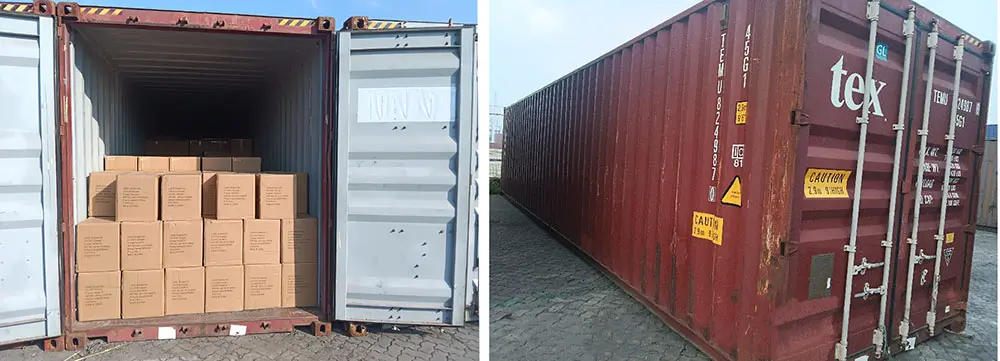
Even the strongest boxes can crush if improperly loaded inside a 20ft or 40ft container. Our loading crew follows strict stowage protocols to build stable cargo stacks:
- Bottom-Heavy Stacking: Heavier master cartons form the bottom base layers, while lighter cartons sit on top.
- Interlocking Brick Pattern: We avoid stacking boxes in straight vertical columns. Staggering the master cartons links the load together, preventing stacks from leaning or falling during ocean swells.
- Zero Gap & Airbags: Empty voids between pallets or carton walls are filled with dunnage bags or protective fillers, eliminating room for cargo to shift during transit.
Transparent Pre-Shipment Inspection & Claim Policy
We stand behind our factory quality. Before you pay the final balance, we provide full pre-shipment photo and video proof of your finished order.
Pre-Shipment Condition Reports
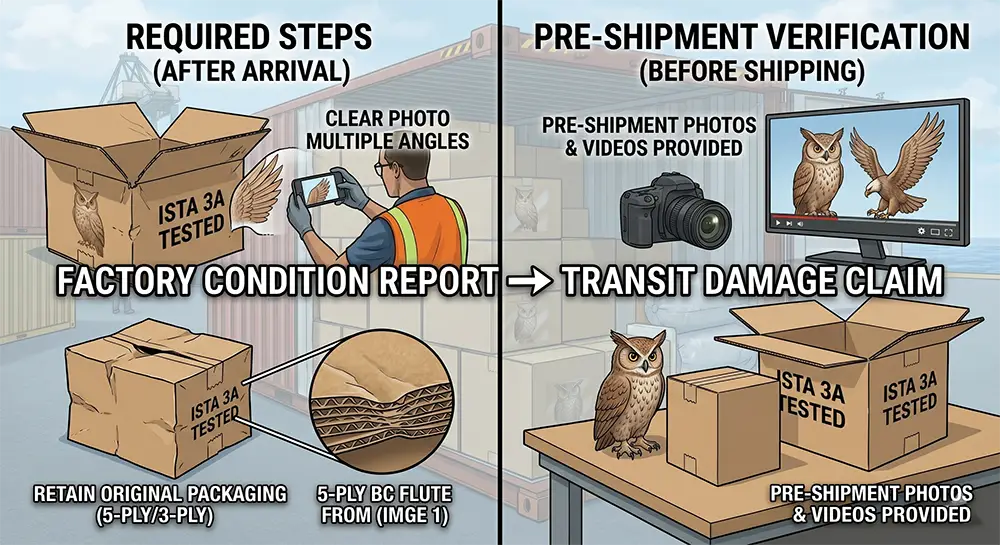
To eliminate disputes over whether damage happened in the factory or during ocean transit, our QC team inspects and records your finished batch before packing. You will receive high-resolution photos and video clips showing product finish, inner box packing, and final sealed master cartons with clear shipping marks.
Simple Steps for Transit Damage Claims
If extreme weather or carrier mishandling damages your shipment upon arrival, our claim process is straightforward:
- Photo & Video Inspection: Take clear photos and short video clips of the damaged outer master carton, inner boxes, and affected wood carvings immediately upon unsealing.
- Keep Original Packaging: Retain the 5-ply master carton and inner boxes for carrier inspection.
- Contact Our Sales Team: Send us the photos along with your bill of lading (B/L) or tracking number. We will work with you to arrange credit, replacements, or logistics claim processing.
Looking to explore our complete wholesale carving catalog? Browse our direct factory lines for Wholesale Owl & Eagle Wood Carvings or check out our main Wooden Bird Factory manufacturing capabilities.
Frequently Asked Questions
How do you protect fragile wood carvings during long ocean shipping?
We use a 3-tier protection system: individual soft silk paper wrapping, sturdy 3-ply inner boxes (typically 2 pieces per inner box), and heavy-duty 5-ply BC flute double-wall master cartons designed to withstand ocean humidity and vertical stacking load.
What is your Minimum Order Quantity (MOQ)?
For in-stock catalog designs, our minimum order quantity starts at 100 pieces (minimum order value $500). For full wholesale or custom OEM/ODM production runs, our MOQ is 300 pieces per design (minimum value $3,000) to optimize freight efficiency.
Are your wood materials legally sourced and certified safe?
Yes. We use premium, legally harvested Basswood, Pine Wood, and Birch Wood sourced from Changbai Mountain, accompanied by official logging permits and phytosanitary quarantine certificates. Our factory holds ISO 9001 and BSCI audits, and our water-based non-toxic paints comply with EN71, UKCA, and ASTM safety standards.
Can you provide custom retail packaging and private label barcodes?
Yes, we offer complete OEM retail packaging services, including eco-friendly Kraft boxes, white display boxes, custom color gift boxes, FNSKU barcode labeling, and hangtags. Custom packaging MOQ starts at 500 units.
How many 20cm wood carvings fit into a master carton?
Our standard factory packing rate for 20cm bird carvings is 48 pieces per master carton. Items are packed 2 pieces per inner box, with 24 inner boxes tightly arranged inside the 5-ply master carton.
Do you offer palletized shipping options?
Yes, we can supply standard heat-treated fumigated wooden pallets or plastic pallets upon request. Palletizing is highly recommended for large LTL (Less Than Container Load) shipments to simplify forklift handling and minimize transit wear.