Skip to content
Key Takeaways
- Choose wood for gift and children’s channels where warmth, craft, and drop-survival drive the sale.
- Reserve ceramic for premium adult decor where gloss and weight signal quality, not fragility.
- Factor material weight into freight; ceramic is roughly 3x denser than basswood and hits container weight limits.
A carved owl on a shelf is a carved owl, but the material it is made from quietly determines its price, its freight cost, its breakage rate, and the customer who buys it. Wooden animal carvings vs ceramic is not a question of which material is better; it is a question of which material fits which channel, which price point, and which customer. This guide compares wood and ceramic on the dimensions that actually move a retailer’s bottom line.
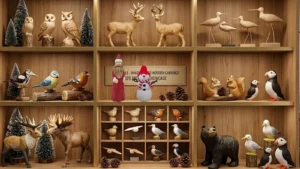
The two materials serve different segments of the same market. Wooden carvings dominate the gift, children’s, and eco-conscious channels where warmth, durability, and a natural story are the selling points. Ceramic figurines dominate the premium decor channel where gloss, weight, and perceived luxury command a higher price. The smart retailer stocks both, but in different ratios and in different parts of the store, and the ratios should be deliberate rather than accidental.
Shelf Appeal: Warmth vs Gloss
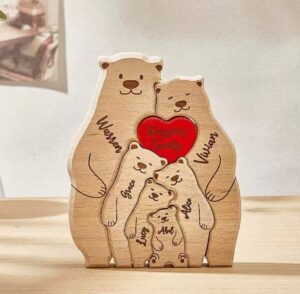
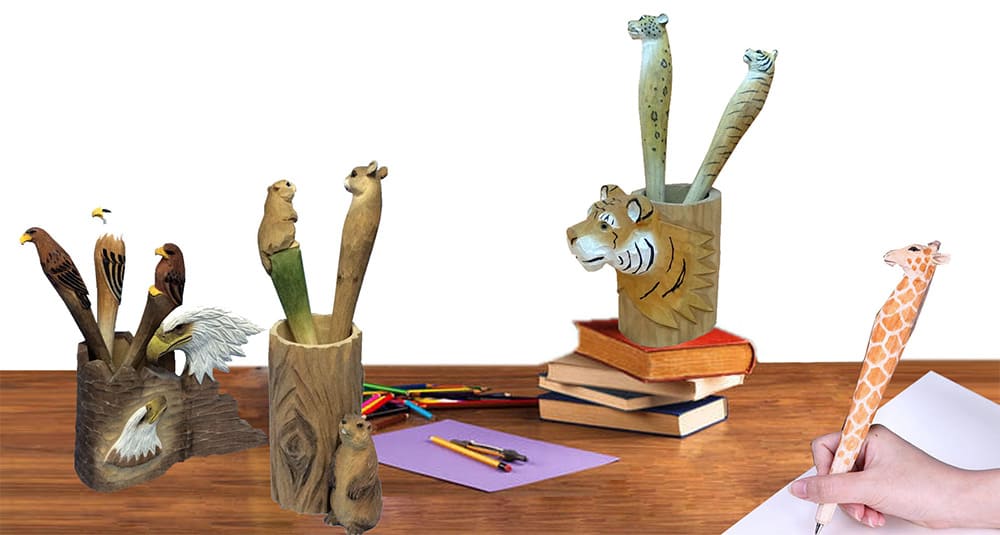
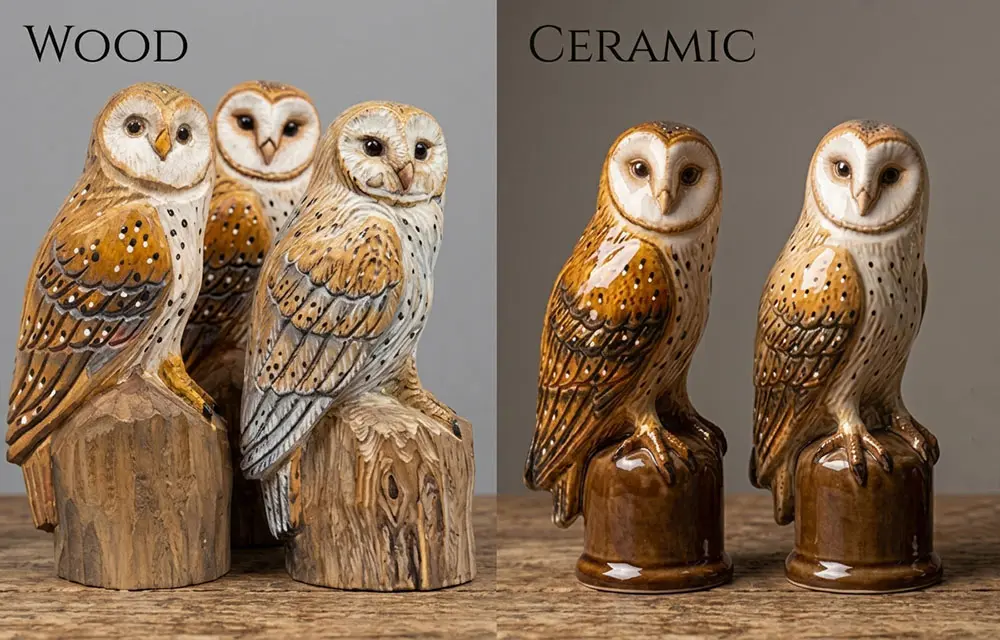
Wooden carvings appeal through warmth and texture. The visible grain, the tool marks, and the natural colour create a tactile, organic presence that invites the customer to touch the piece. Ceramic figurines appeal through gloss and precision. The smooth, glazed surface reflects light and creates a polished, manufactured look that reads as luxury. The customer who picks up a wooden carving is buying craft; the customer who picks up a ceramic figurine is buying finish. The retailer should merchandise wooden pieces in natural-light settings where the grain is visible, and ceramic pieces in spotlighted displays where the gloss catches the eye.
Weight & Freight: The Hidden Cost of Ceramic
Ceramic is roughly three times denser than basswood, and that density is freight cost. A container of ceramic figurines hits its weight limit long before it cubes out, leaving paid-for space unused. A container of wooden carvings cubes out before it hits the weight limit, spreading the freight across more sellable units. On a landed-cost basis, a wooden carving that appears comparable in FOB price to a ceramic one can land cheaper because the freight allocation per piece is lower. The buyer who compares FOB prices without factoring in freight is making an incomplete comparison. The wood carving factory should be able to provide both FOB and estimated landed-cost figures so the buyer can compare materials on a fair basis.
Breakage: Wood Survives, Ceramic Shatters
A dropped wooden carving dents. A dropped ceramic figurine shatters. Over a full season, the breakage rate on ceramic can meaningfully reduce the effective margin of the category. Wood’s survivability is the decisive economic argument for the children’s and gift channels, where products are handled, dropped, and shipped through rough last-mile networks. For the premium decor channel, where pieces sit on a shelf and are rarely handled, ceramic’s fragility is less of a concern and its gloss justifies the risk. The EN71 toy-safety standard adds an additional layer for products sold to children: ceramic shards are a hazard, and wooden pieces are easier to certify for the children’s market.
Margins & the Deliberate Mix
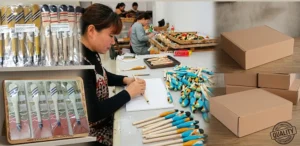
Build the animal figurine category as a portfolio. Stock wooden carvings as the reliable, high-turn core for the gift and children’s channels, and carry a small ceramic tier for the premium decor channel. The mix should be deliberate: a ratio of roughly 70% wood to 30% ceramic covers most channels, adjusted by the specific customer base. The portfolio logic protects the category against the material-specific risks: if a ceramic shipment arrives with breakage, the wooden core carries the category. If the wooden core faces price pressure, the ceramic premium protects the blended margin. Source the wooden core from a single wholesale wooden crafts programme, and treat ceramic as a targeted premium accent rather than a second core. The data from each season will tell you whether to shift the ratio. Verify the sourcing and the quality on a factory tour before committing to volume.

Channel Strategy for the Material Mix
The material mix should be matched to the channel. Gift shops and children’s stores should stock predominantly wooden carvings because the warmth, the drop-survival, and the craft story align with the customer’s purchase motivation. Premium home-decor stores and design showrooms should stock a ceramic tier because the gloss and the weight align with the customer’s expectation of luxury. Museum and zoo gift shops fall in the middle: wooden carvings for the children’s section, ceramic for the adult decor section. The wood carving factory should be able to supply both materials so the buyer can stock the right mix for each channel from one supplier relationship.
The channel strategy should also account for the online channel. Ceramic is heavier and more expensive to ship to consumers, which erodes the margin on direct-to-consumer orders. Wood is lighter and ships more economically, making it the better material for e-commerce. The buyer who sells online should weight the mix toward wood, while the buyer who sells primarily in-store can carry a higher proportion of ceramic. The data from each channel will tell you the right ratio. The buyers who track the data and adjust the mix will capture the full market; the buyers who guess will leave share on the table.
The material decision is ultimately a customer decision, and the data from each channel and each season will tell you what your specific customers prefer. The buyers who treat the material mix as a data-driven portfolio will outperform the buyers who treat it as a fixed catalogue. Start with the 70-30 ratio, track the sell-through, and let the customers tell you which way to lean.
The wooden-versus-ceramic decision is a portfolio decision, and it should be reviewed each season against the data. The buyers who track the breakage rate, the freight cost, and the sell-through by material will make better decisions than the buyers who rely on instinct. The market rewards the data-driven buyer, and the animal carving category is one of the most data-rich categories on the shelf. The data is available, the suppliers can supply both materials, and the customer preference is measurable.
The only remaining variable is the buyer who decides to treat the material mix as a managed portfolio rather than a fixed catalogue. The buyers who make that decision will own the category in their market, and the data from each season will tell them exactly how to adjust the mix.
Frequently Asked Questions
Which material is better for the gift channel?
Wood. It is warmer, more tactile, and survives drops. Ceramic is better suited to the premium decor channel where fragility is less of a concern.
Why is freight more expensive for ceramic?
Ceramic is roughly 3x denser than basswood. Containers hit weight limits early, leaving paid-for space unused and raising the per-unit freight cost.
Can wooden carvings match ceramic’s luxury feel?
No, and they should not try. Wood sells warmth and craft; ceramic sells gloss and precision. The two materials serve different customers at different price points.
What is a good ratio of wood to ceramic?
Roughly 70% wood to 30% ceramic for most channels. Adjust by customer base, and let the breakage and sell-through data guide the ratio each season.
Is wood easier to certify for children’s products?
Yes. Wooden pieces meet EN71 requirements more easily than ceramic, which creates sharp shards when broken and is harder to certify for the children’s market.
Build a Material-Balanced Animal Figurine Range
Source wooden carvings as the durable, warm core and ceramic as the premium accent, with deliberate ratios and channel-specific merchandising.
Explore the Carving Factory →