Skip to content
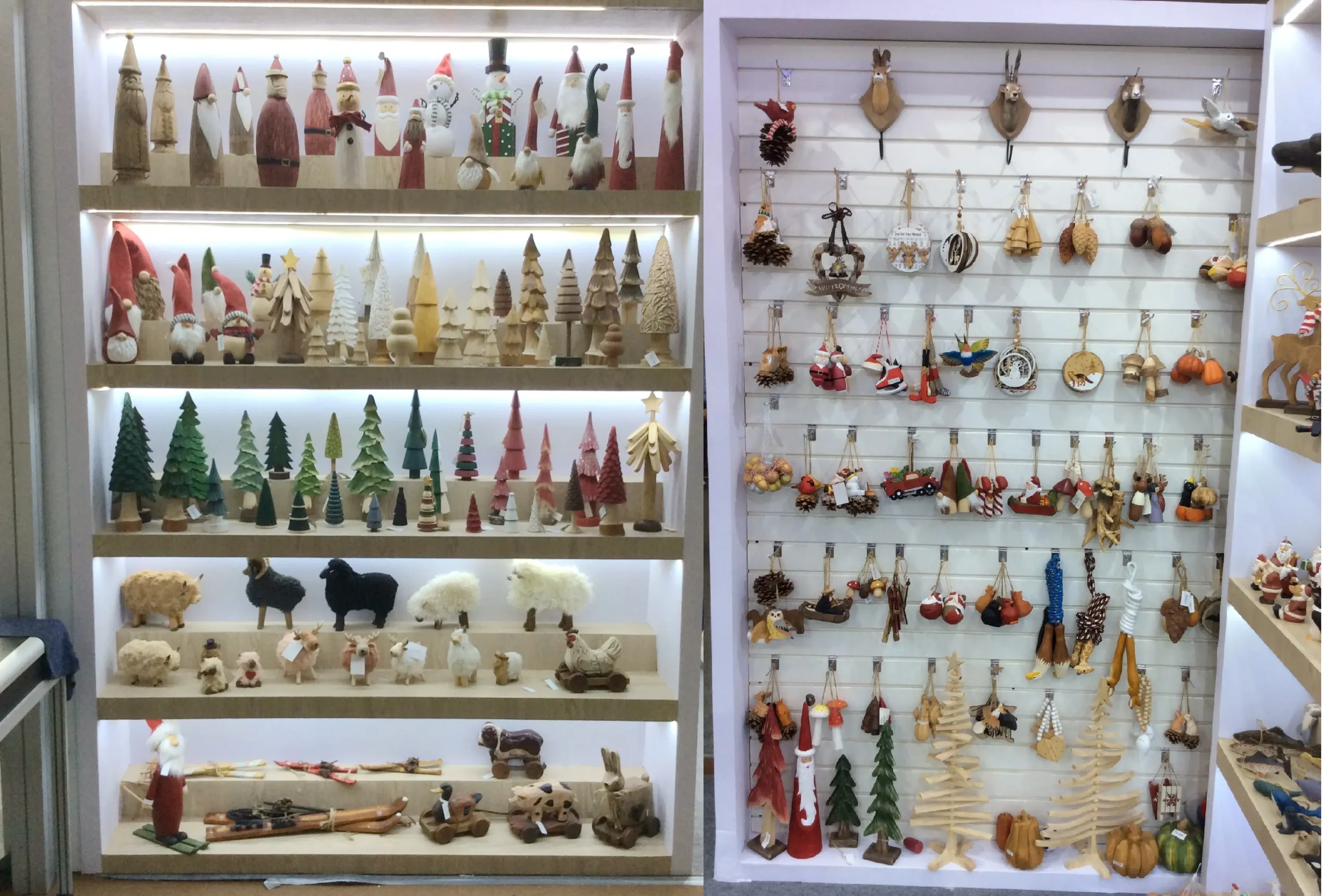
Mastering moq negotiation strategies wooden gifts is not about haggling over a number — it is about trading certainty. The standard custom run at Ewoodarts is 300 units per design, a floor set by setup economics on carving, finishing and packing lines; the buyer who cannot reach 300 on one design still has real routes, because every route that lowers your risk also hands the supplier something worth having: repeat commitment, consolidated shapes, shared blanks or earlier calendar placement. This guide maps the tactics that actually move minimums on wooden gift programmes and, just as useful, the approaches that look like negotiation and only waste the meeting.
Key Takeaways
- MOQ binds a design, not an order. Eight shapes on one purchase order are eight commitments; consolidating to fewer designs at deeper quantities is the first lever, and the biggest.
- Certainty beats volume. A written reorder commitment, an annual programme slot or a shared-blank decision all trade against the minimum because they cut factory risk, not just unit count.
- Personalisation is the MOQ cheat code. One carved blank personalised ten ways is one design to the line and ten products on your shelf.
- Calendar position is negotiating power. Placing orders into shoulder-season capacity earns flexibility that the same buyer cannot get in September.
- Samples convert. A paid sample approved on the spot frequently becomes the opening run at negotiated terms; the sample stage is the conversation to have.
- Some minimums will not move. Paint-mixed colours, custom sculpts and printed gift boxes carry setup costs no negotiation removes — plan the assortment around them instead.
Why MOQ Exists on Wooden Gifts
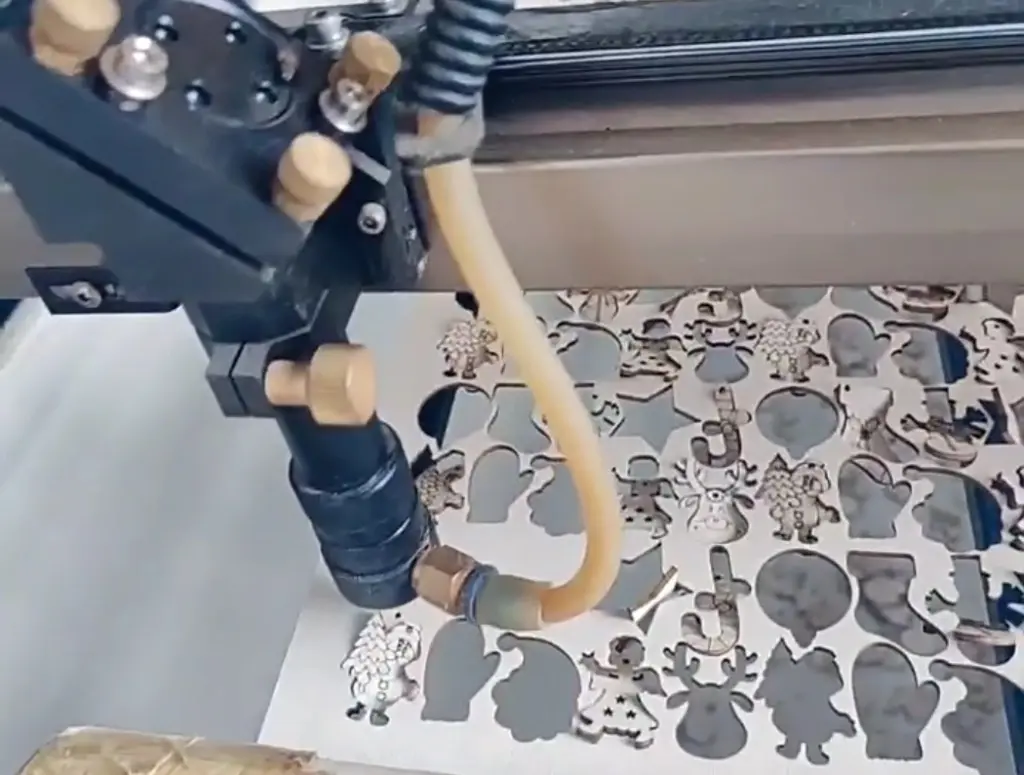
A custom wooden gift run restarts several lines for your design specifically: cut files or sculpt models get prepared, colour batches get mixed for the exact palette, packing lines get set for the box or card you chose, and inspection standards get written against your golden sample. At 30 units those setups happen just as completely as at 3,000, which is why small runs only make sense when the price reflects the setup — or when the supplier already holds some of it. The construction difference between hand-carved and laser-cut work matters here too: laser setups are digital and cheap to amortise; sculpt development is human and slow. A number agreed once becomes the reference for the whole catalogue, which is exactly why suppliers hold it. One quiet mechanism works in the buyer-side favour inside that rigidity: consolidation across the order. Factories can often combine several SKUs that share a blank, a colour batch or a card format into one production block, so a six-SKU order can clear as three compliant runs rather than six short ones — if the buyer asks in that language instead of per line item.
The Six Levers That Actually Move a Minimum
- Consolidation: fewer designs, deeper each — the arithmetic lever.
- Commitment: a written reorder schedule trades future certainty for present flexibility.
- Sharing: catalogue shapes personalised per client combine many buyers into one compliant run.
- Calendar: shoulder-season placement uses idle line time.
- Sample-to-run conversion: approving a sample with the order conversation already open.
- Programme framing: an annual gifting programme (corporate client gifts, retail seasonal resets) is worth more to a supplier than one isolated order — programme terms beat per-order terms.
Tactic Table: What You Trade and What You Get
| Tactic | You Give | You Get | Best When |
|---|---|---|---|
| Design consolidation | Assortment breadth at launch | Standard terms on fewer, deeper SKUs | First orders with 6+ desired shapes |
| Shared blank + personalisation | Full-custom silhouette ambitions | Many logo-client products from one compliant run | Corporate gifting services and engravers |
| Written reorder commitment | Flexibility to switch supplier mid-year | Smaller opening quantity on proven designs | Year-two SKUs with real sales history |
| Shoulder-season placement | Speed — decisions made months early | Slot priority plus MOQ give on new shapes | Christmas, Easter and holiday lines |
| Colour consolidation | Full palette per shape | Variant-count relief — one paint line, shared batch | Painted and printed gift tiers |
| Annual programme framing | Purchasing order-by-order | Programme terms covering all four seasons | Multi-category retailers and gift-box sellers |
Structuring the First Order Around 300
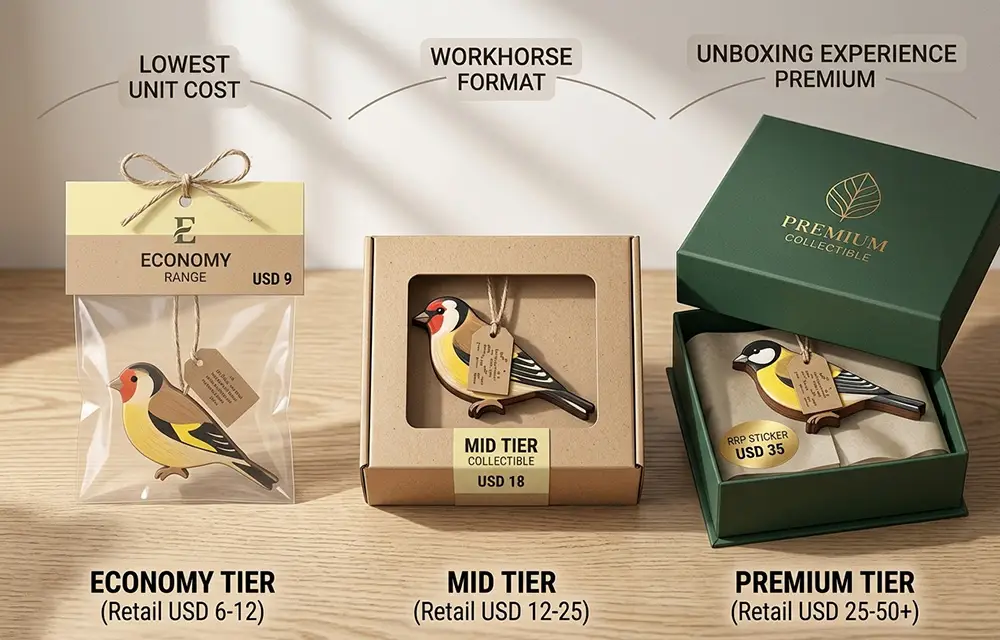
A workable opening structure for a custom wooden gift programme: two proven catalogue shapes at standard terms as the volume base, one personalised shared-blank item for the corporate channel, and one small-batch experimental shape paid as a development run — accepting its higher per-unit cost as the price of learning. That mix reaches the factory as two design commitments plus a sample pipeline, and reaches the market as five to seven sellable products. Deeper decisions belong to the reorder, made with real sales data instead of hope. Illustrative walk-through: a homeware chain wants six animal shapes for a gift wall. Structure that reaches the factory as compliant depth is three shapes at standard quantity — the three proven sellers from comparable lines — one shared blank engraved four ways for the store label, and the remaining two ideas paid as a development sample pair reviewed at the spring appointment. Six shelf stories, two real design commitments, zero broken minimums. The unit-cost logic behind the mix is in the MOQ and unit-cost guide.
Running the Negotiation Conversation
Bring structure, not pleading. The effective brief says: here is the annual programme calendar, here are the shapes at standard terms, here is the one I cannot reach yet and here is what I am offering against it. Ask the supplier to quote the same design at three quantities — the curve usually reveals a knee where the extra flexibility stops costing the factory anything, and that knee is the real negotiable floor. Keep the request single-threaded: a buyer asking for MOQ relief, faster lead time and better payment terms in one email gets none of the three. Whatever the meeting concludes, write it back the same day — one page, the agreed quantities, the trade given for them, and the date the terms were set. Negotiations that live only in inbox threads get re-litigated at every reorder; a signed recap turns year-two ordering into paperwork.
Where custom development and design ownership enter the deal — whose files, whose sculpts, whose exclusivity — read the terms in the custom design IP protection guide before conceding volume for exclusivity.

When Not to Push the MOQ
Three cases where pressing the minimum costs more than it saves. Paint-specific colours: every custom batch is mixed and tested for the destination standard, and the minimum is what keeps that cost honest. Fully custom sculpts: the development hours are real labour; a reduced run on a new sculpt is a discounted development project someone else will fund badly. Printed gift boxes with new artwork: plate and die setup is a fixed cost whatever the quantity — run the box at its own minimum and reuse the format across the year rather than stretching the ornament side to compensate. The strategic point across all three: a minimum that protects a real fixed cost is information, not obstinance — read which cost the number is defending and design the assortment to share it.
If you have a gift programme you want to place and the shapes do not yet reach standard quantities, send us the assortment plan — our team can map which items fit programme terms and which need consolidation first.
Frequently Asked Questions
What MOQ applies to custom wooden gifts?
The standard custom run at Ewoodarts is 300 units per design. Colours of one shape run as one design on a shared paint line; new shapes, new sculpts and new printed-box formats are separate commitments.
What is the easiest way to negotiate MOQ down?
Consolidation first — fewer designs at deeper quantities. Then trade something the factory values: a written reorder commitment, a shared catalogue blank with your engraving, or shoulder-season placement into idle capacity.
Do suppliers concede MOQ near Christmas?
Usually the reverse — peak-autumn capacity hardens minimums and slots. The give is in spring and early summer planning conversations, when a committed order fills lines that are otherwise idle.
Is a sample order the same as a low MOQ?
No — a paid sample is a one-piece-to-ten-piece approval step. Its value in negotiation is timing: an approved sample with an order discussion already open converts more easily to eased opening quantities than a cold request later.
When is MOQ immovable regardless of relationship?
Custom-mixed paint colours, entirely new hand-sculpted forms, and printed gift-box formats with new plate work. Setup and compliance costs there are real and fixed; design the assortment around them instead of around a discount.
Sources
Trade-term context for who carries freight and risk at each MOQ decision: ICC Incoterms rules. For finish-safety documentation on painted gifts, see the site guide on EN71 non-toxic paint.