Skip to content
Custom printed wooden ornaments sit in an unusual corner of corporate gifting: they are cheap enough to give to a whole client list, personal enough to be kept, and branded enough to be seen again every year the recipient puts them up. That combination is why they outlast most promotional items, and it is also why the branding decision matters more than the product decision.
The branding question is not “can you print our logo” but “where should our logo live”. On a hand-carved piece the surface is small, curved and already carrying paint detail, so the brand often belongs on the insert card, the hang tag or the box rather than on the carving. This guide sets out the two levels, what each costs in flexibility, and the budget rule that shapes most corporate gift programmes.
Key Takeaways
- Brand application happens at 2 levels — on the piece where the surface allows, or on the insert card, hang tag and box — and which applies is decided at sample stage.
- A personalized ornament is custom work: 300 pieces at a USD 3,000 minimum order value, sea freight, 60–90 days to port. The 100-piece USD 500 trial tier covers in-stock designs only.
- US tax law caps the deductible business gift at USD 25 per recipient per year, which is the figure most corporate gift budgets are quietly built around.
- Our carving range runs 5 cm to 40 cm in three dimensions and to 80 cm flat, so a branded ornament can be a tree-hanging piece or a desk object.
- Packaging carries the brand when the piece cannot: custom colour boxes from 500 pieces, with custom labels and marks available below that quantity.
- Moisture is held at 8–12% before finishing so a branded piece does not move after it reaches a heated office or home.
In This Guide
- Why Wooden Ornaments Land in Corporate Gifting
- Custom Printed Wooden Ornaments: The Branding Routes
- Piece-Level Against Packaging-Level Branding
- The Budget Question and the 25-Dollar Rule
- Branding Routes Compared
- MOQ, Lead Time and the Ordering Calendar
- Best For / Not For
- What We Check on a Branded Run
- End to End: One Corporate Ornament Order
- Frequently Asked Questions
Why Wooden Ornaments Land in Corporate Gifting
Most promotional items are discarded because they have no occasion to return. An ornament has one built in: it goes back on a tree or a shelf each year, in front of the same household. A brand placed on it is seen annually rather than once, which is the entire economic argument for choosing it over a pen or a mug at a similar unit cost.
There is a second reason the category persists in corporate programmes: the ornament is one of the few branded items whose recipient chooses to display it. A logo on a desk object competes with the owner’s own things; a logo on a tree joins a display the household curates, which is a materially different kind of exposure.
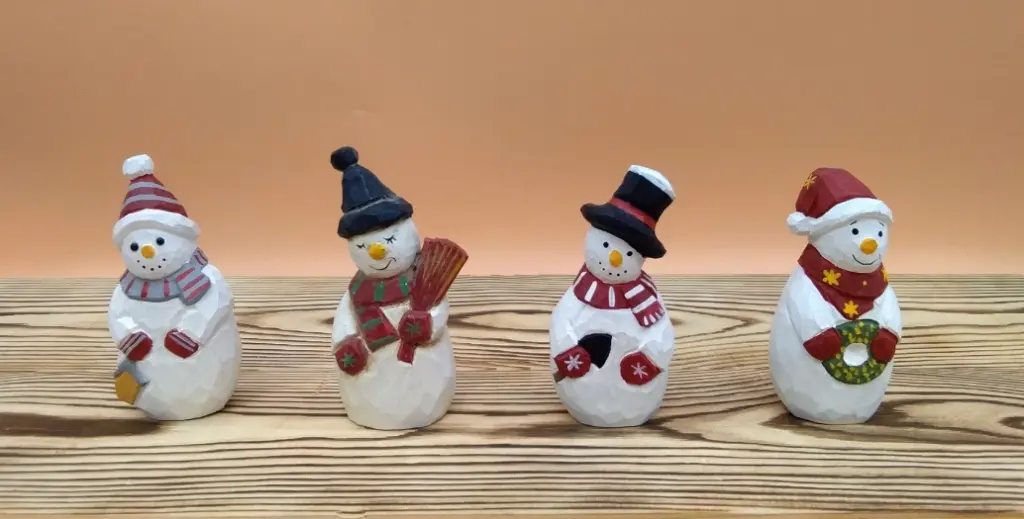
Wood suits the role because it reads as a gift rather than as merchandise. A carved piece in basswood, pinewood, rubber wood or birch, painted by hand, is handled differently from a moulded plastic item with a printed logo, and that difference is what keeps it out of the drawer. The trade-off is that the same hand-finished surface that makes it feel like a gift also limits how much branding it can carry.
Custom Printed Wooden Ornaments: The Branding Routes
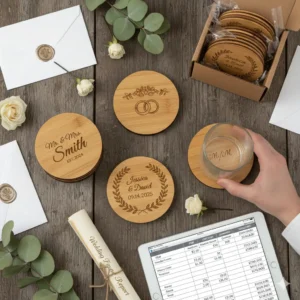
Three routes exist and they are not interchangeable. Engraving cuts the mark into the wood and reads as permanent and restrained; it suits a logo or a short line and works best on a flat or gently curved face. Printed decoration lays colour onto a prepared face and can carry multi-colour artwork, but it sits on top of the paint scheme and has to be designed with it rather than added to it. Packaging-level branding leaves the piece untouched and puts the mark on the insert card, hang tag or box.
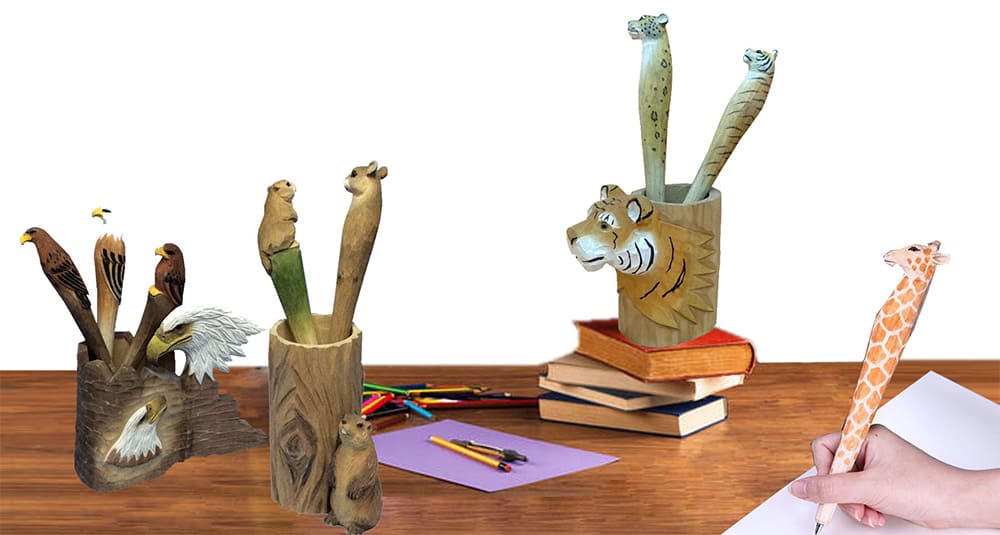
Which route a design can take is a property of the design, not of the catalogue. A fully carved three-dimensional bird has little flat surface and usually ends up branded at packaging level; a flat cut ornament has a clean face and takes engraving or print well. That is why the route is settled against a sample of the actual piece, and why a supplier who promises “printed ornaments” without asking to see the design is guessing. The wider custom route is described in custom product manufacturing.

Piece-Level Against Packaging-Level Branding
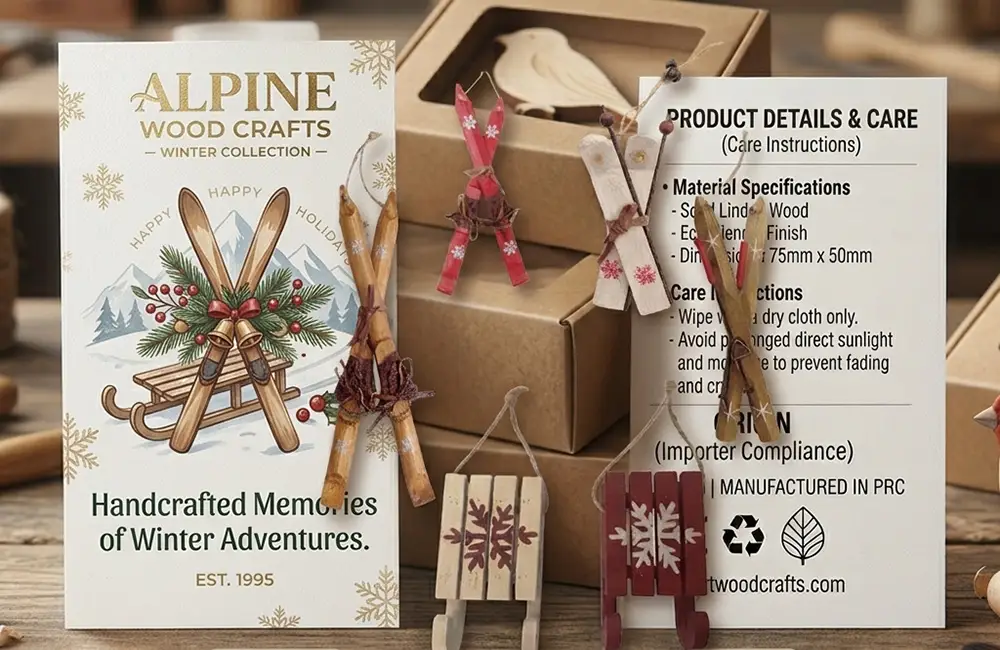
Packaging-level branding is often treated as the fallback and it deserves better than that. An insert card carrying the logo, a message and the year travels with the piece into the recipient’s home and is read at the moment of opening, which is the highest-attention moment in the whole gift. A hang tag with a barcode and retail-facing information also lets the same ornament be sold through retail later without the corporate mark on the carving itself.
The practical split is this: piece-level branding makes the object itself the advertisement and is permanent; packaging-level branding makes the opening moment the advertisement and keeps the object neutral. Programs that want both usually engrave a small mark and carry the full message on the card. Insert cards, hang tags and gift boxes are covered in our guide to ornament retail packaging.
The Budget Question and the 25-Dollar Rule
Corporate gift budgets in the United States are shaped by a tax rule more than by anyone’s taste. The Internal Revenue Service limits the deduction for business gifts to USD 25 per recipient per year, published in its guidance on business expenses at IRS Publication 463. Whether a programme is planned around that figure is a question for the giver’s tax adviser, but it explains why so many corporate gifts cluster just under a price point and why a gift that exceeds it needs a different justification.
Two consequences matter for a buyer of branded ornaments. First, the per-recipient ceiling makes unit cost and packaging cost the variables that decide whether a programme fits, which is exactly where the tier and carton configuration choices bite. Second, the treatment of incidental costs such as engraving and packaging is a tax question with its own nuances, so it belongs to the adviser rather than to this guide or to us. What we can state is our own commercial structure, below, so the arithmetic can be done honestly.
Branding Routes Compared
| Route | Best surface | Carries | Limit |
|---|---|---|---|
| Engraving on the piece | Flat or gently curved face | Logo, short line, year | No colour; small area on a carved form |
| Printed decoration | Prepared flat face | Multi-colour artwork | Must be designed with the paint scheme |
| Insert card / hang tag | Any piece, including fully carved | Full message, logo, year, barcode | Brand is not on the object itself |
| Branded box | Any piece | Full brand presentation at opening | Custom colour boxes start at 500 pieces |
MOQ, Lead Time and the Ordering Calendar
A branded ornament is by definition not an in-stock design, so it belongs on the wholesale and custom tier: 300 pieces with a USD 3,000 minimum order value, sea freight, 60–90 days to port, with full OEM and ODM service. The trial tier of 100 pieces at a USD 500 minimum order value, air express DDP in 20–30 days, is limited to in-stock designs and so cannot carry a corporate mark on the piece — though an unbranded in-stock trial is a legitimate way to test the form before committing the branded run.
Corporate gifting is date-driven, usually to a holiday or an event, and 60–90 days to port excludes sea transit, clearance and inland delivery. Working back from the gift date, the branding route and the artwork file have to be settled and a sample approved months ahead. Payment is T/T at 30% deposit and 70% before shipment, with photographs and video of finished goods supplied before the balance falls due. Custom colour boxes are made from 500 pieces; below that, custom labels and marks are the route. Our ornament capability and range sit on the wooden ornaments wholesale page.
Best For / Not For
| A branded wooden ornament suits | It does not suit |
|---|---|
| Annual client programmes where the piece returns each year | One-off campaigns with no recurring occasion |
| Programs planned months ahead of the gift date | Short-notice gifting, since sampling and sea freight cannot compress |
| Brands comfortable with packaging-level or small engraved marks | Anyone needing a large full-colour logo on a carved 3D form |
| Orders at or above the 300-piece custom minimum | Lists below 300 recipients, unless bought across programmes |
What We Check on a Branded Run
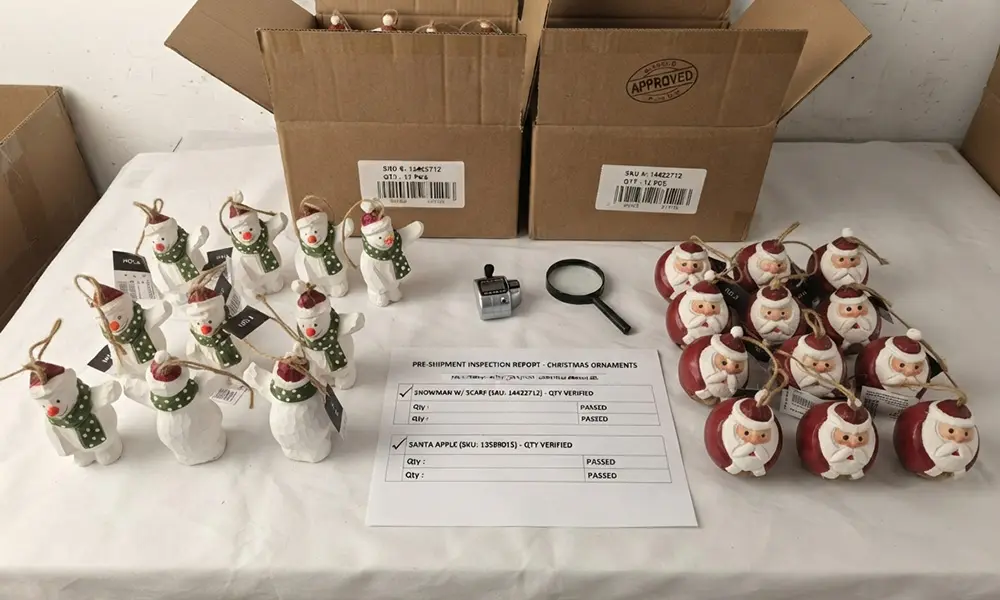
- The mark against the artwork file. Every piece is checked against the approved file, because a logo cut or printed into a finished piece cannot be corrected without refinishing the surface.
- Route suitability on the actual design. Engraving, print or packaging-level is confirmed against a sample of the real piece, not against the product family.
- Moisture before finishing. Timber dried to 8–12% so a branded piece does not move in a heated office or home — the standard is in our guide to wood moisture content.
- Batch consistency against a retained sample. A corporate run is seen as one gift programme, so drift across it is visible when recipients compare.
- Claims limited to what we hold. CE, UKCA, RoHS, EN71 where the article applies, BSCI and ISO 9001. Our facility holds an FSC chain-of-custody certificate, but certified basswood is not currently available to us, so our carvings are not marketed as FSC-certified wood; we supply official timber felling and transport permits. The factory behind the run is described on our wood carving factory page and at ewoodarts.com.

End to End: One Corporate Ornament Order
A professional services firm wants a branded ornament for 260 clients ahead of the holiday season and asks for a quote against a logo file.
Test the quantity and the route together. 260 recipients sits below the 300-piece custom minimum, so the firm either extends the list to staff and prospects or accepts a smaller branded run plus an unbranded remainder. At the same time the logo is tested against the chosen form: a fully carved bird has no clean face, so the mark goes on an engraved base plate or moves to the insert card.
Sample before the calendar closes. One sample is made with the real artwork file and the real packaging, approved and retained. Working back from the gift date, this has to happen months out because production runs 60–90 days to port before transit and clearance.
Order, then read the programme. The run is placed at 300 pieces with a USD 3,000 minimum order value, sea freight, 60–90 days to port, with 30% deposit and photographs and video of finished goods before the 70% balance. Because 300 pieces is below the 500-piece custom colour box threshold, the brand is carried on an insert card and printed labels rather than a bespoke box. Recipients who mention the ornament the following year are the only measurement that matters, and the wider gifting range behind next year’s programme is in our wholesale wooden crafts guide.
Planning a branded ornament programme?
Send us the logo file, the recipient count and the gift date. We will tell you which branding route the design can actually carry, whether the quantity clears the custom minimum, and when the sample has to be approved for the date to hold.
Frequently Asked Questions
Q: Can you print a full-colour logo on any ornament?
No. The route depends on the design’s surface. A flat cut ornament takes print or engraving well; a fully carved piece has little clean face and usually ends up branded on the insert card, hang tag or box. We confirm the route against a sample of the actual piece, not from a logo file.
Q: What is the minimum order for branded ornaments?
300 pieces with a USD 3,000 minimum order value, because a branded ornament is custom work and the 100-piece USD 500 trial tier is limited to in-stock designs. A list below 300 recipients is usually solved by extending the programme to staff and prospects, or by buying across several occasions in one run.
Q: Why do corporate gift budgets cluster around 25 dollars?
Because US tax law caps the deductible business gift at USD 25 per recipient per year, as published in IRS Publication 463. Whether a programme is planned around that figure is a question for the giver’s tax adviser, and incidental costs such as engraving and packaging have their own nuances. It explains the price point most programmes sit at.
Q: How far ahead of the gift date should we order?
Count back from the date, not forward from the order. Production on the custom tier is 60–90 days to port, excluding sea transit, clearance and inland delivery, and a sample against the real artwork file must be approved first. For a holiday programme the realistic ordering point is early in the second half of the year.
Q: Can the same ornament be sold through retail later?
Yes, if the brand is kept off the carving. A mark engraved or printed on the piece makes it a corporate item forever; a mark on the insert card or hang tag leaves the object neutral, and a barcoded hang tag lets it move through retail afterwards. That choice has to be made before the run, not after.