Skip to content
Key Takeaways
- A corporate bulk ornament order is 3 contracts in one: the piece specification, the logo-area specification and the colour-fastness specification; each fails independently and each needs its own gate.
- Logo area is a physical budget, not a design wish: across our 4 main shapes, a one-line mark fits most flat panels, a mark plus date fits 3 of the 4, and a full dedication fits none without moving to the box.
- Colour fastness is tested where the ornament lives: client offices cycle daylight and heating, so the fastness gate runs a 2-step light and wipe cycle before the run, not a datasheet after it.
- Batch uniformity is the corporate risk: a client gift programme ships to many desks on one day, so finish and mark depth are checked against 1 approved first article across the whole run.
- Quantities follow the published tiers: proof at 100 pieces and a USD 500 minimum order value, programme volume at 300 pieces and a USD 3,000 minimum order value, kitted boxes from 500 pieces per reference.
- Lists freeze at order date: names, dates and client marks are reconciled line by line against 1 packing sheet before boxing, because a personalised corporate piece never opens its box twice.
Bulk wooden ornaments for corporate client gifts sit at the intersection of two demanding specifications: a gift programme that must look identical on five hundred desks, and a brand mark that must survive years of daylight beside a monitor without fading or chalking. Neither demand is unusual alone; together they turn an ornament order into three contracts, covering the piece, the logo area and the colour fastness, each with its own approval gate and its own failure mode. This guide walks those three contracts in order, states the physical budget behind each, and ends with the list-freeze and kitting discipline that keeps a personalised corporate programme reconcilable at packing.
Scope note: this page covers the ornament body and its mark; seasonal window planning and festive retail framing live in separate articles, and the print-method detail for branded ornaments sits in our custom printed corporate ornaments guide.
In this guide
- Why One Order Is Three Contracts
- Bulk Wooden Ornaments Corporate Desks Actually Keep
- Logo Area: The Physical Budget
- Colour Fastness: Test Where the Ornament Lives
- Batch Uniformity Across Five Hundred Desks
- Contract Table: Spec, Gate, Failure Mode
- Kitting and the List Freeze
- What We Supply Into Corporate Programmes
- Which Format Fits Which Programme
- What We Check Before a Bulk Order Ships
- End to End: A Firm’s Client Gift Year
- FAQ
Why One Order Is Three Contracts
A corporate gift buyer signs for three outcomes without always naming them: the piece must feel like a gift rather than a giveaway, the mark must read at arm’s length for years, and every unit in the programme must match the approved sample because the programme lands on many desks in one week. Those outcomes are produced by three different specifications, and a quotation that blends them into one line hides which gate was skipped when one fails.
Treating them as three contracts also fixes the approval order: piece first, because the blank decides the logo area; logo area second, because the mark method decides the fastness test; fastness third, because the test result can send the method back to the drawing.
Bulk Wooden Ornaments Corporate Desks Actually Keep
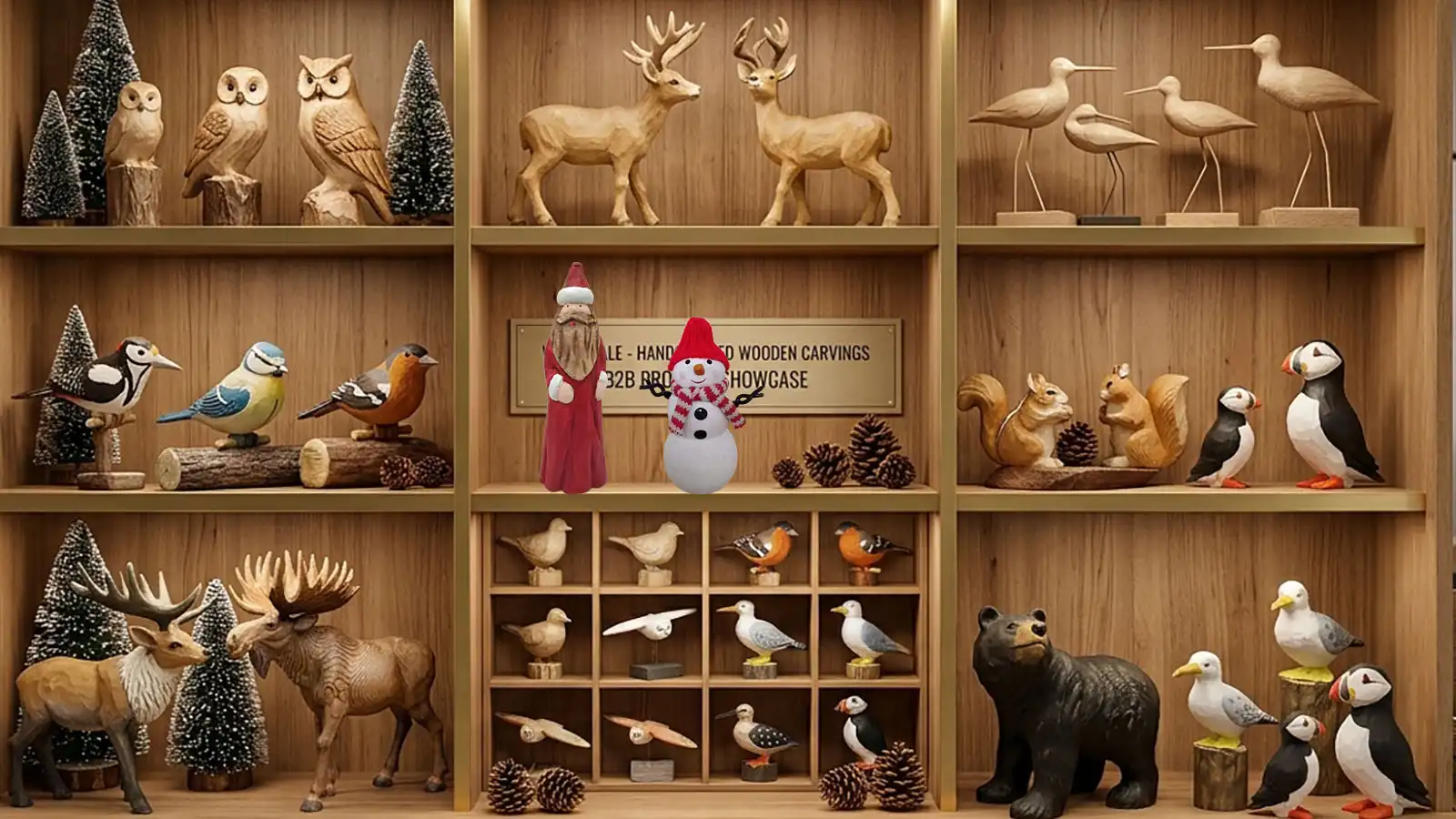
The pieces that survive on client desks share three traits: a stable carved form with no fragile projections, a finish that reads as craft rather than paint, and a hanging or standing option that fits both a tree and a shelf. Carved animal and bird forms in natural or lightly tinted finish dominate corporate keep-rates because they photograph well in annual reports and never clash with office decor.
Forms with thin projections or glued layers can still serve corporate programmes, but they belong on the shelf-facing gift line rather than the desk-facing bulk line, and the specification should say which line a shape was approved for. The hand-carved core of the range is faced on our handcrafted wooden ornaments page, which carries the same keep-rate logic.
Logo Area: The Physical Budget
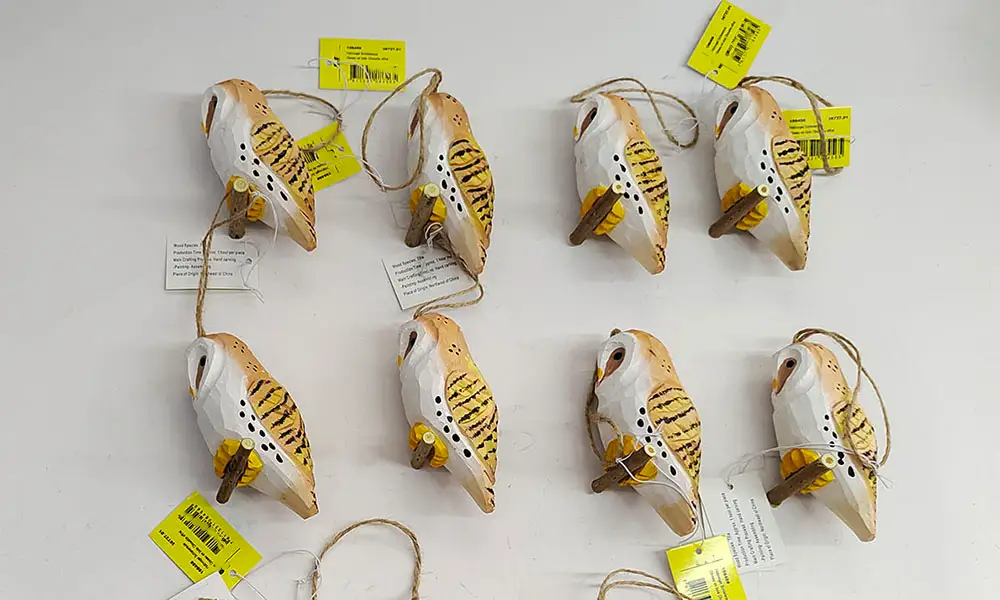
The logo area is a property of the blank, not of the artwork: a carved curved body offers at most one flat-ish panel, and across our 4 main shapes a one-line mark fits most panels, a mark plus date fits 3 of the 4, and a full dedication fits none without moving to the box lid or an insert card. The budget is published per shape from a physical sample in the shipped mark method, so the client’s design team argues with a sample rather than with a supplier.
Method follows the budget: engraving carries short marks with permanent depth and no fade line; one-colour print carries longer marks at lower cost but lives on the surface; full colour is reserved for programmes where the mark is artwork rather than identity, and it accepts the fastness gate that comes with it.
Colour Fastness: Test Where the Ornament Lives
An office is a hostile light environment: daylight through glass on one side, warm artificial light above, and a heating cycle every winter. A mark that survives a drawer fails a windowsill, so the fastness gate runs a light and wipe cycle on sample pieces before the run is approved, and the result is written into the specification as the placement rule, for example mark on the reverse face for window-facing programmes.
Fastness also interacts with finish: an oiled natural face accepts engraving cleanly but holds print poorly, while a sealed face does the opposite. The three-contract order exists precisely to catch that interaction before five hundred pieces carry it.

Batch Uniformity Across Five Hundred Desks
Uniformity is checked against one approved first article, at setup and at mid-run, for finish tone, mark depth and cord or stand hardware. The check is visual and physical rather than instrumental, because the client’s comparison is visual: two pieces held side by side at a reception desk. The 500-desk example sits at the kitted tier’s 500-piece floor, so the uniformity check is also the tier’s natural first sample size.
Where a programme spans species or finish families, uniformity is specified within each family rather than across families, and the packing plan keeps families in separate inners so no desk receives a mixed pair. Uniformity checks ride the same QC checkpoints as every ornament run, listed in our ornament production QC checkpoints guide.
Contract Table: Spec, Gate, Failure Mode
The table is the three-contract sheet we fill per programme; the gate column is written as a signed, checkable action, and the failure column is what each gate exists to catch.
| Contract | Specification | Gate | Failure it catches |
|---|---|---|---|
| Piece | Form, species, finish family, hang or stand | First article signed against the piece spec sheet | Fragile projections on desks |
| Logo area | Mark method, size, panel per shape | Physical sample in the shipped mark method, signed | Artwork exceeding the panel |
| Colour fastness | Light and wipe cycle, placement rule | Cycle test result attached to the spec sheet before run release | Faded marks at windowsills |
Kitting and the List Freeze
Kitting is the delivery layer beneath the three contracts, not a fourth contract: it carries the approved piece, mark and fastness result to the right desk. Personalised corporate programmes live or die by list discipline: names, dates and client marks freeze at order date, reconcile line by line against the packing sheet, and never change after the first article is signed. Kitting follows the freeze: one colour box per gift from 500 pieces per reference, or wrapped per piece with 6 to 12 per inner box for bulk dispatch to a client’s own packing line.
The tag stack carries the programme identity: one shared insert card per event or client cohort, printed at packing so unsold stock carries no dead date, and the reconciliation sheet travels in carton one for the receiving team.
What We Supply Into Corporate Programmes
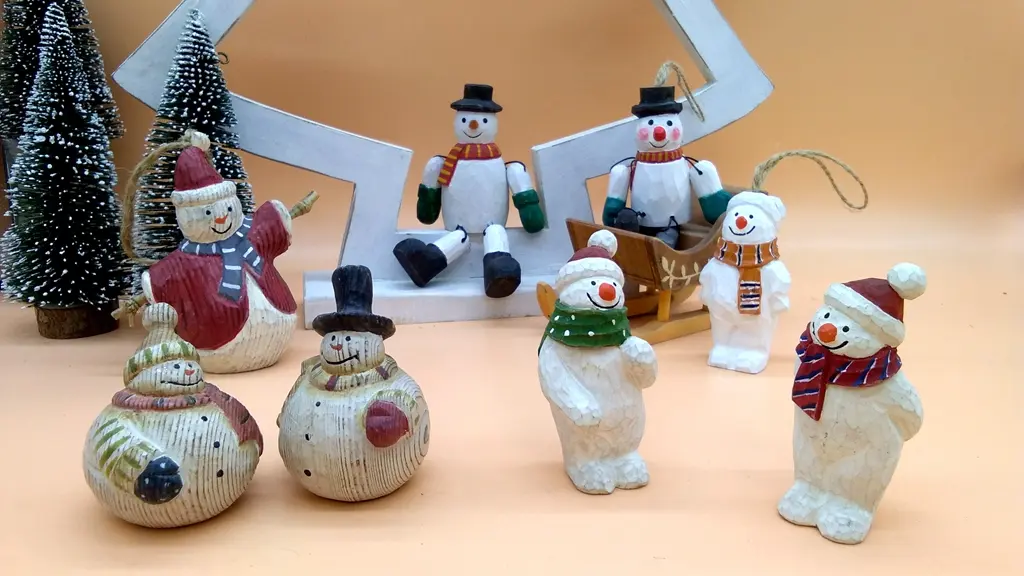
- We supply: carved ornament blanks in 4 species, basswood, pinewood, rubber wood and birch, in 3D carving from 5 to 40 cm and 2D pieces to 80 cm, with the logo-area budget published per shape.
- We supply: engraving and print marks with setup quoted separately, and the light-and-wipe fastness gate run on sample pieces before any run approval.
- We supply: kitted colour boxes from 500 pieces per reference and bulk inners of 6 to 12 pieces, tested to ISTA 3A, with the reconciliation sheet in carton one.
- We do not supply: list changes after the freeze, electronics or hardware inside ornaments, and no claim beyond CE/UKCA declarations, RoHS, EN71 test reports where toy-marketed, BSCI and ISO 9001.
The range and tier structure behind these programmes sit in our wooden ornaments wholesale programme page, and the reconciliation sheet format travels with every kitted reference.
Which Format Fits Which Programme
Client-facing anniversary programmes suit engraved natural-finish pieces with the mark on the reverse face, because the desk keeps the craft side forward and the mark stays out of the light. Employee milestone programmes suit standing forms with a base plate, where the plate carries the name and the piece carries the story. Event and conference programmes suit hanging forms in bulk inners with a shared card, priced for loss rather than for keep-rate.
Programmes that mix client and employee audiences should keep two specifications even inside one order, because the keep-rate assumptions and the mark placement rules differ between the two desks.
What We Check Before a Bulk Order Ships
- Moisture content (MC) at 8 to 12 percent recorded per batch before wrapping, since office heating cycles are exactly where a thin point checks.
- Mark depth and tone against the first article at setup and mid-run, held side by side rather than measured alone.
- Fastness gate result attached to the specification sheet, with the placement rule named per programme.
- Claims limited to what we hold: CE/UKCA declarations, RoHS, EN71 test reports where the piece is marketed as a toy, BSCI and ISO 9001.
Every figure above is first-party and checkable against an inspection report or a certificate we hold; the three-contract structure is programme design, not statistics. The company and its specification library sit at ewoodarts.com.
End to End: A Firm’s Client Gift Year
A professional services firm wants one client gift programme across three offices: an engraved natural-finish ornament per named client, kitted, delivered before its annual client dinner.
Proof and freeze. The programme proofs on the trial tier at 100 pieces and a USD 500 minimum order value, air express DDP in 20 to 30 days, with the logo-area sample and the fastness gate completed before the client list freezes at order date.
Programme run. The full list rides the programme tier at 300 pieces and a USD 3,000 minimum order value, sea freight FOB port-to-port at 60 to 90 days, with inland delivery to the three offices quoted as a separate line, kitted one per colour box with the reconciliation sheet in carton one. Payment runs T/T with a 30 percent deposit and 70 percent before shipment against photos and video of the packed kits, with the lane and clearance split named by the ICC Incoterm published at the ICC Incoterms rules page.
Close. The dinner week confirms counts per office against the freeze sheet, and the spare percentage held at pack covers late additions without reopening the run; next year’s programme starts from this year’s fastness result rather than from a new test.
Run corporate bulk ornaments as three contracts, not one order
Piece, logo area and fastness gates quoted from one specification library.
FAQ
How much logo fits on a bulk ornament?
Across our 4 main shapes, a one-line mark fits most flat panels, a mark plus date fits 3 of the 4, and a full dedication moves to the box lid or an insert card; the budget is published per shape from a physical sample.
Why test colour fastness before the run?
Office light and heating cycles fade surface marks that a drawer would keep; the gate runs a light and wipe cycle on samples so the placement rule is set before five hundred pieces carry the risk.
What does the list freeze protect?
The reconciliation at packing: names and dates frozen at order date can be checked line by line, while late changes produce mis-kitted gifts that cannot be recalled once boxed.
Which mark method lasts longest on a desk?
Engraving, because the mark sits below the surface and fades with the wood itself rather than on top of it; print methods live on the surface and carry the fastness gate with them.
Can client and employee programmes share one spec?
They can share an order but should not share a spec: keep-rate assumptions and mark placement rules differ between a client desk and an employee shelf, and blending them prices both wrongly.