Skip to content
Key Takeaways
- Specify carton grade by weight per layer: use B-flute for layers under 12 kg, double-wall for layers above that threshold.
- Run a carton drop test on production-packed samples at six sides plus corners before the first container ships.
- Stack cartons on pallets with interlocking patterns, not column stacks, and do not exceed four layers for wooden decor.
The carton is the last thing a buyer thinks about and the first thing that fails in transit. A beautifully carved wooden ornament packed in a carton that collapses under the weight of three layers above it arrives as firewood, not product. Carton bearing capacity is the single most preventable source of transit damage for wooden decor and Himalayan salt products, and the wholesale buyer who specifies the right carton, the right stacking, and the right packing will have a lower damage rate than the buyer who treats the carton as an afterthought. This guide explains how to specify, test, and pack export cartons so the product arrives as it left the factory.
The carton is a structural component of the product, not a commodity. It must carry the weight of the layers above it in a container stack, survive the vibration and impact of ocean and road transit, and protect the product from moisture, dust, and handling damage. A carton that fails at any of these points is a write-off of the product inside it, and the cost of the failure is many times the cost of the carton.
Carton Specification: Grade, Flute & Weight Limits
The carton specification starts with the flute grade. B-flute (single wall, approximately 3mm thickness) is suitable for cartons carrying lightweight wooden products, up to approximately 12 kg per layer. BC-flute or double-wall (approximately 6mm) should be used for cartons carrying heavier products or cartons that will be stacked more than three layers high in a container. The weight per carton determines the minimum flute grade, and the buyer should specify the expected weight per carton and the expected stacking height in the container when ordering the carton. The carton supplier or the product factory should be able to confirm that the specified carton is rated for the load. The ICC Incoterms rules define who bears the risk of transit damage; under FOB, the risk transfers at the port of loading, so the buyer who specifies the carton protects their own goods.
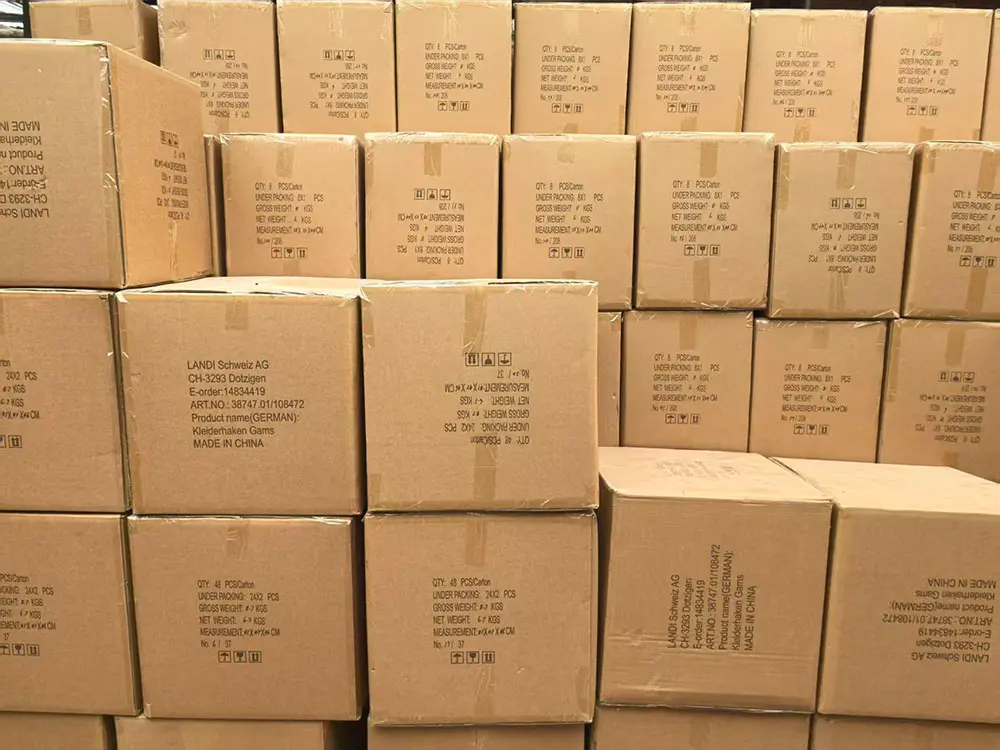
Drop Testing: Proving the Carton Before the Container Sails
The carton drop test is the proof that the carton specification works. The test should be performed on a production-packed carton, not a hand-packed sample, because production packing is faster and looser and the carton performs differently. The standard test protocol is six sides plus corners, dropped from a height that simulates the typical handling drop in a warehouse or a container. The carton should show no structural failure, and the product inside should show no damage. The test result should be documented and shared with the buyer before the first container ships. The wholesale wooden crafts supplier should provide the drop test report with the first shipment, and the buyer should require it as a condition of shipment acceptance. A carton that passes the drop test on a production sample is the strongest single predictor of a low damage rate in transit.

Stacking and Palletising: Column vs Interlock
The stacking pattern on the pallet determines how the cartons share the load. A column stack, where each carton sits directly on top of the one below it, transmits the entire weight of the upper layers through the corners of the lower cartons. This concentrates the load on the strongest part of the carton but requires that the cartons be perfectly aligned. An interlocking pattern, where cartons are rotated and overlapped between layers, spreads the load across more cartons and is more stable during transit. Interlocking is recommended for wooden decor because the cartons are rarely perfectly uniform in size, and the interlock absorbs the variation. The stacking height should not exceed four layers for wooden decor cartons, because the weight of four layers of product is the practical limit for the lower cartons. Pallet strapping and stretch-wrapping add lateral stability and prevent the cartons from shifting during container transit.
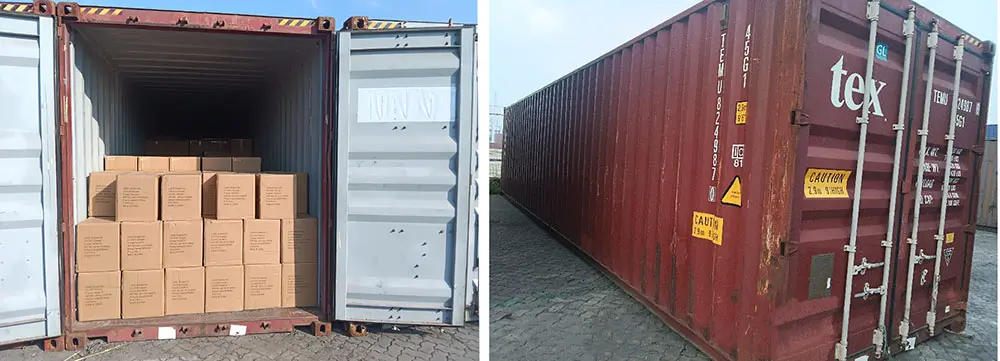
Moisture Protection, Labelling & Receiving
Moisture is the silent killer of carton integrity. A carton that absorbs humidity from the container air loses strength and can collapse under a load that it would carry easily when dry. Each carton should carry a desiccant pouch inside, and the container should carry a desiccant unit. The carton exterior should be labelled with the SKU, the quantity, the weight, the handling symbols, and the destination. The labelling should be scannable at the receiving warehouse, and the carton should carry a unique barcode that links to the packing list. The factory tour should include a review of the carton specifications, the drop-test results, and the packing and labelling process, because the carton is the last line of defence between the product and the damage that writes it off.
Moisture Control During Container Transit
Sea freight exposes cartons to humidity swings across climate zones. A container travelling from East Asia to Northern Europe moves from 30°C and 80% relative humidity at origin to single-digit temperatures at destination, creating condensation inside the container walls and roof. Corrugated board absorbs this moisture and loses up to 50% of its compression strength within 72 hours of exposure to 90% RH.
Three measures protect carton integrity during ocean transit. First, line the container floor with a moisture-barrier sheet and place desiccant units along the walls; a 20-foot container typically needs 8-10 units of 1 kg each. Second, specify water-resistant adhesive in the corrugated board when ordering export-grade cartons; standard starch-based adhesive softens in humidity, while moisture-resistant formulations hold under 85% RH. Third, avoid stacking cartons directly against container walls; leave a 5 cm air gap on all sides so condensation runs down the wall rather than soaking into the carton edge.
For high-value or long-haul shipments, consider adding a humidity indicator card inside a sample carton per pallet. The card changes colour at set humidity thresholds; the receiving warehouse checks it on arrival and flags any pallet that exceeded the limit before the carton collapse risk becomes invisible.

International Shipping Standards for Export Cartons
Three standards govern carton performance in international trade. ISTA 3A (International Safe Transit Association) covers parcel-delivery packaging and simulates the handling a carton endures through courier networks: drop, vibration, compression. ISTA 1E covers unitised loads and is the most relevant for containerised pallet shipments; it replicates the stacked vibration and vertical impact forces a carton experiences in a container. ASTM D4169 provides distribution-cycle testing for truck, rail, air and sea modes.
Request carton suppliers to provide an ISTA test certificate for the specific flute grade, board combination and closure method you intend to use. A passing certificate does not transfer across flute grades; B-flute test data does not validate E-flute cartons even if the board weight is identical. For e-commerce parcels containing carved wooden items, ISTA 6-Amazon.com is the minimum requirement for FBA inbound shipments.
Customs authorities in the EU and US increasingly inspect carton markings. Every export carton must carry the gross weight in kilograms, the country of manufacture in English, and a handling symbol (up arrows, fragile, keep dry) printed on at least two non-adjacent faces. Missing country-of-origin marking is one of the most common reasons for customs hold on wooden-decor shipments. The step-by-step packing rules these load limits feed into are listed on the how to package products page.
Carton Grade Selection by Product Weight
| Product Weight per Carton | Recommended Flute | Board Combination | Edge Crush (ECT) |
|---|---|---|---|
| Up to 5 kg | E-flute | Single-wall; 125gsm Kraft outer | 23 lb/in |
| 5-15 kg | B-flute | Single-wall; 150gsm Kraft outer, 125gsm inner | 32 lb/in |
| 15-30 kg | BC-flute (double-wall) | Double-wall; 175gsm Kraft outer, 125gsm inner | 44 lb/in |
| 30-50 kg | AB-flute (double-wall) | Double-wall; 200gsm Kraft outer, 150gsm inner | 55 lb/in |
| 50 kg plus | Triple-wall | Triple-wall; 200gsm Kraft throughout | 71 lb/in |
Frequently Asked Questions
What carton grade should I use for wooden decor?
B-flute single-wall for lightweight products under 12 kg per layer. Double-wall BC-flute for heavier products or stacks of more than three layers.
How should I test carton strength?
Run a six-side-plus-corners drop test on a production-packed carton. Production packing is looser than hand-packing, so the test must use production cartons.
What is the best stacking pattern?
Interlocking patterns spread the load and are more stable. Column stacking concentrates the load on corners. Do not stack more than four layers for wooden decor.
How do I protect cartons from moisture?
Place a desiccant pouch inside each carton and a desiccant unit in the container. Moisture absorbed from the air weakens cartons under load.
What should be on the carton label?
SKU, quantity, weight, handling symbols, destination, and a scannable barcode linked to the packing list for warehouse receiving.
Specify Export Cartons That Survive Transit
Work with a factory that provides carton specifications, drop-test reports, and documented packing and stacking procedures for every shipment.