Skip to content
When planning incoterms wooden decor imports, understanding trade obligations is just as critical as choosing the right manufacturer. Incoterms — short for International Commercial Terms (published by the ICC) — define exactly where the seller’s responsibility ends and yours begins during international shipping. For buyers sourcing wooden crafts, wall art, or seasonal decorations, selecting the wrong incoterm can mean unexpected freight costs, damaged cargo with no recourse, or delayed customs clearance that kills your profit margin.
Published by the International Chamber of Commerce, incoterms are used in every international trade contract. Yet many wholesale buyers — especially those new to sourcing wooden decor from Asian manufacturers — overlook how deeply these terms affect total landed cost. This guide breaks down the four most relevant incoterms for wooden decor imports — EXW, FOB, CIF, and DDP — with practical examples drawn from real supply chain scenarios. If you are just starting to explore wholesale sourcing, our Ewoodarts homepage provides a broad overview of product categories and capabilities.
EXW (Ex Works): Maximum Buyer Control, Maximum Responsibility
Under EXW, the seller simply makes the goods available at their factory or warehouse. From that point forward, every cost and risk — inland transport, export customs, ocean freight, import duties, and final delivery — falls on the buyer. For wooden decor importers, EXW can look attractive because the quoted unit price appears low. But that price tag does not include a single logistics cost beyond the factory door.
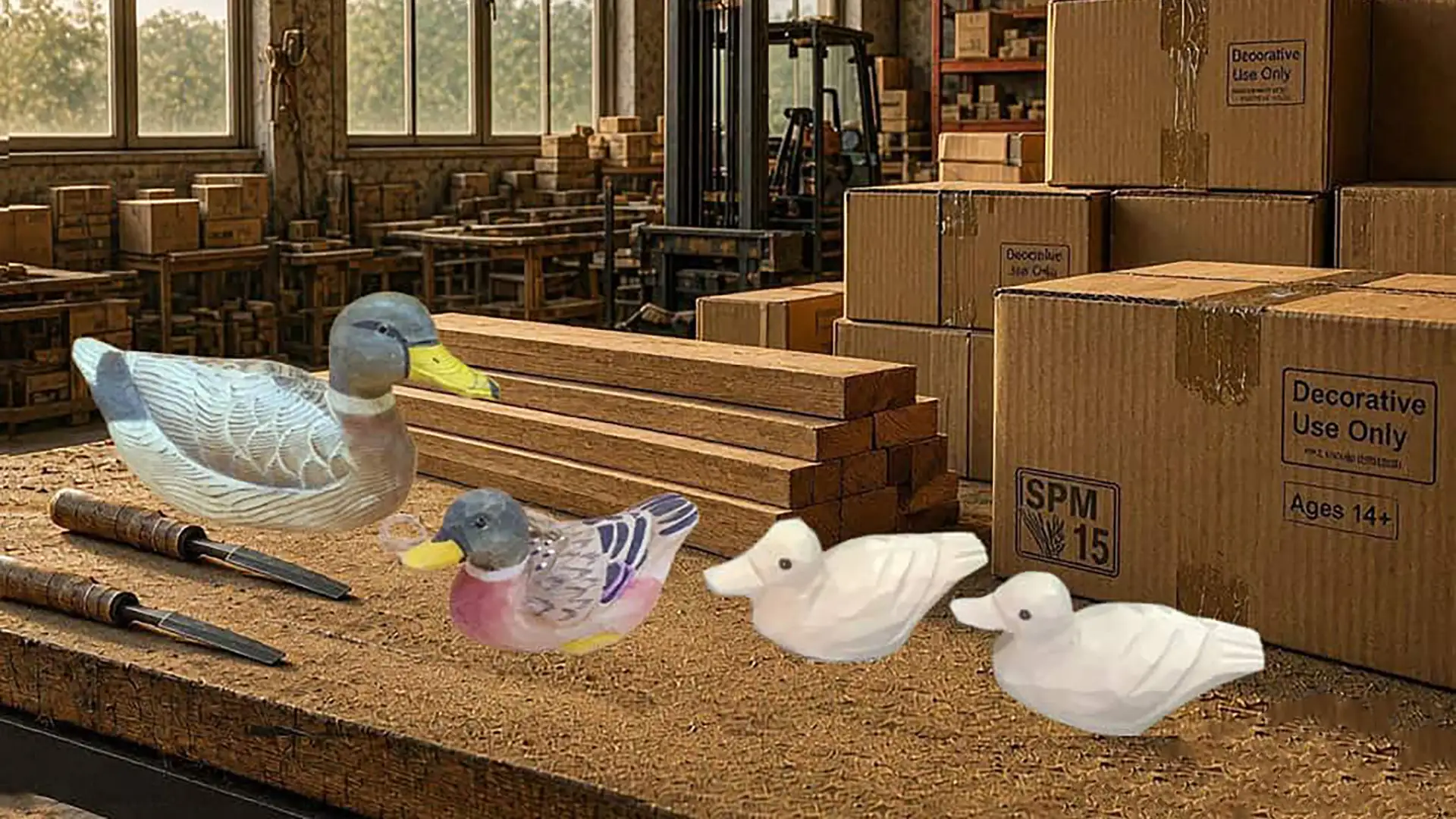
EXW works best when you have an established freight forwarder in China or the origin country and want full visibility over every leg of the shipment. For example, if you consolidate wooden crafts from multiple suppliers into one container, EXW gives you the flexibility to control pickup timing and routing. However, if this is your first time importing, managing export customs documentation in a foreign country adds complexity that may not be worth the marginal savings on product cost.
A practical note: some manufacturers quote EXW prices but are unwilling to assist with export packaging compliance. When importing fragile wooden decor items, proper packaging matters enormously. Reputable suppliers test packaging to ISTA 3A standards and ship in 5-ply master cartons (58×44×31 cm, typically 8–15 kg per carton) to protect products during multi-leg international transit. Always confirm packaging standards before accepting an EXW quote.
FOB vs. CFR/CIF: Where Risk Transfers and Costs Shift
FOB (Free on Board) is the most widely used incoterm in B2B wooden decor sourcing. The seller handles all costs up to loading goods onto the vessel at the named port of shipment. Once the container crosses the ship’s rail, risk transfers to the buyer. FOB gives you a clear cost breakpoint: the supplier’s price includes production, quality control, inland transport to port, and export customs clearance. Everything from the ocean onward is your responsibility.
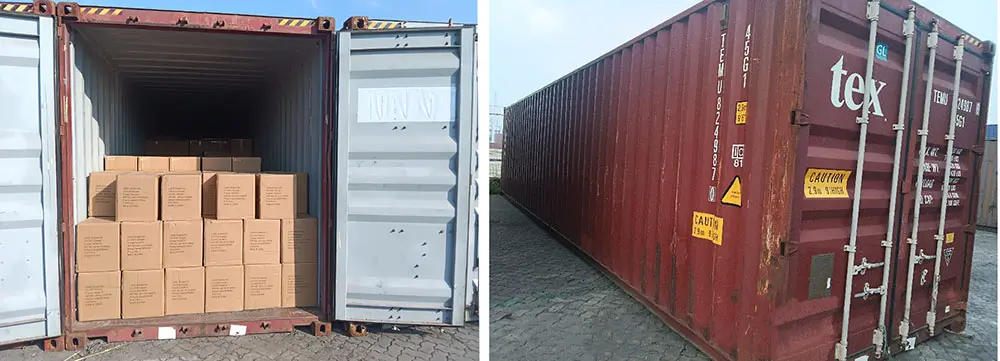
CFR (Cost and Freight) and CIF (Cost, Insurance, and Freight) extend the seller’s obligation further. Under CFR, the supplier pays freight to the destination port but risk still transfers at the origin port — a subtle but critical distinction. Under CIF, the seller also arranges marine insurance. For buyers new to international freight, CIF can feel safer because the supplier manages the shipping process. However, the insurance coverage under CIF is typically minimum-level (Institute Cargo Clauses C), which may not fully cover high-value or fragile wooden decor items.
Here is a practical comparison: if you order a trial of 100 pieces at $500 under FOB Dalian, you arrange and pay for ocean freight and import duties yourself. Under CIF Los Angeles, the same order arrives at your destination port with freight and basic insurance included — but you still handle import customs, duties, and final-mile delivery. When evaluating incoterms for wooden decor imports, the choice between FOB and CIF often comes down to whether you have a reliable freight forwarder and whether you want to consolidate shipments from multiple suppliers into one container.
DDP (Delivered Duty Paid): The Door-to-Door Shortcut for Wooden Decor Buyers
DDP places maximum responsibility on the seller. The supplier handles everything — production, export customs, ocean or air freight, import duties, taxes, and delivery to your specified address. For wholesale buyers, DDP feels like domestic purchasing: you agree on a unit price, and the goods arrive at your warehouse with no surprise costs. This is especially valuable for buyers importing wooden decor into the US, Europe, or Australia, where customs regulations and duty rates can be complex.
DDP is particularly popular among Amazon FBA sellers sourcing wooden crafts and seasonal decorations. The supplier ships directly to Amazon fulfillment centers, handling all compliance documentation along the way. Not all manufacturers offer DDP, because it requires the seller to have logistics infrastructure or partnerships in the destination country. Suppliers that support DDP to US, European, and Australian commercial warehouses — as well as Amazon FBA centers — provide a significant advantage for buyers who want to minimize logistics management overhead.
The trade-off with DDP is cost transparency. Because the seller bundles all logistics costs into the unit price, it can be harder to benchmark whether you are getting competitive freight rates. For larger wholesale orders — say, 500 pieces with custom packaging — requesting a cost breakdown alongside the DDP quote helps you understand what you are paying for each component.
Incoterms Wooden Decor Import: How to Choose the Right Term
The right incoterm depends on three factors: your experience level with international trade, the size of your order, and your logistics infrastructure. Here is a practical framework for making the right decision:
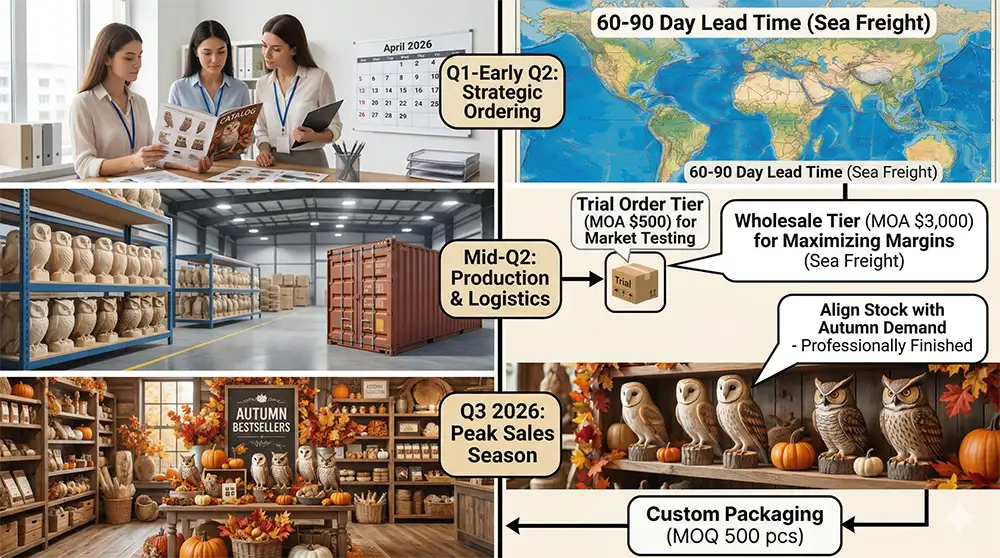
- First-time buyer, small trial order (100 pcs / $500): DDP is the safest choice. You pay a slightly higher unit price but avoid the complexity of arranging freight, customs, and insurance yourself.
- Growing buyer, trial-to-wholesale stage (300 pcs / $3,000): FOB gives you the best balance. You control ocean freight (potentially consolidating with other suppliers) while the supplier handles everything up to the port. This is the sweet spot for building a cost-effective supply chain.
- Established importer, bulk custom orders (500+ pcs with custom packaging): FOB or CIF, depending on whether you have preferred freight forwarders. At this volume, even small differences in freight cost per unit translate into significant savings over a full container load.
- Amazon FBA seller: DDP to the fulfillment center simplifies your operations dramatically. The supplier manages compliance, labeling, and delivery scheduling.
Regardless of which term you choose, always confirm lead times upfront. Stock items typically ship within 7–15 days, trial orders take 20–30 days, and bulk custom orders require 60–90 days for production and quality control. These timelines affect your shipping method decision — air freight for urgent replenishment versus sea freight for planned inventory builds.
For a broader view of product categories and sourcing options, explore our full range of wholesale wooden crafts to see which items suit your order volume and target market.
Common Incoterm Mistakes Wooden Decor Importers Must Avoid
Mistake 1: Confusing cost transfer with risk transfer. Under CIF, the seller pays freight to your port, but risk transfers at the origin port. If goods are damaged in transit, you — not the seller — file the insurance claim. Many buyers assume CIF means the seller bears all risk, which is incorrect.
Mistake 2: Ignoring insurance adequacy for fragile goods. Wooden decor items — especially carved pieces, wall art with delicate finishes, or items with glass components — are susceptible to moisture and impact damage. Minimum CIF insurance may not cover these risks. If you ship FOB or CFR, purchase supplemental cargo insurance that specifically covers wood products.

Mistake 3: Not specifying the correct named place. Incoterms require a named location (e.g., “FOB Dalian” or “DDP 123 Main St, Chicago”). Vague references like “FOB China” create ambiguity about which port, who handles inland transport, and where risk transfers. Always name the specific port or address.
Mistake 4: Overlooking payment term alignment. Incoterms define logistics responsibility, not payment terms. Standard payment structures in this industry use T/T with 30% deposit and 70% before shipment for wholesale orders, while smaller trial or sample orders may use online payment gateways. Ensure your contract clearly separates incoterm obligations from payment schedules to avoid disputes.
Mistake 5: Failing to verify supplier certifications. When importing wooden decor into regulated markets, product compliance is non-negotiable. Suppliers should hold relevant certifications including BSCI, ISO9001, CE, UKCA, EN71-1/-2/-3, and RoHS depending on your target market. Visit our wood carving factory page to see our quality control standards. The incoterm you choose does not affect compliance responsibility — that always rests with the manufacturer — but working with a certified supplier reduces your risk regardless of shipping terms.
Flexible Trade Terms for Your Wooden Decor Imports
EXW · FOB · CIF · DDP — We support every stage of your supply chain with certified quality and reliable delivery.
Request Wholesale Quote →Frequently Asked Questions
Which incoterm is best for first-time wooden decor importers?
DDP (Delivered Duty Paid) is the most beginner-friendly option. The supplier manages all logistics, customs clearance, and delivery to your door or warehouse. You receive a single all-in price with no surprise freight charges or customs paperwork. Once you gain experience and build relationships with freight forwarders, you can shift to FOB for better cost control on larger orders.
What is the difference between FOB and CIF for wooden decor shipments?
Under FOB, the seller’s responsibility ends once goods are loaded on the vessel at the origin port. You arrange and pay for ocean freight and insurance. Under CIF, the seller pays freight and basic insurance to your destination port, but risk still transfers at the origin port. For fragile wooden decor, CIF’s minimum insurance may be insufficient — consider supplemental coverage regardless of which term you choose.
Can suppliers ship DDP to Amazon FBA warehouses?
Yes. Many wooden decor suppliers now offer DDP shipping directly to Amazon FBA fulfillment centers in the US, Europe, and Australia. The supplier handles all export documentation, ocean freight, import duties, and last-mile delivery to the designated FBA center. This is especially useful for seasonal products like wooden ornaments and holiday decorations where timing is critical.
How do incoterms affect the total landed cost of wooden decor products?
Incoterms determine which logistics costs are included in the supplier’s quoted price versus which you pay separately. An EXW quote looks cheapest but requires you to add inland transport, export customs, ocean freight, insurance, import duties, and final delivery. A DDP quote looks higher per unit but includes everything. Always compare total landed cost — not just unit price — when evaluating quotes under different incoterms.
What certifications should I verify when importing wooden decor?
Depending on your target market, look for BSCI (social compliance), ISO9001 (quality management), CE and UKCA (European and UK market access), EN71-1/-2/-3 (toy safety, relevant for children’s wooden decor), and RoHS (restricted substances). These certifications indicate the manufacturer follows Rigorous Quality Control and Source-to-Shelf Integrity standards. Always request copies of current certificates before placing your first order.