Skip to content


Deer salt lick blocks are one of the few farm-store categories where the buyer’s question is arithmetic rather than taste: how many animals, how many weeks, how many kilograms, and how the pallet lands at the back door. The retail shelf behind that arithmetic is thin in B2B coverage, which is why farm and hunting retailers usually price licks from a competitor’s shelf tag instead of a supplier conversation.
This guide gives farm and hunting retailers the sizing method, the form choices, the bulk-buying tiers and the import paperwork that a salt lick programme actually runs on, written from our side of the pallet as a Himalayan salt manufacturer and supplier. Weights and formats quoted are our own product-sheet numbers; consumption rates are yours to observe in week 1.
Key Takeaways
- Size a lick programme in 3 steps: count the animals that will reach it, choose the block form that survives your mounting point, then set the reorder interval from week-1 consumption observed on your own ground, not from a catalogue average.
- Form follows mounting: rock-hewn blocks suit free-standing stumps and ground stations, pressed uniform blocks suit holders and hangers, and rope-tied or hanging formats suit fence lines where a ground block would mud out in 1 wet week.
- Deer and livestock licks are a mineral supplement, not feed: the label carries 1 supplement framing and the species it is intended for, and no therapy, medication or cure wording belongs anywhere near the block.
- Bulk buying is a pallet decision: our pressed licks pack in cartons on pallets for export, and 1 mixed pallet with our other salt lines clears a tier minimum that a lick-only pallet may miss, which changes the landed cost per block.
- Import paperwork for salt is ordinary but strict: classification, origin and any food- or feed-adjacent registration in the destination market belong on the purchase order, because 1 missing line holds a pallet at the border for weeks.
- Private label is where farm retail margins live: custom pressed shapes, branded wraps and carton marks run from our OEM route, with the artwork frozen at order date like 1 other specification.
In This Guide
- Why the Shelf Tag Is Not a Pricing Method
- Deer Salt Lick Block Sizing: The 3-Step Method
- Forms: Rock-Hewn, Pressed and Hanging
- The Label: Supplement, Not Feed, Not Medicine
- Bulk Buying: Pallets, Tiers and Mixed Loads
- Three Forms Compared
- Import Paperwork for Salt
- What We Supply as Manufacturer and Supplier
- Best For / Not For
- What We Check Before a Pallet Wraps
- End to End: A Farm Store’s First Lick Programme
- Frequently Asked Questions
Why the Shelf Tag Is Not a Pricing Method
A competitor’s shelf tag tells you what somebody else decided, in their cost structure, for their customer mix. Salt lick economics run on pallet weight, carton count and freight per block, none of which are visible from a shelf, and all of which change when a store switches form, size or private label. Pricing from the tag imports someone else’s mistakes at full retail.
The alternative is a short conversation with a manufacturer or supplier about four numbers: block weight, pieces per carton, cartons per pallet and the tier minimum that applies. Those four numbers price the category honestly, and they are the ones this guide works through. The range they apply to is described on our salt lick for animals page.
Deer Salt Lick Block Sizing: The 3-Step Method
Step 1 counts the animals that will actually reach the block: deer visiting a station, head of cattle at a fence line, or goats in a yard, counted at the busiest week rather than the average one. Step 2 chooses the form against the mounting point, because a block that muds out or rolls away is consumed at twice the rate of one that stays put. Step 3 sets the reorder interval from week-1 consumption weighed on your own ground: weigh the block at placement and again after 7 days, and let that delta drive the calendar.
The method deliberately contains no universal consumption figure, because intake swings with season, forage quality, lactation and weather, and any supplier quoting a single number across all herds is quoting marketing. What a manufacturer can quote is the block side: weights per format, pieces per carton and pallets per tier, which is where the buying decision actually lives.

Forms: Rock-Hewn, Pressed and Hanging
Rock-hewn blocks are cut from mined salt with their natural faces intact: irregular, heavy for their size, and the format deer and cattle meet at ground stations and stumps. Pressed blocks are milled salt compacted into uniform shapes: consistent weight, clean edges, and the format that fits holders, buckets and branded wraps. Hanging and rope-tied formats carry a drilled hole or embedded rope: fence-line and post mounting where ground placement would mud out or be kicked apart.
Each form also packs differently, which is the bulk-buying consequence: pressed blocks carton tightly and palletise in clean layers, rock-hewn blocks nestle with more void per carton, and hanging formats add rope or wire weight and a slower packing rate. The form decision is a freight decision as much as a field decision, and it should be made once, in writing, for the whole programme. Pressed blocks also need a mould, and the mould cost logic follows the same rules as any compressed product, set out in our guide to tooling and mould costs for custom wooden products, where the amortisation maths transfers unchanged.
The Label: Supplement, Not Feed, Not Medicine
A salt lick is a mineral supplement presented as a block, and the label must say so in the destination market’s register: intended species, supplement framing, net weight, origin and the manufacturer or supplier identity. What it must never carry is feed language that implies rationing, or any therapy, medication or cure wording, because those convert a mineral block into a regulated product in most jurisdictions and into a liability in all of them.
Private-label programmes inherit this discipline: the retailer’s brand may own the wrap design, but the supplement framing and species line stay where the regulation puts them, and the artwork freeze at order date includes a compliance read of every line. Where a market requires feed- or supplement-registration before import, that registration sits on the critical path ahead of the production slot, not beside it. The OEM route that carries the freeze is our custom product manufacturing process.

Bulk Buying: Pallets, Tiers and Mixed Loads
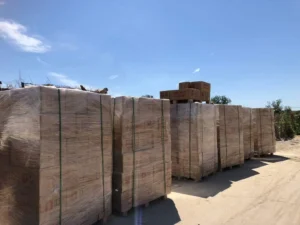
Salt is dense, and density is why lick programmes live or die on pallet maths: freight per block falls sharply when cartons cube out a pallet layer cleanly, and rises just as sharply when a lick-only order leaves half a layer empty. Our pressed licks pack in cartons on export pallets, and the carton and pallet configuration is quoted per format so a buyer can cube the load before ordering.
The second lever is the mixed pallet: combining licks with our other salt lines, lamps, cooking salt and small packaged products, clears tier minimums that a lick-only pallet misses and spreads the fixed freight across more sellable units. Buyers who run a farm store and a gift shelf in the same building are sitting on exactly this opportunity, and the consolidation arithmetic is the same discipline as any multi-SKU load; the gift-shelf half of that mixed pallet is ranged from our wholesale wooden crafts guide.
Three Forms Compared
| Form | Mounting | Packing behaviour | Best programme |
|---|---|---|---|
| Rock-hewn | Ground station, stump | Void per carton, heavy layers | Deer stations, extensive cattle |
| Pressed uniform | Holder, bucket, wrap | Clean carton and pallet layers | Private label, retail shelf |
| Hanging or rope-tied | Fence line, post | Rope weight, slower pack rate | Wet ground, horse paddocks |
Import Paperwork for Salt
Salt crosses borders as an ordinary commodity with an ordinary paper stack: commercial invoice, packing list, certificate of origin and the classification line the destination tariff schedule assigns to salt products. What makes it strict rather than difficult is that salt sits adjacent to food and feed regimes in most markets, so a registration, notification or facility listing may apply even when the block is destined for a fence line.
The US classification side is searchable through the US International Trade Commission’s HTS database, and the practical discipline is to fix the classification line with your broker before the purchase order, not after the vessel sails, because a reclassification mid-transit is a storage bill with paperwork attached.

What We Supply as Manufacturer and Supplier
- We supply: Himalayan salt licks in rock-hewn, pressed and hanging formats, with product-sheet weights, carton counts and pallet configurations per format.
- We supply: private-label pressing, branded wraps and carton marks through our OEM route, with the label compliance read included in the artwork freeze.
- We supply: the export paper stack from our side, certificate of origin, packing list and invoice matching the carton marks, so the broker’s file closes without chasing.
- We do not supply: medication, therapy or cure claims of any kind on a lick label, and no formulation advice that belongs to the buyer’s veterinarian or nutritionist.
Best For / Not For
| Buyer | Best for | Not for |
|---|---|---|
| Farm and ranch store | Pressed and hanging formats, pallet tiers | Lick-only half pallets |
| Hunting and wildlife retail | Rock-hewn deer stations, season-timed loads | Any claim beyond supplement framing |
| Private-label brand | Custom pressed shapes and wraps | Artwork changes after the freeze |
| Mixed farm-and-gift store | Mixed pallets with salt lamps and packs | Separate freight per category |
What We Check Before a Pallet Wraps
- Block weight per format against the product sheet, sampled per batch, because density variance is the silent freight thief.
- Structural integrity, pressed blocks drop-tested from handling height and rock-hewn blocks checked for latent fracture lines.
- Hanging hardware and rope ties load-checked on the sampling plan, since a dropped block at a fence line is a wasted block and a lame animal risk.
- Carton marks against the packing list, format, weight and count legible from the pallet without breaking wrap.
- Label lines against the destination register, species, supplement framing, net weight, origin and supplier identity, checked at artwork freeze and again at packing.
Every figure above is first-party and checkable against an inspection report or a product sheet we issue; the sizing method and consumption discipline belong to your ground, and we say so on every quotation. The company and its specification library sit at ewoodarts.com.

End to End: A Farm Store’s First Lick Programme
A two-door farm store carries a competitor’s licks at a margin it cannot explain and wants its own programme before the spring stocking season, with a private-label wrap on the pressed line.
Price from the four numbers. The store requests block weight, pieces per carton, cartons per pallet and tier minimum per format, and rebuilds its shelf price from landed cost instead of the competitor’s tag. The pressed line cubes a full pallet layer; the rock-hewn line does not, so rock-hewn moves to a mixed pallet with the store’s lamp order.
Freeze the label with the artwork. The private-label wrap carries the store’s brand, the supplement framing, the species line and net weight, with the compliance read done at freeze. The destination market’s feed-adjacent notification is filed before the production slot, on the critical path where it belongs.
Set the reorder from week 1. Both doors weigh blocks at placement and day 7, record the delta per station type, and set the reorder interval from their own numbers. The second order consolidates pressed licks, hanging formats and the lamp line on one mixed pallet, and the store’s margin finally has a denominator it owns.
Pricing a salt lick programme from your own numbers?
Send us your animal counts, your mounting points and your destination market. We will return the format recommendation, the four pricing numbers per format, and the mixed-pallet plan that clears the tier.
Frequently Asked Questions
Q: How do I size a deer salt lick order?
In three steps: count the animals reaching the station at the busiest week, choose the form your mounting point survives, then set the reorder interval from week-1 consumption weighed on your own ground. No supplier’s universal intake number can replace that delta, because intake swings with season, forage and weather on your land, not ours.
Q: Which form suits wet ground and fence lines?
Hanging or rope-tied blocks, because a ground block in wet pasture muds out, rolls, and gets consumed at twice the intended rate while fouling the station. Rock-hewn suits dry ground stations and stumps, pressed suits holders and branded wraps, and the form decision should be written once for the whole programme because it also decides the pallet.
Q: What may a salt lick label claim?
Supplement framing only: intended species, net weight, origin and the manufacturer or supplier identity, in the destination market’s register. Feed language implying rationing, and any therapy, medication or cure wording, convert a mineral block into a regulated product in most jurisdictions and into a liability in all of them, including on private-label wraps.
Q: How do mixed pallets change the landed cost?
They spread fixed freight across more sellable units and let a lick order clear a tier minimum it would miss alone. Pressed licks cube clean pallet layers, rock-hewn leaves void, so pairing rock-hewn with lamps or packaged salt lines fills the layer and drops the freight per block, which is usually the difference between a margin and a rounding error.
Q: Can we private-label pressed salt licks?
Yes: custom pressed shapes, branded wraps and carton marks run through our OEM route, with the label compliance read included in the artwork freeze at order date. The registration or notification your destination market requires for feed-adjacent products sits on the critical path ahead of the production slot, so it should start before the artwork does.