Skip to content

Dropshipping vs wholesale is usually argued as a margin question, and that argument misses the point. The two models differ in one place first, who holds the stock when a customer clicks, and every other difference a business feels, in photos, claims, returns and cash, is a consequence of that single fact.
This guide describes both models fairly for wood decor, then states plainly why carved wood resists the dropship half of the comparison, and where our own two tiers sit in it. Every production, pack and tier figure is our own first-party number; platform fees and ad costs are yours to source.
Key Takeaways
- Dropshipping and wholesale differ in 1 place first: who holds the stock when the customer clicks; every other difference, photos, claims, returns and cash, follows from that single fact.
- A dropship listing carries 3 liabilities the seller rarely prices: the product photo’s claims, the destination label rules of the ship-to market, and the returns path for a piece the seller has never held.
- Wholesale moves those liabilities to someone who can inspect them: our export pack is white paper per piece, 6 to 12 per inner box, 240 to 480 per master carton at 8.0 to 15.0 kg gross, ISTA 3A rated, checked before it seals.
- Carved wood resists the dropship model physically: no 2 hand-carved pieces are pixel-identical, so a stock photo is a promise the next unit cannot keep, and variation complaints land on the listing owner.
- Cash behaves oppositely: dropshipping ties almost 0 capital in stock but pays per-unit fees and ad costs forever, while our wholesale tier at 300 pieces and a USD 3,000 minimum order value buys unit cost down and owns the customer record.
- Freight terms decide who eats a damaged carton: under Incoterms rules the risk transfer point is a written choice between 2 parties, and a model where nobody chose it is a model where both parties eat it.
In This Guide
- Why the Margin Argument Misses the Point
- Dropshipping vs Wholesale: The Two Models Described Fairly
- Who Holds Stock, Photos and Claims
- Returns and the Damage Economics
- Why Carved Wood Resists Dropshipping
- The Two Models Compared
- Freight Terms: The Written Choice Nobody Makes
- Where Our Tiers Sit, and What We Do Not Run
- Best For / Not For
- What We Check Before a Carton Seals
- End to End: A Dropshipper Moves to Held Stock
- Frequently Asked Questions
Why the Margin Argument Misses the Point
Spreadsheet comparisons of the two models usually line up unit cost against unit fee and declare a winner. Real programmes fail elsewhere: on a listing whose photo promised a grain pattern the delivered piece does not have, on a returns label for a parcel nobody can open and inspect, on a customs hold because the ship-to market’s label rules were nobody’s job.
Held stock is not a cost centre, it is a place where liabilities can be inspected before they become customer events. That is the frame this guide uses, and it is why a manufacturer’s tier structure, like the one described on our wholesalers and retailers page, is written around named consignees and sealed cartons rather than per-parcel flows.
Dropshipping vs Wholesale: The Two Models Described Fairly
Described fairly, dropshipping is a testing business: the seller tests demand with listings and photos before owning anything, pays per-unit costs and platform fees, and converts a proven listing into a brand later. It is a legitimate first step for many categories, and its capital efficiency is real.
Wholesale is a possession business: the buyer holds stock, photographs it, writes its claims, inspects its returns and owns the customer record. Unit cost falls with tier size, and every liability sits with a party who can open the carton. Neither model is morally superior; they are different allocations of the same four liabilities, stock, photos, claims and returns.

Who Holds Stock, Photos and Claims
In dropshipping the listing photo is usually the supplier’s, and the claims embedded in it, species, finish, safety grading, origin, become the seller’s the moment the listing goes live, because the seller of record answers for what the page says. The seller inherits adjectives they never verified, in markets whose label rules they may not have read.
In wholesale the buyer photographs their own stock and writes claims against documents they hold: species and origin statements, finish safety sheets, pack specifications. The destination-market label layer is then a deliberate step rather than an inherited surprise, and the rules for wooden gifts entering the EU are set out in our guide to EU packaging and labelling for wooden gifts.
Returns and the Damage Economics
Wholesale concentrates damage into one inspectable event per shipment: the carton arrives, the consignee checks it against the pack specification and the ISTA 3A test the configuration passed, and a claim follows the agreed freight terms. One shipment, one inspection, one decision.
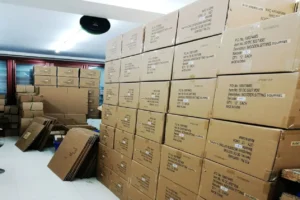
Dropshipping distributes the same physical risk across every parcel, and each end-customer return is a separate event with its own label, its own inspection decision and its own restock or write-off, executed by a party who does not hold the piece. The per-event cost is small and the count is not, which is where the model’s apparent margin goes. Our pack exists to make the wholesale event boring: white paper per piece, 6 to 12 per inner box of 21 by 11 by 14 cm, 240 to 480 per master carton of 58 by 44 by 31 cm, gross 8.0 to 15.0 kg, with the retail-unit layer specified separately where a brand adds one, as covered in our guide to ornament retail packaging.

Why Carved Wood Resists Dropshipping
Hand carving guarantees variation: grain figure, paint blend and carve detail differ piece to piece within one approved sample’s tolerance. A wholesale buyer holds the retained sample and grades the range against it in person, so variation reads as craft. A dropship customer holds a photograph and grades their parcel against it, so the same variation reads as error.
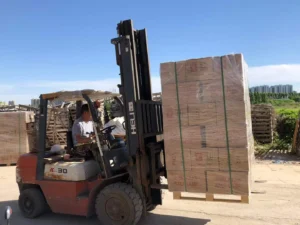
Weight and fragility reinforce the point: carved wood ships at real mass, 8.0 to 15.0 kg per master carton, and per-parcel fulfilment multiplies both the freight cost and the damage surface that a consolidated carton absorbs once. The range those cartons carry, from carved animals to coasters and seasonal decor, is in our wholesale wooden crafts guide.
The Two Models Compared
| Dimension | Dropshipping | Wholesale held stock |
|---|---|---|
| Stock at click time | Supplier’s, unseen | Buyer’s, inspected |
| Photos and claims | Inherited from supplier | Own photos, own documents |
| Returns | Per parcel, uninspected | Per shipment, inspectable |
| Capital and fees | Low capital, perpetual per-unit fees | Capital in stock, unit cost falls by tier |
| Variance tolerance | Low, photo is the promise | High, sample is the reference |
| Fit for carved wood | Poor, variation and mass | Good, inspection and tiers |
Freight Terms: The Written Choice Nobody Makes
Under Incoterms rules the point where risk transfers from seller to buyer is a written choice, and it decides who eats a carton that arrives crushed. Programs that never made the choice find it out during a damage claim, when both parties find themselves owning the same loss. The rules themselves are published by the International Chamber of Commerce, and the choice belongs on the purchase order, not in a dispute.
In a dropship flow the equivalent choice is usually absent by design: the parcel moves under the platform’s or the supplier’s default terms, and the listing owner finds their exposure in the returns dashboard. Held stock at least makes the question answerable before the goods move.

Where Our Tiers Sit, and What We Do Not Run
- We run 2 tiers, both to one named consignee: the trial tier at 100 pieces and a USD 500 minimum order value, air express DDP in 20 to 30 days on in-stock designs, and the wholesale and custom tier at 300 pieces and a USD 3,000 minimum order value, sea freight 60 to 90 days to port with full OEM and ODM.
- We do not run dropshipping: no single-piece picking, no per-parcel labelling, no per-parcel returns; those are a fulfilment business we do not operate.
- We supply the documents a held-stock buyer needs: species and origin statements, finish safety sheets, pack specification and ISTA 3A photo sets, plus photos and video of finished goods before the balance falls due.
- We supply custom labels, marks and retail boxes from 500 pieces, so a brand moving from dropship to held stock can put its own face on the carton in the same transition.
Best For / Not For
| Seller situation | Best for | Not for |
|---|---|---|
| Testing a new niche | Dropship on standard goods, not carved wood | Carved ranges with variation tolerance |
| Proven listing, growing brand | Trial tier first, own photos and claims | Staying on per-unit fees at volume |
| Retail chain or multi-door | Wholesale tier, one pack spec, own labels | Any per-parcel flow into stores |
| Pure marketplace arbitrage | Categories with unit consistency | Hand-carved anything |
What We Check Before a Carton Seals
- Likeness to the retained sample on a sampling plan, because the sample is what makes variation read as craft.
- Moisture at 8 to 12 percent recorded per batch before wrapping.
- Carton make-up and gross weight within the specification, 240 to 480 pieces per master at 8.0 to 15.0 kg.
- Drop test on the made-up configuration to ISTA 3A, repeated whenever the pack changes.
- Claims limited to what we hold: CE, UKCA, RoHS, EN71 where it applies, BSCI and ISO 9001.
Every figure above is first-party and checkable against an inspection report or a certificate we hold; the model comparison is analysis, not statistics, and the fee lines are deliberately left to your platform’s current schedule. The company and its specification library sit at ewoodarts.com.

End to End: A Dropshipper Moves to Held Stock
An online home-decor seller has two proven listings in carved bird figurines, sourced per parcel for 14 months, and a returns rate they cannot explain because they have never opened a returned parcel.
Audit the listings first. The seller lists every claim their pages currently make and matches each to a document they hold; most match nothing, because the photos and adjectives were inherited. The rewrite starts from what a retained sample and a finish sheet can support, and the destination label rules for their two biggest ship-to markets are added before the next campaign.
Move one listing on the trial tier. One hundred pieces at a USD 500 minimum order value fly air express DDP in 20 to 30 days, in-stock designs only. The seller photographs their own stock, rewrites the listing against their own documents, and for the first time opens every return: 3 of the first 9 are variation complaints that the old photos created, now fixable with honest imagery.
Consolidate the proven listing on the sea tier. At 300 pieces and a USD 3,000 minimum order value with 60 to 90 days to port, unit cost falls enough to fund a custom colour box at the 500-piece minimum across both listings, and the freight terms are written on the purchase order so a crushed carton has one owner. The box and mark work rides our custom product manufacturing route. The second listing follows at the next replenishment, and the per-parcel supplier relationship ends with a written handover of the retained sample.
Deciding between dropshipping and held stock?
Send us your listings and your ship-to markets. We will return the claim audit each listing needs, the tier that fits your proven volume, and the freight terms that give a damaged carton exactly one owner.
Frequently Asked Questions
Q: Do you offer dropshipping for carved wood decor?
No. We are a manufacturer selling in two tiers, trial at 100 pieces and wholesale and custom at 300, and both ship to one named consignee. A dropship programme would need single-piece picking, per-parcel labels and per-parcel returns, which is a fulfilment business we do not run and will not pretend to run.
Q: Who is liable for a listing’s claims in dropshipping?
The seller of record on the listing, which in a dropship model is usually the party that has never seen the goods. Claims about species, finish, safety grading and origin travel with the listing, so a dropshipper inherits every adjective the supplier’s photo implies, plus the destination market’s label rules.
Q: Why does carved wood suit wholesale better than dropshipping?
Because hand carving guarantees variation: grain, paint blend and carve detail differ piece to piece, so a single stock photo overpromises on every subsequent unit. Wholesale buyers inspect a retained sample and grade the range in person; dropship customers compare their parcel to a photograph and return the difference.
Q: How do returns differ between the two models?
In wholesale, damage is claimed against the carton at delivery under agreed Incoterms, once per shipment. In dropshipping, every end-customer return is a separate event with its own label, inspection and restock decision on a piece nobody holds, which is where the model’s margin quietly disappears.
Q: Which model should a new wood-decor seller start on?
Wholesale at the trial tier: 100 pieces, a USD 500 minimum order value, air express DDP in 20 to 30 days, in-stock designs. Holding the stock makes the photos yours, the claims yours and the returns inspectable, and it teaches the range’s variation before a listing promises consistency the craft cannot deliver.