Skip to content

Every time a spa procurement manager signs a purchase order for Himalayan salt bricks, the real work begins. Finding a reliable Himalayan salt supplier means verifying not just the pink hue but the entire chain—from mine GPS coordinates to the vacuum seal on each pallet. A single container of poorly processed salt can stall a salt room installation and force reorders that eat into margins.
The market is flooded with traders who repackage bulk salt from multiple sources, skipping critical steps like optical color sorting. Those steps matter. Fragments of rock or clay left in the batch can cause electrical shorts in lamps and degrade the uniform look a spa client expects. A direct manufacturer who controls sorting, moisture-proof packing, and certification compliance eliminates those variables before the product leaves the factory.
This guide lays out a seven-step vetting framework built on 20 years of sourcing and processing authentic salt from Pakistan’s Khewra mines. You’ll learn exactly which certifications to demand, how to test for authenticity without flying overseas, and why export-grade packaging is the difference between a trouble-free delivery and a claim dispute.

Fake Salt, Dead Deals: Why Unreliable Suppliers Cost You More
One bad shipment of fake salt can collapse a multi-year spa project.
Counterfeit Himalayan salt laced with rock fragments or artificially dyed destroys your brand reputation. Many wholesale suppliers skip optical color sorting, leaving up to 2% rock and clay in the salt. That debris causes electrical shorts in lamps and ruins the aesthetic of salt walls. Our processing line uses full-spectrum optical sorters that reject non-salt particles with 99.5% accuracy — a step most commodity importers avoid to save cost.
-
- Vague certifications:: If a supplier claims ‘CE’ but cannot provide UKCA, BSCI, or ISO 9001 certificates, they likely resell blended salt. Demand a lab assay showing 84 trace minerals and sodium chloride <98% — the hallmark of authentic pink salt.
- Refused traceability:: A trustworthy supplier names the specific Pakistani mine (e.g., Khewra) and provides a notarized Certificate of Origin plus GPS verification of the mine entrance. Without batch traceability, you risk importing blended or synthetic product.
- Price below $1.50/kg:: Genuine wholesale Himalayan salt bricks at $1.50–$2.00/kg FOB (over 1 ton). A quote under that range typically signals rock fillers or artificial pink dye — not real salt.
| Issue | Consequence of Unreliable Supply | ewoodarts Solution | Value to Your Business | Verification Method |
|---|---|---|---|---|
| Salt Authenticity | Counterfeit rock salt or artificial dyes | Direct Khewra mine sourcing + Certificate of Origin | Guaranteed 100% authentic mineral profile | Lab assay (84 trace minerals) |
| Material Purity | Rock and clay debris causing shorts | Full-spectrum optical color sorting (99.5% accuracy) | Flawless aesthetics & electrical safety | Pre-shipment video audit |
| Packaging & Shipping | 5-8% breakage from moisture absorption | Individual shrink-wrap + moisture-barrier cartons | Reduces breakage rate to under 2% | ISTA 3A drop-test compliance |
| Certification Compliance | Customs delays or safety hazards | ISO9001, BSCI, and UKCA certified production | Seamless EU/US market access | Valid audit reports on file |
| Order Reliability & MOQ | Middleman markups & rigid bulk rules | Direct OEM manufacturing with low 300 MOQ | Eliminates 20-30% middleman margin | Factory direct contract terms |

Must-Have Certifications for a Trustworthy Salt Supplier
Three certifications separate real salt factories from commodity importers.
A trustworthy Himalayan salt supplier holds ISO9001 for quality management, BSCI for social compliance, and UKCA for electrical safety on lamps. These aren’t just badges — they’re the minimum bar for EU/US market access. Ask for a lab assay showing at least 84 trace minerals and sodium chloride content below 98%, which confirms authentic pink salt. A Certificate of Origin from the Pakistani mine, traceable to a specific batch, is non-negotiable.
-
- ISO9001: Verifies consistent quality control across sorting, processing, and packaging. Without it, you risk batch-to-batch inconsistency.
- BSCI Audit: Proves ethical labor practices in the factory. Major retailers like Landi Switzerland require this for supplier approval.
- UKCA/CE: Mandatory for any electrical salt lamp sold in the UK or EU. Covers electrical safety and electromagnetic compatibility.
- Lab Assay (84 Minerals): A genuine assay shows at least 84 trace elements and NaCl < 98%. Many suppliers skip this — or show a generic report not linked to your batch.
- Certificate of Origin: Must be notarized and include mine site name and GPS coordinates. Blended salt from multiple sources won’t have a valid single-origin cert.
Direct Mine vs. Middleman: Which Supply Chain Wins?
A middleman adds 20–30% markup with zero quality control — a direct manufacturer controls every step from mine block to master carton.

When you buy from a trading company or importer, you are paying a 20–30% premium for the same salt block that a direct manufacturer processes. That markup buys you no involvement in raw material selection, no optical sorting, and no say in packaging standards.
The real cost of the middleman shows up in your inbound quality. Many wholesalers skip optical color sorting, leaving up to 2% rock and clay fragments in the salt. Those particles degrade the visual appeal and, in salt lamps, can cause electrical shorts. A direct manufacturer that runs full-spectrum optical sorters (99.5% rejection accuracy) eliminates that risk before the block ever reaches your container.
-
- Pricing: Direct manufacturer: $1.50–$2.00/kg FOB for bulk orders over 1 ton. Middleman: $1.80–$2.60/kg for the same product, with no control over processing consistency.
- Quality Control: Factory-owned processing allows multi-stage inspection: raw block screening, humidity monitoring, vacuum sealing with desiccants. Middlemen buy pre-packed salt and cannot enforce those checks.
- Customization: Direct sourcing enables custom sizing (e.g., 20x10x5 cm blocks to 30x60x5 cm tiles), private labeling, and low MOQ of 300 pieces. Middlemen typically offer only standard dimensions and require full pallet buys.
- Traceability: A direct supplier can provide notarized Certificates of Origin, mine-site GPS coordinates, and batch codes. A middleman usually cannot prove the salt came from a single mine — increasing the risk of blended or counterfeit product.
Packaging is another hidden failure point. Authentic Himalayan salt is hygroscopic: it absorbs moisture from the air. If your supplier does not individually shrink-wrap and use moisture-barrier master cartons with desiccants, the tiles will dissolve or crumble during ocean freight. Direct factories that ship 100+ containers per year to Europe and North America have proven packing methods — ours includes individual shrink-wrap plus desiccant packs inside each master carton, a standard that middlemen rarely match.
For a spa procurement manager tracking KPIs like defect rate under 2% and on-time delivery, eliminating the middleman is not a cost-play — it is a risk-play. You gain real-time order tracking, a single point of accountability, and products that arrive ready for installation without rework. The math is clear: direct manufacturers win on both cost and reliability.
How to Vet a Himalayan Salt Supplier Before You Order
Most Himalayan salt suppliers skip optical sorting.
A reliable Himalayan salt supplier must demonstrate process transparency beyond a price list. Three non-negotiable vetting steps will separate authentic manufacturers from commodity resellers that risk your spa projects with counterfeit or damaged product.
-
- BSCI Audit & Heavy Metals Lab Analysis: Request a current BSCI audit report for ethical sourcing compliance and a third‑party lab assay for heavy metals (lead, arsenic, mercury). Authentic Himalayan salt contains 84 trace minerals and a pink hue from iron oxide — the report should confirm sodium chloride content below 98%. Many suppliers cannot provide batch‑specific certificates of origin from the Pakistani mine.
- Live Video Tour of Processing Line: Schedule a live walkthrough of the sorting, washing, and packing stages. Watch for optical color sorters — we use full‑spectrum sorters that reject rock and clay fragments with 99.5% accuracy. Many wholesale suppliers skip this step, leaving up to 2% non‑salt debris that can cause electrical shorts in lamps or degrade therapeutic value.
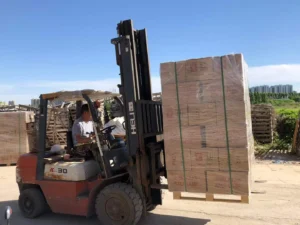
- Pre‑Shipment Inspection Rights & 2% Defect Rate Guarantee: Insist on a contractual right to inspect goods before shipment and require a documented guarantee that defect rate will not exceed 2%. Real Himalayan salt is hygroscopic; unsealed packaging leads to crumbled tiles during ocean freight. Our export packing includes individual shrink‑wrapping plus master cartons with moisture barriers, proven in European spa projects.
Conclusion
A reliable Himalayan salt supplier delivers more than pink blocks. You need verifiable mine origin, full-spectrum optical sorting that rejects rock and clay, and moisture-barrier packaging that survives ocean freight. Skip these checks, and you risk counterfeit salt, electrical shorts in lamps, or crumbled tiles arriving at your spa project.
Now that you know the vetting criteria, compare your current supplier against them. Request batch traceability codes, notarized certificates of origin, and a lab assay for trace minerals. For a direct manufacturer that meets these standards, review the product specs and certification documents at ewoodarts.com.
Frequently Asked Questions
What brand of Himalayan salt is best?
There is no single best brand—reliability comes from the manufacturer’s sourcing and certification. Look for a factory that directly imports from Pakistan’s Khewra mines and holds ISO9001 and BSCI verification. Request a Certificate of Origin and batch test report before ordering.
How can you tell if Himalayan pink salt is real?
Real Himalayan salt is slightly translucent and won’t dissolve instantly in water; counterfeit salt often uses dyed rock salt. A lab report confirming mineral composition and optical sorting is the only. Always ask for a certificate of authenticity from a direct-source supplier.
Are all brands of Himalayan salt the same?
No—purity, processing, and consistency vary widely between commodity importers and dedicated factories. Trustworthy suppliers like Jilin Ever Creation use single-origin salt and multi-stage quality control to ensure uniform color and composition. Verify the supplier’s mine source and quality checks before comparing prices.
Where can I buy Himalayan salt in bulk?
Buy direct from a specialist manufacturer like Jilin Ever Creation, which sources from Pakistan and offers wholesale salt lamps, bricks, and blocks. Bulk orders typically start at one pallet (~1,000. Confirm shipping terms (FOB, CFR, DDP) and MOQ with the supplier first.
How To Choose Trusted Private Label Manufacturers For Himalayan Salt?
Focus on certifications (ISO9001, BSCI, UKCA) and a transparent supply chain from mine to finished product. A reputable manufacturer will offer a low MOQ like 300 pieces, provide batch. Request samples and a certificate of origin before committing to a private-label partner.