
A Himalayan salt block is a dense, crystalline slab of mineral salt used to cook or serve food with steady, radiant heat. When tempered and heated gradually in the oven, it distributes warmth evenly, seasons food naturally, and resists thermal shock that can cause cracking. This guide explains how to prepare, heat, and maintain your salt block properly so it remains durable and safe through repeated cooking sessions.

Prerequisites: Tools and Materials Needed
Before heating a Himalayan salt block in the oven, gather tools that ensure safe handling and precise temperature control. Each item helps prevent cracking and maintains even heat distribution throughout the process.
- Authentic Himalayan salt block from a reputable supplier such as Jilin Ever Creation.
- Oven with adjustable temperature settings.
- Ceramic or other heat-resistant trivet to support the salt block.
- Infrared thermometer for accurate surface temperature readings.
- Heat-resistant gloves for safe handling during and after heating.
- Damp sponge and scraper for cleaning; avoid soap and immersion in water.
Having these essentials ready ensures controlled heating, minimizes safety risks, and helps maintain the block’s structural integrity through repeated use.
Premium Himalayan Salt Blocks for Culinary & Hospitality Needs
Partner with Jilin Ever Creation to source natural, FDA‑ and EU‑approved pink Himalayan salt blocks mined from Pakistan’s Khewra Mine. Customize dimensions, finishes, and packaging for food service, retail, or hospitality applications, all supported by flexible global shipping and low minimum orders.
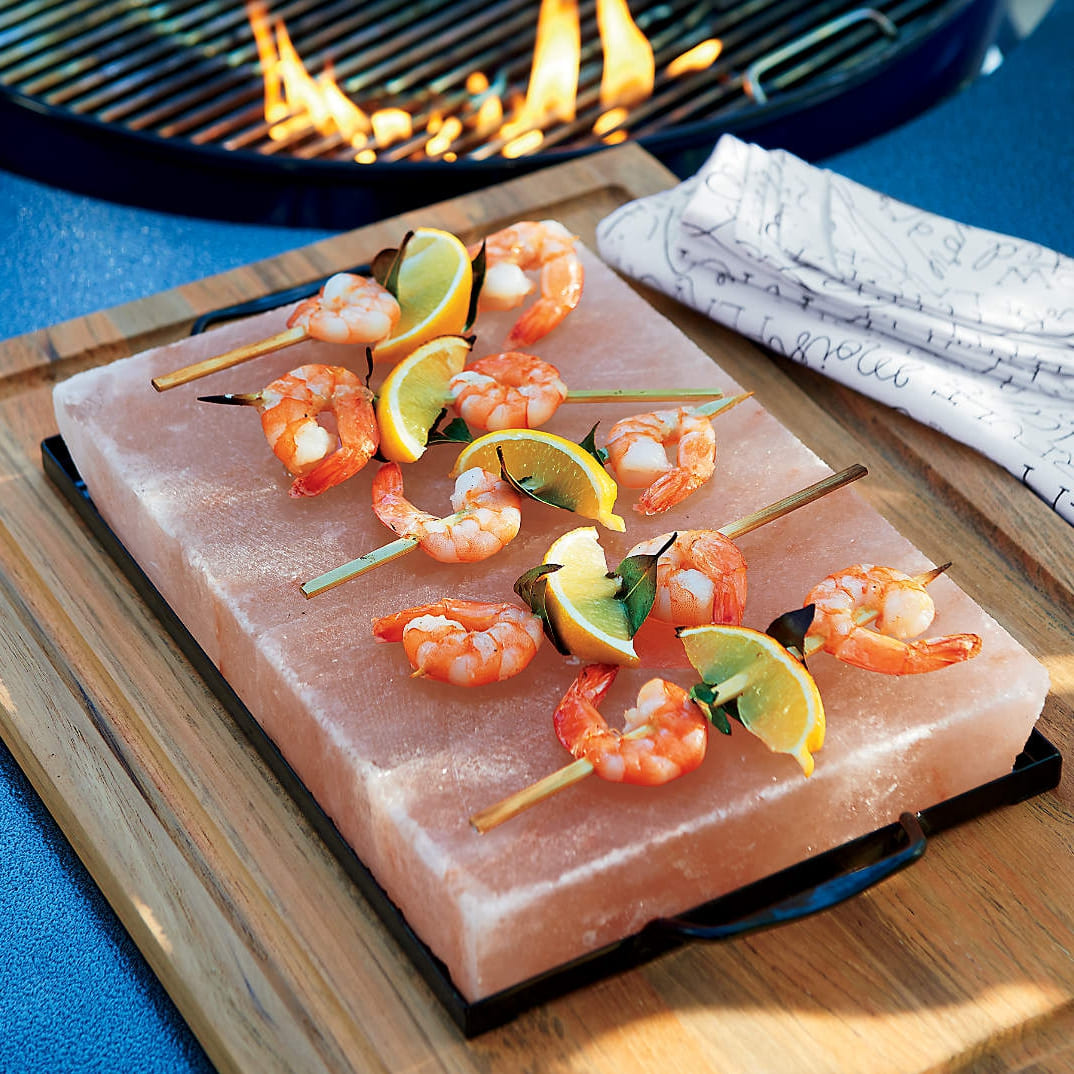
Step 1: Preparing the Salt Block for Oven Heating
Before baking or roasting on a Himalayan salt block, it must be tempered. This conditioning step strengthens the block and prevents cracking when exposed to high oven heat. Tempering removes hidden moisture and allows the salt crystal structure to adapt to gradual, consistent temperatures.
How to Temper the Salt Block Before First Use
Tempering introduces the block to heat slowly, preparing it for safe oven performance. The oven provides steady, indirect warmth—the best way to prevent stress fractures in the salt. Always confirm the block is fully dry before beginning.
- Place the salt block on a stovetop over low heat for 15–20 minutes during the first use to allow moisture to evaporate evenly.
- Avoid direct flame and rapid temperature increases, which can cause fine surface cracks.
- After cooling, the block becomes conditioned for future oven preheating and baking sessions, offering a stable and long-lasting cooking surface.
Step 2: Gradual Oven Heating Process
How to Warm the Salt Block Slowly in the Oven
To temper a Himalayan salt block properly, rely on the oven’s steady, indirect heat. A gradual temperature rise releases residual moisture and prevents cracks caused by rapid thermal changes.
Begin by placing the block on a ceramic trivet or baking stone inside a cold oven. This buffer prevents direct contact with metal racks and supports even heat distribution. Set the oven to 170°F (76°C) and let the block warm gently for about 30 minutes.
Next, increase the temperature by 50–100°F (10–20°C) every half hour. Each stage gives the salt crystal structure time to adjust. Continue until reaching 400–500°F (204–260°C), the ideal range for searing or baking.
Use an infrared thermometer to monitor surface temperature throughout the process. This controlled, incremental heating method conditions the block safely for repeated oven use and prolongs its durability.
Step 3: Cooking and Handling the Salt Block Safely
Using the Salt Block for Oven Cooking and Aftercare
Once your Himalayan salt block has been tempered, the oven provides a reliable way to cook with it. Its steady, indirect heat minimizes thermal shock and promotes even cooking with a subtle salt infusion. Place the block on a trivet or lower oven rack before preheating so it warms gradually as the temperature increases.
During cooking, food may be placed directly on the heated block or transferred carefully to a heat‑resistant surface for serving. Always wear heat‑proof, fire‑resistant gloves when moving or adjusting the block. This precaution prevents burns and ensures a secure grip throughout handling.
After baking or searing, allow the block to cool naturally inside the oven to avoid stress from rapid temperature changes. Leave the oven door slightly open so heat dissipates slowly. Once completely cool, clean the surface with a damp sponge and scraper only. Never immerse the block in water or use soap—its porous salt structure can dissolve on contact with excess moisture.
Expert Tips and Common Mistakes to Avoid
Cooking with a Himalayan salt block in the oven enhances flavor and presentation, but small errors can quickly reduce its lifespan. Careful attention to heating, handling, and maintenance keeps the block safe, stable, and performing well. The guide below highlights common pitfalls and how to prevent them during tempering or baking.
| Common Mistake | How to Prevent or Correct It |
|---|---|
| Heating the salt block too quickly, causing cracks | Increase the oven temperature gradually to avoid thermal shock and maintain the block’s structural integrity. |
| Placing a hot salt block on cold or damp surfaces | Set the block on a heat-resistant trivet or pad to ensure even cooling and protect both surfaces from sudden temperature shifts. |
| Submerging the block in water or cleaning with soap | Use only a damp sponge and gentle scraper for cleaning, then let the block dry completely before storing to prevent surface erosion. |
| Cooling the block immediately on a countertop after use | Allow the block to cool gradually inside the oven; rapid cooling on a countertop can cause contraction and cracking. |
| Handling a hot block without protective gloves | Always wear certified heat-resistant gloves when moving or adjusting a hot block to prevent burns and accidental damage. |
By following these safety and temperature practices, you preserve the block’s structure and achieve consistent culinary performance. The oven’s controlled, even heat works best for tempering—but patience and precision ultimately ensure lasting results.
Understanding Salt Block Durability and Maintenance
Himalayan salt blocks add a refined, naturally seasoned character to oven cooking, but their crystalline structure demands careful handling. Sudden temperature shifts are the most common cause of cracking, so both heating and cooling processes should be gradual. Proper preheating and tempering strengthen the block’s internal structure and reduce stress that can lead to fractures.
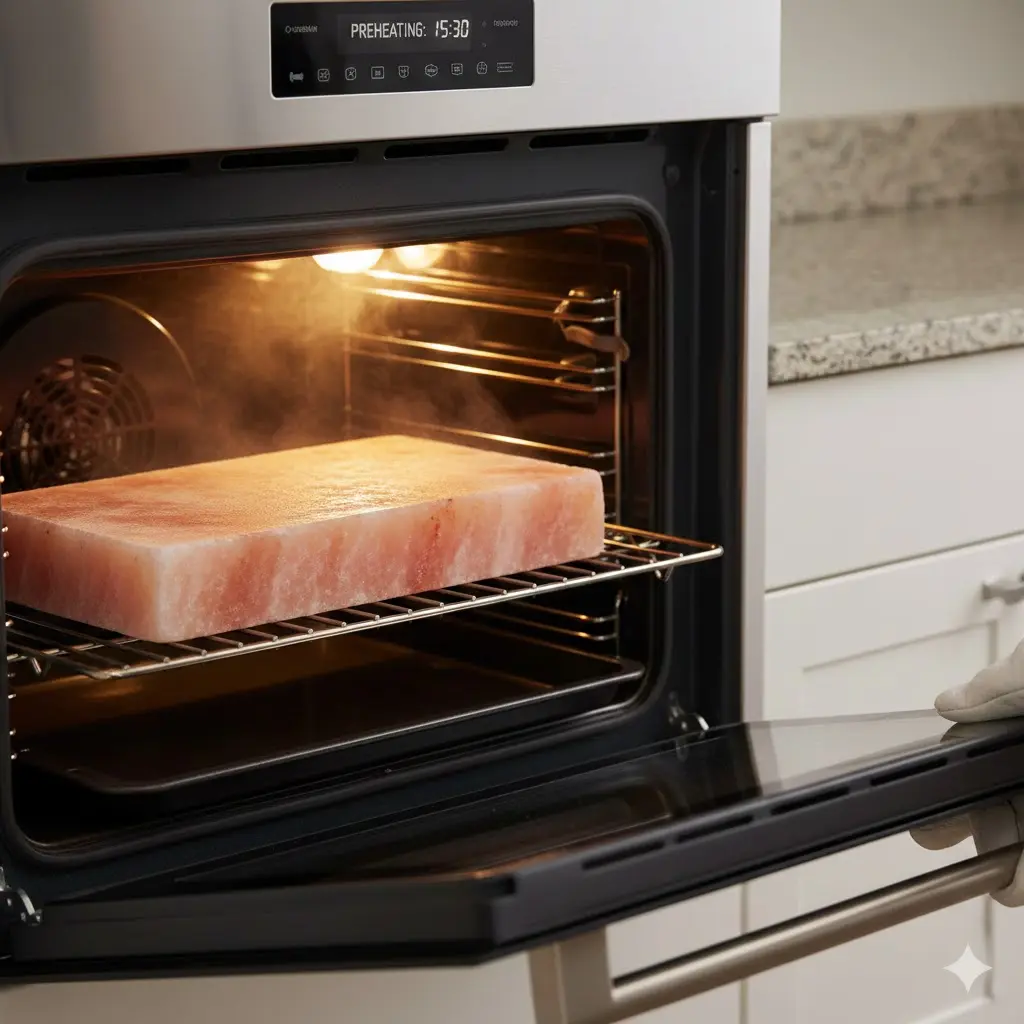
Moisture also plays a key role in long-term durability. Controlled baking cycles allow residual water inside the salt to evaporate safely, preserving structural integrity. Rapid temperature increases, by contrast, trap steam and often result in surface fissures during use.
After each cooking session, minimize contact with water. Allow the block to cool completely, then wipe it with a damp sponge and gently scrape away residue. Avoid soaking, scrubbing, or leaving it in standing water, as salt readily dissolves with prolonged moisture exposure.
Periodic low-temperature tempering sessions act as preventive maintenance. These slow heat cycles reinforce density, maintain hardness, and promote even performance for consistent results in baking, searing, and presentation.
Frequently Asked Questions About Using a Salt Block in the Oven
What is the maximum temperature for heating a Himalayan salt block in the oven?
A Himalayan salt block can be safely heated to approximately 400–500°F for searing or baking. Begin at the lowest oven setting and increase the temperature in 50°F increments every 30 minutes. Avoid rapid temperature jumps, which can cause cracking and reduce the block’s lifespan.
Is it better to place the salt block on a baking sheet or directly on the oven rack?
Place the block on a ceramic trivet, sturdy baking sheet, or heavy-duty oven rack while the oven is still cold. Avoid glass or thin metal surfaces, as the block’s weight and heat may cause them to warp or crack. Using a trivet also simplifies handling after cooking.
How long does it take to fully heat a salt block in the oven?
Reaching a stable cooking temperature typically takes 90 minutes to two hours. Begin at 170°F for 30 minutes, then gradually raise the temperature in stages until the block reaches the target cooking range. This slow warm-up promotes structural stability and even heat distribution.
How should I handle the salt block after cooking to ensure safety?
Always wear heat-resistant gloves when handling a hot salt block. Allow it to cool gradually inside the oven to prevent thermal shock. Never place a hot block on a cold countertop or expose it to water, as this can lead to immediate cracking or injury.
Can I bake items like pizza or bread on a Himalayan salt block?
Yes. A properly tempered and preheated salt block can be used to bake pizza, flatbreads, or cookies, adding a subtle savory flavor. Ensure the block is fully heated before placing dough or batter on it to prevent sticking. The result is a crisp, evenly baked surface with natural seasoning.
Final Thoughts
Tempering a Himalayan salt block in the oven is the most dependable way to prepare it for consistent, high‑temperature cooking. The gradual, even heat removes residual moisture and stabilizes the crystal structure, preventing stress or cracking.
Raising the temperature in controlled increments and handling the block with heat‑resistant gloves safeguards its integrity and extends its usable life. Careful oven conditioning creates a more resilient surface and ensures balanced seasoning with every use.
Once comfortable with oven techniques, explore advanced applications such as grilling or chilled serving presentations. Each method benefits from precise tempering and temperature control, reinforcing both performance and safety in professional culinary settings.
Experience the quality firsthand with our trial order – an easy way to test these high-margin products with just a $500 investment. Get in touch to start your trial order today!