Skip to content
In a market flooded with mass-produced goods, finding suppliers who deliver consistent quality and craftsmanship is a persistent challenge for procurement officers. Too often, subpar materials or rushed production compromise durability—costing businesses time, money, and trust.
Nestled in Jilin, China, Jilin Ever Creation’s wood carving factory answers that problem with handcrafted excellence at industrial reliability: over twenty years turning linden and pine into intricate, durable pieces—carved birds, slingshots, coasters, and custom gifts—under documented ISO 9001 quality management and EN71 product safety. This article walks through the process, from timber selection to final inspection, and explains how craft consistency elevates a supply chain.
Key Takeaways
- Two decades of single-material focus (linden and pine) beats generalist factories on detail quality.
- Traditional hand passes and modern machine passes are deliberately split—each does what it does best.
- ISO 9001 governs the process; EN71 governs the paint; pre-shipment photo and video approval governs the buyer.
- Raw-to-finished production for a typical carved bird runs 4 to 8 days depending on detail level.
- Over 90% of production ships to North America and Europe—export packing is built into every stage.
- Wood traceability comes from official timber felling and transport permits, documented lot by lot.
Table of Contents
1. The legacy of craftsmanship at Jilin Ever Creation
Imagine a workshop where every piece of wood tells a story. That is Jilin Ever Creation, a wood carving factory in Jilin, China, that has been perfecting artisan wood carving for over twenty years. Since 2004, the company has turned simple linden and pine into handcrafted wooden products shipped to customers worldwide.
Origins and growth of an export-first workshop
Jilin Ever Creation started as a small operation with focused ambitions. Over two decades it grew into a specialized carving factory, exporting more than 90% of its goods to North America and Europe. The ISO 9001 certificate is the proof that growth was disciplined, not accidental—quality management systems, documented at every stage, are what make a workshop trusted by overseas buyers who cannot walk the floor themselves.
The role of tradition in modern production
Tradition here is not a slogan—it is the backbone of the work. Skilled artisans hand-carve each piece, blending time-honored techniques with modern tolerances. The result is handcrafted wooden products that feel timeless while fitting contemporary retail: every cut and curve on a bird or slingshot carries accumulated technique, which is the one thing automated replicas cannot buy.
Why craftsmanship matters for procurement decisions
When choosing a supplier, craftsmanship decides return rates. A twenty-year legacy means the factory has already absorbed the mistakes that a newer shop will pass on to you. Businesses working with this factory get more than products—they get a partner fully committed on quality and customization, with an operating record open to inspection. The historical depth of the trade itself, from relief carving to modern decorative craft, is documented in scholarly accounts of wood carving’s evolution.
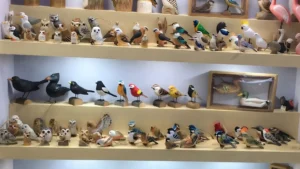
The craft shows up concretely in finished goods—detailed bird mobiles, painted songbirds, and characterful pieces whose hand origin is visible at arm’s length, like the work displayed across our hand-painted duck collection.

2. Mastering wood carving techniques: tradition meets innovation
How does a plain block of wood become a bird that looks ready to fly? At Jilin Ever Creation, wood carving techniques blend old-world handwork with modern tooling, and the sequence is deliberate: machines do the work machines win, artisans do the work only hands can do.
Traditional hand-carving and its precision
Senior artisans learned the craft the hard way—by hand, for years. Traditional hand techniques demand patience and a steady grip, and that precision is what gives wooden birds and slingshots their character: the feather layering, the eye line, the wing curve that no router template reproduces. Design exploration of those techniques is the subject of our companion piece on innovative wood carving birds.
Modern tools, used where they beat hands
The factory does not romanticize inefficiency. High-speed sanders, band saws, and jigs handle stock removal and flattening—operations where repeatability matters—before hand chisels take over for detailing. The split keeps production honest: machine consistency on the structural passes, artisan control on every visible one.
From raw wood to finished product
The production path is short to read and long to master. Raw linden or pine is handpicked and inspected at intake, sketched against the client’s sample or reference, rough-shaped, carved to detail, sanded by hand and machine in alternation, painted with water-based EN71-compliant coats, and sealed. A typical carved bird completes that path in four to eight days depending on detail level, with quality gates at each stage rather than only at the end.

3. Ensuring quality: standards and processes in wood carving
When sourcing handcrafted wooden products, quality is not a perk—it is the contract. At Jilin Ever Creation, quality assurance in wood carving is built into every step, and the certifications make it auditable: ISO 9001 for the management system behind production, and EN71-1/-2/-3 covering mechanical safety, flammability, and chemical migration on painted goods.
Rigorous checks at every stage, not just the last
No piece leaves without inspection where inspection actually applies. Raw pine and linden are checked for grain defects and moisture at intake; semi-finished carvings are checked for structural detail; painted goods face finish and adhesion checks before packing. The full stage-by-stage logic—what gets checked, when, and with what—is the subject of our dedicated quality control in hand carving guide.
Quality assurance versus mass production
Mass production is fast, and it is also flat: identical flaws ship by the thousand. The handcrafted approach wins because oversight attaches to each stage—weight, finish, and joint strength on a carved bird are verified piece-class by piece-class, which is how a factory delivers both soul and repeatability. For buyers, that distinction shows up months later as a difference in return rates, not in the sample box.
Pre-shipment approval, before the container moves
The final gate is the buyer’s. Every wholesale order ends with a photo-and-video approval pass: the actual finished goods, photographed off the line, sent before shipping. A North American buyer’s carved birds and pens went through exactly that loop—each style verified for weight, finish, and strength against the approved sample—and arrived as ordered, years of shelf life still ahead.
4. Sustainable practices and material traceability
Green sourcing is now a procurement requirement, not a marketing garnish. Jilin Ever Creation has spent over twenty years refining sustainable wood sourcing, turning linden and pine from the Changbai Mountain region into eco-friendly wood crafts with a defensible paper trail behind every lot.
Responsible sourcing of linden and pine
It starts with the trees. Wood is selected from managed stands under official timber felling and transport permits, so every delivery of raw stock is legal, documented, and traceable to its origin. That permit-level traceability is the honest baseline of sustainable sourcing—the scale and governance of world forestry are set out by the FAO Forestry Department, and the role of artisan craft in sustainable development has its academic literature too.
Certifications and what they actually cover
One clarification saves importers real trouble. The company holds an FSC chain-of-custody certificate covering its facility and processes; the basswood and pine used in carving lines are sold on the strength of documented legal sourcing (felling and transport permits), not as product-level FSC-certified material. ISO 9001 and EN71 apply to the production system and the painted goods respectively. Knowing which claim attaches to which certificate is what a compliance-minded buyer should demand in writing—and it is written into our own line sheets.
Eco-friendly techniques in production
Low-waste carving patterns, water-based non-toxic paints, and recycled-paper packing run through daily production. Offcuts go to smaller items—coasters, pegs, blanks—rather than the skip, and the finishing chemistry is chosen so that repair touch-ups (see our packing and handling practice for the transport-side logic) use the same safe materials as the original coat.

5. Customization and global reach
A wood carving factory is most useful when it can make yours. Jilin Ever Creation blends sample-based customization with a global shipping footprint, which is why procurement teams treat it as a standing partner rather than a one-order supplier.
From client sample to final product
Send a sample or a drawing, and the workshop reverse-engineers it: species and grade selection, carving passes, paint matching, and a proof photo before tooling the batch. Pens, coasters, ornaments, and birds all start the same way—what makes the result high-quality is the detail budget you allocate and the tolerance you set in the approval loop, documented in our custom manufacturing process page.
Serving North America, Europe, and beyond
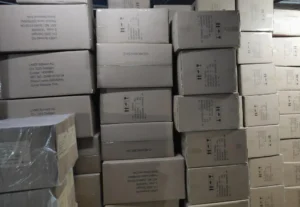
More than ninety percent of production ships abroad, concentrated in North American and European retail, with growing seasonal demand from Australia and Southeast Asia. Export packing, marking specs, and lead-time planning are standard at this factory, not extras—paired with the trial-order tier (100 pieces, 15-20 days by air DDP) that lets a new buyer verify quality before scaling to sea-freight production runs.
The practical edge for procurement officers
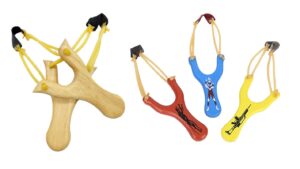
How to choose a wood carving supplier? Judge reliability, documented sourcing, and customization responsiveness—and test all three with a small order first. A U.S. client’s custom slingshot line began exactly that way: sketch to basswood sample to repeat wholesale, the same path our wholesale wooden crafts partners follow.

Conclusion
Twenty years in the wooden crafts trade makes one thing clear: craftsmanship is not decoration on top of manufacturing—it is the manufacturing. At Jilin Ever Creation, tradition and modern standards are the same system: hand passes only where hands win, documented quality everywhere else, and a buyer who can see the goods before they ship.
Quality and care separate the best suppliers from the rest. If you are evaluating a partner who delivers more than products, start small, verify the details, and let the production record do the persuading. The material science behind our species choices—hardness, grain, and moisture control—is laid out in the basswood technical guide.
Twenty Years of Craft, One Proof Batch Away
Jilin Ever Creation runs sample-based customization under ISO 9001 process control—verify every detail on photo-and-video pre-shipment approval before your order ships.
Frequently Asked Questions
What are the main types of wood carving techniques used in factories?
Factories combine relief carving, whittling, and chip carving, each with specific tools and passes to create different textures and depths. Machine stock-removal handles the structural cuts; hand tools execute the visible detail.
How is quality assurance maintained in wood carving factories?
Through staged inspection—raw material checks at intake, detail checks on semi-finished carvings, finish checks on painted goods—supported by skilled artisans, ISO 9001 process discipline, and buyer pre-shipment approval.
What types of custom wood crafts can a carving factory produce?
Sample-based production covers decorative sculptures, gift items, coasters, ornaments, pens, and functional pieces. Custom designs are tailored to the client’s sample, sketch, or brand color specification.
How does sustainability work in a wood carving factory?
Responsibly sourced linden and pine with official felling and transport permits, low-waste cutting patterns that route offcuts to smaller items, water-based non-toxic finishes, and recycled packing paper.
What are the steps in the wood carving process?
Select and inspect the wood, sketch against the approved reference, rough-cut the shape, refine with carving knives and gouges, add detailing, sand by hand and machine, then paint, seal, and inspect before packing.