Skip to content
Client Appreciation · Holiday B2B Gifting
December is the one month a listing agent, a book of business, or a farm insurance agency will actually thank you for the paperwork you sent all year. If you are sourcing real estate agent christmas gifts, this guide shows retailers and corporate suppliers how to build a client-appreciation Christmas gift program around hand-carved wooden ornaments: who buys, what sells, how to personalize it, and the production calendar that keeps gifts out of a January recycling bin.
Key Takeaways
- Agents gift at scale, not at random. A single agent typically orders 50-300 units per season for closed clients, past clients, and referral partners (lenders, title officers, inspectors), which makes them a repeatable wholesale segment rather than a one-off buyer.
- Personalization is the entry ticket. An unmarked gift is a decoration; a gift with the family name, the address of their first purchase, or the agency logo becomes a keepsake, and keepsakes justify a higher retail price.
- Wood ornaments match the niche psychology. Buyers in this segment want “heirloom, home, warmth” signals, and a hand-carved wooden ornament maps onto all three without the fragility of glass or the giveaway feel of plastic.
- The calendar is unforgiving. Personalized holiday orders must be locked by early autumn; production and transit windows collapse after that, and a gift arriving in February actively damages the buyer’s client relationships.
- Sell programs, not SKUs. Agencies respond to tiered gifting systems, top clients get premium carved sets, open houses get mid-tier ornaments, prospects get branded blanks, so retailers who merchandize in tiers win larger orders.
In This Guide
- Why Real Estate & Insurance Agents Are a Strong Wholesale Niche
- What Actually Sells: A Quick Reference Table
- Personalization Tiers: Name, Address, Family Set
- Packaging That Does the Gifting Work for the Buyer
- The Order Calendar: Lock Dates, Production, Delivery
- How Retail Stores Should Merchandise This Category
- Budget Tiers and Volume Logic
- FAQ
Why Real Estate & Insurance Agents Are a Strong Wholesale Niche
Unlike casual holiday shoppers who buy impulsively, real estate brokers, independent insurance agents, and mortgage originators operate on recurring annual marketing budgets. For these professionals, year-end gifting is not an expense—it is customer retention infrastructure. A well-chosen physical gift delivered in December generates repeat listings, policy renewals, and warm referrals well into the third quarter of the following year. Retailers who understand this psychological distinction stop trying to sell single decorations and start selling structured client-appreciation programs.
What Actually Sells: A Quick Reference Table
Agent and agency buyers do not browse categories, they browse recipient lists. The mapping below reflects how the requests we receive are actually phrased, and it is the fastest way for a salesperson to qualify a bulk buyer in one conversation.
| Recipient Tier | Typical Buyer Asks | Best-Fit Product | Order Size |
|---|---|---|---|
| Top closed clients (the “keys” list) | Family name + move-in year, gift box, card insert | Hand-carved ornament set (bird, house, tree) | 25-75 units |
| Past clients (5-year database) | Single ornament, engraved name, hang tag | Laser-cut flat ornament, custom engraving | 100-300 units |
| Referral partners (lenders, title, inspectors) | Agency logo, premium finish, desk-safe display | Carved figure on base or mantel ornament | 10-30 units |
| Open house / farm walk prospects | Low unit cost, logo, easy to hand out | Two-piece engraved blank ornament with card backer | 300+ units |
| Insurance agency staff & producers | Matching set, year marker, tenure recognition | Same-shape ornament family with year variants | 10-50 units |
Notice the pattern: the unit cost goes down as the list gets longer. The retail counter instinct is to push the premium SKU; the correct instinct in this niche is to build a three-tier ladder from one tooling family, so the buyer can allocate budget across the whole recipient pyramid without placing four separate orders. Our wholesale wooden crafts line is set up this way by default, carving, finishing, engraving, and packaging under one roof, which keeps tiered programs inside a single production slot.
Personalization Tiers: Name, Address, Family Set
“Personalized” is one word doing a lot of jobs. In this category there are actually three escalating levels, and each one moves the price band and the deadline:
- Tier 1, date or logo only. A single engraving plate (agency name + year, or just the year). Fastest, cheapest, and safe at 300+ units because no per-unit data varies. This is the prospect-gift workhorse.
- Tier 2, per-recipient names. Every unit carries different text, the client’s surname or household name. This requires the buyer to supply a clean spreadsheet, and it requires the seller to proof names back to them in writing before production. Misspelling a client’s name on their own gift is the single most expensive error in this category.
- Tier 3, family sets and addresses. Multi-piece ornaments that assemble into one story: the family surname tree, the address of their first purchase, a bird per species per kid. Highest perceived value per dollar spent, and the tier that top-producing agents actually remember giving.
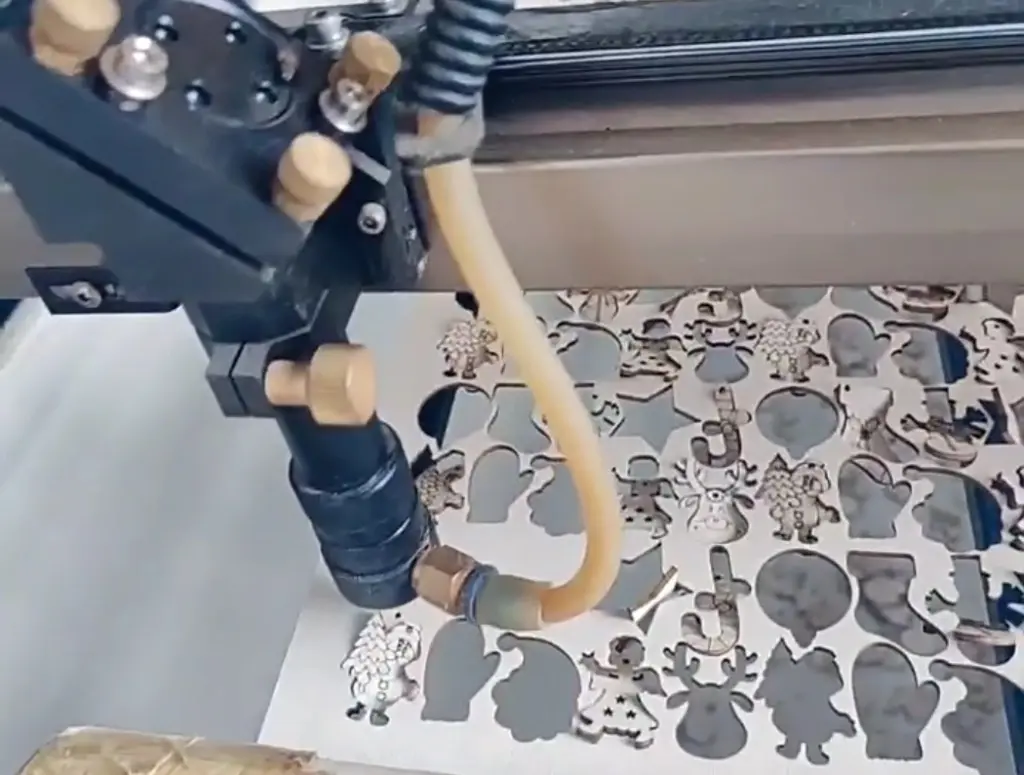
From the manufacturing side, Tier 1 is a tooling decision, Tier 2 is a data-verification decision, and Tier 3 is an assembly-and-packaging decision. That progression matters when a buyer asks “how much extra for names?” because the honest answer depends on which tier they mean and how many name lines per unit. When quoting our carved lines, always quote the engraving method (laser vs. hand-painted name) separately from the ornament itself; it keeps your margin visible and keeps the buyer from comparing your Tier 2 price against someone else’s Tier 1.
We cover the design-to-sample mechanics in depth in our hand-carved versus laser-cut ornament comparison, but the short version for agent buyers is: approve a proof with their actual client names on it, not a lorem-ipsum mockup. Half of all December disasters trace back to a proof nobody read carefully.
Packaging That Does the Gifting Work for the Buyer
An agent’s real constraint in December is not money, it is hands. A 200-name list means 200 envelopes, 200 cards, 200 something to tape the gift to. Retailers who solve the assembly problem win the order against sellers who only solve the product problem.
Three packaging moves matter in this niche:
- Insert card with a message slot. A Christmas-themed card printed with the agency logo on the front and a blank signature line inside, attached to the ornament, converts a product into a greeting. The buyer writes 200 first names in one sitting instead of sourcing cards separately.
- Ready-to-mail proportions. Ornaments packed to fit a standard flat envelope or a padded mailer, not a box that triggers parcel pricing, change the buyer’s math completely. A gift that costs more to mail than to buy never makes the list.
- Per-unit protection with a hang tag. Ribbon already tied, tag already printed, ornament already in a clear sleeve with a backing card: the unit goes from carton to client envelope with zero touch.
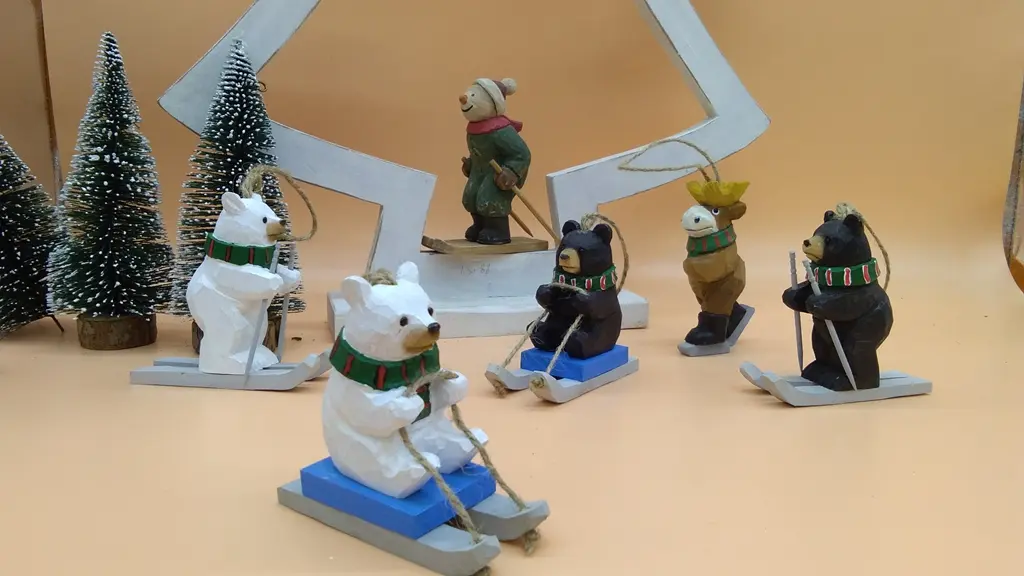
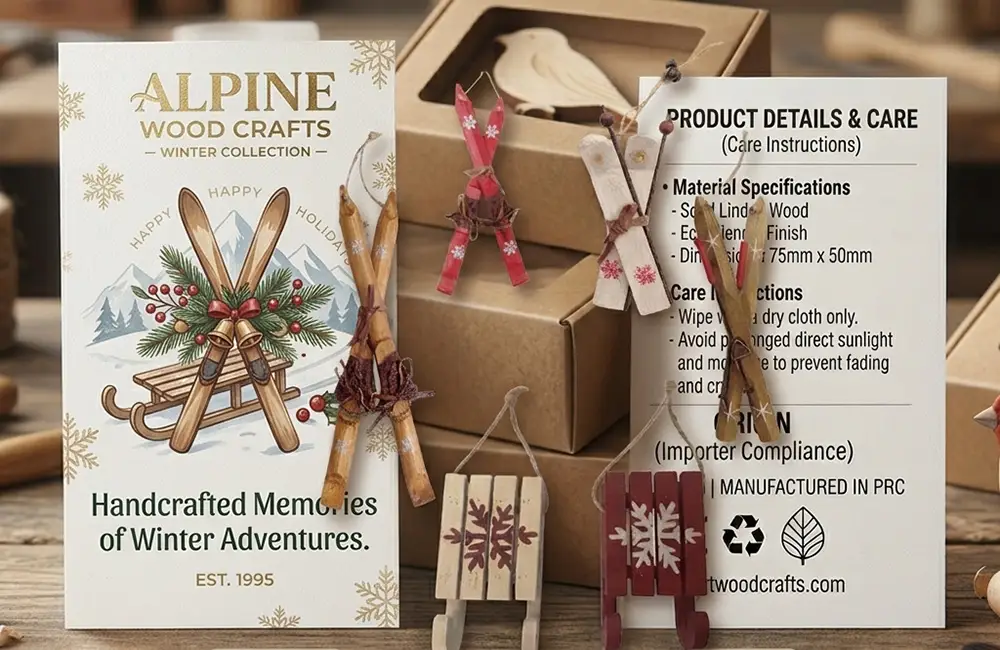
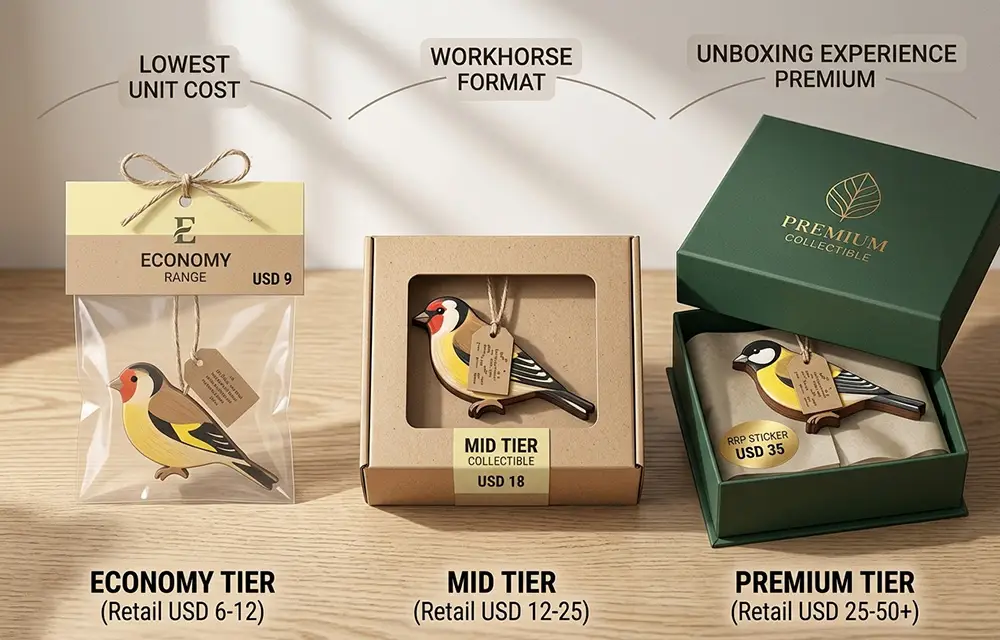
The images below show a real production example from our own line: the front-and-back view of an alpine ski-sled ornament with its holiday insert card, alongside our standard packaging tier comparison.
The Order Calendar: Lock Dates, Production, Delivery
Every failure we see in client-gifting is a calendar failure. The buyer assumes December is the deadline. The real deadlines are three months earlier, and they stack:
| Milestone | Real-World Window | What Slips If You Miss It |
|---|---|---|
| Program planning & budget sign-off | June – July | Tooling slots for custom shapes; late buyers default to stock shapes |
| Golden sample & name-list proofing | August | Anything with per-unit engraving; unproofed names become misspelled gifts |
| Production & pre-shipment QC | September | Ocean transit; air freight at 3-4x cost is the only recovery lever |
| In-destination arrival & store repack | Early – Mid October | Personalization turnaround at the retail end; holiday card-mailing window |
| Gifts in clients’ hands | November – December 15 | The entire point of the program |
Retailers should print this calendar and hand it to bulk buyers in September conversations, not December ones. A buyer who is “just looking” on October 1 is already a tooling-slot miss; the honest sell is the in-stock engraving ladder, not the custom shape they cannot get. If you want a fuller breakdown of MOQ and lead-time mechanics, see our wholesale procurement guide for wooden crafts.
How Retail Stores Should Merchandise This Category
When an agent walks into your store, they are not shopping. They are auditing you for a program. Merchandise the category so the audit answers itself:
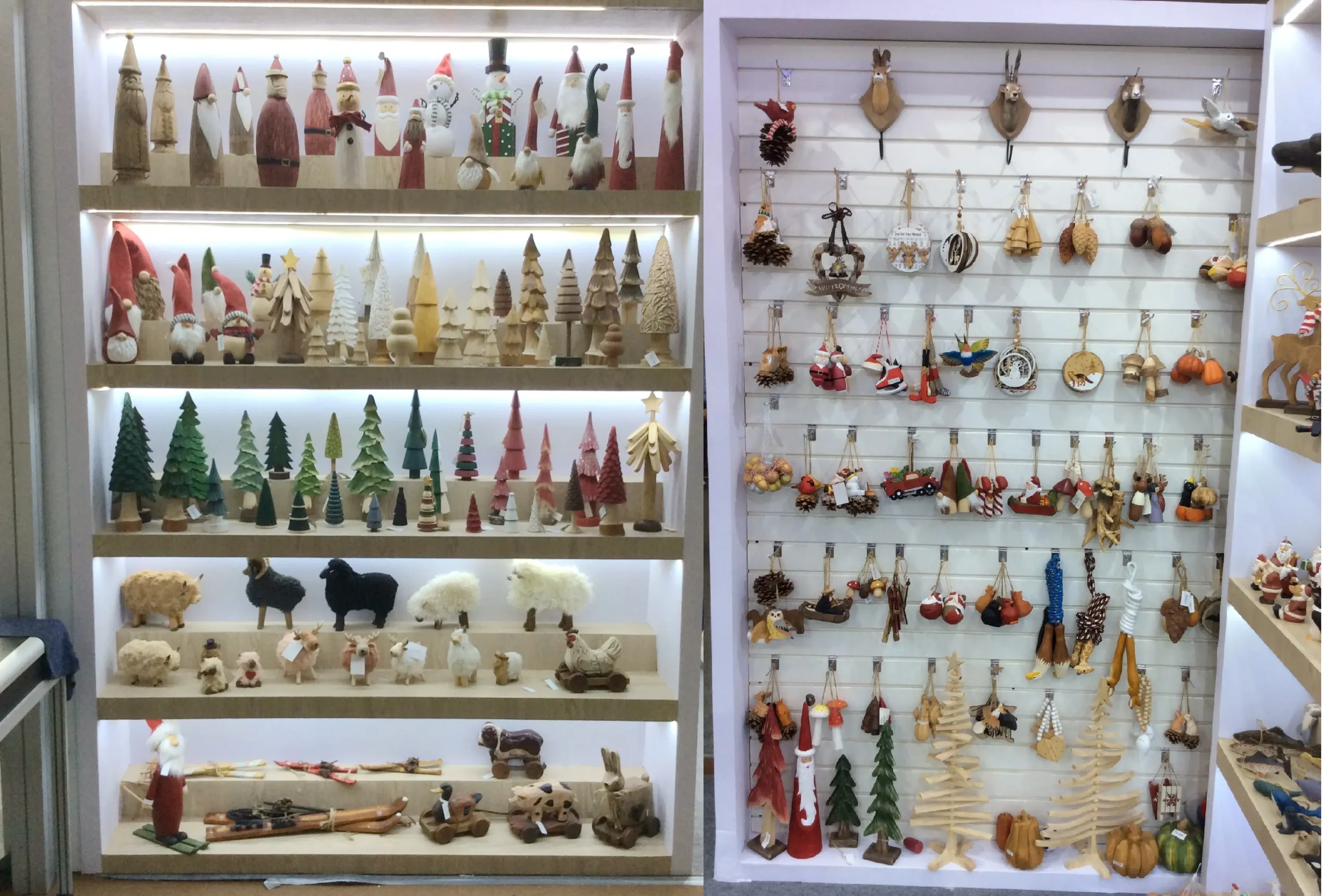
- Build a “corporate gifting” table, not an ornament aisle. One tiered display, economy to premium, with a sample of each packaging level, does the selling before your staff opens their mouth. Our own window display playbook covers the anchor-piece logic that makes this table readable from the sidewalk.
- Post the volume ladder on the fixture. A simple card (“25+ / 100+ / 300+ tiers, ask us about name engraving”) converts a browser with a 180-name list into a conversation. Most stores never say the word “corporate” out loud and therefore never hear these buyers identify themselves.
- Keep a proof pad and a sample name spreadsheet. Show a buyer the mock ornament with their own agency name on it in under two minutes. That demo closes more of this niche than any discount.
- Partner with the local co-working realty office and independent insurance agencies. Leave a tiered sample kit; those offices re-order annually and refer each other.
Budget Tiers and Volume Logic
Agent buyers typically budget per recipient, not per order, and the per-recipient number splits into three recognizable bands: a stocking-stuffer band aimed at the full database, a keepsake band for recently closed clients, and a flagship band for the ten relationships that generated half the year’s commissions. The product logic that supports all three from one tooling family looks like this:
| Program Layer | Build | Personalization | Packaging Level |
|---|---|---|---|
| Database-wide (200-500 names) | Single laser-cut flat ornament, one shape per year | Agency logo + year only | Economy: sleeve + backer card |
| Active closings (25-100 names) | Two-piece carved ornament (tree + bird) | Surname + move-in year engraving | Mid: insert card + ribbon + hang tag |
| Top-10 relationships | Hand-carved family set or custom silhouette | Full family name, address, or custom scene | Premium: gift box + letterpress card |
We deliberately do not print FOB figures here, because engraved, packaged, tiered programs are quoted per specification, not per catalog page. What we can say with certainty from twenty years of December orders: the buyer who locks a three-tier program in August outperforms the buyer who hunts for a deal in November on both unit cost and delivered happiness, because slot availability, not sticker price, is what governs the economics late in the season. Request current wholesale pricing through the quote link below and we will return a tiered sheet against your actual name count.
One more budget note that saves retail conversations: tax treatment. In the US, business gifts face a long-standing per-recipient deduction limit under IRC §274(b) (historically $25), which quietly explains why this niche buys 300 modest ornaments rather than 20 luxury ones. Agents do not cite the code, but they behave like they’ve read it: many names, modest per-unit value, one engraving story each. (Practical context, not tax advice.)
Build a Client-Gift Program Your Buyers Re-Order Every December
FAQ
Q1: How many ornaments does a typical real estate agent order for a December client-gift program?
A: Most solo agents order between 50 and 150 units, sized to their five-year past-client database, while teams and brokerage offices commonly run 200-500. That is why tiered pricing ladders beat single unit prices in this niche: the same ornament family must serve a 60-name list and a 400-name list without retooling.
Q2: Can each ornament carry a different client name?
A: Yes, per-unit engraving is standard for this category. The buyer supplies a spreadsheet, the supplier proofs it back with a sample list showing the actual names, and production only starts after written approval. Misspelled names are the most common and most costly failure, so treat the proof step as part of the product.
Q3: When is the last safe date to place a personalized Christmas gifting order?
A: For imported, engraved, gift-boxed programs, the practical lock is end of summer for ocean freight, with air freight as an expensive fallback into early autumn. Domestic stock-and-engrave options can run later, but anything requiring custom tooling or packaging should be finalized by August to survive Q4 port and carrier congestion.
Q4: Why do agents choose wooden ornaments over candles, mugs, or wine baskets?
A: Three reasons: weight and flat-pack shipping keep per-unit delivery cost near zero, wood carries the “home and heirloom” brand language agents already sell, and an engraved surface turns a generic gift into a named keepsake. Candles melt in transit, mugs break, wine baskets exclude recipients, and none of them carry a family name.
Q5: What should a retail store ask a bulk buyer in the first conversation?
A: Two questions only: “How many names are on your list, and when do they need to be mailed?” Those answers instantly determine the tier structure, personalization level, and whether the calendar is realistic, and they position your store as a program consultant rather than a product vendor.
Video note: no factory video asset exists yet for client-appreciation ornament production. Flagged for production; this guide ships with verified stills from the 2026 ornament and packaging lines in the meantime.