Skip to content

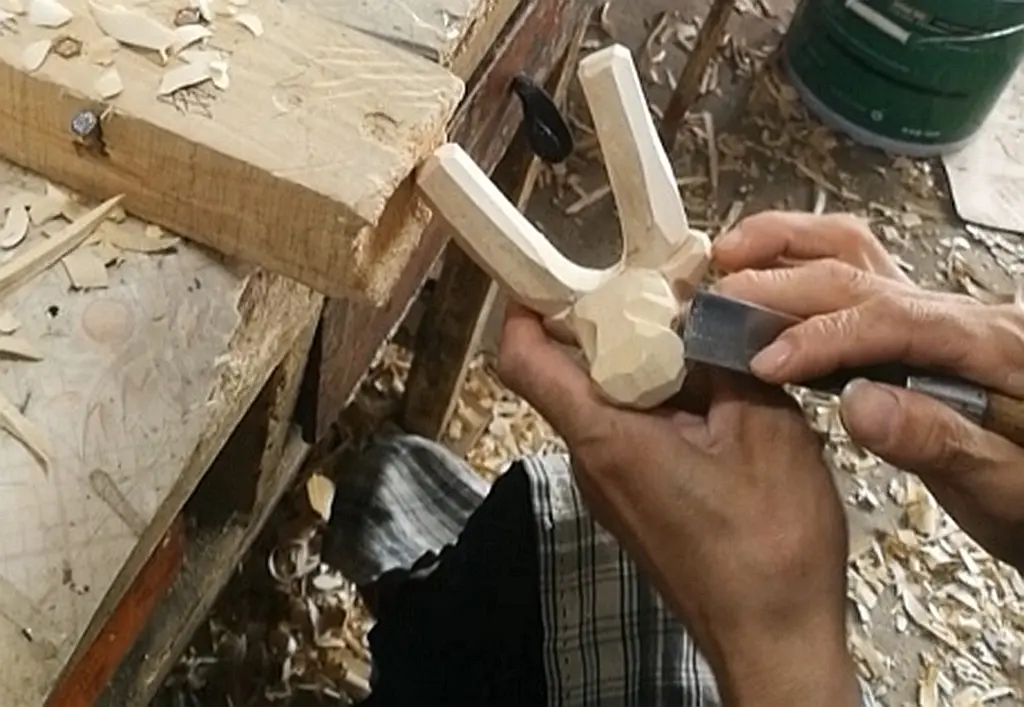
A slingshot frame is the whole instrument in miniature. The fork geometry sets the draw length, the band anchor and the way the shot feels in the hand; the material sets whether those properties hold still over years of use or drift with humidity, impact and fatigue. Buyers comparing wood against metal are really comparing two different ideas of what the object is for.
This comparison is written from one side of it. We carve wooden slingshot frames in solid timber and we do not make metal ones, so the metal side below is described fairly but from the outside, and where a number would belong to a metal supplier we say so rather than inventing it. What we can give you is our own first-party material and commercial terms, and the safety position a slingshot carries into retail.
Key Takeaways
- The frame is the slingshot: fork geometry sets draw and band anchor, and our carved frames come from the same 5 cm to 40 cm three-dimensional range as our ornament work.
- Wood damps vibration where metal transmits it, and our moisture standard of 8 to 12 percent before finishing is what keeps a wooden fork from moving after it ships.
- Metal frames are outside our capability entirely: we work 4 species (basswood, pinewood, rubber wood, birch) and no metal, so the metal side of this comparison belongs to another supply chain.
- A slingshot within a child’s reach is a different product from an adult sport item: the age grade, the warning label and the band specification all change, and small-parts rules apply under age 3.
- Trial tier is 100 pieces at a USD 500 minimum order value on in-stock designs, air express DDP in 20 to 30 days; wholesale and custom is 300 pieces at USD 3,000, sea freight, 60 to 90 days to port.
- No velocity, energy or cycle-life figure is quoted here; those move with band, pouch and draw length, and a number offered without your own 3 variables is a guess.
In This Guide
- Why the Frame Decides the Slingshot
- Slingshot Frame in Wood: What It Gives and What It Costs
- The Metal Side, Described Fairly
- Wood and Metal Frames Compared
- Safety, Labeling and the Age Question
- What We Make and What We Do Not
- Best For / Not For
- What We Check on a Slingshot Run
- End to End: Specifying a Wooden Slingshot Order
- Frequently Asked Questions
Why the Frame Decides the Slingshot
Bands and pouches are consumables; the frame is the product. Everything a user feels at full draw, the way the fork sits in the hand, whether the band stays seated after a thousand releases, is a property of the frame’s shape and its material. Two frames with identical geometry in different materials will not shoot or age identically, which is why the material question is not cosmetic.
It is also a question about failure mode. A frame that fails does so suddenly and under load, so the material’s behaviour at its limit matters more than its behaviour in normal use. That is the single most important difference between the two sides of this comparison, and it is the reason a serious buyer asks about grain direction, casting quality or machining method rather than about finish.
Slingshot Frame in Wood: What It Gives and What It Costs
A carved wooden fork gives three things a metal frame cannot. It damps vibration, so the shot feels quieter in the hand. It is warm and grippy rather than cold and slick, which matters in cold weather and in long sessions. And each piece carries grain and carving character, which is why a wooden slingshot is bought as an object as much as a tool.
What it costs is sensitivity to moisture and to grain orientation. Wood moves with humidity, so a fork carved without respect for the grain can open a check along a limb over seasons, and a piece that ships wet can move in transit. That is why the material is dried to 8 to 12 percent before finishing and why the fork is carved with the grain running through the limbs rather than across them. The species choice matters too: a dense hardwood branch blank carries load differently from a soft carving wood, and the honest answer to “which wood” depends on the draw weight the frame has to hold.
The Metal Side, Described Fairly
Metal frames, usually aluminium or steel, are machined or cast to a tolerance wood cannot hold, and they do not move with humidity. For a shooter who wants identical behaviour from every unit and the option of interchangeable band mounts, metal is the rational choice, and it is the material most competitive and sport-oriented slingshots use.
The trade-offs are the mirror image of wood’s strengths. Metal transmits vibration to the hand, is cold and can be slick, and a cast frame carries its own failure question in the form of porosity or a poor alloy, which is why machined billet frames sit above cast ones in price. We describe these from the buyer’s side because we do not manufacture them: any velocity, fatigue-cycle or alloy specification for a metal frame has to come from that supplier against your own draw setup, and we will not quote one. The company behind the wooden side of this comparison is at ewoodarts.com.
Wood and Metal Frames Compared
| Factor | Carved wood | Machined or cast metal |
|---|---|---|
| Shot feel | Damped, warm, grippy | Crisp, vibration transmitted |
| Dimensional stability | Moves with humidity unless dried and grained correctly | Stable; tolerance held by machining |
| Unit-to-unit consistency | Varies with grain and hand; judged against a retained sample | High within a production batch |
| Failure question | Grain orientation and moisture | Casting porosity or alloy quality |
| Object value | Kept and displayed as a carved piece | Kept as equipment |
| Our capability | Yes, hand-carved in solid timber | No, a different supply chain |
Read down the table and the pattern is that neither material wins; they optimise for different things. Wood optimises for feel and for the life of the object after the shot, metal for repeatability and dimensional indifference. A retailer choosing between them is choosing which customer they are serving, and the bay should be built around that answer rather than around whichever frame is cheaper to buy.
Safety, Labeling and the Age Question
A slingshot is a projectile device, which puts it in a different compliance conversation from a decorative carving. Two questions dominate. Who is it sold to, and what does the packaging say. A frame marketed into a child’s hands is a children’s product with a small-parts and age-grading assessment; the same frame marketed as adult sport equipment is not, and the label, the warning text and the band specification differ accordingly.
In the United States the small-parts and children’s product rules are administered by the Consumer Product Safety Commission and published in its safer products guidance; in the European market the EN71 series applies where the article is a toy. The grade and the warning are compliance statements and must not be adjusted to widen an audience, because the grade that understates the hazard is the one that produces a recall. Retail-facing labeling practice for our slingshot range is covered in our guide to slingshot retail safety labeling.
What We Make and What We Do Not
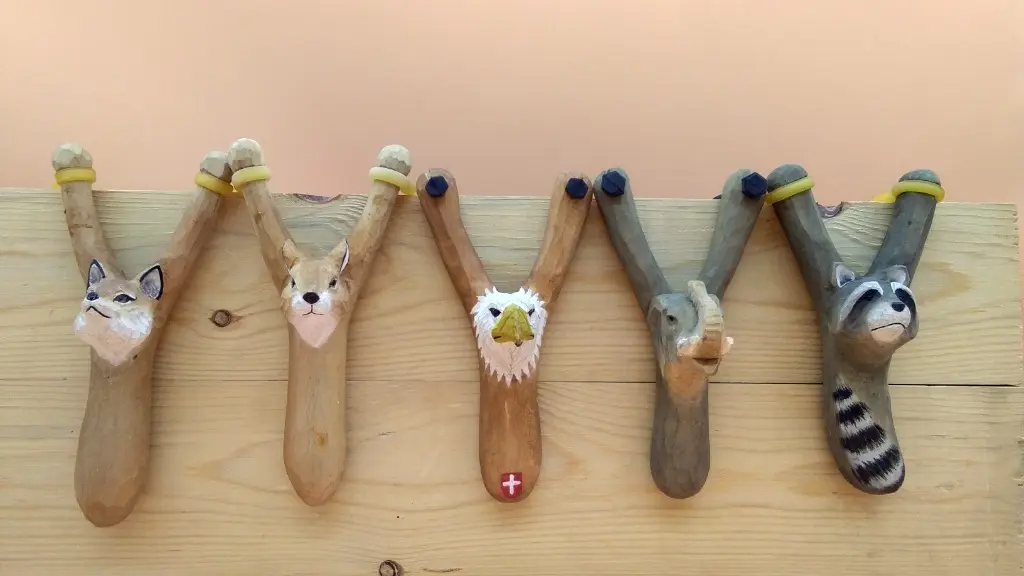
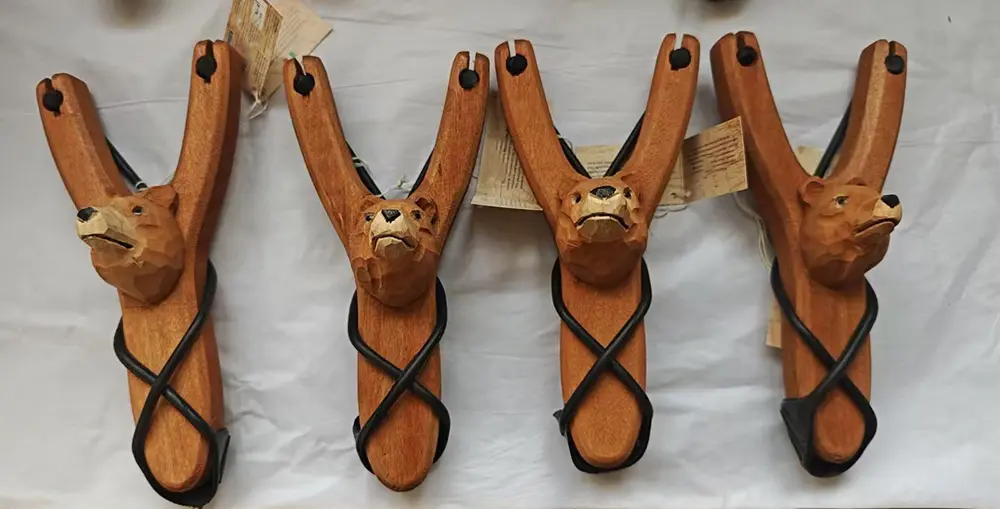
Our slingshot work is hand-carved wooden frames, part of our novelty and giftware range alongside artisan wooden pens, family puzzles and custom piggy banks. Every piece is carved and painted by hand in basswood, pinewood, rubber wood or birch, and the animal-shaped frames that characterise the line are carved as figures first and frames second, which is exactly why they sell as objects.
We do not make metal frames, we do not supply bands or pouches as a separate consumable line, and we do not publish velocity or energy data, because those are properties of a band-and-draw setup rather than of the frame we carve. A buyer needing a metal frame, a competition band spec or a certified energy figure should source those elsewhere and treat this guide as the wooden side of the decision. The workshop behind the carving is described on our wood carving factory page.

Best For / Not For
| A carved wooden frame suits | It does not suit |
|---|---|
| Gift, collectible and outdoor-lifestyle retail | Competition shooting needing unit-to-unit identity |
| Buyers who value damped feel and object character | Users in consistently wet or swinging-humidity conditions |
| Programs with a clear age grade and warning label | Any listing that would blur the age grade to sell wider |
What We Check on a Slingshot Run
- Grain through the limbs. Every fork is checked for grain running along the limbs rather than across them, since a cross-grain limb is the failure mode that matters on a loaded frame.
- Moisture before finishing. Dried to 8 to 12 percent so the fork does not move or check after it ships; the standard is in our guide to wood moisture content.
- Band seat and anchor geometry. The seat is checked for a clean band path with no sharp edge that would cut the band under load.
- Label and grade consistency. The age grade, warning text and hang tag are checked against the specification the piece is sold under, not against the carving.
- Claims limited to what we hold. CE, UKCA, RoHS, EN71 where the article is a toy, BSCI and ISO 9001. Our facility holds an FSC chain-of-custody certificate, but certified basswood is not currently available to us, so our carvings are not marketed as FSC-certified wood; we supply official timber felling and transport permits.
End to End: Specifying a Wooden Slingshot Order
An outdoor-lifestyle retailer wants a carved animal slingshot line for its gift wall and asks whether wood is defensible against the metal frames its competitor stocks.
Position it as an object, not as equipment. The line is ranged on the gift wall with the age grade and warning visible, and it is sold on feel, character and the carved figure rather than on performance claims it cannot win. That positioning decision is made before any artwork, because it determines the label.
Sample the frame, not the finish. One sample per animal is checked for grain direction through the limbs, band seat cleanliness and stability after a humidity cycle, and retained as the reference for the run. Finish is judged against the same sample.
Order to the tier that matches the wall. A first wall is filled on the trial tier at 100 pieces with a USD 500 minimum order value from in-stock designs, air express DDP in 20 to 30 days; a line that sells moves to wholesale and custom at 300 pieces with a USD 3,000 minimum order value, sea freight, 60 to 90 days to port, with 30 percent deposit and photographs and video of finished goods before the 70 percent balance. Pieces are wrapped in white paper and packed 6 to 12 per 3-ply inner box and 240 to 480 per 5-ply master carton rated to ISTA 3A. The range behind the line is in our wholesale wooden crafts guide.

Specifying a wooden slingshot line?
Send us the animals you want carved, the age grade you intend to sell under and the wall it will sit on. We will return the frame specification, the grain and moisture checks we run, and the label wording the grade requires.
Frequently Asked Questions
Q: Is a wooden slingshot frame as strong as a metal one?
They fail differently rather than one being stronger. A grained and dried wooden fork carries load along the limbs and damps the shot; a machined metal fork holds tolerance and ignores humidity. The wooden question is grain and moisture, the metal one casting porosity or alloy. We check grain on every fork and dry to 8 to 12 percent.
Q: Do you make metal slingshot frames?
No. We carve wooden frames in basswood, pinewood, rubber wood and birch and work no metal at all. A buyer needing a metal frame, a competition band spec or a certified energy figure should source those elsewhere. This guide covers the wooden side and says plainly where our capability stops.
Q: What age grade should a slingshot carry?
The grade follows the intended user and the marketing, not the carving. A frame sold into a child’s hands is a children’s product with a small-parts assessment; sold as adult sport equipment it is not. Determine it per design and market, print it as determined, never lower it to widen the audience.
Q: Will a wooden frame warp in a humid climate?
It can if made wrongly, which is why moisture and grain are controlled, not hoped for. Timber is dried to 8 to 12 percent before finishing and the fork is carved with the grain through the limbs. A piece that still moves after that has a defect, which is a warranty conversation, not a property of wood.
Q: Can I get velocity or power figures for a wooden slingshot?
Not from us, and treat any supplier figure with caution. Velocity and energy belong to the band, pouch and draw length as much as the frame, so a number quoted without your setup describes a different product. We supply the frame, its grain and moisture checks and the required label; ballistics are yours to test.