Skip to content
Wooden family puzzles have quietly become one of the most reliable impulse-to-repeat-purchase products in specialty retail, museum gift shops, and educational toy stores. Unlike mass-produced cardboard jigsaw puzzles that warp after a single spill, hand-carved wooden family puzzles offer durability, tactile appeal, and a keepsake quality that justifies a premium price point. For B2B buyers, however, the category raises practical questions: What sizes sell best? How many pieces should a retail SKU contain? Which wood species balances detail with cost? And which safety certifications are non-negotiable for EU and US markets?
This guide answers those questions from the perspective of a factory that has been manufacturing hand-carved wooden puzzles for over two decades. The goal is to give retailers and importers the specification knowledge needed to build a profitable, compliant, and differentiated wooden puzzle line — whether you are launching your first SKU or expanding an existing toy category.
Why Wooden Family Puzzles Are a Strategic Retail Category
The global puzzle market has experienced steady growth, driven by consumer demand for screen-free family activities and educational toys that develop fine motor skills. Wooden puzzles sit at the intersection of three purchasing motivations: gifting, child development, and parent-child play. A hand-carved wooden family puzzle works as a keepsake gift that represents the receiving family, and as a teaching tool for parent-child play on any ordinary afternoon — a duality that cardboard puzzles simply cannot match.
From a retail margin perspective, wooden family puzzles benefit from higher perceived value. Hand-carved basswood puzzles carry an artisanal quality that supports price points two to three times above equivalent cardboard puzzles, while the material cost differential is far smaller than retailers might assume. The key is choosing the right size, family piece set, and wood species for your target customer — which is exactly what the following sections break down.
Size Specifications: The 13–23cm Range, With Custom Sizes on Request
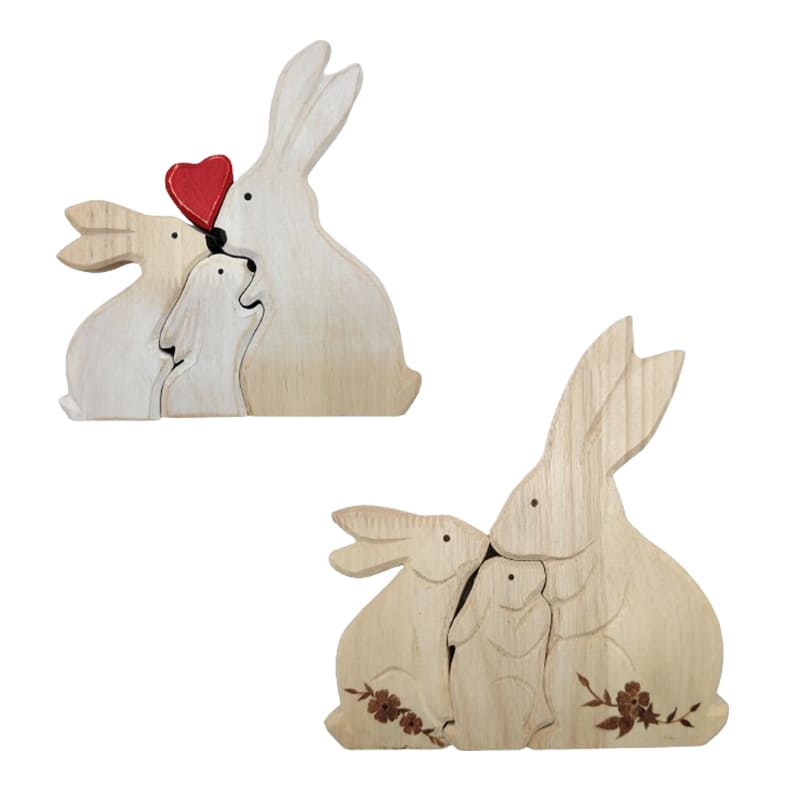
Our wooden family puzzles are produced in one consistent dimensional band: 13–23 cm. That is the current range in full — there are no miniature or oversized puzzle formats in the line today, so buyers can plan shelving, gift packaging, and freight around a single, predictable size band rather than guessing across a scattered assortment.
The 13–23cm band is deliberate. An assembled family puzzle in this range sits comfortably on a standard retail shelf, fits standard gift boxes and shipping cartons, and lands at a price point that works for both impulse gifting and planned purchases. At this scale, each family figure is also large enough to be hand-carved with real character — faces, poses, and painted details that survive a child’s daily handling — while staying light enough to keep freight costs reasonable.

If your assortment calls for larger statement pieces, custom sizes are open to discussion: larger dimensions are quoted individually and agreed before production begins. What we will not do is promise off-the-shelf sizes the factory cannot currently ship. The honest answer to “what sizes do you stock?” is 13–23 cm today, with larger custom formats available to talk through on a custom order.
Piece Counts Match the Family: Designed for Ages 3 and Up
These are wooden family puzzles, and they are designed for children aged 3 years and up. That age grade is a product decision, not a complexity ladder: the piece count does not climb with the child’s age — it mirrors the family at home. A household of three buys a three-piece set: father, mother, and child. A household of four buys a four-piece set. The customer simply matches the set to the people in their home, and that matching logic is the entire appeal of the category.

| Household | Piece Set | Typical Set |
| Family of 3 | 3 pieces | Father, mother, and child figures |
| Family of 4 | 4 pieces | Parents plus two children |
| Family of 5 | 5 pieces | Parents, children, and grandparents |
| Custom | Matched to the household | Piece count set to the customer’s own family |
The 3+ grading also keeps compliance simple. In both the EU and the US, age grading is part of how a toy is defined and tested — EN71 in Europe, ASTM F963 in the United States — and a product graded 3+ sits outside the under-36-month small-parts regime. The pieces are generously sized in any case: an assembled family puzzle runs 13–23 cm, so individual figures are large, smooth-edged, and easy for small hands to grasp.
The two jobs this product actually does are gifting and parent-child education. As a gift, the set mirrors the receiving family — a bear family for a household of three, an elephant family for four — which gives it a keepsake quality a generic jigsaw never has. As a teaching tool, it supports recognition and storytelling: children name the family members, sort the pieces, and retell their own daily routines through play. The value is in the family story, not in a count of interlocking pieces.
Material Selection: Basswood vs. Pine vs. Rubber Wood
The choice of wood species affects carving detail, weight, durability, and unit cost. Most hand-carved wooden family puzzles are produced from one of three primary materials, each with distinct characteristics.
Basswood (linden/Tilia): The dominant species for hand-carved puzzles. Basswood has a fine, even grain that holds intricate detail without splintering. It is lightweight, which keeps shipping costs low, and accepts eco-friendly, non-toxic paints beautifully. The majority of puzzle manufacturers — including factories serving European toy retailers — default to basswood for good reason. It is the strategic choice for products that require both carving precision and a smooth painted finish.
Pinewood: Slightly harder and more resinous than basswood, pine offers a visible grain pattern that some buyers prefer for a “natural rustic” aesthetic. However, the grain can interfere with very fine carving detail, and the added weight increases freight costs. Pine is better suited to larger, simpler puzzles where the wood texture is part of the design story.
Rubber wood: A cost-effective hardwood sourced from replanted rubber tree plantations, rubber wood appeals to buyers prioritizing sustainability credentials. It is denser than basswood, which makes it more durable but also heavier and slightly more challenging to carve by hand. Rubber wood puzzles tend to have a warmer color tone and are often left unpainted to showcase the natural grain.
Safety Compliance: EN71, ASTM F963, and What Retailers Must Verify
Wooden family puzzles intended for children must comply with toy safety regulations in every market where they are sold. This is non-negotiable, and the compliance burden falls on the importer of record — not just the manufacturer.
In the European Union, wooden puzzles must carry the CE mark and comply with EN71-1 (mechanical and physical properties), EN71-2 (flammability), and EN71-3 (migration of certain heavy metals from paints and coatings). Since 2021, the UK requires UKCA marking under essentially identical standards. In the United States, the equivalent is ASTM F963, enforced by the Consumer Product Safety Commission.
A compliant wooden puzzle factory will use eco-friendly, non-toxic paints that are independently tested for heavy metal migration. The factory should also hold a current social compliance audit — such as a BSCI audit report — which demonstrates that production conditions meet international labor standards. Many European retailers now require both product safety certification and social compliance documentation before onboarding a new supplier.
When evaluating a supplier, request copies of EN71 test reports for the specific paint and wood combination used in your order. A generic “EN71 compliant” statement without product-specific test data is insufficient for due diligence. Reputable manufacturers will provide test reports tied to your exact SKU specifications.
Customization Options: OEM and ODM for Wooden Puzzles
The wooden family puzzle category offers significant customization potential, which is where OEM and ODM capabilities become critical differentiators between factories.
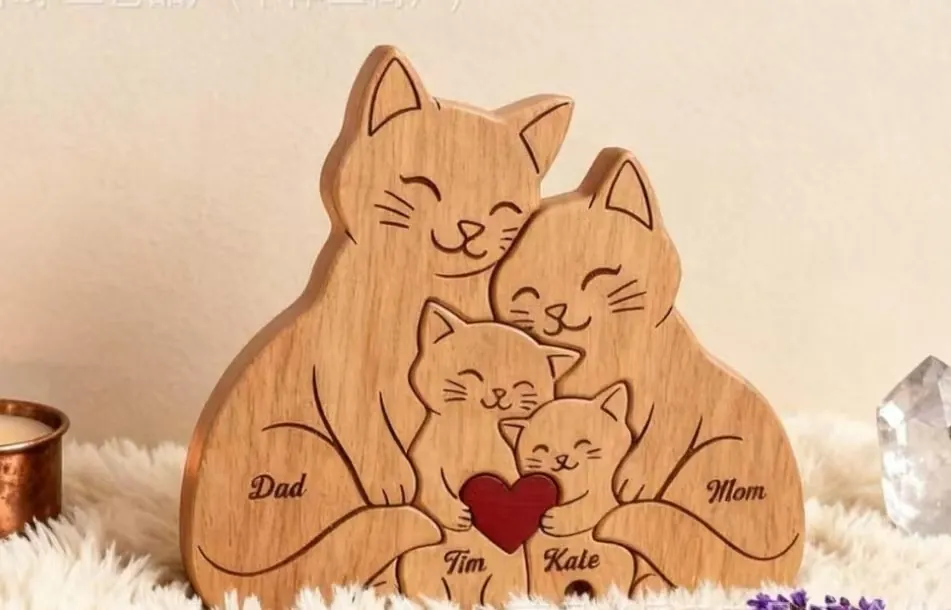
OEM (Original Equipment Manufacturing): You provide the design — a vector file, reference photo, or physical sample — and the factory reproduces it in wood. This is the standard route for retailers with established brand artwork or licensed characters. The factory’s role is to translate your 2D artwork into a 3D carved puzzle with a piece set matched to the family it represents, carved within the standard 13–23cm range or a custom size agreed in advance.
ODM (Original Design Manufacturing): The factory’s design team creates original puzzle concepts based on your brief — for example, “a four-piece wooden animal family puzzle for the Scandinavian market, natural finish, retail price point under €15.” This approach is ideal for retailers building a private-label puzzle line without in-house design resources.
Customization extends beyond the puzzle itself. Factories offering full OEM/ODM services can also produce custom retail packaging — color boxes with your branding, insert cards with puzzle facts or brand stories, and hang-tab options for peg-strip display. Custom packaging typically requires a minimum order of 500 pieces per design, while the puzzle itself can often be customized at lower quantities.
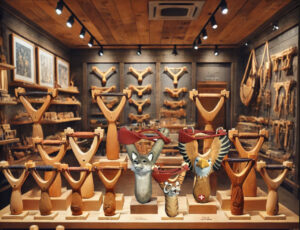
For retailers interested in expanding their wooden product range beyond puzzles, the same OEM capabilities typically extend to complementary categories such as wholesale wooden piggy banks and handmade wooden slingshots, allowing you to build a cohesive product line from a single supplier.
Ordering Essentials: MOQ, Lead Times, and Pricing Structure
Understanding the ordering process helps retailers plan inventory and manage cash flow effectively. Here is a typical structure for wholesale wooden family puzzles from an established OEM factory:
| Order Type | MOQ | Min. Order Value | Lead Time | Shipping |
| Trial Order | 100 pcs | USD 500 | 20–30 days | Air express DDP (customs included) |
| Wholesale / Custom | 300 pcs | USD 3,000 | 60–90 days | Sea freight (cost-optimal) |
| Custom Retail Box | 500 pcs | — | Included in production | — |
Payment terms typically follow a T/T structure: 30% deposit to initiate production, with the remaining 70% due before shipment. For small trial orders and sample purchases, some factories offer online payment gateway options. Before the final payment is released, the factory should provide production photos and videos for your approval — a standard practice that protects both parties.

Shipping options include DDP (Delivered Duty Paid) door-to-door service to the US, Europe, and Australia, which simplifies logistics for retailers unfamiliar with import customs procedures. For larger wholesale orders, sea freight offers the lowest per-unit cost, with full container loading available for orders exceeding 5,000 pieces.
How to Choose the Right Wooden Puzzle Supplier
Not all wooden puzzle manufacturers are created equal. When evaluating potential suppliers, focus on five criteria that directly affect product quality, compliance, and supply chain reliability.
1. Hand-carving capability: True hand-carved puzzles require skilled artisans, not CNC machines. A factory with experienced carvers (10+ years average tenure) produces puzzles with smoother edges, more consistent detail, and fewer splintering issues. Ask for close-up photos of carved surfaces to assess finish quality.
2. Anti-cracking treatment: Wood is a hygroscopic material. Puzzles shipped from a humid manufacturing environment to a dry retail climate can crack if the wood has not been properly kiln-dried and treated. Reputable factories kiln-dry wood to a specific moisture content (typically 8–12%) and apply anti-cracking log treatment before carving. This is especially critical for puzzles destined for arid climates or heated retail environments.
3. Compliance documentation: The supplier should hold current EN71, CE, UKCA, and/or ASTM F963 test reports, along with a BSCI or similar social compliance audit. Request to see original documents, not summaries. Verify that the test reports cover the specific materials (wood species + paint combination) used in your order.
4. Traceable wood sourcing: Sustainable, traceable wood sourcing is increasingly important to retailers and their end consumers. A reliable supplier can provide official timber felling and transport permits as proof of wood origin. This documentation supports ESG reporting and helps retailers meet their own sustainability commitments.
5. Sampling process: Before committing to a bulk order, always request a pre-production sample. A confident supplier will offer refundable sample kits that allow you to evaluate carving quality, paint finish, piece fit, and packaging before placing a full production order. The sampling process typically takes 7–15 days for existing designs and 15–20 days for fully custom pieces.
Building a Profitable Wooden Puzzle Line
The most successful wooden puzzle retail programs start with a focused assortment: 3–5 SKUs covering different family sizes and animal families, 2–3 wood species, and a mix of painted and natural finishes. From there, retailers can expand into seasonal designs (Christmas, Easter, Halloween), custom branded puzzles, and complementary wooden product categories.
The key to long-term profitability is partnering with a factory that combines artisanal carving quality with industrial-scale compliance and logistics capabilities. Whether you are a specialty toy retailer, a museum gift shop buyer, or an e-commerce brand looking for differentiated products, the right manufacturing partner will support your growth from trial order to full container load — with consistent quality at every stage.
For retailers ready to explore a wooden family puzzle line, the next step is to request a product catalog and sample kit from a qualified OEM manufacturer. With the sizing, piece count, material, and compliance knowledge outlined in this guide, you will be well-equipped to evaluate suppliers and build a puzzle collection that delights customers and delivers strong margins.
Build Your Wooden Family Puzzle Line With a Certified OEM Factory
13–23 cm family-matched sets, EN71-tested finishes and private-label packaging — request the wholesale catalog and sample kit.
Explore Wholesale Wooden Family Puzzles →Frequently Asked Questions
What sizes are available for wholesale wooden family puzzles?
Our wooden family puzzles are produced in sizes from 13 to 23 cm, which is the full current range. Larger custom sizes can be discussed for custom orders, with dimensions agreed before production begins.
What is the minimum order quantity for custom wooden family puzzles?
The standard MOQ for custom wooden family puzzles is 100 pieces for trial orders (minimum USD 500 order value). For fully customized retail packaging with your branding, the MOQ increases to 500 pieces per design.
What safety certifications do wooden puzzles need for EU retail?
Wooden puzzles sold in the EU must carry CE marking and comply with EN71-1 (mechanical/physical properties), EN71-2 (flammability), and EN71-3 (heavy metal migration from paints). For the UK market, UKCA marking under equivalent standards is required. Our family puzzles are graded for ages 3 and up, so they sit outside the under-36-month small-parts regime.
Which wood is best for hand-carved puzzles?
Changbai Mountain basswood is the main species for our hand-carved family puzzles, with pine, birch and rubber wood available where a design calls for them. Every batch is kiln-dried and moisture-checked before carving.
How long does production take for a wholesale wooden puzzle order?
Trial orders typically ship within 20–30 days. Custom wholesale orders of 300+ pieces require 60–90 days depending on complexity and quantity. Stock items may ship within 7–15 days.