Skip to content
Key Takeaways
- Use the rule of three: odd-number groupings of carved animals look intentional, even numbers look like clutter.
- Anchor each display with one large statement piece, then layer smaller animals around it at varied heights.
- Rotate the animal groupings seasonally to keep the shelf fresh without buying new inventory.
A hand-carved wooden animal is not a decoration you place on a shelf; it is a decoration you style into a space. The difference between a carved owl that sells and one that sits on the shelf for months is not the carving quality; it is how the retailer displays it. Wooden animal decor styling is the merchandising skill that turns a good product into a great sale, and the retailer who masters it will see the animal carving category outperform every other decor line on the floor.
The three most effective styling locations in a home are the entryway, the shelf, and the mantel. Each has different sight lines, different lighting, and different styling rules. The retailer who understands the rules for each location can create displays that sell the carving, not just the product.
The Entryway: First Impression
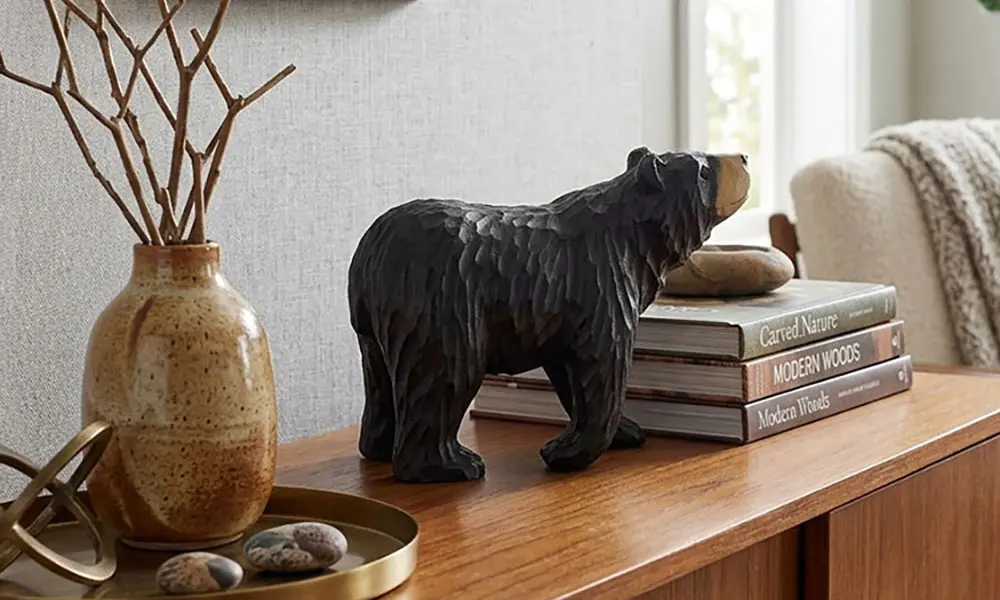
The entryway is the first impression a home makes, and a carved animal in the entryway sets the tone for the whole space. The entryway display works best with one large statement piece, 25-40 cm, placed on a console table or a pedestal where it is seen at eye level from the door. The piece should be the focal point, not part of a group; the entryway is about one strong visual statement, not a collection. The lighting matters: a carved animal in a dim corner is wasted, but the same piece under a directional light becomes a gallery piece. The retailer should photograph the entryway display with the statement piece and use it as a shelf talker or a product page image, because the customer who sees the piece styled in context is far more likely to buy than the customer who sees it on a white background.
The Shelf: The Rule of Three
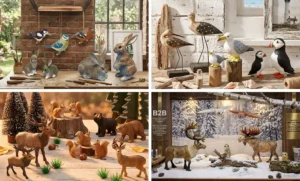
The shelf is where the carved animal collection comes alive, and the rule of three is the styling principle that makes it work. Group carved animals in odd numbers, three or five, at varied heights and depths. A large owl at the back, a medium fox in the middle, and a small squirrel in front creates a layered, natural grouping that draws the eye across the shelf. Even numbers look like a set; odd numbers look like a collection. The wood carving factory should be able to supply graduated sizes of the same species so the retailer can build the layered effect. Add a non-wood element, a small plant, a candle, or a book stack, to break up the wood and create visual contrast. The shelf display should be refreshed seasonally, rotating the species and the groupings to keep the look fresh without buying new inventory.

The Mantel: Symmetry and Height
The mantel is the most formal display location in the home, and it rewards symmetry and height variation. A carved animal on each end of the mantel, with a mirror or a clock in the centre, creates a balanced, intentional look that reads as designed rather than decorated. The height variation matters: a tall piece at the centre, medium pieces on each side, and small pieces at the ends creates a stepped effect that draws the eye across the mantel. The mantel is also where the seasonal rotation is most visible: swap the species and the accent colours for each season, and the mantel becomes a year-round display that keeps customers returning. The National Retail Federation home decor trend data consistently shows that nature-inspired styling and seasonal rotation are the two merchandising techniques that drive repeat purchases in the home decor category.

Merchandising the Styling Story
The styling story is the sales tool that turns a carved animal from a product into a solution. The retailer who photographs the three display locations, entryway, shelf, and mantel, and uses those images on shelf talkers and product pages, gives the customer a ready-made answer to the question “where would I put this?” The customer who sees the piece styled in context buys; the customer who sees it on a white background hesitates. The styling images should be sourced from the wholesale wooden crafts supplier as part of the product documentation, or created by the retailer’s own visual merchandising team. Verify the styling on a factory tour by requesting the supplier’s styling photography and display guides as part of the product package.
Lighting: The Styling Tool That Sells the Carving
Lighting is the most under-used styling tool in the wooden animal category. A carved owl in a dim corner is a product; the same owl under a directional spotlight is a sculpture. The lighting should be positioned to create depth and shadow on the carved surface, because the tool marks and the grain variation that define the hand-carved quality are visible only when the light falls across the surface at an angle. Flat, overhead lighting eliminates the texture and makes the carving look machine-made. The retailer should invest in adjustable track lighting or small spot fixtures for the animal carving display, and the supplier should provide lighting guidance with the product photography so the customer who buys online sees the piece as it would look in a well-lit home. The CPSC and EN71 safety frameworks apply to products marketed to children, so the lighting in a children’s display should also be checked for safety compliance.
The lighting should also be seasonal. In summer, natural light from a window can be the primary source, and the carved animal should be positioned where the afternoon sun creates long shadows across the surface. In winter, artificial lighting becomes the primary source, and the warm colour temperature of a 2700K bulb enhances the wood tone and creates a cozy, fireside feel that matches the winter home. The retailer who adjusts the lighting with the seasons creates a display that feels current and intentional, and the customer who feels that intentionality is the customer who trusts the retailer’s taste.
The lighting story should be told in the product photography. The supplier should provide images that show the carving under different lighting conditions, so the online customer can see the texture and the depth that a flat product shot eliminates. The images should be used on the product page, the shelf tag, and the social media posts, because the customer who sees the carving in context is the customer who buys. The National Retail Federation home decor trend data shows that lifestyle photography outperforms product-only photography in online conversion by a significant margin, and the animal carving category is one where the lifestyle image is the most powerful sales tool.

Seasonal Styling: Keeping the Shelf Fresh
The animal carving display should be refreshed seasonally, and the refresh should be planned as a merchandising calendar, not improvised. Spring brings baby animals and bright accents: chicks, lambs, fawns, and pastel-painted pieces. Summer brings coastal and garden species: birds, butterflies, and sea creatures in driftwood tones. Autumn brings forest animals in warm colours: foxes, owls, deer, and squirrels in honey and amber finishes. Winter brings the classic statement pieces: bears, wolves, and eagles in deep, rich tones. The species rotation keeps the shelf feeling current without buying new inventory, because the same pieces that sold in autumn are the pieces that sell again next autumn, and the customer who sees a seasonal display trusts that the retailer is attentive and intentional.
The seasonal rotation should be communicated to the customer. A shelf talker that reads “Autumn Forest Collection” or “Spring Garden Birds” creates a reason to visit and a reason to buy. The seasonal naming also creates a collection story that the customer can follow across the year, and the customer who follows the collection is the customer who returns. The wholesale wooden crafts supplier should provide seasonal styling guides and photography with the product, so the retailer can execute the rotation without a visual merchandising team.
The seasonal rotation is also the merchandising tool that drives the highest margin in the animal carving category. The statement pieces that anchor each seasonal display are the highest-margin SKUs, and the seasonal framing justifies the price. The retailer who rotates seasonally sells the same inventory at a higher price than the retailer who leaves the same inventory on the shelf year-round. The rotation is not a cost; it is a margin strategy. The buyers who plan the seasonal calendar, communicate the seasonal story, and execute the rotation with the supplier’s support will own the animal carving category in their market.

Frequently Asked Questions
What is the rule of three in animal carving styling?
Group carved animals in odd numbers, three or five, at varied heights and depths. Odd numbers look intentional; even numbers look like clutter.
How should I display a carved animal in the entryway?
One large statement piece, 25-40 cm, at eye level on a console or pedestal. The entryway is about one strong visual statement, not a group.
What works best on a mantel display?
Symmetry and height variation. A carved animal on each end, a mirror or clock at the centre, and stepped heights from centre to edges.
Should I rotate animal groupings seasonally?
Yes. Swap species and accent colours each season. The shelf stays fresh without new inventory, and customers return to see the new look.
How do I photograph the styling for retail?
Photograph each display location, entryway, shelf, mantel, with the pieces styled in context. Use the images on shelf talkers and product pages to answer “where would I put this?”
Style Your Carved Animal Range for Maximum Sell-Through
Source graduated sizes of hand-carved animals from one factory, with styling photography and display guides for the entryway, shelf, and mantel.
Explore the Carving Factory →