Skip to content
Key Takeaways
- Stock forest families (bear, fox, owl) as the highest-turn animal group across all retail channels in 2026.
- Add 2-3 coastal species per season to capture the beach-house trend that is expanding inland.
- Keep 60% of the range in the 10-18 cm gift band; that is where 73% of wooden animal volume lives.
The wooden animal carving category is not static; it follows the same design currents that move the broader home-decor market, just at a slower, more deliberate pace. Wooden animal decor trends in 2026 are shaped by three forces: the enduring appeal of forest and woodland families, the expansion of coastal and shorebird themes into inland markets, and a consumer preference for smaller, collectible formats over single statement pieces. This guide maps the trends and tells wholesale buyers which animals to stock, in which sizes, for which channels.
The data from wholesale order patterns and retail sell-through is consistent: animal families that tell a story outsell standalone species, and the gift band (10-18 cm) dominates volume across every channel. The trends below are not guesses; they are patterns that have held across multiple seasons and show no sign of reversing.
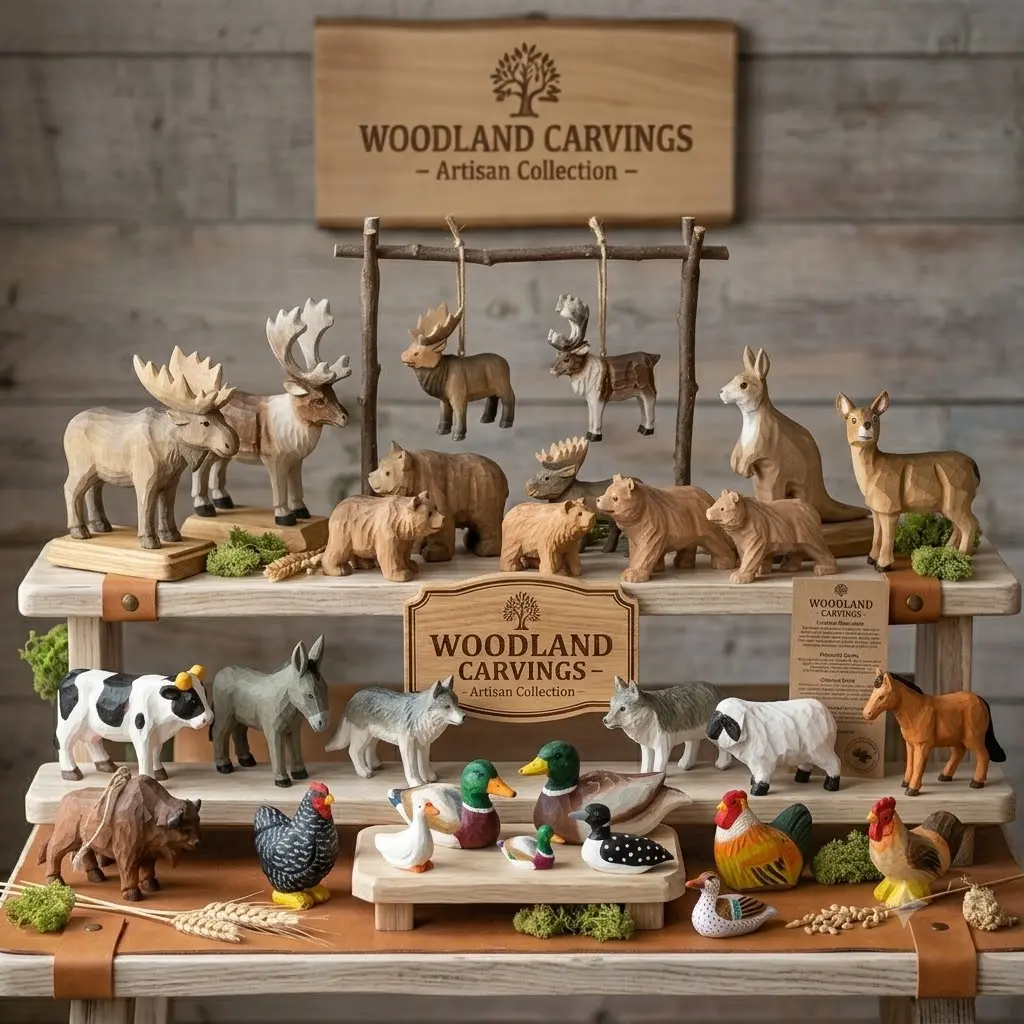
Forest Families: The Core That Never Fades
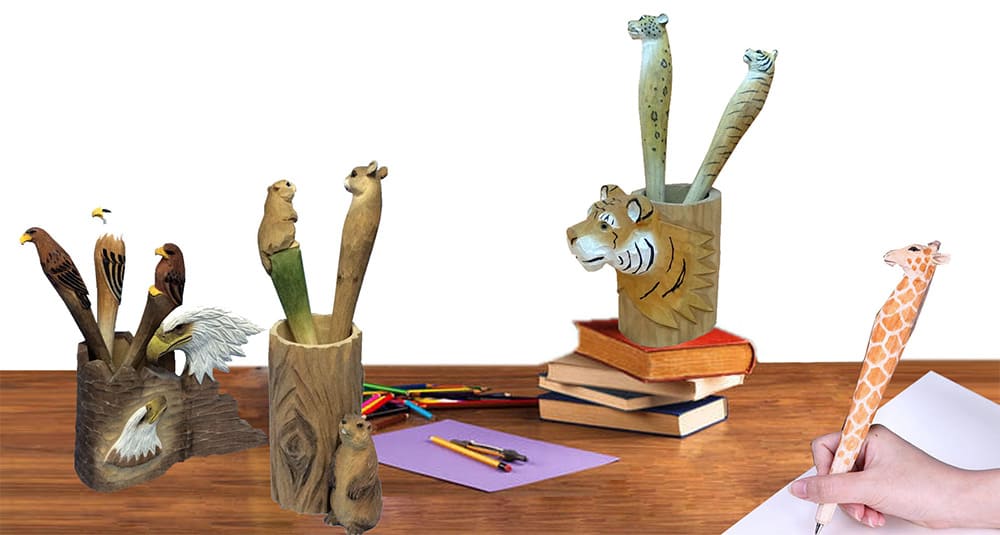
Bear, fox, owl, deer, and squirrel families remain the highest-turn animal group across gift shops, museum stores, and home-decor retailers. The appeal is universal: these animals are recognisable, emotionally warm, and fit the cabin, woodland, and hygge aesthetics that dominate home styling. Stock them as a graduated family (small, medium, large) across the 5-25 cm range, and merchandise them as a collection rather than as individual pieces. The family format encourages collecting, which lifts the lifetime value of the customer and the basket size of the initial purchase.

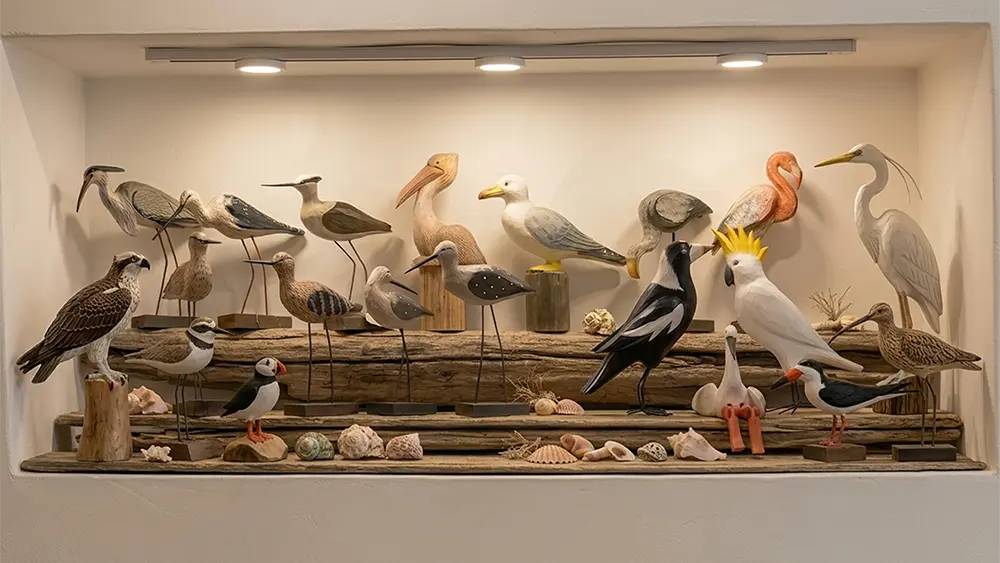
Coastal & Shorebird Expansion
Seagulls, sandpipers, pelicans, and herons are the fastest-growing segment in wooden animal decor, driven by the coastal-home trend that is expanding far beyond the coastline. Retailers in landlocked states are stocking shorebirds because the aesthetic sells a feeling of calm and holiday, not a geography. The coastal palette (driftwood greys, sand beiges, soft whites) also photographs beautifully for e-commerce and social media, which amplifies the trend. Stock 2-3 shorebird species per season, rotating the accent colours to match the seasonal coastal look. The National Retail Federation seasonal trend data consistently shows that nature-inspired decor themes outperform novelty themes in home goods.
The Small-Format Shift
The 10-18 cm gift band is where the volume lives, and the trend is toward even smaller, collectible formats. A shelf of 8-12 cm animals in a themed family sells more units and more total revenue than a single 30 cm statement piece, because the small format fits more homes, more budgets, and more gift occasions. Retailers should allocate roughly 60% of their animal carving shelf to the 10-18 cm band, 25% to the 5-10 cm impulse band, and 15% to the 18-40 cm statement band. The small-format pieces also pack denser and ship cheaper, which improves the per-unit freight economics. The wood carving factory should be able to produce the same design across multiple sizes so the collection reads as a coherent family.
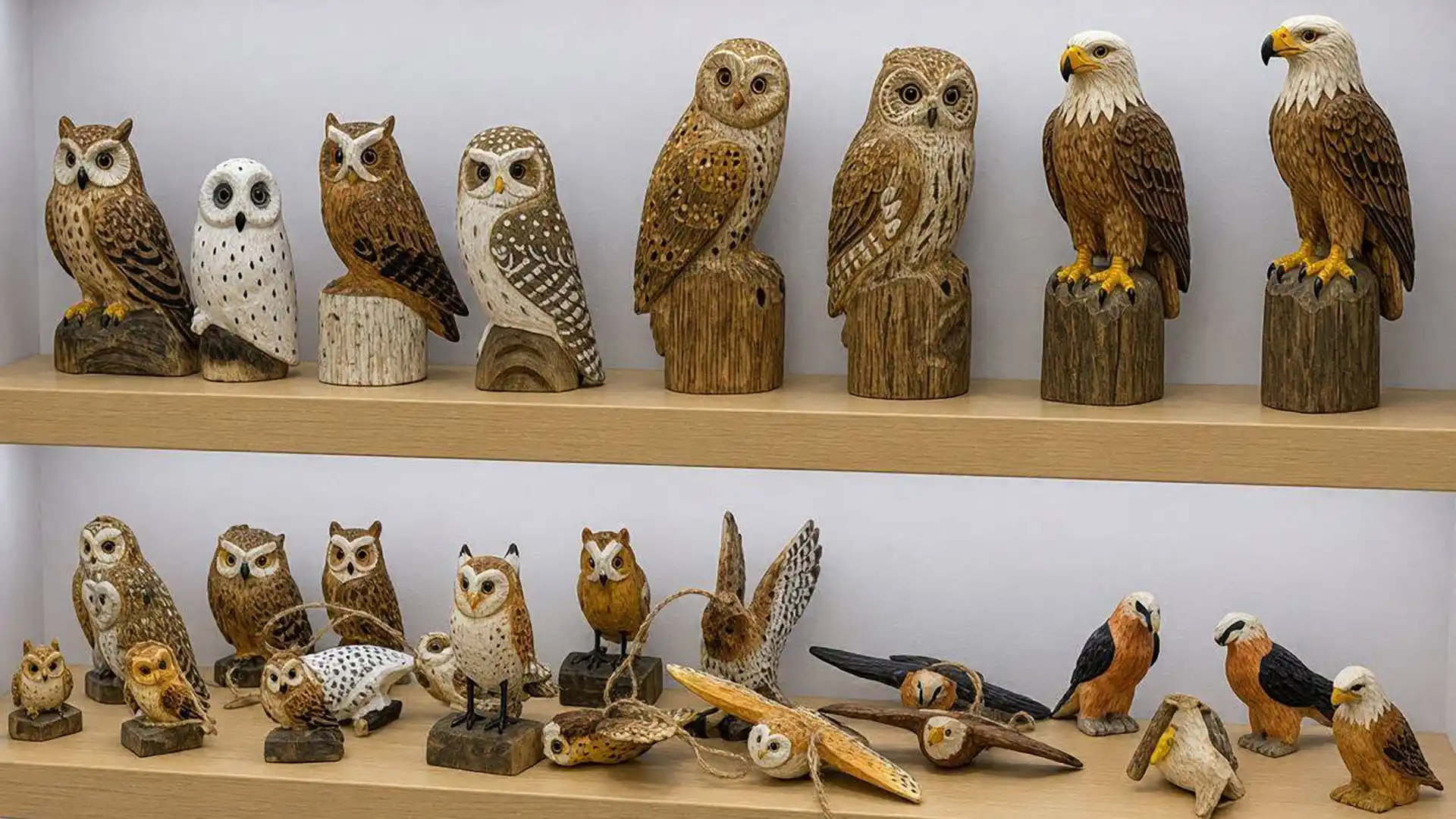
Buying Strategy: How to Stock the Trends
Build the range in three layers. The core layer is the forest family in 10-18 cm (bear, fox, owl, deer, squirrel), which should be always in stock. The seasonal layer is 2-3 coastal species rotated with the seasons (sandpiper in spring, pelican in summer, heron in autumn). The experimental layer is 1-2 new species each season, ordered in small quantities to test demand before committing to volume. This three-layer approach keeps the shelf fresh without risking the core, and it gives the buyer data on which new species to promote to the core. Source the entire range from one wholesale wooden crafts supplier for finish consistency, and verify the carving quality on a factory tour before scaling. Fold the animal programme into your custom manufacturing plan so new designs can be added without disrupting the core.
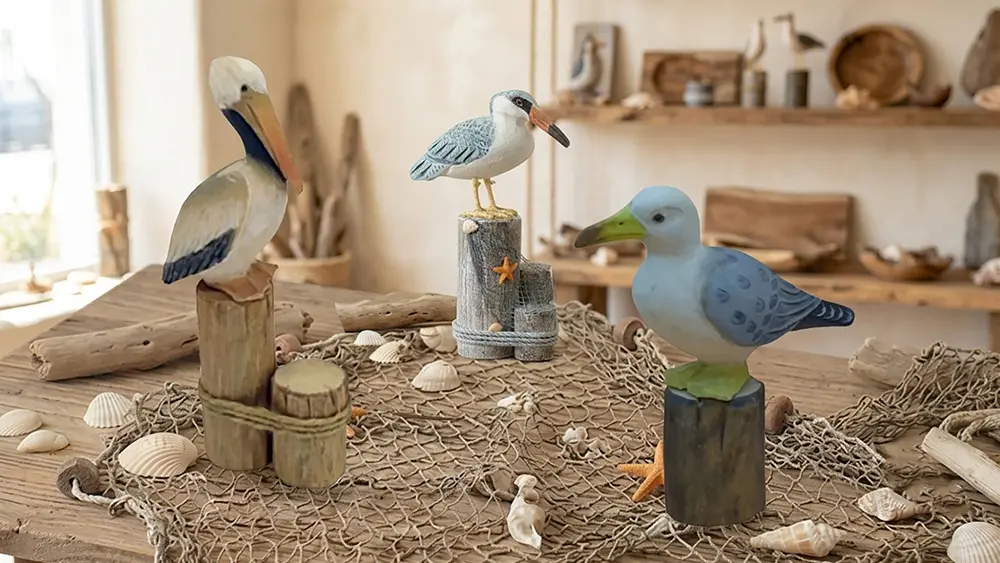
Seasonal Rotation & the 2026 Calendar
The animal carving shelf should rotate with the seasons. Spring brings birds and rabbits, summer brings coastal and shorebird species, autumn brings forest families in warm tones, and winter brings owls and deer in a snowy palette. The rotation keeps the shelf fresh without requiring a full redesign, and it gives the buyer a reason to reorder seasonally. The core forest family stays constant; the seasonal accents rotate.
Plan the rotation six months ahead with your wood carving factory partner so the seasonal pieces are produced in the preceding off-peak period, when production capacity is available and freight is cheaper. A well-planned rotation also smooths the factory workload across the year, which helps keep unit costs stable. The wood carving factory should be able to produce the seasonal accents in the same finish and style as the core, so the collection reads as one coherent family across the year.
The data from each season should feed the next, and verify the programme on a factory tour before scaling. Track sell-through by species and size at the end of each season, and use the data to decide which seasonal accents to promote to the core. Over two or three seasons, the range becomes a self-improving portfolio that reflects what your specific customers actually buy.
The 2026 wooden animal market rewards the buyer who stocks the trends as a system: a core forest family, a seasonal coastal rotation, and a data-driven experimental layer. The buyers who build that system now will own the animal carving shelf for years, because the trends are structural and the customer loyalty they generate compounds with every season.

Global Influences on Animal Carving Choices
The animals that sell in European gift shops are not identical to those that sell in North American home-decor stores. European markets favour native woodland species (hedgehog, badger, red squirrel) and birds (robin, kingfisher), while North American markets favour larger forest mammals (bear, moose, raccoon) and birds of prey (eagle, hawk). The wood carving factory should be able to produce region-specific species within the same carving style and finish, so the collection can be tailored to the market without fragmenting the supplier base.
Asian markets, particularly Japan and South Korea, favour small, detailed pieces with a kawaii or minimalist aesthetic. The same owl that sells as a rustic decor piece in Europe may need a softer, rounder silhouette and a lighter finish to sell in Tokyo. The buyer who understands these regional preferences can stock a globally coherent range with locally optimised accents, which is the most efficient way to serve multiple markets from a single custom manufacturing programme.
The trend data also shows that endangered and conservation species (panda, snow leopard, sea turtle) are gaining traction in museum and zoo gift shops, where the purchase is tied to a conservation message. These species should be stocked with a small shelf card that names the species and links the purchase to a conservation narrative. The demand is small but growing, and the margin is strong because the purchase is mission-driven.
The 2026 animal carving market is a portfolio, not a product line. The buyers who treat it as a managed collection of core, seasonal, and experimental species, sourced from one factory and adjusted by the data each season, will own the category. The buyers who treat it as a static order form will watch the trends pass them by. The trend data is available, the supplier capacity is available, and the customer demand is proven. The only remaining variable is the buyer who decides to act on the signals instead of reacting to the sell-through.
Start with the forest family core, add two coastal species this season, and track the sell-through by species and size. Within two seasons you will have a data-backed assortment that outsells any generic catalogue order. That is the destination the trends are pointing toward, and the buyers who arrive first will own the shelf for years.
Frequently Asked Questions
Which animal families sell best in 2026?
Forest families (bear, fox, owl, deer, squirrel) are the highest-turn group. Coastal shorebirds (seagull, sandpiper, heron) are the fastest-growing segment.
What size band should I stock most heavily?
The 10-18 cm gift band, at roughly 60% of the range. The 5-10 cm impulse band and 18-40 cm statement band fill the remaining 40%.
Do coastal animals sell in inland locations?
Yes. The coastal aesthetic sells a feeling of calm and holiday, not a geography. Shorebirds are expanding inland as part of the broader coastal-home trend.
How should I test new animal species?
Add 1-2 new species per season as an experimental layer, ordered in small quantities. Promote the winners to the core; drop the rest without disrupting the shelf.
Should I source all animals from one supplier?
Yes. One supplier ensures finish and style consistency across the range, and the graduated family format only works if the pieces look like they belong together.
Stock the 2026 Animal Carving Trends
Source forest families, coastal shorebirds, and collectible small-format animals from one factory, with graduated sizes, consistent finish, and seasonal rotation support.
Explore the Carving Factory →