Skip to content
Key Takeaways
- Classify wooden slingshots as outdoor toys and request EN71 test reports before listing in any children’s channel.
- Apply age grading (3+, 6+, 14+) on packaging and POS; it determines which safety rules apply and where you can sell.
- Sand edges, seal the wood, and use a cord that breaks before the fork does, so the failure mode is safe.
Wooden slingshots sit at an uneasy intersection of toy, outdoor gear, and nostalgic craft, and that is exactly why wooden slingshots compliance matters. A product that shoots a projectile is regulated more closely than a carved figurine, and the importer who treats it as a simple wooden toy will eventually face a stop-sale or a recall. This guide explains the age-grading, safety, and packaging rules that wholesale buyers need to apply before a single slingshot reaches a shelf.
The good news is that a well-made wooden slingshot is inherently safer than a plastic or metal one: wood flexes, the cord can be chosen to give before the frame, and hand-sanded edges reduce laceration risk. The compliance burden is therefore manageable if the product is designed with safety from the start, rather than having safety retrofitted onto a design that was never meant for children.
Age Grading: The First Compliance Decision
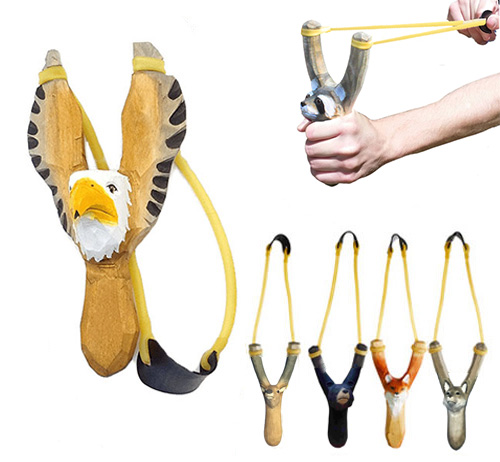
Age grading is not a suggestion; it is the legal classification that determines which safety standard applies. A slingshot graded 3+ must meet the full toy-safety standard including small-parts, sharp-edges, and projectile-energy limits. One graded 14+ is a sports item and follows general product-safety rules. The importer must decide the grade before manufacturing, print it on the packaging, and be prepared to defend it with test reports. Grade too low and the testing burden rises; grade too high and you lose the children’s gift market. The most common commercial balance is 6+ or 8+, with a soft, felt-ball projectile to keep kinetic energy within limits.
EN71 & Projectile Testing
In the EU, the EN71 toy-safety standard applies to slingshots marketed to children. Three parts are relevant: physical and mechanical properties, flammability of the wood and cord, and migration of elements from any paint or finish. The projectile clause is the most specific: a toy projectile must not exceed a certain kinetic energy, and the tip must be blunt or padded. For a wooden slingshot firing a felt ball, this is usually achievable; for one firing a hard pellet, it is not. Specify the projectile type in the purchase order and test the exact combination of fork and projectile that will be sold.
Designing for Safe Failure
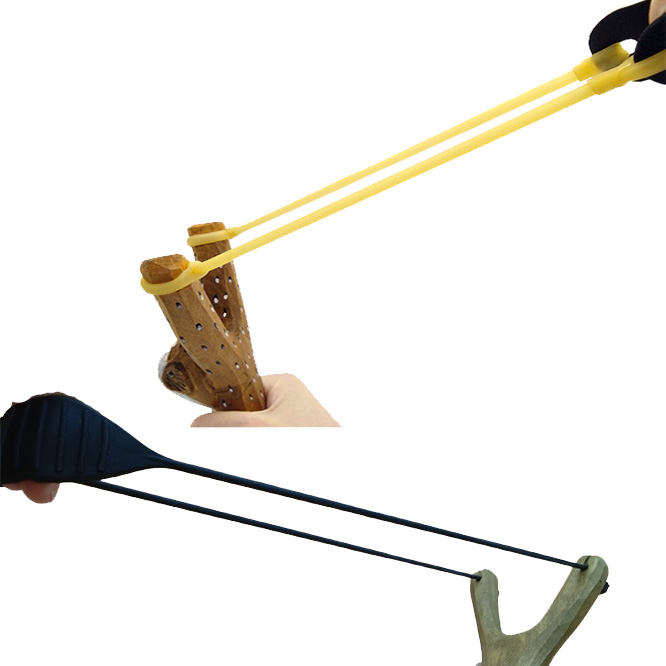
A slingshot can fail in two ways: the fork can snap, or the cord can break. The safer design makes the cord the weak point, because a snapped cord flings harmlessly while a snapped fork leaves sharp splinters in a child’s hand. Specify solid basswood forks that are sanded smooth with no sharp edges and a cord that fails before the wood does. If the fork is painted, the paint must be eco-friendly, non-toxic, and chip-resistant, compliant with EN71 standards because a child’s hand will be gripping it under tension. Verify all of these with a pull test on the cord and a visual inspection of the fork under the AQL plan in your wooden slingshot order.
Packaging, Labeling & Retail Compliance
The packaging must carry the age grade, the CE mark for the EU, a warning about adult supervision where appropriate, and the importer’s traceability details. The packaging should also prevent the product from being tested in-store: a sealed blister or a tied box keeps the cord and projectile from being tried by shoppers, which avoids both damage and the risk of an unsupervised launch in the aisle. Verify the packaging claims, especially the age grade, with your supplier’s test reports and confirm them on a factory tour before volume production. The compliance package for a slingshot is heavier than for a figurine, but it opens the mainstream toy and gift channels that a non-compliant product cannot enter.
Supplier Vetting & the Compliance File
Before you place a volume order, build a compliance file for the slingshot: age-grade test report, EN71 parts 1-3 reports, the cord pull-test result, the packaging proof with all required markings, and a signed declaration from the supplier that the production batch matches the tested sample. Keep this file current and accessible, because a retailer or a customs authority can ask for it at any time, and a missing document means a delayed shipment.
The compliance file also serves as a competitive filter. Suppliers who can produce it promptly and consistently are the ones who have invested in testing infrastructure; those who cannot are either guessing or testing on your dime. Choose the former and build the relationship around the file, updating it annually or when the product changes. A well-maintained compliance file is your best response to a marketplace suspension or a consumer complaint, turning potential regulatory roadblocks into seamless operational checks.

Sell-Through & the Outdoor Channel
In retail, slingshots sell best when grouped with outdoor and camping products rather than in a general toy aisle. Place them near wooden insect kits, magnifying glasses, and nature journals to create an outdoor-explorer zone that appeals to parents looking for screen-free activities. The wooden, nostalgic feel of the slingshot fits this zone perfectly, and the compliance story — safe, tested, age-graded — is the exact reassurance that converts browsing parents into buyers.
A strong sell-through in the outdoor channel provides the data needed to expand the line: once the slingshot proves itself, a matching wooden target set or carrying pouch can double the basket size. Confirm your factory can support these extensions through a dedicated custom manufacturing program, ensuring every new SKU meets full compliance from day one.
Ultimately, treating wooden slingshot compliance as a systematic process rather than a checklist gives you a defensible category position. Buyers who get age grading, EN71 testing, and packaging right operate with higher margins, fewer competitors, and direct entry into mainstream retail channels that untested products simply cannot enter.
Frequently Asked Questions
What age grade should I apply to wooden slingshots?
6+ or 8+ with a soft felt-ball projectile is the most common commercial balance. It opens the older children’s gift market while keeping the testing burden manageable.
Does EN71 apply to wooden slingshots?
Yes, if marketed to children. Parts 1, 2, and 3 apply, with the projectile-energy clause being the most specific. Test the exact fork-and-projectile combination that will be sold.
Which should fail first, the cord or the fork?
The cord. A snapped cord is harmless; a snapped fork leaves sharp splinters. Design the cord to break before the wood, and verify with a pull test.
What must the packaging include for compliance?
Age grade, CE mark for the EU, adult-supervision warning where appropriate, and importer traceability details. The packaging should also prevent in-store product testing.
Can I sell ungraded slingshots as decor only?
Not safely. Any product that looks like a toy and can shoot a projectile will be treated as a toy by regulators and consumers, regardless of how it is labelled.
Source Compliant Wooden Slingshots with Test Reports
Explore age-graded, EN71-tested wooden slingshots with soft projectiles, sanded edges, and retail-ready packaging for toy and gift channels.
Browse Wooden Slingshots →