Skip to content
Corporate buyers are rethinking the value of traditional swag like paper coasters that deliver little lasting impact. With low market reach—just a $500–850 million global niche—and short product lifespans, disposable giveaways often fail to deliver measurable ROI or align with sustainability commitments. As brands seek cost-effective tools that stay visible and reinforce trust, wooden coasters emerge as a durable and strategic alternative in corporate branding.
This article explores how corporate branded coasters made from wood outperform conventional swag in retention, visibility, eco-appeal, and cost efficiency. You’ll see why wooden coasters maintain a 65% retention rate on desks, create up to 3,000 minutes of daily visibility per unit, and align better with modern ESG goals—all while keeping marketing budgets under control through scalable bulk orders and long-term use.
Industry Manufacturers List
Quick Comparison: Top Picks
| Manufacturer | Location | Core Strength | Verdict |
|---|---|---|---|
| Individual Gift Boxes (Unit Cartons) | Industry Wide | Rigid or folding carton boxes sized for single coasters or small sets (2–4 pieces). | Ideal for premium corporate or executive gifts where branded presentation enhances perceived value. |
| Multi-Piece Set Packaging (Gift Sets of 4–6 Coasters) | Industry Wide | Paperboard or rigid boxes, tin boxes, or wood sleeves holding multiple coasters, often branded with belly bands or sleeves. | Perfect for bundled gifting and upscale retail-style corporate presentations. |
| Sleeves, Belly Bands, and Simple Wraps | Industry Wide | Printed paper sleeves, kraft or coated bands, and shrink-wrap labels securing 2–10 coasters. | Best for low-cost, lightweight branding at scale with minimal material usage. |
| Eco-Friendly and Minimal Packaging | Industry Wide | Recycled-content cartons, kraft sleeves, low-ink labels, and bulk inner packs minimizing material and shipping impact. | Strong sustainability choice aligning with ESG and eco-conscious branding goals. |
| Retail-Style Display Packaging for Onboarding and Merch | Industry Wide | Hang-tab cartons, blister cards, and display boxes with UPC codes and multilingual content. | Suited for branded merchandise or e-commerce programs requiring store-ready packaging. |
| Kitting and Custom Gift Sets with Other Items | Industry Wide | Large mailer or keepsake boxes with foam or trays for coasters plus mugs, bottles, or bar tools. | Excellent for high-end kits and curated gifting experiences that elevate brand perception. |
| Protective Shipping and Bulk Master Cartons | Industry Wide | Corrugated inner cartons, partitioned master cases, foam wraps, and pallet-ready bulk configurations. | Essential for safe, bulk transport of fragile coasters, optimizing shipping and reducing breakage risk. |
Individual Gift Boxes (Unit Cartons)
Individual gift boxes, also known as unit cartons, are tailored for single coasters or small coaster sets. Each set arrives in its own branded box, often featuring inserts or die-cut foam to keep the pieces secure and aligned. This packaging approach strengthens the perception of quality while offering a clean, gift-ready look.
These cartons are common across the industry, serving as both protection and a branding touchpoint. Manufacturers design rigid or folding boxes that keep the items intact during transport and make distribution easy for corporate gifting, employee recognition, or client packages.
At a Glance:
- 📍 Location: Industry Wide
- 🏭 Core Strength: Rigid or folding carton boxes sized for single coasters or small sets (2–4 pieces).
- 🌍 Key Markets: Corporate gifting programs, executive gifts, employee recognition kits, and client welcome packages.
Why We Picked Them:
| ✅ The Wins | ⚠️ Trade-offs |
|---|---|
|
|
Multi-Piece Set Packaging (Gift Sets of 4–6 Coasters)
Multi-piece set packaging is a popular approach in the coaster industry, bundling four or six coasters together in one retail-style unit. Divider cards or trays keep each piece protected, helping prevent scratches during transport. This format boosts the perceived value of each purchase and creates an attractive display for gifting or personal use.
These sets are typically housed in paperboard or rigid boxes, tin containers, or wooden sleeves. Many brands add belly bands or decorative sleeves for branding and retail appeal. The setup makes it a preferred option across gifting channels, especially in corporate or hospitality settings where presentation matters.
At a Glance:
- 📍 Location: Industry Wide
- 🏭 Core Strength: Paperboard or rigid boxes, tin boxes, or wood sleeves holding multiple coasters, often branded with belly bands or sleeves.
- 🌍 Key Markets: Corporate holiday gifts, hospitality and real-estate closing gifts, and standardized distributor gifting sets.
Why We Picked Them:
| ✅ The Wins | ⚠️ Trade-offs |
|---|---|
|
|
Sleeves, Belly Bands, and Simple Wraps
Sleeves, Belly Bands, and Simple Wraps focus on lightweight packaging that keeps coaster stacks neatly secured while showing off printed logos or event design. These solutions reduce material use and shipping costs, making them a favorite for bulk branding orders across many industries.
Typical products include printed paper sleeves, kraft or coated belly bands, and shrink-wrap labels that hold together two to ten coasters. This practical method supports large-scale production runs for cost-effective brand visibility.
At a Glance:
- 📍 Location: Industry Wide
- 🏭 Core Strength: Printed paper sleeves, kraft or coated bands, and shrink-wrap labels securing 2–10 coasters.
- 🌍 Key Markets: Mass giveaways, event bundles, on-pack promotions, and budget-conscious corporate programs.
Why We Picked Them:
| ✅ The Wins | ⚠️ Trade-offs |
|---|---|
|
|
Eco-Friendly and Minimal Packaging
Eco-Friendly and Minimal Packaging uses recycled or natural materials such as kraft paper, recycled wraps, and bulk packs to minimize waste. These solutions help brands communicate environmental responsibility by focusing on recycled content, reusability, and proper disposal.
This approach is widely applied across industries that wish to lower packaging footprint while maintaining product integrity. Common products include recycled-content cartons, kraft sleeves, and low-ink labels designed to reduce materials and shipping impact.
At a Glance:
- 📍 Location: Industry Wide
- 🏭 Core Strength: Recycled-content cartons, kraft sleeves, low-ink labels, and bulk inner packs minimizing material and shipping impact.
- 🌍 Key Markets: Sustainability-driven corporate campaigns, eco-conscious brands, and ESG-focused purchasing programs.
Why We Picked Them:
| ✅ The Wins | ⚠️ Trade-offs |
|---|---|
|
|
Retail-Style Display Packaging for Onboarding and Merch
Retail-Style Display Packaging for Onboarding and Merch focuses on creating packaging that mirrors consumer retail standards. Designed with storytelling panels, artwork, and barcodes, these packages bring a polished look suitable for brand shops or company merch programs. They help companies elevate promotional items into collectible, retail-worthy pieces that reflect the brand’s story and identity.
The production setup emphasizes variety and precision, offering hang-tab cartons, blister cards, and display boxes. Each format supports UPC coding and multilingual designs for international use. These packaging options fit distribution through company stores, campus and museum shops, and online merchant platforms, keeping brand consistency across global markets.
At a Glance:
- 📍 Location: Industry Wide
- 🏭 Core Strength: Hang-tab cartons, blister cards, and display boxes with UPC codes and multilingual content.
- 🌍 Key Markets: Company stores, campus and museum shops, branded merchandise programs, and e-commerce portals.
Why We Picked Them:
| ✅ The Wins | ⚠️ Trade-offs |
|---|---|
|
|
Kitting and Custom Gift Sets with Other Items
Kitting and Custom Gift Sets with Other Items focuses on creating curated gift packages that include coasters alongside other branded goods like mugs, bottles, or desk accessories. Each item is thoughtfully arranged in premium boxes to create a polished and cohesive presentation.
Their production setups allow the use of large mailer or keepsake boxes lined with foam or molded trays to securely fit multiple pieces. This approach adds durability, protects fragile elements, and helps elevate the unboxing experience for recipients.
At a Glance:
- 📍 Location: Industry Wide
- 🏭 Core Strength: Large mailer or keepsake boxes with foam or trays for coasters plus mugs, bottles, or bar tools.
- 🌍 Key Markets: New-hire kits, virtual-event swag boxes, executive gifts, and client appreciation packages.
Why We Picked Them:
| ✅ The Wins | ⚠️ Trade-offs |
|---|---|
|
|
Protective Shipping and Bulk Master Cartons
Protective Shipping and Bulk Master Cartons provide reinforced packaging tailored for fragile materials such as stone or ceramic. By using strong dividers and durable carton structures, these packages help prevent breakage during handling and transportation. The design also ensures that the cartons stay intact even under heavy stacking or long-distance shipment conditions.
This packaging line focuses on efficiency and cost savings, making it ideal for repacking or local distribution. It optimizes freight expenses through lightweight yet durable constructions that adapt easily to palletized loads. Their consistent performance supports both regional fulfillment and corporate logistics operations where product integrity matters most.
At a Glance:
- 📍 Location: Industry Wide
- 🏭 Core Strength: Corrugated inner cartons, partitioned master cases, foam wraps, and pallet-ready bulk configurations.
- 🌍 Key Markets: Promotional distributors, fulfillment centers, and large corporations handling custom kitting or regional distribution.
Why We Picked Them:
| ✅ The Wins | ⚠️ Trade-offs |
|---|---|
|
|
The Problem with Traditional Corporate Swag
High Costs and Limited Market Reach
Traditional corporate swag such as branded paper coasters sits in a relatively small global niche valued at roughly $500–850 million, which is minor compared to the broader promotional market. This narrow scale limits production efficiency and raises per-unit costs for companies seeking measurable ROI.
Most coasters are sold to hospitality sectors—restaurants, bars, and cafes—while corporate gifting makes up a much smaller share, often struggling to attain bulk pricing advantages. The cost structure leaves little room for innovation compared to digital or experience-based marketing methods that achieve broader exposure.
Because the segment remains fragmented and lacks economies of scale, many promotional buyers face logistical inefficiencies and low distribution leverage, with modest brand impact despite visible spending.
Low Brand Impact and Short Lifespan
Disposable promotional items like paper coasters provide immediate branding at an event but fade from relevance once the gathering ends. Their limited lifespan restricts the repetition needed for long-term recall.
Corporate buyers increasingly perceive little value in single-use merchandise when compared against digital campaigns or experiential events that foster sustained brand awareness. Even as suppliers expand customization options, much of the market remains saturated, and most products are indistinguishable from competitors.
This commoditization erodes the perceived uniqueness of corporate giveaways, turning coasters and similar items into low-retention tools rather than strategic communication assets.
Environmental and Strategic Drawbacks
Although paper coasters are biodegradable, the high volumes used in corporate contexts still create excessive waste. Companies committed to sustainability find that disposable promotional swag contradicts their environmental goals.
More organizations now prioritize reusable or recyclable materials, yet most legacy swag programs still rely on single-use approaches that undercut brand credibility regarding eco-conscious initiatives. This disconnect makes it harder for marketing teams to align promotional strategies with larger ESG and sustainability narratives.
The result is a strategic mismatch between modern brand values and traditional products, causing missed opportunities to connect meaningfully with audiences who increasingly expect visible environmental responsibility.
Benefit #1: High Retention Rate on Desks
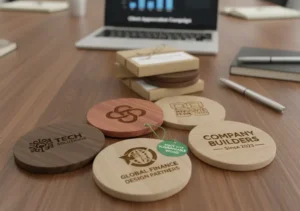
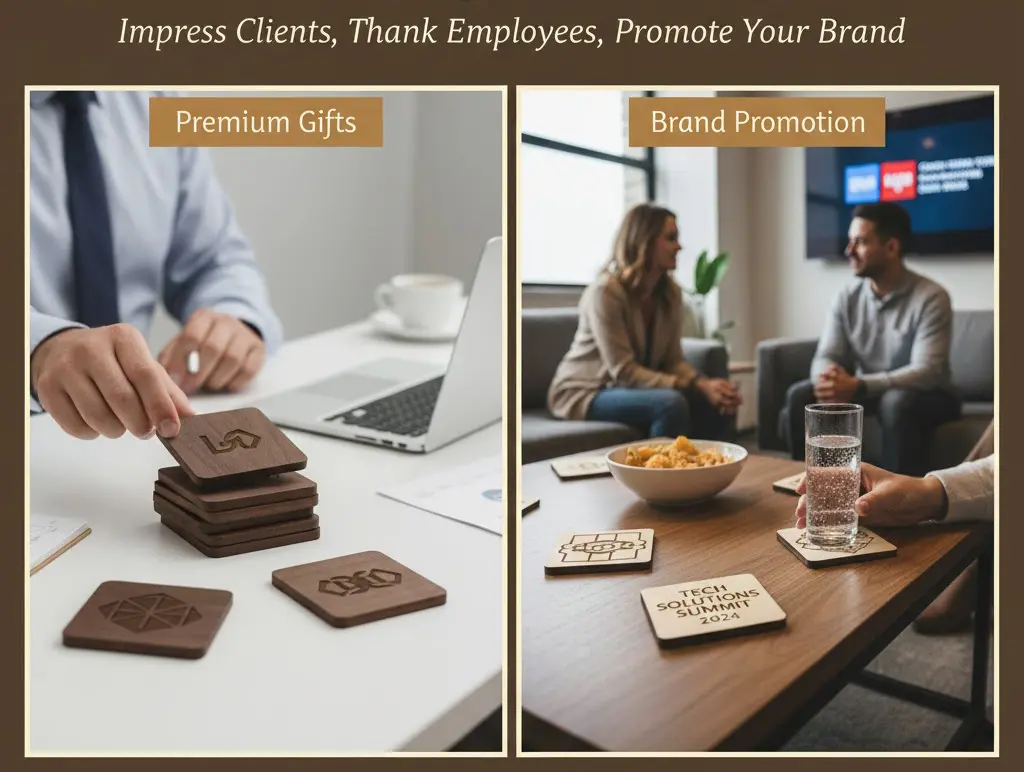
Branded wooden coasters hold a notable 65% retention rate, meaning two-thirds of users continue keeping them visible on desks or counters long after receiving them. Each use generates multiple logo impressions, maintaining brand visibility and improving recall compared with other promotional tools.
Why Retention Rate Matters for Branded Coasters
Retention rate measures how often a branded item keeps being used and seen over time, strengthening memory of the brand with every interaction. For marketers, a higher retention rate means ongoing exposure without extra ad spend.
Wooden coasters deliver about a 65% retention rate, which shows that nearly two-thirds of recipients continue to use them at home or in offices. This ongoing visibility means the logo stays part of everyday visual space, making the coaster both practical and promotional.
By comparison, other desk items such as small accessories or pens show around 58% retention, so coasters outperform by maintaining longer engagement and more consistent brand exposure.
How Coasters Maintain a Long Presence on Desks
A single coaster can produce up to 186 brand impressions based on users lifting a beverage about nine times per sitting over nine separate uses. This small yet repetitive action keeps the logo directly in view, creating strong reinforcement through habit.
Every time the coaster is used, the brand mark reappears at eye level, forming a subtle visual cue that improves recall. Because coasters serve both function and design, they tend to remain stationary items on desks and counters for weeks or months.
In workplaces or hospitality settings, these items create long-term brand reinforcement. Their durability and surface quality ensure the message stays visible without wear, contributing to continued recognition.
Marketing Impact and Measured Results
Campaigns have shown measurable outcomes. For example, one brewery using QR-coded coasters tracked a 30% rise in repeat visits, confirming that combining functionality and interactivity enhances engagement. This example illustrates how practical items can drive measurable behavior changes in customers.
Survey data also shows that 59% of marketers report better loyalty when offering personalized branded gifts like wooden coasters. The combination of everyday visibility and customization strengthens the emotional link between user and brand.
The blend of utility, visual appeal, and personalization helps transform coasters from one-time gifts into durable brand carriers that stay in constant use, providing organic advertising value day after day.
Bulk Wooden Coasters with Custom Designs
Benefit #2: Daily Brand Visibility
Branded wooden coasters placed in high-traffic hospitality venues provide continuous, natural exposure every day. Each use reinforces brand identity through physical interaction, generating up to 3,000 minutes of visibility per unit per day—offering cost-efficient marketing visibility compared to static media.
| Exposure Metric | Visibility Duration | Marketing Value |
|---|---|---|
| Daily Exposure per Active Coaster | Approx. 3,000 minutes (50 hours) | Consistent visibility across hospitality venues |
| Monthly Cumulative Visibility | 90,000 minutes (30-day calculation) | Sustained and repeat audience engagement |
| Engagement Level | Higher tactile interactions than static ads | Strengthened recall and emotional connection |
How Branded Coasters Build Daily Exposure
Branded wooden coasters operate as micro billboards in everyday environments such as cafes, bars, hotels, and restaurants. Positioned directly under a customer’s drink, they command constant attention throughout multiple daily touchpoints. This physical presence strengthens brand recall through subtle repetition, even without overt advertisement.
Each coaster’s use represents multiple brand interactions as patrons lift and replace their drinks. Over a full day, this simple routine can produce thousands of visual impressions, building memory reinforcement through a tactile experience more personal than screen-based ads.
This rhythm of engagement helps brands remain present without intrusion, linking the company identity with hospitality and comfort through natural association.
Quantifying Visibility and Engagement
Daily visibility averages around 3,000 minutes—or 50 hours—of continuous exposure for each coaster actively in use. Across one month, the brand exposure scales to 90,000 minutes, making this one of the most cost-effective touchpoints in hospitality-driven marketing.
Because coasters are both functional and visible, they generate steady engagement levels significantly higher than static posters or digital displays. In these settings, customers interact directly and repeatedly, turning ordinary use into measurable consumer impressions.
Research comparisons across promotional items indicate that coasters deliver up to 65% retention rates, outperforming conventional desk or print materials. This measurable recall supports their role as long-term brand reinforcers within hospitality environments.
Design and Placement Strategies for Maximum Reach
Smart coaster design transforms an everyday object into a high-impact marketing channel. Custom shapes, engraved artwork, and integrated QR codes provide conversation triggers and seamless digital engagement opportunities. These tactile and visual cues encourage users to interact more deeply with the brand message.
Deploying coasters at popular social venues automatically places them within consumers’ daily habits. Each encounter during dining or coffee breaks increases brand recognition among audiences aligned with hospitality and lifestyle sectors.
When creative design meets strategic placement, a wooden coaster evolves from a practical accessory to a soft marketing asset—quietly broadcasting the brand through experience and repetition.
Benefit #3: Eco-Friendly Brand Image
Adopting eco-friendly branded coasters supports sustainable practices, strengthens ESG alignment, and improves public perception by demonstrating a company’s environmental responsibility at every customer touchpoint.
Eco-Friendly Materials Signal a Responsible Brand
Branded coasters made from bamboo, cork, recycled paper, or recycled leather align with global sustainability goals and demonstrate a company’s commitment to responsible practices. By selecting renewable and biodegradable materials, brands create a tangible connection between their marketing materials and environmental values showcased in their daily operations.
These renewable materials enable businesses to express verified ESG commitments in visible, client-facing settings like corporate events, cafés, and offices, reinforcing authenticity in sustainability messaging.
Sustainability Preference Drives Purchase and Loyalty
Eco-conscious audiences increasingly choose brands that integrate sustainability into promotional materials. Coasters made from recyclable or compostable substrates deliver a message that resonates with customer expectations and supports long-term brand loyalty.
Eco-friendly merchandise builds higher engagement by aligning the product experience with shared environmental values, leading to stronger connections and positive reinforcement of brand credibility.
Regulatory and ESG Alignment Enhances Corporate Reputation
Using certified recyclable or compostable coaster materials helps companies meet evolving environmental regulations and contribute directly to ESG reporting requirements. This allows procurement and marketing teams to show measurable progress toward sustainability objectives while using an everyday branding tool.
Consistent eco-branding across customer and employee touchpoints builds trust with stakeholders who value transparency, compliance, and evidence of environmental responsibility.
Differentiated Brand Story Through Visible Green Touchpoints
Using visible eco-materials—such as upcycled paper or bamboo—provides a constant visual cue of a brand’s commitment to sustainability during each customer interaction. These materials not only serve functional purposes but also enrich the tactile and visual experience of clients.
Designing coasters from sustainable sources gives brands an opportunity to merge creative aesthetics with purpose-driven messaging, creating an authentic and recognizable green narrative within promotional strategies.
Future-Proofing Promotional Strategy with Growth in Eco Coaster Segment
Market data shows that demand for eco-conscious coaster products continues to expand globally, making sustainability central to the future of promotional product design. Investing in eco-branded materials now helps businesses stay adaptive and compliant with fast-changing market and regulatory expectations.
Early adoption provides an advantage for companies positioning themselves as leaders in environmental strategy while ensuring that their promotional materials remain aligned with long-term industry growth trends.
Benefit #4: Durability of Laser Engraving
Laser engraving ensures that branding on coasters remains clear, permanent, and resistant to daily wear. The process etches directly into the surface, producing markings that stay intact through moisture, cleaning, and long-term use, making it superior to printing methods that degrade over time.
Permanent Markings That Last Through Everyday Use
Laser engraving forms a design that becomes part of the coaster, so it will not peel or fade even after years of handling. By vaporizing minute amounts of material, the engraved area gains depth and permanence that surface printing cannot match. This technique keeps brand logos consistently visible, maintaining professional presentation in offices, restaurants, and event venues.
Unlike ink or paint applied to the top layer, laser engraving interacts directly with the material substrate. This means coasters can withstand heat, repeated use, and environmental exposure while keeping sharp contrast and clean lines. As a result, the branding endures as long as the coaster itself does.
For companies, this permanence guarantees a uniform branded appearance across large corporate batches or promotional distributions, reinforcing recognition every time the coaster is used.
Resistance to Moisture, Cleaning, and Wear
Engraved coasters retain their visibility even when exposed to condensation from glasses, spills, and cleaning routines. This makes them ideal for wet environments like bars and cafes, where standard prints often smear or lift. The engraved marks stay crisp and visible without requiring sealants or coatings, cutting maintenance costs while preserving the intended design.
The durability spans across materials such as wood, cork, slate, and leather. Each maintains edge precision and design definition long after production. Unlike coatings or decals, laser marks cannot detach or flake, even through repeated contact with moisture or cleaning chemicals commonly used in workplace and hospitality settings.
Because these surfaces naturally resist degradation, businesses can invest once in engraved coasters and reuse them repeatedly, aligning with sustainability efforts and reducing replacement frequency compared to disposable promotional items.
Material-Specific Endurance and Brand Longevity
The performance of laser engraving adapts well across materials used in corporate coasters. On wood or cork, it captures complex details and fine lettering without discoloration. The texture adds contrast, enhancing legibility while remaining durable under mechanical friction. Stone or stainless steel versions resist corrosion and abrasion, preventing color loss and ensuring designs remain legible for years.
Suppliers note that even without coatings, engraved marks on high-grade steel or maple remain sharp under regular use, showing minimal wear. The natural patina that develops on some materials complements the design, reinforcing its character rather than obscuring it. This durability provides a tangible sense of quality in corporate gifts or promotional pieces meant to last beyond single events.
When used for long-running marketing programs, this endurance keeps the brand’s visual integrity intact while reducing replacement costs. The combination of strength, permanence, and clarity ensures that every piece continues to represent the brand effectively over time, adding both practicality and perceived value to corporate merchandise.
Benefit #5: Cost-Effectiveness of Bulk Orders
Bulk ordering branded coasters allows businesses to cut unit costs dramatically while accessing supplier incentives such as free shipping, waived setup fees, and volume discounts reaching up to 50% for large-scale runs. These savings make custom coasters an affordable and scalable option for marketing campaigns and hospitality promotions.
How Bulk Purchasing Reduces Per-Unit Costs
Large coaster orders significantly lower the price per unit, often bringing costs under $0.50 each when ordering 2500 units or more. At this scale, material sourcing, printing setup, and logistics costs are spread over a wider base, allowing suppliers to offer better rates for bulk commitments.
Economies of scale apply across multiple materials. Pulpboard and cork styles benefit most, as they are simpler to produce and ship. The higher the quantity, the lower the incremental material and labor costs, creating sharp price drops as you move to larger order tiers.
Many suppliers establish minimum order limits between 100 and 250 pieces, offering predictable pricing tiers as order volume increases. This lets businesses confidently scale campaigns without unexpected cost jumps between batches.
Material-Based Pricing Comparisons
Material choice has a major impact on the overall cost of custom coasters. Pulpboard options typically offer the best value, starting at around $0.14 per piece for large runs. These are ideal for short-term promotions, events, or trade shows where high quantities are needed at low cost.
Cork coasters fall in the midrange, averaging $0.40–$0.56 per piece depending on the supplier and volume. They appeal to brands seeking a balance between affordability and eco-friendly presentation. Leather and ceramic options, while more expensive—ranging between $1.50 and $1.99 per unit—carry premium quality and longer lifespans suitable for executive or retail-level promotions.
In short, brands can tailor coaster material to campaign goals: disposable pulpboard for scale, cork for sustainable appeal, and leather or ceramic for perceived high value.
Extra Savings Through Supplier Incentives
Beyond base pricing, bulk coaster orders unlock additional cost advantages. Suppliers frequently waive setup fees once order thresholds—such as 500 units—are reached, eliminating charges that can add $50–$100 per run for smaller batches.
Tiered discounts often climb as high as 50% for large-scale orders, extending up to capacities of 100,000 units for national campaigns. Free or reduced shipping also applies at wholesale volumes, particularly for high-density materials like cork or pulpboard where freight dominates cost.
To build confidence before full production, some vendors provide small test orders between 12 and 25 pieces. This minimizes risk and helps validate print quality and design accuracy prior to scaling up. Together, these incentives make bulk coaster purchasing not just economical but strategically sound for ongoing marketing programs.
Designing a Logo that Pops on Wood
Creating High Contrast and Simplified Logo Designs
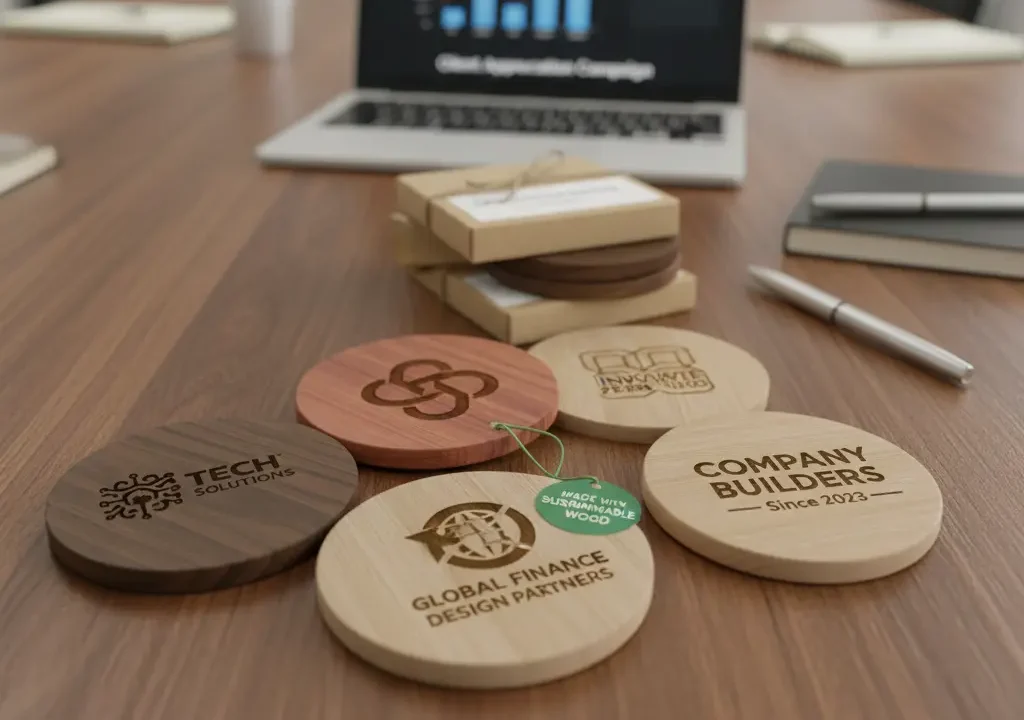
Using high contrast and clear geometry is key when placing logos on wooden coasters. Dark inks stand out best on light woods such as maple or bamboo, while light or white inks bring visibility to darker woods like walnut. This ensures that the design remains readable even where lighting conditions are low or uneven.
To maintain sharp, legible marks, limit complexity in the artwork. Removing gradients, tight patterns, and ultra-fine details prevents loss when printed or engraved at small sizes. Bolder shapes, icons, or wordmarks reproduce far more clearly and look intentional at viewing distances typical in hospitality settings.
A practical guideline is to maintain a minimum stroke width of about 0.3–0.4 mm. The primary logo or emblem should occupy roughly half to three-fifths of the available print surface, preserving both visibility and stability in texture reproduction across batches.
Choosing Wood Types and Printing Methods for Strong Impact
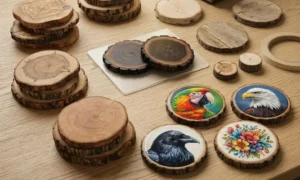
Different printing approaches create different impressions on wood. Laser engraving burns the mark directly into the grain, grabbing attention through its tactile depth and high durability. UV and screen printing methods, on the other hand, bring color back into play. They allow accurate brand reproduction and include white underbases for brightness when needed.
Wood choice matters as much as the print process. Tight, straight grain structures such as maple or birch prevent distortion or dark spots during decoration. Smooth finishes give inks a clean edge and make the surface easier to wipe or seal.
Leaving the logo zone relatively open—around 60–70% of the coaster face—is another visual safeguard. It focuses the viewer’s attention on the mark itself rather than irregularities like grain variation or small knots that might distract from the overall composition.
Maintaining Color and Legibility in Real Use
Using opaque or double-layered inks avoids fading or tone shifts caused by the natural color of wood. Applying a white underbase beneath key elements will keep brand hues accurate and prevent unwanted blending with the substrate.
In real environments—cafes, tasting rooms, client lounges—logos are often partially hidden by glasses or mugs, so designs should center bold marks with abundant negative space. Short, strong words or clear symbols outperform smaller taglines or dense typographic arrangements.
To maintain clarity over time, text should reach at least 2.5–3 mm in height and sit 3–5 mm away from the edge. This margin protects fine details from chipping or darkening caused by repeated contact with moisture and glass bases.
Frequently Asked Questions
What is the best wood for logo engraving?
The top choices for engraving are basswood, maple, birch plywood, cherry, and walnut. Basswood is lightweight and engraves cleanly for detailed designs. Maple gives a refined and sharp contrast for premium products. Birch plywood is affordable and stable for large-volume engraving. Cherry provides a rich tone and engravings that darken over time, while walnut adds depth and elegance with its dark finish.
How much do custom coasters cost in bulk?
Bulk pricing depends on material, design, and quantity. Pulpboard coasters often fall between $0.26 and $0.79 each, while cork options usually stay under forty cents per unit. High-end materials like ceramic or slate range higher at $1.85 to $3.44 apiece. Larger orders receive stronger discounts, and many suppliers offer free shipping or reduced rates for wholesale tiers.
Are wooden coasters tax deductible as marketing?
Branded wooden coasters used for outreach or giveaways typically classify as advertising expenses and can be fully deductible if ordinary and necessary for promoting the business. When distributed broadly at events or to prospects, they qualify as marketing costs rather than limited gifts. Tax treatment may vary, so consulting a professional adviser is recommended.
Can I print color logos on wood?
Yes, color printing on wood is possible through UV printing, which creates bright, durable designs directly on the surface. Other methods like sublimation or digital inkjet may also work, but UV gives the best detail and adhesion. Light-colored woods such as maple or birch help colors stand out. For protection, many apply a clear finish after printing.
What is the turnaround time for 500 units?
For mid-sized orders around 500 coasters, standard production usually takes 6 to 11 business days after artwork approval. Simple one-color impressions or smaller runs can finish in as little as 3 to 5 days, while complex custom work or special packaging may extend the schedule. Rush options are commonly available for tight timelines.
Final Thoughts
Wooden coasters combine long-term visibility, practical use, and sustainable design into a single promotional item that people actually keep. Compared with paper or plastic alternatives that end up discarded, wooden versions stay on desks, in restaurants, and in meeting spaces for months, continually reinforcing brand presence. Their durability, tactile quality, and everyday relevance make them a low-maintenance way for companies to connect with clients and staff through daily interaction.
For businesses looking to balance impact, practicality, and responsible materials, branded wooden coasters offer a clear advantage. They reduce waste, keep production costs manageable through bulk ordering, and retain their polished look far longer than printed swag. As more organizations align marketing with sustainability values, these coasters act as understated yet powerful symbols of lasting brand commitment and thoughtful design.