Skip to content
Wholesale wooden coasters sit at the intersection of three buying motives: functional tabletop protection, branded merchandise and impulse gifting. This hub guide walks a first-time or expanding buyer through the decisions that determine whether a coaster programme earns its shelf space: material, branding method, order structure, packing and channel playbook. It is the entry point for the coaster cluster — the commercial pages, spec comparisons and channel guides sit underneath it, and they are all linked from here.
Key Takeaways
- Five species cover nearly all wholesale demand: basswood, birch, beech, white oak and bamboo, each mapped to a channel.
- Branding methods are not interchangeable: laser engraving, full-colour print and deboss suit different species and price points.
- Production MOQ is 300 pieces per design; trial orders of 100 pieces run on in-stock blanks only.
- Packing format is a margin lever: gift-boxed sets sell at retail as gifts, bulk packs serve hospitality replacement cycles.
- Mixed-line containers let small buyers consolidate coasters with birds, ornaments or puzzles to improve landed cost.
- No credible supplier quotes a per-unit price before species, thickness, branding method and packing format are fixed. A price list without those four variables is not comparable.
- Specify grade per line item rather than per order, so one purchase order can serve both a hospitality replacement pack and a premium gift programme.
The Coaster Line at a Glance
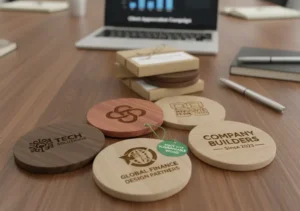
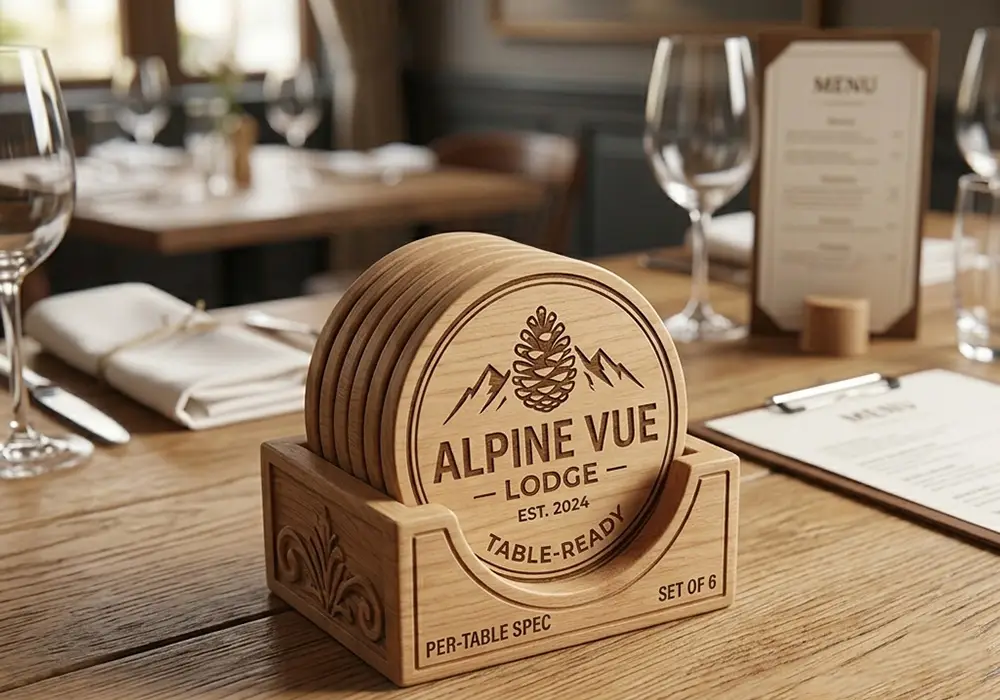
The factory coaster line runs from plain natural blanks for craft retail to fully branded, gift-boxed sets for corporate programmes. Shapes include round, square, hexagon and custom silhouettes; thicknesses run from 4 mm print-grade blanks to 10 mm premium slabs with bevelled edges. Edge treatment (raw, sanded round, bevelled, burnt) is specified per order because it changes both feel and packing density.
Where to Buy Wholesale Coasters: Four Supplier Types
“Where can I buy wholesale coasters?” is the most common question in this category, and the honest answer is that the four available answers are not interchangeable. Each one solves a different problem, and buyers who pick the wrong type end up paying for convenience they never used.
| Supplier type | What you actually get | Right choice when |
|---|---|---|
| Direct manufacturer | Control of species, thickness, edge, branding and packing; tooling and die work; production-slot scheduling | You have a repeatable design and a reorder cadence |
| Trading company / aggregator | Mixed stock, low per-line minimums, one invoice — at an intermediary mark-up and with no control of the cutting stage | You need small assorted quantities immediately |
| Wholesale marketplace | Discovery of many makers, per-maker terms, platform-standard returns handling | You are testing designs before committing a programme |
| Domestic converter / print shop | Fast local branding on imported blanks; short lead times; limited species and format choices | The event date is fixed and short |
A useful rule: buy blanks from wherever is cheapest and most reliable, but buy branding wherever the process is closest to the substrate. Engraving and deboss are production-stage operations; surface printing can be done downstream. That single distinction explains most of the price spread you will see between suppliers quoting “the same” coaster. On the question of which manufacturer is best, the honest answer is that no supplier can be judged on a logo wall — the evaluation criteria that actually separate them are in the buyer checklist below.
Materials Quick-Pick
Species selection is a channel decision. Basswood leads for engraving and print programmes; birch and beech carry hospitality abuse; white oak and bamboo anchor premium and eco positions. The full comparison — hardness, grain behaviour and engraving quality — lives in our best wood for coasters guide, and the sustainability axis is argued separately in bamboo versus hardwood and plywood versus solid wood.
| Species | Working character | Best channel fit | Branding fit |
|---|---|---|---|
| Basswood | Even, fine, low-contrast grain; cuts cleanly; takes finish uniformly | Engraved gift retail, promotional sets | Laser and print both excellent |
| Birch | Hard and dimensionally stable; resists edge chip under washing cycles | Café and hotel bulk packs | Print and deboss; engraving slightly lower contrast |
| Beech | Dense and impact resistant; pronounced grain line; steams and bends predictably | Bar and taproom abuse programmes | Deboss and burnt edge |
| White oak | Open grain with strong figure; heavy; naturally moisture resistant | Premium retail and corporate boxed sets | Engraving only — grain swallows print |
| Bamboo | Grass, not timber; very hard for its weight; linear grain, low tannin bleed | Eco-positioned retail and hotel wellness | Laser gives dark, high-contrast marks |
Thickness, Diameter and Format: What Actually Changes Cost
Thickness is the single most under-negotiated variable in a coaster quotation. It drives material consumption, weight per carton, and perceived quality — in that order. A 4 mm print-grade blank is correct for a high-volume promotional run where the coaster is a carrier for artwork. 6 mm is the default retail thickness and the right starting point when a buyer has no preference. 8-10 mm reads as premium in the hand and is what boxed gift sets should use, but it costs proportionally more material and cuts freight efficiency sharply because weight, not volume, becomes the binding constraint.
Diameter follows glassware, not fashion. 90-95 mm suits wine and spirits; 100-105 mm covers pint glasses and most tumblers; 120 mm and above belongs to beer mugs, share-plates and cocktail programs where the vessel foot is wide. A coaster that is smaller than the vessel’s base ring leaves a wet crescent on the table, which is the most common source of hospitality complaints and is entirely a specification error rather than a manufacturing one.

Format choice also determines packing density, and therefore landed cost. Round coasters nest; square and hexagon formats stack but waste carton volume at the corners. A buyer switching from 100 mm round to 100 mm square without re-checking the carton plan will usually fit fewer pieces per carton than expected. Ask for the pieces-per-carton figure against the specific shape before comparing freight.
Branding Options and Their Trade-offs
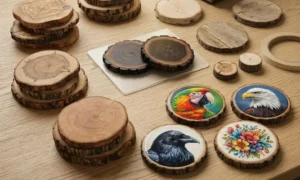
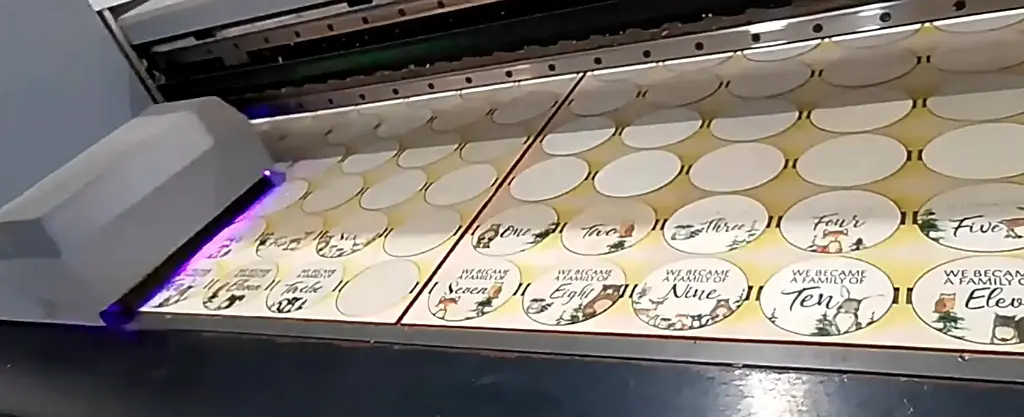
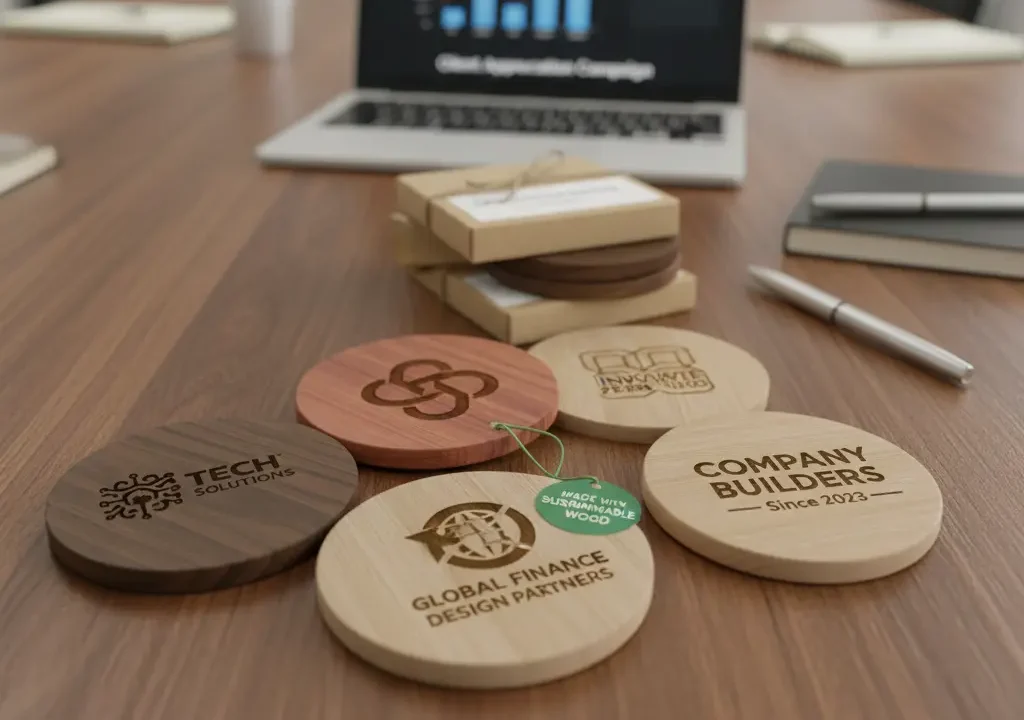
Laser engraving is permanent and reads premium on light species; it is per-piece machine time, so cost scales linearly with quantity. Full-colour print carries logos with gradients and multiple colours, amortises over the run, but sits on the surface and wears faster under abrasive cleaning. Deboss presses the mark into the wood: subtle, durable, best on even-grained hardwoods, and cheapest at volume once the die exists.
Two practical points that catch buyers out. First, colour count is a cost driver in print but is irrelevant in engraving, where the mark is simply burnt wood — a logo that needs four spot colours and a dark brand grey is a different product depending on which process you choose. Second, a deboss die is a one-off tooling charge that stays on file, so the second and later reorders are cheaper than the first; if a supplier’s reorder price is not lower, ask what changed. Buyers mixing channels often run two branding specs from one production run to serve both retail gifting and hospitality replacement.
Finishes, Waterproofing and Care Instructions
An unfinished wooden coaster will drink water, stain and eventually cup. The finish system, not the species, is what determines service life, and it is the part of a quotation most buyers never read. Film-forming finishes (lacquer and marine-grade top coats) sit on the surface, block moisture effectively, and show wear at the edges first. Penetrating finishes (hard waxes and food-safe oils) soak in, feel better in the hand, and require periodic re-application — which makes them right for retail gift sets sold with a care card and wrong for a hotel programme that will never re-oil anything.

Specify the coating by performance requirement rather than by name, and require the coating specification sheet in the shipment documents. Our comparison of non-toxic and eco-friendly coaster finishes covers which systems survive dishwasher cycles and which are decorative only. The care card that ships in a retail set is not a courtesy — it is the cheapest returns reduction available in this category, and we can print yours.
MOQ and Order Structure
Production runs start at 300 pieces per design, which covers a single shape, species and branding combination. Trial orders of 100 pieces are available on in-stock blanks for buyers testing a concept before committing a design. Multi-design orders stack minimums per design; mixed-line containers — coasters consolidated with other lines — are the standard route for buyers whose per-line volume is below a full carton programme. Hospitality programmes typically reorder twice a year; retail gift programmes reorder seasonally.
If your per-design volume is genuinely below 300, the correct move is to reduce the number of designs rather than to hunt for a lower minimum. Four designs at 300 pieces is a healthier programme than twelve designs at 100, because it concentrates both the tooling investment and the reorder history in the places where they compound. MOQ mechanics and cost drivers are broken out in the custom logo coaster MOQ and cost guide.
Packing and Shipping Reality
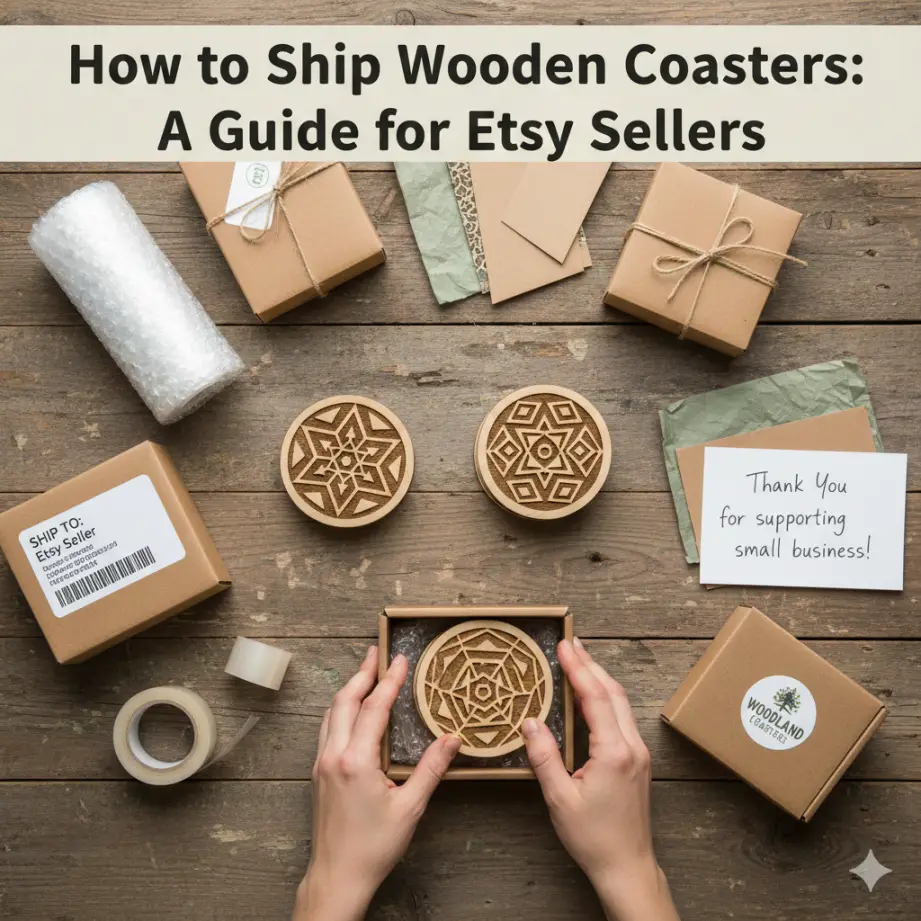
Coasters are dense and flat: they cube efficiently but punish poor corner protection. Gift-boxed sets pack in inner boxes then five-layer export cartons; bulk packs use interleaving to prevent face scratching. For ocean freight to humid markets, cartons carry desiccant and a moisture barrier because finished coaster faces show water marking if condensation reaches them in transit. Carton load plans follow the stacking specification published with each order confirmation.
Where a retail or hospitality buyer requires documented transit performance, packing is specified against ISTA packaging transit testing standards, and the drop-test record travels with the shipment file. E-commerce resellers shipping single sets should read the separate guide for marketplace sellers, because parcel handling is a different failure regime than container handling; the structural basis is in carton bearing capacity and custom retail packaging for wooden crafts.
What Drives the Unit Price
Buyers routinely ask what wooden coasters sell for, and any supplier who answers with a single number is guessing. Six variables set the price, and they are independent of each other: species (material cost and waste rate), thickness (material consumption and carton weight), branding method and colour count (per-piece machine time versus amortised tooling), edge treatment (an extra handling pass), packing format (bulk, sleeve, gift box, or individual set with insert card), and quantity per design (where the reorder discount actually lives).
Two of those six — packing format and edge treatment — are where comparable-looking quotations diverge most, because both are frequently quoted as “standard” without being named. Fix all six in writing before comparing prices, then compare. Because we quote factory-direct against your specification rather than from a published price list, the resulting number is a production cost plus a factory margin, and it will move predictably when you change one variable at a time. Landed cost also depends on terms and tiering, which are decoded in wholesale terms for wooden decor.
Five Failure Modes and the Clause That Prevents Each
- Warping after arrival. Caused by shipping high-moisture blanks in sealed cartons. Prevention: a moisture and flatness check clause at goods-in, stated in the purchase order rather than assumed.
- Face staining or water marking. Caused by condensation in transit without a barrier. Prevention: desiccant plus moisture-barrier liner specified per destination climate.
- Edge chipping. Caused by loose packing in bulk formats. Prevention: interleaving or corner protection priced explicitly, not absorbed silently.
- Print wear within weeks in bar use. Caused by choosing surface print for an abrasive-cleaning channel. Prevention: specify the cleaning regime in the brief and let that choose the branding method.
- Colour mismatch between reorders. Caused by re-approving artwork from a file instead of a retained physical golden sample. Prevention: golden-sample retention written into the reorder terms.
Every one of these is preventable in the purchase order rather than in the claim. The pattern is consistent: the failure is not a factory defect but an unstated assumption, which is why the checklist below matters more than the price comparison.
Material Sourcing and Legality Documentation
Wood products now carry documentation obligations that did not exist a few years ago, and they fall on the importer rather than the supplier. Our timber is documented through official felling and transport permits, and we provide that paperwork with the shipment file. EU and UK buyers preparing for due-diligence requirements should read our EUDR documentation checklist for wooden decor before their first order rather than after their first audit.
One clarification worth stating plainly: we hold FSC certification as a company, but FSC-certified basswood supply is not available to us at product level, so we do not describe our coasters as made from FSC-certified wood. Where a retail programme requires chain-of-custody product claims, raise it at quotation stage so we can tell you honestly which stock can support it and which cannot. Social and quality compliance behind the material is covered by our BSCI and SEDEX audit position and by the factory description on the wood carving factory page.
Channel Playbook
| Channel | Winning format | Reorder driver |
|---|---|---|
| Gift shop | Engraved gift-boxed sets of four | Seasonal gifting calendar |
| Hotel / café | Printed or debossed bulk packs | Wear replacement cycle |
| Brewery taproom | Debossed bulk packs, burnt edge | New beer launches, merch resets |
| Corporate gifting | Premium boxed sets, individual engraving | Event and anniversary calendar |
| Wedding and events | Engraved single-shape favours, kraft boxed | One-off volume per event, referral repeat |

Hospitality-specific programme design — branding durability, reorder cadence and set structures — is covered in the hotel and restaurant coaster programmes guide. Custom shapes and private-label packing run through the OEM/ODM customization workflow.
The Coaster Cluster: Every Buying Question, One Map
This page is the entry point. Each link below answers one question in more depth than a hub can carry.
- Buying and pricing: wholesale wooden coasters (quote page) · buying beer and bar coasters · custom logo MOQ and cost factors · wholesale terms decoded
- Specification: best wood for coasters · plywood vs solid wood · bamboo vs hardwood · eco-friendly finishes
- Channel programmes: hotel and restaurant · corporate branding · promotional products · wedding favours
- Merchandising and packing: seasonal designs that sell · gift set curation · countertop display · marketplace shipping
What We Check on Every Coaster Order
- Blank moisture and flatness before sanding, so finished faces stay flat in transit.
- First-article branding approval against the golden sample for depth, colour and registration.
- Face protection: interleaving or tissue between printed faces in bulk packs.
- Carton drop test on production-packed cartons before the first container of a new packing format.
- Packing list mapping to multi-address programmes so each property receives its own carton count.
Quality Grades and How to Specify Them
Coaster quotations move with grade specification, so name the grade in the request. Craft grade allows small mineral streaks and pin knots on the face and suits painted or burnt designs where character reads as intentional. Retail grade requires clean faces with edge-level colour consistency and suits natural-finish gift sets where the wood itself is the visual. Premium grade adds face-matching within a set, bevelled edges and hand-finishing, and is the correct specification for boxed corporate gifts where every set is opened in front of someone. Specifying grade per line item, rather than per order, lets one purchase order serve both a hospitality replacement pack and a premium gift programme.
Seasonal Calendar for Coaster Programmes
Coaster demand runs two peaks: the autumn gifting build for holiday retail and corporate programmes, and the spring refresh for hospitality terraces and café reopenings. Production slots for engraved and gift-boxed formats fill first in both peaks because personalisation runs sequentially. Buyers ordering for a fixed event should approve branding proofs at least five weeks out and confirm quantities at least three weeks out; late quantity growth after cutting starts is absorbable, late branding changes are not. Which designs to put in each window is a separate question, answered in seasonal wooden coaster designs, and the longer planning view is in wooden home decor market trends.
Private Label vs Stock Branding
Stock branding applies your logo to factory shapes and finishes: fastest route, lowest tooling, ideal for testing a channel. Private label develops your own shape, edge profile and packing under your brand: higher upfront sampling, stronger shelf identity, and exclusivity on the design once agreed. Many buyers run stock branding for hospitality replacement volume while holding private-label shapes for retail gifting, keeping one supplier and two brand positions. The development path and its real timeline are set out in from sketch to container.
Buyer’s Evaluation Checklist
- Species and grade named per line item, not “wood” on a quotation.
- Branding method and colour count fixed before price comparison.
- Packing format priced explicitly: bulk, sleeve, gift set or eco box.
- Moisture and flatness checks stated in the quality clause, not assumed.
- Reorder path agreed: artwork on file, golden sample retained, reorder lead time written down.
With those five points fixed in the first purchase order, every subsequent reorder becomes a two-line email instead of a renegotiation, which is where coaster programmes either compound or stall.
Documentation That Should Accompany Every Coaster Order
Receiving inspection goes faster and insurance claims stay winnable when five documents travel with the shipment: the commercial invoice and packing list mapped to carton contents; a species and grade declaration per line item; the branding proof approval record with version and date; the coating specification sheet for printed or debossed finishes; and the carton drop-test record whenever a new packing format ships for the first time. Missing any of these turns a routine receiving check into a dispute, and turns a transit damage claim into an unverifiable story.
Buyers who standardise this document set on the first order report that reorders need no re-verification: the retained golden sample, the artwork file and the document template together make every subsequent shipment a confirmation instead of an inspection. That is the operational difference between a supplier and a programme.
Quote Species, Branding and Packing in One Pass
Basswood through white oak, laser, print or deboss, bulk packs to gift-boxed sets. Production MOQ 300 pieces per design, with 100-piece trials on in-stock blanks.
Frequently Asked Questions
What is the minimum order for wholesale wooden coasters?
300 pieces per design for production runs, where one design means one shape, species and branding combination. Trial orders of 100 pieces are available on in-stock blanks only, which lets you test a concept before committing tooling. Multi-design orders stack the minimum per design, so reducing the number of designs is usually cheaper than hunting for a lower minimum.
What type of wood is best for coasters?
It depends on the channel rather than on hardness alone. Basswood is the best all-round choice for engraved and printed gift programmes because its even, low-contrast grain takes both processes cleanly. Birch and beech suit hospitality because they resist edge chip through repeated washing. White oak reads premium in the hand but swallows printed colour, and bamboo gives very hard, high-contrast laser marks at low weight. The full comparison is in our best wood for coasters guide.
Which branding method lasts longest in bars?
Deboss and laser engraving both outlast surface print, because the mark is in the substrate rather than on it — abrasive cleaning and repeated wetting strip printed ink first. Print wins only when the logo genuinely needs full colour or gradients. Many taproom programmes run deboss with a burnt edge for exactly this reason, and hold a printed version for retail gift sets where the artwork matters more than the wash cycle.
How much do wooden coasters sell for wholesale?
There is no single answer worth trusting, because six independent variables set the number: species, thickness, branding method and colour count, edge treatment, packing format, and quantity per design. Two quotations that look identical often differ because one includes a bevelled edge and a gift box while the other assumes bulk packing. Fix all six in writing before comparing prices — we quote factory-direct against your specification rather than from a published list.
Can coasters ship in a mixed container with other lines?
Yes. Mixed-line consolidation is standard and improves landed cost for buyers whose volume per line is below a full carton programme — coasters with birds, ornaments, puzzles or salt products in one shipment is a routine order for us. Retail-ready barcodes, insert cards and gift-box artwork are part of the packing specification, and packing lists can be mapped to multiple delivery addresses within one container.