Skip to content
A retailer in Cologne once sent back 200 of our robins. Not because they were damaged — because the paint looked “printed.” He couldn’t tell the difference between our hand-work and a machine job. That stung. It also told us we needed to do a better job showing buyers what actual hand-painting looks like at scale, and why it costs what it costs.
This guide is for wholesale buyers sourcing hand-painted wooden birds who need to justify a higher price point to their own customers. We’ll walk through how our painters work, how we keep 1,000 units looking consistent without losing the handmade feel, and how to spot the difference between real brushwork and a spray job. If you’re sourcing hand-painted wooden birds for retail, this is what you should know before placing an order.
Why Hand-Painted Birds Sell at Higher Prices
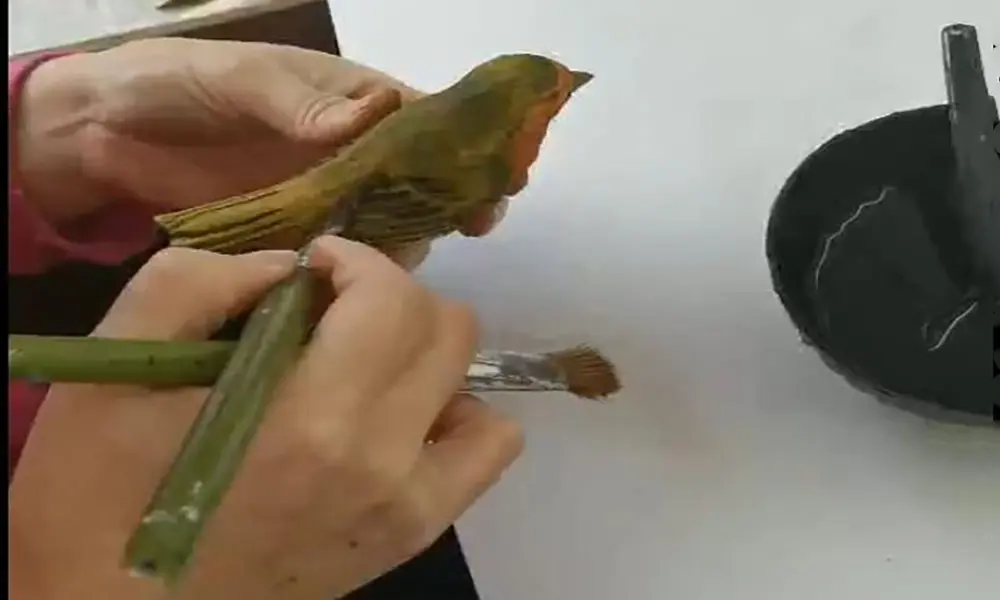
The short answer: labor. Each bird takes a painter 8-12 minutes from base coat to final eye detail. Multiply that by 1,000 units and you’re looking at 130-200 hours of skilled work. A machine prints the same batch in an afternoon. That’s the cost gap — and also the value gap.
What does the customer actually get for that extra money? Three things:
- No two pieces are identical. Slight variations in feather shading or eye placement tell the buyer they’re holding something a person made. In gift shops, this is the #1 comment customers make before purchasing.
- Paint follows the carving. A brush can lay color into concave feather grooves and around raised wing tips. A printer can’t. This gives the bird depth that flat printing flattens out.
- Color layering. Our painters apply 3-4 thin layers per bird — base, shading, highlight, detail. This builds a richness that a single-pass print can’t match.
How We Keep 1,000 Units Consistent
“Handmade” doesn’t mean “random.” If you order 500 goldfinches, you need them to look like the same species — not 500 different interpretations. Here’s how we handle that:
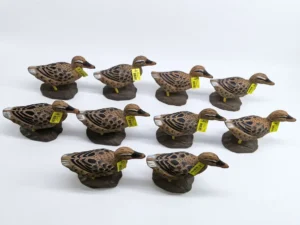
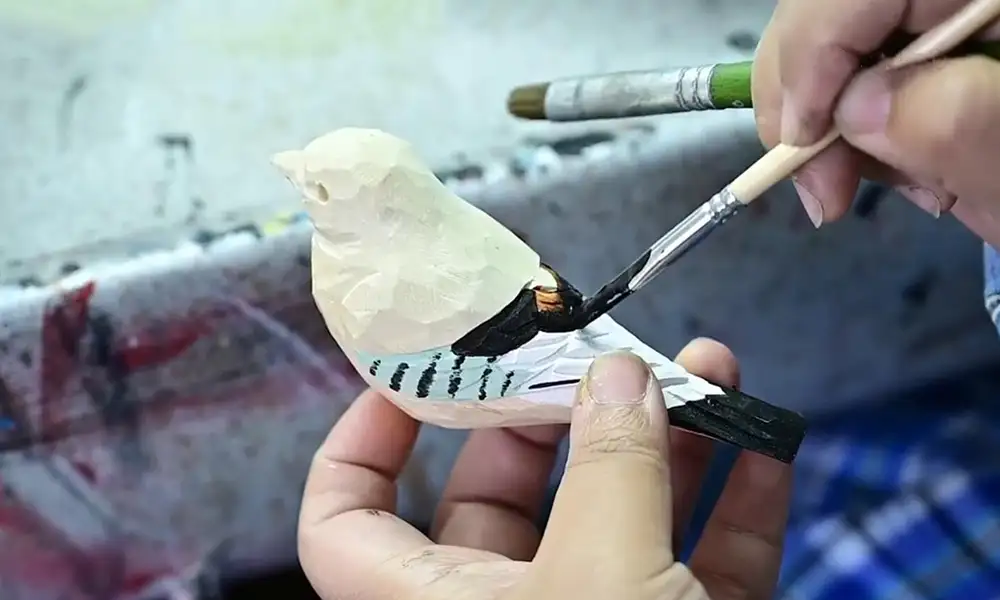
Reference boards. Before a production run starts, our lead painter creates a “master bird” and photographs it from six angles. Every painter on that run works from the same reference. Color mixtures are measured by weight, not eyeballed.
Stage checks. Each bird passes through three hands: carver, painter, inspector. The painter checks their own work against the master before it moves on. The inspector pulls 10% of each batch for side-by-side comparison. Anything that drifts too far gets repainted.
What we allow vs. what we reject. A 1-2mm variation in eye stripe width? That’s handmade character. A wing that’s the wrong shade of brown because someone used the wrong mix? That gets stripped and redone. We train our team to know the difference.

Paint Thickness: Keeping the Wood Grain Visible
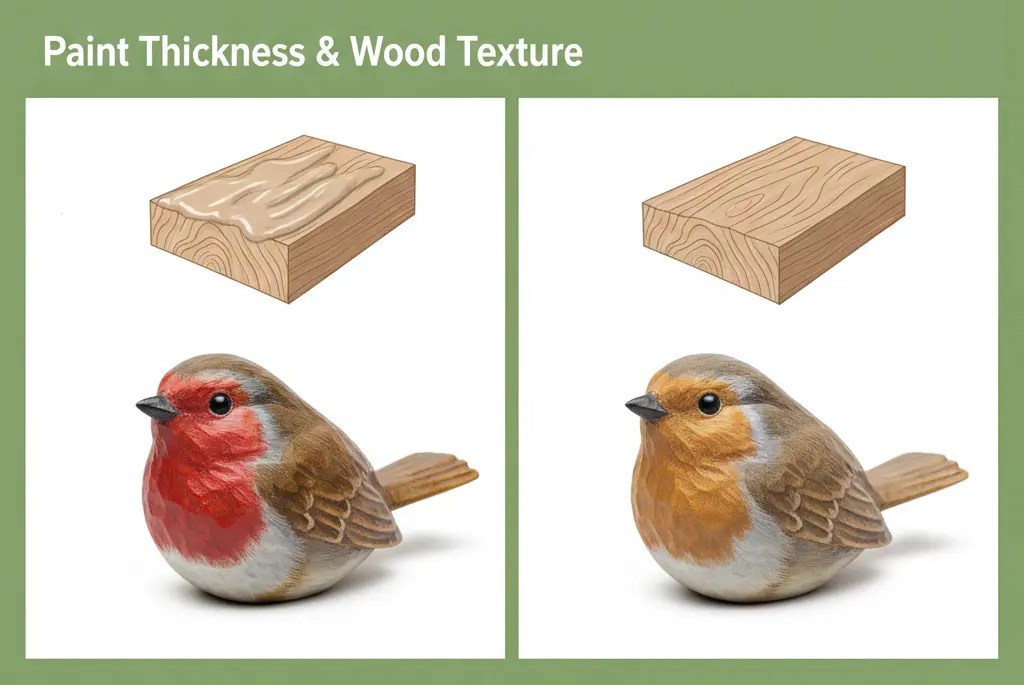
Here’s a mistake cheaper factories make: they slap on one thick coat to save time. Covers fast, looks flat, feels like plastic. You lose the basswood grain entirely. The bird might as well be resin.
We go the other direction. Three to four thin coats of water-based paint, each one barely adding film thickness. The grain still shows through on natural-finish areas. On fully painted sections, you can still feel the carving texture under your thumb. That tactile quality is what makes a customer pick the bird up in a store — and once they pick it up, they usually buy it.
All our paints are water-based and non-toxic. For the compliance specifics (EN71, ASTM, heavy metal testing), we’ve written a separate guide: EN71 Non-Toxic Paint Standards for Wood Crafts.
Fade Resistance: What Actually Matters
A buyer asked us last year: “Will your robins still be red in two years?” Fair question. Here’s the honest answer:
Our paints carry an ASTM lightfastness rating of LFII (very good). In practical terms, that means no noticeable fading under normal indoor lighting for 5+ years. Direct sunlight on a south-facing windowsill? That’s a different story. Any painted object will fade eventually under sustained UV. We tell our retail partners to advise customers: shelf or wall display, not windowsill.
If you’re selling in a market with high sun exposure (Australia, southern US), mention this to your customers. It manages expectations and prevents returns.
Species Accuracy and Custom Colors
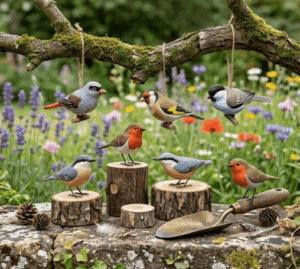
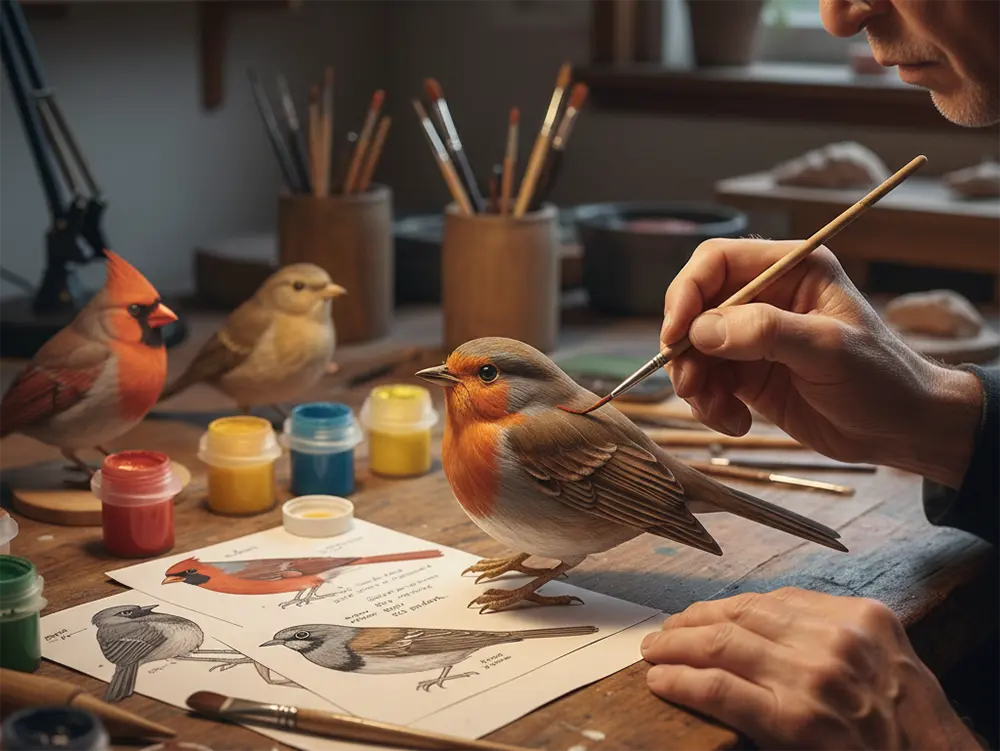
We paint over 60 songbird species regularly. Our painters work from ornithological reference photos, not from memory. Cardinal red goes in specific places. Blue jay barring follows a pattern. Get it wrong and a birdwatcher customer will notice immediately.
For custom work: yes, we do Pantone matching. Yes, we can paint your local species that we don’t stock. The MOQ for custom paint colors or species is 300 pieces. Lead time adds about 10 days to a standard order because we need to mix, test, and approve the color before the full run.
Protecting Paint in Transit
Painted surfaces scratch if they touch each other. Full stop. So each bird gets wrapped in tissue paper individually, then seated in a compartmented inner box. No bird touches another bird. The inner boxes go into a 5-ply master carton that passes ISTA 1A drop testing. Our damage rate on painted orders runs under 0.5%. For the full packaging breakdown, see our packaging guide.
Frequently Asked Questions
How can I tell if a bird is genuinely hand-painted vs. printed?
Look at the feather edges under good light. Hand-painting shows tiny directional brush marks — the strokes follow the feather’s natural angle. Printing is perfectly uniform with no texture variation. Also run your thumb across the surface: hand-painted pieces have slight ridges where paint layers build up. Printed surfaces feel flat.
What’s the MOQ for a custom-painted order?
300 pieces per species/colorway. That covers the cost of mixing and testing your custom colors. For our stock species (60+ available), the trial minimum is 100 pieces at $500 order value.
Will colors fade in a sunny store window?
Under normal indoor retail lighting, no noticeable fading for 5+ years (ASTM LFII rated). Direct sun through glass for hours daily will accelerate fading over 18-24 months. We recommend window displays use rotation — swap pieces every few months if they’re in sustained direct light.
What’s the lead time for hand-painted orders?
Stock species: 15-20 days. Custom colors or new species: add 10 days for color development and approval. Large orders (2,000+) shipped by sea: 60-90 days total including production and freight.
Can I mix painted and natural-finish birds in one order?
Yes. We regularly split orders — say 60% painted, 40% natural clear-coat. No extra MOQ per finish type as long as the total order meets 300 pieces. Just specify the split in your PO.