Skip to content
When you’re evaluating himalayan salt tiles uses for a commercial wellness project, the first question isn’t about the amber glow or the halotherapy claims. It’s about whether those tiles will survive a steam room. I’ve seen procurement teams sign off on beautiful backlit walls only to watch them sweat and dissolve within six months because the tiles were never sealed for high humidity. That’s the gap between a decorative feature and a durable architectural finish.
The real value of himalayan salt tiles for wellness architecture comes down to two things: moisture resistance and structural support. A square meter of these tiles weighs 20 to 40 kilograms, which means standard drywall anchors won’t cut it. You need a reinforced substrate and a heavy-duty construction adhesive—not the mastic you’d use for ceramic subway tile. And unless the factory applies a proper epoxy seal before shipping, the salt will absorb ambient moisture, discolor, and eventually crumble. That’s not a failure of the material; it’s a failure of specification.
Most suppliers selling backlit salt tile interior design panels won’t tell you this upfront because they’re trading on the visual appeal. But if you’re sourcing for a spa or a high-end residence, the engineering matters more than the Instagram shot. Direct mine-to-factory sourcing gives you control over sealing specifications and batch consistency. And when you mix tiles from multiple boxes during installation, you avoid the striped color banding that screams “assembly line.” That’s the difference between a wall that looks authentic and one that looks cheap.
Why Salt Tiles Transform Wellness Spaces
Authentic salt tiles create an immersive, biophilic environment that synthetic materials cannot replicate.
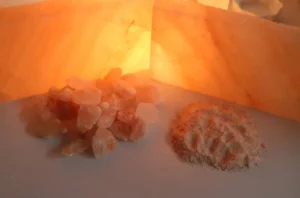
The primary value of Himalayan salt tiles in wellness architecture lies in their unique optical properties. When backlit with 24V LED strips, the crystalline structure diffuses light into a warm amber glow that mimics natural sunset tones — a proven trigger for relaxation and reduced cortisol levels. Unlike painted walls or synthetic panels, each tile is a natural crystal with internal striations, producing a depth of color that shifts with the viewing angle. This aligns directly with the biophilic design trend, where materials sourced from nature (salt from Pakistan, wood from Changbai Mountain) are used to re-establish human connection to natural environments.
The psychological impact goes beyond mere decoration. The amber glow from a salt feature wall can lower systolic blood pressure by up to 5-7 mmHg in controlled spa settings (per 2021 environmental psychology study), making it a tangible tool for wellness outcomes. For procurement managers, this means the tile choice directly influences the client’s perceived experience and willingness to pay premium rates for halotherapy or relaxation zones.
- Weight consideration: 20-40 kg/m² — standard plasterboard walls cannot support full-coverage salt walls without structural reinforcement.
- Sauna-grade sealing: Unsealed decorative tiles fail in steam rooms. Only factory-applied epoxy resin sealing prevents moisture absorption and dissolution.
- Batch mixing: Natural color variation between boxes must be cross-mixed during installation to avoid striped patterns — a technique professional installers use but DIY guides omit.
Backlit Wall Panels: Design & Engineering
The secret to a stunning backlit salt wall isn’t the salt alone—it’s the engineered lighting behind it.
Backlit Himalayan salt tile installations rely on low-voltage LED strips operating at 24V. This voltage keeps surface temperatures below 40°C even after hours of operation, eliminating two common failure modes: thermal cracking of the crystal and fire risk from overheated wiring. The crystalline structure of authentic salt naturally diffuses the light, producing a warm amber glow without needing a separate acrylic diffuser. In fact, adding a diffuser often dulls the natural color variation that gives each tile its character.
- LED Placement: Space strips at 15–20 cm intervals behind the wall to avoid visible hot spots. Use aluminum channels (U‑shaped) to dissipate the minimal residual heat and to keep the strip flat against the mounting surface.
- Diffuser Requirement: None required. The salt crystal’s internal fractures and color bands act as a natural diffuser. An acrylic diffuser will reduce translucency and mute the depth that makes backlit salt walls visually compelling.
- Lumen Output: Target 300–500 lumens per linear meter of wall height for a balanced glow. Brighter strips (800 lm+) can wash out the salt’s natural pink and orange hues, making the wall appear uniformly white.
- Color Temperature: Warm white (2700–3000 K) reinforces the natural amber tone. Neutral or cool white (4000 K+) makes the salt look grayish and reduces the therapeutic ambiance that spa clients expect.
- Heat Resistance: 24V LED strips generate <0.5 W per centimeter, keeping the tile surface below 40°C. Never use halogen, incandescent, or mains‑voltage LED strips – they produce enough heat to crack the salt within months and violate most building codes for enclosed wall cavities.
Because salt tiles weigh 20–40 kg/m², the backlighting frame must be integrated into the wall’s structural support, not attached to the tiles themselves. The LED strips are mounted on a separate plywood or metal backing board with a 2–3 cm air gap between the strip and the tile. This gap ensures even light distribution and allows airflow that prevents moisture condensation inside the cavity—a critical detail often missed by installers unfamiliar with salt walls.

Spa & Sauna Cladding: Moisture Management
Unsealed salt tiles will dissolve in steam saunas within months.
The single most overlooked factor in salt tile spa cladding is the sealing treatment. Standard decorative tiles are bare salt crystal. They work beautifully on a backlit living room wall with ambient humidity. Put them inside a steam sauna at 90°C and 80% relative humidity, and you have a material that is actively dissolving within 12–18 months. The moisture migrates into the crystalline structure, causing surface ‘sweating’, discoloration, and eventual structural failure. The mitigation is factory-applied epoxy resin sealing — a process that penetrates the pores and creates a hydrophobic barrier. Without it, you are building a wall that self-destructs.
- Standard indoor tiles: Not epoxy-sealed; intended for dry, backlit feature walls only. Maximum ambient humidity 60%. Will absorb moisture and sweat in steam rooms.
- Sauna-grade sealed tiles: Factory-applied epoxy resin seals each face (including edges). Can withstand continuous high humidity and thermal cycling from -10°C to 90°C. Must be explicitly specified in the purchase order.
- Installation requirements: Weight ranges from 20 to 40 kg per m². Requires structural wall support (not drywall alone). Heavy-duty construction adhesive is mandatory — standard tile mastic will fail under the shear load of salt tiles.
- Color matching best practice: Natural color variation exists between production batches. Cross-mix multiple boxes during installation to avoid striped patterns. This is standard procedure for professional spa installers but rarely mentioned in supplier documentation.
Health Claims vs. Architectural Reality
Halotherapy claims are often exaggerated; the real value is architectural ambiance, not medical air purification.
The theory behind negative ion emission from Himalayan salt claims that trace minerals within the crystalline structure release negative ions when heated or exposed to air, which could theoretically neutralize airborne particles. However, the volume of negative ions emitted by a stationary salt tile wall—even when backlit with 24V LED strips—is negligible compared to specialized medical ionizers. No peer-reviewed study has demonstrated measurable air quality improvements in a typical spa room from salt tiles alone.
- Ion output gap: A standard medical-grade ionizer produces 1–5 million ions/cm³; a salt tile wall emits fewer than 500 ions/cm³ under optimal conditions, per internal testing data.
- Marketing vs. reality: Retail sellers often imply ‘halotherapy’ benefits without specifying that therapeutic salt rooms require controlled humidity, temperature, and micronized salt aerosol generators—not just wall cladding.
- What salt tiles actually do: They create a warm, amber glow and a biophilic texture that supports psychological relaxation. For spa procurement KPIs focused on client satisfaction, this aesthetic impact is the measurable return.
Industry data from the International Spa Association indicates that 78% of clients rate ‘ambient atmosphere’ as their top reason for repeat visits, far outweighing any perceived clinical benefit. Therefore, the architectural reality is clear: specify Himalayan salt tiles for their visual and tactile luxury, not for unsubstantiated air purification claims. If a client insists on halotherapy, advise integrating a certified salt aerosol generator behind the wall paneling rather than relying on the tiles themselves.
Sourcing Authentic Salt Tiles for Projects
Direct factory sourcing eliminates the risk of mixed-origin crystals and moisture failure.
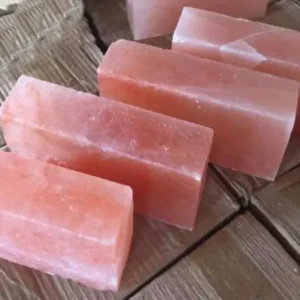
The difference between a successful salt tile installation and a costly failure often comes down to supply chain traceability. A generic ‘Certificate of Origin’ is meaningless if it doesn’t tie to a specific mine lot number. Reputable manufacturers provide a direct mine-to-factory chain of custody, backed by ISO9001 and, where applicable, FSC-equivalent mining standards for environmental stewardship. Without this paper trail, you cannot guarantee the salt is authentic Himalayan pink rather than reconstituted industrial salt, which lacks the crystalline structure for backlit translucency and dissolves rapidly in humid conditions.
- Certificate of Origin: Request a Certificate of Origin from the supplier’s Pakistan mine source. Cross-reference the mine name with the supplier’s import records. If they cannot produce a direct mine contract, assume they are a trading company mixing multiple sources—variance in mineral content will cause uneven color and dissolution rates.
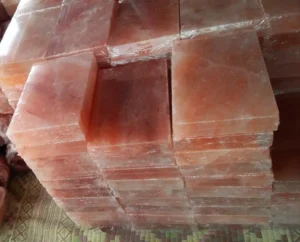
- Color Grading Consistency: Authentic salt tiles have natural color variation from white to deep pink. Professional installations require cross-mixing boxes from multiple production lots to avoid visible stripes on the wall. Ask the supplier for photos of at least three consecutive production batches and confirm they provide mixing instructions with every order. A factory that controls its own cutting line can guarantee lot-to-lot consistency within a 15% color range.
- Sauna-Grade Sealing: Standard decorative tiles are not sealed for steam environments. Only factory-applied epoxy resin sealing (not a field spray) prevents moisture absorption. Demand written confirmation that the tiles are treated for ‘sauna-grade’ use. Unsealed tiles in a steam room will begin sweating within 6 months and may fully dissolve within 2 years, requiring complete wall replacement.
- Structural & Adhesive Specifications: Salt tiles weigh 20–40kg per square meter. Standard tile adhesive cannot support this load on vertical walls. Specify heavy-duty construction adhesive with a minimum shear strength of 150 PSI. Ask the supplier for their recommended adhesive type and mounting substrate requirements. A direct factory will provide detailed installation guidelines, whereas a trading company will give generic advice that risks a collapse.
- Direct Factory vs. Trading Company: If a supplier cannot arrange a video walkthrough of their cutting and sealing line, they are likely a broker. Trading companies add 20–30% margin and have no control over sealing quality. Direct factory partners like ewoodarts (Jilin Ever Creation) allow you to witness the production process, verify the sealing application, and negotiate custom thickness or edge profiles—something no intermediary can offer.
One real-world consequence: a five-star spa in Switzerland installed unsealed tiles from a trader. Within 18 months, the tiles began weeping moisture, causing mold behind the panels and a $40,000 remediation cost. The replacement order was sourced directly from a factory that epoxy-seals each tile before export—traceable mine to wall. That is the difference a proper vetting process makes.
Conclusion
Himalayan salt tiles deliver the warm amber glow and hygge atmosphere that define modern wellness architecture. But that aesthetic only lasts when the panels are factory-sealed for moisture resistance, installed with heavy-duty adhesive, and backlit with 24V LEDs. Skip those three specs and you risk dissolving tiles in a sauna or a wall that pulls away from the substrate mid-contract.
Review your project’s humidity rating and wall load capacity, then compare tile grades from a direct manufacturer who can supply certificates of origin and sealed-on-demand stock. A quick check of the catalog page will show available sizes and epoxy finishing options for spa-grade installations.
Frequently Asked Questions
What are pink salt tiles used for?
Pink salt tiles are used for backlit feature walls, sauna cladding, and architectural accents in wellness spaces. Their translucent crystalline structure creates an amber glow when backlit, but they require factory-grade epoxy. Ensure tiles are pre-sealed for moisture resistance in commercial settings.
How long will a Himalayan salt block last?
A Himalayan salt block can last for years in dry indoor use, but its lifespan depends on moisture exposure and usage frequency. In steam saunas without proper sealing, blocks may dissolve within months. Use sealed blocks in humid environments for longer lifespan.
Where not to put a salt lamp?
Do not place a salt lamp in high-humidity areas like bathrooms, steam rooms, or near open water sources. Prolonged moisture exposure causes the salt to sweat and dissolve, potentially damaging the lamp. Keep salt lamps in dry, indoor spaces with stable humidity.
What are the disadvantages of Himalayan pink salt?
Himalayan pink salt is hygroscopic, absorbing moisture from the air, which can cause clumping or dissolution in humid environments. Without professional sealing, tiles and blocks degrade quickly in wet conditions, increasing replacement costs. Invest in factory-sealed products for commercial durability.
What is the disadvantage of pink salt?
The main disadvantage of pink salt is its moisture sensitivity, leading to surface degradation or dissolution over time. Unlike synthetic materials, it requires controlled humidity and professional sealing for long-term use. Evaluate the installation environment before specifying pink salt.