Skip to content
Key Takeaways
- Stock pressed licks for the price-sensitive farm and feed channel; natural rock licks for the premium equine market.
- Pressed licks are consistent in shape and density; natural licks vary, and the variation is the premium signal.
- Source both types from one supplier who can grade natural rock and produce pressed licks on the same site.
Salt licks are not a single product category; they divide into two distinct manufacturing methods, two distinct price points, and two distinct customer segments. When sourcing pressed salt licks wholesale, you are looking at products manufactured by compressing salt crystals into a uniform shape. Natural rock licks, conversely, are cut directly from a Himalayan salt block. This guide compares the two types on cost, durability, customer perception, and market fit, so the wholesale buyer can stock the right mix for the right channels.
The pressed-vs-natural decision determines the price ladder, the freight cost, the animal segment served, and the reorder pattern. The buyer who stocks both types in a deliberate ratio captures the full market from the cost-conscious farmer to the premium stable owner.
Pressed Salt Licks: Consistency and Cost
Pressed salt licks are made by grinding salt into a fine grain and compressing it under high pressure into a uniform block. The process produces a consistent shape, a consistent density, and a consistent dissolution rate, which is what the farm and feed channel values. Pressed licks are cheaper to produce and cheaper to ship because they cube out efficiently in a container. They are the right choice for the volume channel: farm supply stores, livestock feed retailers, and agricultural co-ops.
The trade-off is that pressed licks lack the mineral variation and the visual appeal of natural rock, so they cannot command the premium that natural rock can. The buyer who serves the farm channel should stock pressed salt licks wholesale as the core inventory, with natural rock as the premium upsell. The salt lick for animals supplier should be able to produce both types to the same mineral specification.
Natural Rock Licks: The Premium Tier
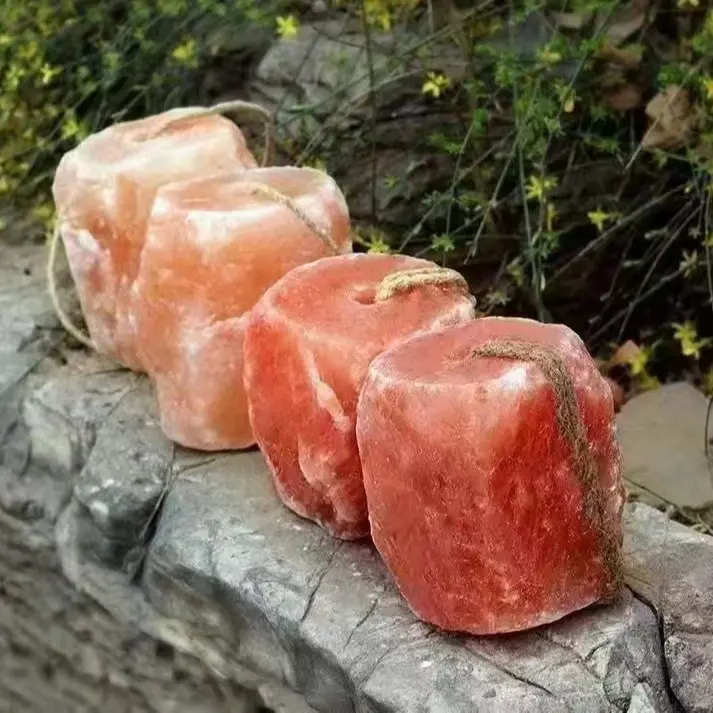
Natural rock licks are cut directly from a Himalayan salt block, and each piece is unique in colour, mineral distribution, and shape. The variation is the premium signal: the deep pink and orange tones, the visible mineral banding, and the irregular shape communicate natural origin and quality. Natural licks are more expensive to produce and more expensive to ship because their irregular shape cubes out less efficiently, but they command a significantly higher retail price.
The natural lick is the right choice for the premium equine channel, the boutique pet store, and the wellness-oriented farm shop. The customer who buys a natural lick is buying the perceived health benefits of Himalayan salt over processed alternatives. Retail trend data shows that premium, natural-ingredient products are the fastest-growing segment of the companion animal and livestock care market.
Head-to-Head: Which Lick Fits Which Channel
The right lick depends on the channel, the animal, and the customer. Pressed licks fit the cattle, sheep, and general livestock channel where volume and consistency matter more than visual appeal. Natural licks fit the horse, deer, and exotic animal channel where the owner values mineral variety and natural origin. The farm supply store should stock pressed as the core and natural as the premium tier. The equine tack shop should stock natural as the core, with pressed available as a budget option.
The buyer who stocks both types from a single supplier captures the full animal care market and can serve any customer who walks through the door. While the wholesale wooden crafts programme does not carry salt licks, a reliable factory group can often share freight on a mixed container. Verify the mineral content and the packaging on a factory tour before committing to volume.
Packaging and Shipping Salt Licks
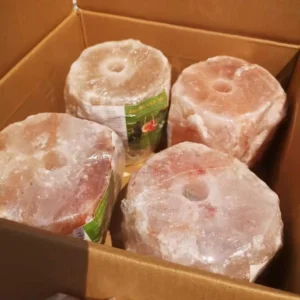
Salt licks are heavy and must be packed to survive container transit without cracking or crushing. Natural rock licks, with their irregular shapes, require individual cushioning or nesting in a carton to prevent contact damage. Pressed licks, with their uniform shape, can be packed more densely in stacked cartons.
Both types should be shipped with a desiccant to control moisture, because salt absorbs humidity and a damp lick can arrive stained, softened, or degraded. The packaging should be drop-tested at the packed weight on a production sample, not a hand-packed one. The salt lick supplier should provide packaging specifications and test reports with the first order.
The freight cost for salt licks is driven by weight, not cube, because the licks are dense. The buyer should calculate the per-unit freight cost by dividing the container freight by the number of licks that fit within the weight limit, not the cube limit. A container of natural licks carries fewer units than a container of pressed licks because the irregular shapes pack less efficiently.
The buyer who factors freight into the unit cost comparison between natural and pressed salt licks wholesale will see that the cost difference at the FOB level narrows or reverses when freight is included. The supplier who can produce both from one facility, with consistent mineral content and reliable packaging, is the partner worth building a programme around.

Market Trends in Animal Salt Licks
The animal salt lick market is growing in two directions. The premium equine and smallholder channel is demanding natural, unprocessed licks with visible mineral banding and traceable origin. The farm and livestock channel remains price-sensitive and values the consistency and lower cost of pressed licks. The buyer who serves both channels captures the full market.
The trend data also shows that pet and companion-animal owners are increasingly buying salt licks for rabbits, guinea pigs, and other small animals, creating a new retail channel for smaller-format pressed licks in pet stores. The supplier who can produce a small-format pressed lick for the pet channel, alongside the standard sizes for livestock and equine, gives the buyer a complete product ladder.
Ultimately, the pressed-versus-natural decision is a portfolio strategy. The salt lick category is one of the most dependable and margin-rich lines in the animal care market. Buyers who build a deliberate price ladder—positioning natural rock as a premium, traceable product and pressed salt licks wholesale as a consistent, affordable staple—will capture the full spectrum of customers, from budget-conscious farmers to premium stable owners. How the same salt category performs as a lit retail product — landed cost per kilogram and weight-class choices — is covered in the salt lamps wholesale profit guide.
Frequently Asked Questions
What is the difference between pressed and natural salt licks?
Pressed licks are ground salt compressed into a uniform shape. Natural licks are cut from a Himalayan salt block. Pressed is consistent; natural is variable and premium.
Which lick is best for horses?
Natural rock licks. The mineral variation and natural origin command a premium in the equine channel. Pressed licks are a budget alternative.
Which lick is more cost-effective for volume channels?
Pressed licks. They are cheaper to produce, cube out efficiently in containers, and serve the farm and feed channel where consistency matters more than visual appeal.
Should I stock both types?
Yes. Stock pressed as the volume core and natural as the premium tier. Both types from one supplier give you a complete product ladder.
Can salt licks share freight with wooden products?
Yes. Salt licks are dense and can be consolidated with lighter wooden SKUs to improve container cube and lower per-unit freight costs.
Stock Pressed and Natural Salt Licks from One Source
Source both types from a single factory, with consistent mineral specifications, export packaging, and mixed-container freight consolidation.
Browse Salt Licks →