Skip to content
A wooden pelican doesn’t sell itself. Let me be clear about that upfront. Nobody walks into a gift shop, sees a 14-inch hand-carved pelican, and grabs it the way they grab a keychain at the register. A pelican is a decision. It’s the piece someone stares at from across the room, walks over to, picks up, turns around in their hands, puts back, thinks about for twenty minutes, and then comes back for.
And that’s exactly why every coastal store needs them. Not because they move fast. Because they anchor the room. Because they make everything else in the store look more premium by association. Because the customer who buys the pelican is the customer who also fills a bag with three sandpipers, two keychains, and a pen on the way out.
This guide covers everything a buyer needs to know about sourcing wholesale wooden pelicans — sizes, construction, finishes, who buys them, and how to stock them without tying up your cash flow.
The Anatomy of a Wooden Pelican: What You’re Actually Buying
A pelican carving is a different beast from a sandpiper or a puffin. The size alone changes the engineering. Here’s what goes into one:
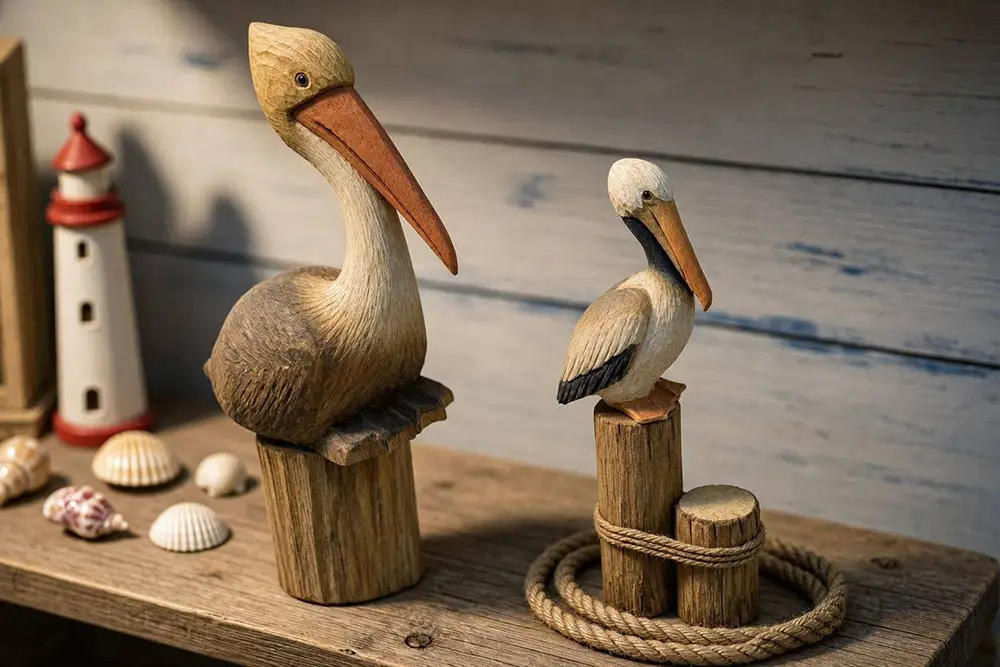
The body. Carved from a single block of kiln-dried basswood. No joints, no glue-ups, no laminated sections. The reason matters: a pelican’s body has that distinctive pouch curve and barrel chest. If you laminate two pieces, the seam shows through the paint within a year as humidity cycles expand and contract the wood at different rates. One piece. Always. Our kiln-drying brings moisture to 8–12% before carving starts, which is the single most important step in preventing cracks on a piece this large.
The beak and pouch. This is where cheap suppliers cut corners — literally. The beak is the longest, thinnest protrusion on the bird. On a 14-inch pelican, the beak extends 4–5 inches from the face. Carve it too thin and it snaps in shipping. Carve it too thick and it looks cartoonish. We carve to a specific taper — thick at the base, gradual thinning to the tip — and reinforce the internal grain direction so the beak’s natural wood fibers run lengthwise. Breakage rate on our pelican beaks: under 1% in transit, and that’s almost always from a dropped carton, not a structural failure.
The finish. Hand-painted, species-accurate. White pelican: cream body, yellow-tipped beak, black flight feathers on the wing tips. Brown pelican: chocolate body, pale neck, that distinctive yellow pouch. Every brush stroke is visible up close. We also offer natural clear-sealed and distressed weathered-white finishes for shops going after a more minimalist or farmhouse-coastal aesthetic.
Three Sizes, Three Roles in Your Store
We cut pelicans in three standard sizes. Each one serves a different function in a retail environment, and understanding that helps you stock the right mix:
Pelican Size Guide
Small — 8 in / 20 cm
Shelf accent. Groups of 2–3.
Entry price point.
Medium — 12 in / 30 cm
The core seller. Window displays,
feature shelves.
Large — 16 in / 40 cm
Statement piece. Hotel lobbies,
restaurant floors, feature walls.
Small (8 in). These are your “gateway pelicans.” A customer who’s never bought a large carving starts here. They fit on a bookshelf, a bathroom counter, a kitchen windowsill. They pair well with sandpipers in a mixed shorebird grouping. Most shops stock these in pairs or trios — two whites and a brown, or three whites facing the same direction.
Medium (12 in). The workhorse. This is the size that sits in a window display and stops foot traffic. It’s big enough to read from ten feet away but small enough to fit on a standard retail shelf without a special riser. If you’re only going to stock one pelican size, stock this one.
Large (16 in). The room anchor. Hotels, seafood restaurants, and high-end coastal boutiques buy these for lobby displays, bar shelves, and entryway tables. They’re not impulse buys — they’re design purchases. The customer who buys a 16-inch pelican is decorating a space, not filling a bag. These sell slower but at a significantly higher price point, and they elevate the perceived value of everything around them.
Who Actually Buys Wooden Pelicans? Four Customer Profiles
In twenty years of shipping these, I’ve seen four types of pelican buyers. Knowing which one you are (or which ones walk into your store) helps you stock smart:
1. The coastal gift shop. Your bread and butter. You need 2–3 medium pelicans in the window, a cluster of smalls on the main shelf, and maybe one large on a pedestal near the entrance. You reorder smalls and mediums twice a season. The large sits for a month or two, then someone walks in and falls in love with it.
2. The hotel or restaurant buyer. They want the large size, often in multiples. A seafood restaurant orders four 16-inch browns for the bar shelf. A boutique hotel orders six whites for lobby niches. They care about consistency — all six need to look like they belong together. They also care about lead time because they’re working around a renovation or opening date.
3. The interior designer. Buys one or two at a time, very specific about finish. Wants the natural clear-sealed or the distressed white. Asks for photos before shipping. Will pay premium for a custom stain match. Low volume, high touch, but they come back for every project.
4. The online reseller. Amazon, Etsy, Wayfair marketplace. They want the small and medium sizes, photographed on white backgrounds, shipped in protective packaging that survives UPS. They reorder in steady 300-piece batches and care most about consistency and pack dimensions.

Ordering Pelicans: What’s Different from Small Birds
If you’ve ordered our keychains or sandpipers before, pelicans change a few logistics:
MOQ. 300 pcs per design for small and medium. For the large 16-inch, we’re flexible — some clients order 50 or 100 pieces because the unit cost is higher and the sell-through is slower. Talk to us about your plan and we’ll work with you.
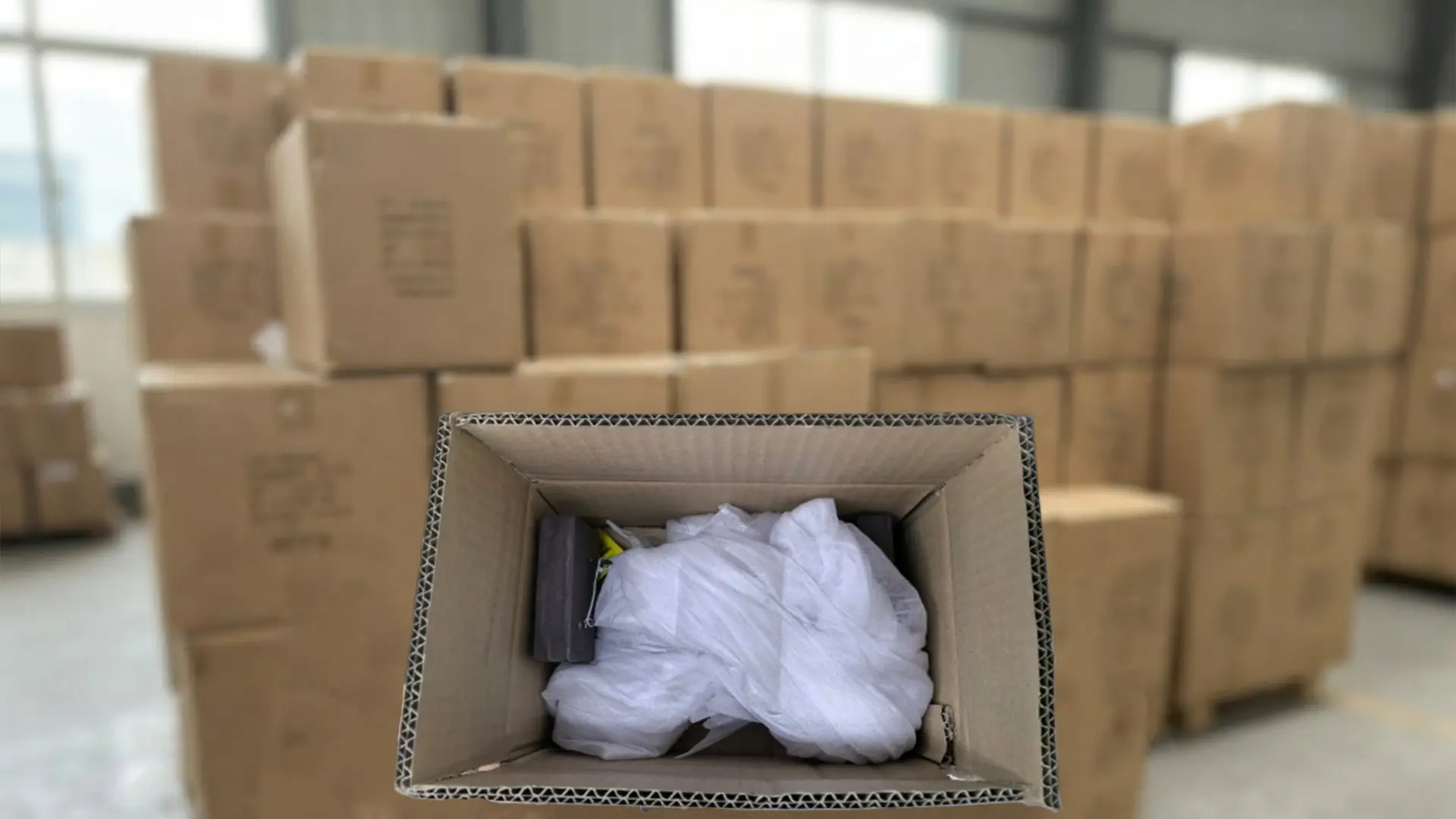
Packaging. Each pelican gets its own inner box with foam cradling — no bulk packing like small items. The beak is the vulnerable point, so the foam cradle supports it specifically. Master carton holds fewer pieces (varies by size), and cartons are double-walled with corner protection.
Lead time. 60–90 days for production depending on quantity. Some best-selling designs (medium white, medium brown) may have partial stock for quicker dispatch — ask when you inquire. Custom finishes or sizes add time.
Shipping. Small orders (a few cartons): DDP to your door, hassle-free. Larger orders: LCL or air depending on urgency. Pelicans are heavier and more volumetric than small items, so we’ll help you calculate the most cost-effective method.
Quick Spec Reference
| Detail | Spec |
|---|---|
| Sizes | Small 8 in (20 cm) / Medium 12 in (30 cm) / Large 16 in (40 cm) |
| Material | Single-block kiln-dried basswood (8–12% moisture). No laminations. |
| Species | White pelican, brown pelican. Custom species on request (300+ pcs). |
| Finishes | Hand-painted (species-accurate), natural clear-sealed, distressed white. Custom Pantone match available. |
| Legs & base | Metal wire legs, epoxy-set. Ships assembled on base. K/D only on request. |
| MOQ | 300 pcs/design (S & M). Large size: flexible — discuss your plan with us. |
| Packaging | Individual foam-cradled inner box. Double-walled master carton with corner protection. |
| Lead time | 60–90 days. Partial stock on best-sellers — ask when inquiring. |
| Shipping | DDP for small orders. LCL or air for larger volumes. |
Pelicans sit at the top of the 20/60/20 merchandising framework — the 20% premium statement pieces that anchor a display and pull customers in from the sidewalk. Balance them with mid-tier workhorses like sandpipers for volume, and explore the full range of hand-applied finishes to match your store’s aesthetic.

Frequently Asked Questions
Is the pelican carved from one piece of wood or glued together?
One piece. Always. The body is carved from a single block of kiln-dried basswood — no laminations, no glue joints. On a bird this size, glued seams will show within a year as humidity cycles cause differential expansion. Single-block carving takes more raw material and more skill, but it’s the only way to guarantee structural integrity on a 12- or 16-inch piece.
What’s the breakage rate on pelican beaks in shipping?
Under 1%, and almost always from a dropped or crushed carton rather than a structural weakness. The beak is carved with the wood grain running lengthwise (not crosswise), which gives it natural flex strength. Each bird ships in a foam cradle that supports the beak specifically. If you do receive a damaged piece, we replace it — no arguments, no photos required for the first few.
Can I order just 50 large pelicans for a hotel project?
Probably yes. The 300-piece MOQ applies to small and medium sizes. For the 16-inch large pelican, we’re flexible on quantity because we understand the sell-through is slower and project buyers often need specific counts. Tell us your project scope — hotel lobby, restaurant bar, retail display — and we’ll work out a quantity and timeline that fits.
Do you offer white and brown pelicans, or just one species?
Both. White pelican (cream body, yellow-tipped beak, black wing tips) and brown pelican (chocolate body, pale neck, yellow pouch) are our standard species. If your coastline has a specific pelican species — or you want a stylized rather than realistic colorway — we can match it. Custom species or colors require 300+ pieces.
How are pelicans packed differently from small items?
Each pelican gets its own individual inner box with a custom foam cradle — not bulk-packed like keychains or small birds. The foam supports the body and beak independently so nothing shifts in transit. Master cartons are double-walled with corner protection. The bird arrives mounted on its base, fully assembled. You open the box and shelf it.
Can I get a distressed or natural finish instead of painted?
Yes. Three standard finishes: hand-painted (species-accurate), natural clear-sealed (wood grain visible, minimalist look), and distressed weathered-white (hand-sanded, chipped, aged appearance). Interior designers tend to prefer the natural or distressed options. Custom Pantone color matching is available for orders of 300+ pieces.