Skip to content
Custom design IP protection in manufacturing is decided long before anyone copies anything. By the time an importer discovers that a factory kept a master sample, reused a color panel for another client, or let a “similar” item appear in a competing catalog, the damage is already inside shipping containers. The protections that actually work are procedural, not dramatic: what the factory signs before it sees your drawings, who owns the samples and tooling, and which clauses the contract records in writing. This guide walks through each control as it applies to hand-carved wooden crafts, with the specific numbers and documents a protected custom order should generate — from reference images to the final QC record.
- Sign before you send. A countersigned NDA should exist before reference images, dimensions, or finish requirements leave your inbox.
- Name the owners of samples and tooling. For hand-carved crafts the protected assets are the master sample and packaging plates, not injection molds — write who owns each into the contract.
- One clause is not a strategy. Pair the exclusivity clause with documentary controls: sealed samples, dated photo records, and a QC file per SKU.
- Check the factory file first. Ask for certifications and timber permits before you share anything commercially sensitive.
- Local legal review. This article is sourcing guidance, not legal advice — have counsel in your market review the final contract.
- Why protection starts before the first sample
- What your NDA should cover
- How custom design IP protection works in manufacturing
- Sample and mold ownership: who keeps what
- IP clauses for your OEM contract
- What a hand-carving factory can promise
- The pre-production paper trail
- Frequently asked questions
Why Protection Starts Before the First Sample
The handover is the vulnerable moment. To quote a custom order, a factory needs the standard OEM startup inputs: multi-angle reference images, target dimensions, wood species, and finishing requirements. That package describes your product well enough for a determined third party to commission something close. Protection therefore has to start at the handover itself, not after you see the first prototype.
Three facts shape the strategy. First, an original design drawing is protected by copyright in most countries from the moment it is created — the WIPO copyright framework explains how this protection travels internationally — but proving authorship later depends on dated records. Second, industrial design registration is territorial and takes time, so it cannot cover the sampling phase that starts this week. Third, a factory that runs many client projects cannot guess which of your files are sensitive unless you mark them and make the rules explicit. The NDA, the records, and the named ownership are the bridge between the day you send files and the day any registration takes effect.
What Your NDA Should Cover
An NDA is a filter, not a ceremony. A useful one for a custom wooden crafts order contains six elements. It defines confidential information concretely: drawings, photographs, dimensions, finishes, pricing, customer lists, and anything else you mark. It limits use to a single stated purpose — quoting, sampling, and producing your order — so the same reference images cannot quietly serve another client’s project. It confirms that your design remains yours: receiving files creates no license or co-ownership for the factory. It sets a term that survives the project, typically two to five years. It obliges return or destruction of materials on request. And it states that the design may be registered by you, in any territory, at any time, without the factory’s consent being required.
In practice, timing matters as much as text. A reputable supplier will countersign before you attach anything. We sign NDAs as standard before receiving reference files, answer inquiries within one business day, and accept sample payments through an online gateway so trial orders can move without friction. If a supplier dodges the signature step or asks you to send files “just to look,” treat that as information about how the rest of the project will be run.
How Custom Design IP Protection Works in Manufacturing
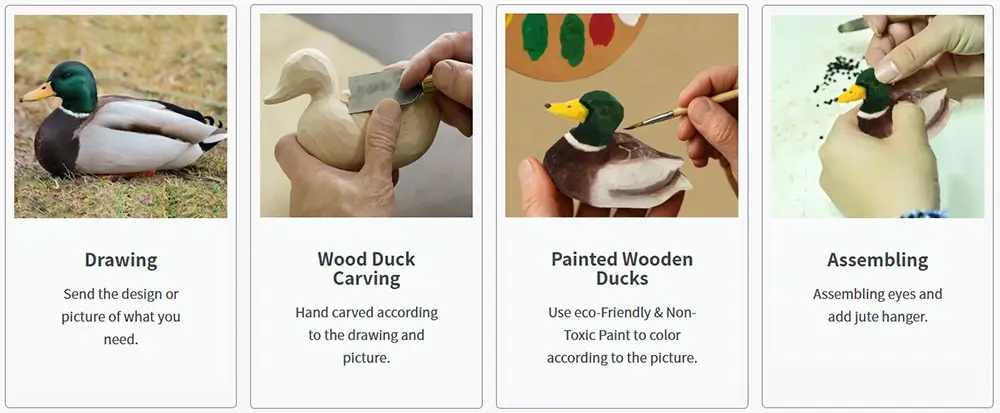
Custom design IP protection in manufacturing is a chain of records, and each link should be checkable. The chain starts with the approved prototype: after the reference package arrives, the factory carves and finishes a sample, photographs it from agreed angles, and sends the images for approval before production tooling or volume work begins. For us the sample stage sits inside a 20–30 day trial-order window, and a larger custom program typically runs 60–90 days — time you can use to review each record rather than wait for a final surprise.
Payment structure reinforces the records. Our terms are T/T with a 30% deposit and the 70% balance before shipment, and finished-goods photos and videos are provided before the balance is due. That means you approve the visible result before you release final payment — a natural checkpoint that also documents what the factory produced against what you approved. On the production floor, every incoming wood batch is checked for integrity and moisture content before carving begins, and the same discipline extends to the client’s design: reference prints, color panels, and the approved sample stay labeled with the project code instead of floating around the workshop as “inspiration.”
Order structure also matters, because it sets the cost of protecting a design across tiers:
| Order tier | Minimum | Shipping | Lead time |
|---|---|---|---|
| Trial order | 100 pcs, from USD 500 | DDP air express, customs included | 20–30 days |
| Wholesale & custom | 300 pcs, from USD 3,000 | Sea freight | 60–90 days |
| Custom color box | 500 pcs | Packed with order | With production |
Every tier above is the framework our custom product manufacturing service runs on, and each tier should carry its own protection documents — the trial sample for design approval, the volume order for exclusivity, the color box for packaging tooling.
Sample and Mold Ownership: Who Keeps What
Mold ownership is the clause importers reach for first, and it deserves an honest correction for wooden crafts: hand-carved production uses no injection molds. A carved bird or a personalized piggy bank is shaped by hand, so there is no steel cavity that could later stamp out your design for someone else. The assets that actually need owners are different — and naming them in writing is what prevents disputes.
| Asset | What it is | What the contract should say |
|---|---|---|
| Reference package | Your images, dimensions, wood species, finish requirements | Remains your property; returned or destroyed on request |
| Master sample | The sealed, signed sample you approved | Yours on full payment; factory keeps one labeled reference copy |
| Color panels | Painted finish swatches matched to your spec | Project-specific; not reusable for other clients’ orders |
| Packaging tooling | Dies and printing plates for custom color boxes (500 pcs tier) | Transfer to you on payment; stored and not re-run without written approval |
Write the same logic into the contract even if the factory never touches a mold: what arrives from you, what the factory may keep for reference, what transfers on final payment, and what may never be reused. Disputes about “who owns the mold” are usually disputes about who never wrote this list down.
IP Clauses for Your OEM Contract
Five clauses carry most of the weight in a custom manufacturing contract. The ownership clause states that all pre-existing IP — your drawings, brand, packaging artwork — stays yours, and that new IP created during the project (the approved sample, color matches, packaging design) is assigned to you. The exclusivity clause restricts the factory from producing the same or confusingly similar designs for other buyers during the term. The no-catalog clause is its practical sibling: the factory will not offer your design in its own catalog, website, or trade-show displays without written approval. The confidentiality clause extends the NDA into the contract itself, covering production quantities, pricing, and delivery dates as well as design files. The jurisdiction clause fixes which country’s courts or arbitration hear a dispute — unpleasant to negotiate, far more unpleasant to discover is missing later.
Register what you can, where it matters. Copyright in original designs arises automatically in Berne Convention countries, while industrial design registration is a territorial filing that can be pursued through national offices or the WIPO Hague System. The contract and the registrations do different jobs: registration gives you rights against the world, the contract binds the specific factory in front of you. Both are worth having; neither substitutes for the other.
What a Hand-Carving Factory Can Promise
A factory can promise process. It can sign the NDA before files arrive, label and seal samples, keep project-specific records, and refuse reuse of your color panels. It cannot promise outcomes in your market — no supplier can police every trade show on another continent — and any factory that says otherwise is telling you what you want to hear. Choose the partner that is precise about the process instead.
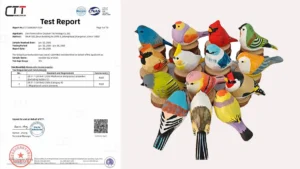
Ask for proof on the same day you ask for promises. The compliance file we can show includes a BSCI audit report (amfori social compliance, re-audited on a two-year cycle), ISO9001 quality management, CE and UKCA marks, EN71-1/-2/-3 toy safety, and RoHS — plus official timber felling and transport permits for traceable wood. Certifications do not prove IP behavior, but a factory that keeps audited records in one domain is far more likely to keep your design records in another. For a closer look at what an audit should cover, see our factory audit guide.
Hand-carving itself is quietly protective. Because every piece is carved and hand-painted rather than stamped by a machine, no two items are identical — the artisanal variance that makes wholesale copying your exact product far harder than copying a molded one. Your registered design plus a hand-carved original is a stronger position than a registered design plus an injection mold that anyone with capital could commission.
The Pre-Production Paper Trail
Enforcement is only as good as the records behind it. Before the first production batch, collect these in one dated folder per project:
| Record | Why it matters |
|---|---|
| Countersigned NDA | Dated before your files were sent |
| Reference package | The exact images, dimensions and finishes you sent |
| Approved sample record | Dated photos and approval note for the sealed sample |
| QC file per SKU | Moisture and integrity checks, paint and finish conformance |
| Pre-shipment media | Photos and videos of finished goods before the balance |
| Packaging specification | Box artwork, tooling ownership, and ISTA 3A-tested carton spec |
This is the folder a lawyer can actually use — and the one that tells the factory, from day one, that your design is treated as property rather than as a request. It costs a few extra emails per order and it is the cheapest insurance in the whole sourcing budget.

Frequently Asked Questions
Will the factory sign an NDA before I send design files?
Yes. We countersign an NDA before receiving any reference images, dimensions, wood species, or finishing requirements. Inquiries are answered within one business day, and trial sample payments can be handled through an online gateway so nothing stalls.
Who owns the mold if I pay for tooling?
Hand-carved wooden crafts use no injection molds. The assets that need named owners are the master sample, color panels, and packaging tooling such as box dies and printing plates. The contract should state that these transfer to you on full payment and are not re-run without written approval.
Can the factory sell my custom design to other buyers?
Not under a signed exclusivity clause with a no-catalog term. Write both into the contract: the factory produces the design only for you, and will not display or offer it in its own catalog, website, or trade-show materials without written approval.
Do I need to register my design before quoting?
No. Registration strengthens later enforcement but is not required to start. The NDA and dated records protect your design during sampling, while registration is territorial and takes time. Begin both tracks in parallel.
How do you protect my design during sampling?
The sample stays labeled with your project code, sealed after approval, and documented with dated photos at each stage. Finished-goods photos and videos are sent before the final balance is due, and a QC file is kept per SKU.
Bring your design to a factory that treats it as property
NDAs before the first file, named sample and tooling ownership, and a dated record at every step. Browse the full ewoodarts catalog or start a protected custom project with our OEM team.
Discuss Your Custom Project →Note: This article is general sourcing guidance, not legal advice. Contract language, NDA terms, and IP strategy should be reviewed by counsel qualified in your jurisdiction.