Skip to content
When the Christmas wall comes down in early January, most gift shops face eight weeks of nothing to sell — and the carved wooden bird line is the inventory that fills it without a new category. A robin, owl or shorebird carving bought for the tree in December reads as seasonal winter bird decor in January, spring-garden stock in March and nursery-gift merchandise all year. This guide covers the carry-over mechanics: which bird formats survive the transition best, how to reset colour and placement after the holiday, what to reorder in January, and how the same SKUs feed the Easter and spring reset the garden-centre buyers already plan.
Key Takeaways
- Birds are the one Christmas category that does not expire. Unlike themed ornaments, a carved bird is decor on any shelf in any month — the carry-over requires restyling, not new stock.
- Two finishes cover the whole year. Natural-wood pieces read winter and rustic; painted spring palettes switch the same carving from Christmas to garden season without re-tooling.
- January is reorder month, not clearance month. The post-holiday window is when bird lines refill at their cheapest because supplier capacity is idle and the spring reset is already in mind.
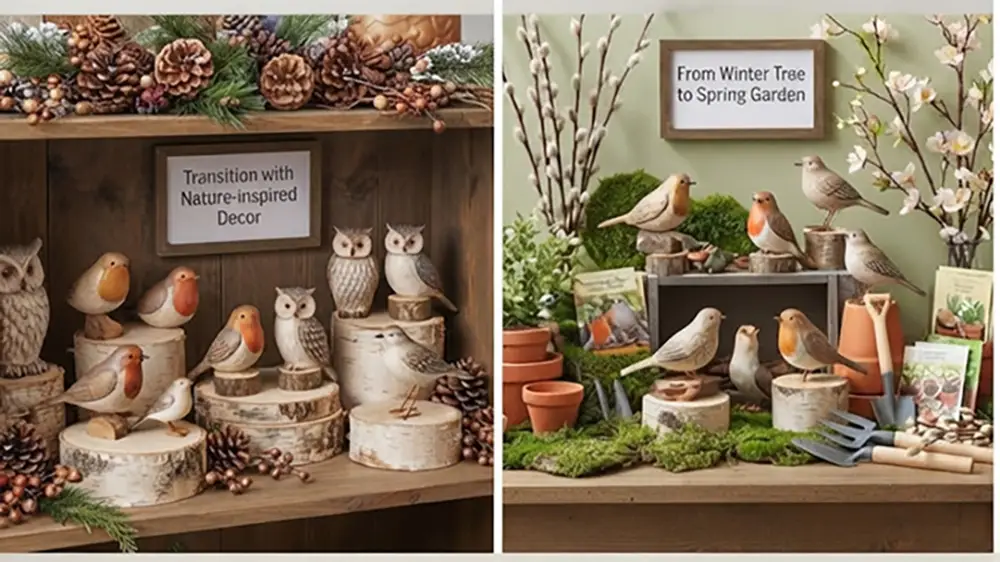
- Placement carries the story. Move birds from tree to shelf-scapes with moss, branches and feeder props and the same SKU reads as a new season without new product.
- Valentine and nursery niches buy birds. Paired dove and songbird carvings quietly out-earn heart SKUs in gift shops by mid-February.
- Feed the spring pipeline. The garden-bird reset in March starts from January orders — the same programme logic garden centres run on a season calendar.
Why Birds Carry Through the December Reset
Christmas inventory dies on a calendar; nature inventory does not. The carved bird line at the wooden bird factory was built on a winter-woodland aesthetic — robins on branches, owls in snow, shorebirds in reeds — which means the same pieces that sold as ornaments and centrepieces through December read as January decor without alteration. The retailer problem in Q1 is not demand (nature-themed gift items sell steadily through winter) but narrative: what story sits on the shelf once tinsel is gone. Woodland birds supply the story themselves, because winter is when birds are most visible to the customers who feed them.

Which Formats Survive the Transition
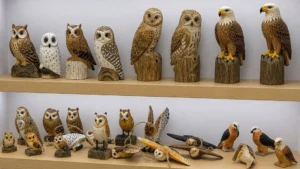
Not every bird SKU carries equally. The formats that work hardest from December to March: branch-perched carvings (the perch reads winter bare-branch, spring blossom), standing owls and songbirds on bases (shelf objects in any season), and wall-hook sets that move from holiday gifting to everyday entryway merch. Flat ornament-only shapes with hanging ribbon are the weakest carry-over — once the tree is gone, they look like leftovers. When buying the spring assortment forward, weight toward free-standing and perch formats; treat ornament-hung formats as a Christmas-window commitment.
| Format | December Job | January-March Job | Carry Strength |
|---|---|---|---|
| Branch-perched songbirds | Tree and window accent | Winter-nature shelf tier; nursery gift | Strongest — perch restyles with the season |
| Standing owls and birds on bases | Centrepiece and gift box | Any-shelf keepsake; Valentine paired tier | Strong — free-standing, no holiday cues |
| Wall-hook bird sets | Stocking-stuffer price point | Entryway and kids-room everyday merch | Moderate — functional, sells year-round |
| Flat hanging ornament shapes | Volume tree sales | Weak on open shelves; keep in Christmas stock | Lowest — buy strictly for the season |

The January Shelf Reset: Colour, Props, Placement
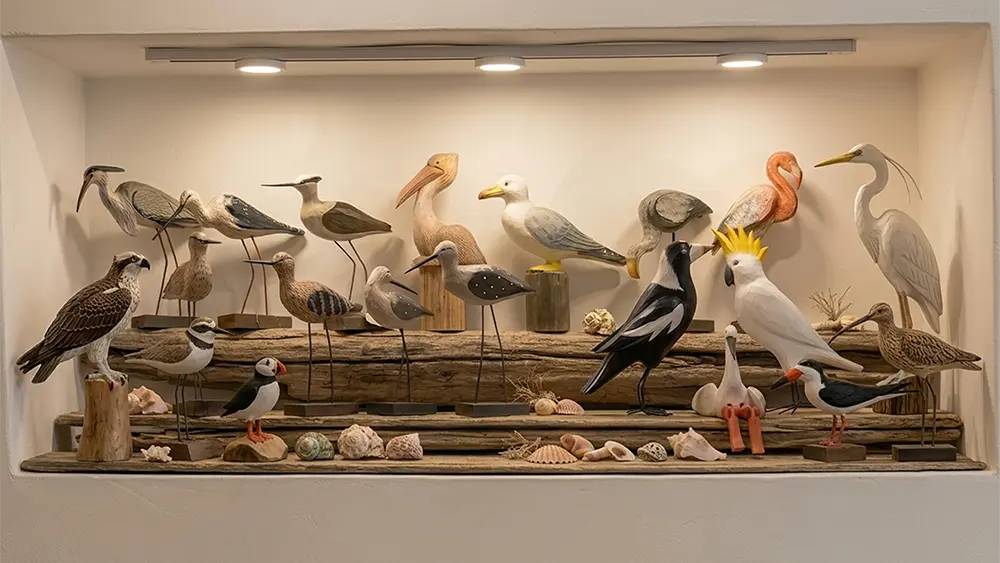
The reset is a merchandising job, not a markdown job. Three moves: pull greenery-and-red props and replace with birch branches, moss, dried-feeder styling and neutral linen; regroup by species pairs and family sets rather than by holiday theme cards; and light the shelf for wood grain, not for sparkle. Natural-finish carvings — the unpainted or lightly stained pieces from the shorebird line and the woodland collection — do most of the January work because their palette already matches the season. Painted Christmas-red pieces should rotate back into the spring tier in February, not sit in forced winter merchandising.
Signage carries most of the reset weight and costs nothing but reprinting cards. Holiday copy — tree, stocking, gift — should leave the shelf entirely; replace it with species names and a small nature note per grouping, because winter buyers respond to the robin-and-frost story far better than to leftover Christmas superlatives. A pattern that works across gift shops: one seasonal header card above the table, one species card per grouping, and one hand-size card at the front edge naming the Valentine and nursery use cases while those windows are open. Neutral card stock survives the next reset too, so the print run serves both the winter and the spring shelf instead of being binned in February.
One operational habit protects the carry-over stock itself: painted and gilded pieces that sat out under holiday lights should be boxed flat with paper between faces and stored dry, never stacked shrink-wrapped through a warm attic week — finish bloom and film transfer are the silent reasons a January shelf looks tired instead of fresh. Bare-branch and natural-finish pieces need no such ceremony, another reason to weight the carry assortment toward them.
Valentine, Nursery and Feeder-Adjacent Niches
Birds quietly own three January-March gift niches. Paired lovebirds and dove carvings take the Valentine message-card tier better than hearts do, because the object outlives the day. Songbird carvings land in the nursery-gift register where the child is not yet the buyer — a robin on a base is a first-room keepsake. And in garden centres and hardware accounts, decorative birds sell beside functional feeders as the style layer of birding, the same cross-merchandising logic set out in the garden centre display zones guide. None of these niches needs new shapes — only new cards beside the same carvings.
Feeder adjacency deserves one specific note for gift shops without a garden department: winter is peak birdwatching engagement in much of North America and Europe, and customers already buying seed and suet are the warmest audience for a carved robin on the same table. A paired display — functional feeder at one end, decorative carvings at the other, a single card connecting them — tests the whole niche with no new inventory commitment.

January Reorder Economics
January is the cheapest placement month of the bird-year calendar. Factory capacity idles after the Christmas rush, and the standard 300-unit-per-design terms mean a post-holiday reorder refills the spring assortment with normal production rather than expedited work. Two disciplines make it profitable: buy species families forward together so the March reset is already paid for, and re-ordering the same carving in a different finish (natural for winter, painted pastels for spring) counts as a second SKU — the tooling and sculpt exist already, so the variation is a finishing decision with its own MOQ, covered in the MOQ and unit-cost guide.
Rolling Into the Spring and Easter Reset
The carry-over closes the loop in March: eggs, chicks and bunnies join the bird wall and the winter shelf becomes the spring-garden shelf — the pairing strategy laid out in the spring garden and Easter display guide. Retailers who ordered bird stock in January take the spring reset at normal production lead times; those who wait until they see Easter demand buy at the worst point of the calendar. The bird line is the thread that keeps the store earning between the two biggest seasons, and the pillar assortment behind it is covered in the wholesale wooden birds factory guide.
Sourcing note for buyers whose customers ask: carved bird lines sit inside managed-forest timber frameworks, backed by trading-entity FSC certification, official logging permits, and quarantine compliance; scheme context at FSC.
If you want a January-to-March bird plan — carry formats, finish variants and the spring reset sequence on your existing shapes — our team can build that assortment sheet with you.
Frequently Asked Questions
Do Christmas wooden bird ornaments sell after the holiday?
Free-standing carvings and perch styles carry straight into January as winter-nature decor; flat hanging shapes are the weak carry-over. Buy standing and perch formats when you want a bird line to earn all year.
How do retailers restyle bird carvings for winter?
Swap holiday props for bare branches, moss and neutral linen, regroup by species pairs instead of holiday themes, and light for wood grain. The same robin reads as a Christmas ornament in December and a winter-nature keepsake in January.
Is January a good month to reorder bird inventory?
It is the cheapest placement month: post-holiday factory capacity is idle, and reorders cover the spring reset on normal production timing rather than expedite.
What sells between Christmas and Easter besides birds?
Nothing that fits the same shelf — birds own the gap because they carry three Q1 niches: paired Valentine keepsakes, nursery gifts and feeder-adjacent garden-centre style items.
Does the same bird carving work in two seasons?
Yes: natural finishes carry winter and rustic shelf tiers, painted spring palettes switch the identical carving into garden-season merchandising. Same sculpt and tooling, one finishing decision, two sellable SKUs.