Skip to content

Key Takeaways
- Birth year gifts cover 3 jobs in one shelf: the registry piece that carries the date, the shower favour that carries the event, and the childhood keepsake that carries the name; one blank shape cannot price all 3.
- The date mark has a physical budget: on our blank shapes a year fits most flat panels, a year plus name fits 3 of 4, and a full dedication fits none, so the mark is quoted per shape from a physical sample.
- Keepsake pieces outlive the room they start in, so grading follows the child: any piece that can ride in a stroller bag meets the small-part probe and cord rule, and 3 is the age line most small-part rules turn on.
- Moisture decides whether a keepsake survives its second decade: wood held at 8 to 12 percent at packing is the difference between an heirloom and a checked joint in a humid attic.
- Pack for the gift box, not the carton: kitted one per colour box from 500 pieces, or wrapped per piece with 6 to 12 per inner box for bulk favour lines.
- Proof quantities on the 100-piece trial tier at a USD 500 minimum order value, air express DDP in 20 to 30 days, before the 300-piece wholesale tier carries the season in 60 to 90 days to port.
Birth year gifts are the most durable segment in wooden gifting: the piece is bought once, kept for decades, and re-photographed every year beside the child it names. That longevity is also what makes the segment hard to price, because a birth year gift is not one product but three jobs sharing a shelf, the registry milestone piece, the shower favour, and the childhood keepsake, each with a different buyer, a different mark and a different pack. This segment guide separates the three jobs, sets the engraving budget each can carry, and states the grading and moisture lines that keep a keepsake saleable for the decades it promises.
The guide sits between two adjacent pages on purpose: retail programmes for personalised piggy banks are covered in their own article, and anniversary or commemorative ornament gifting in another; here the unit of analysis is the birth year mark itself and the range built around it.
In this guide
- Why the Birth Year Segment Behaves Differently
- Birth Year Gifts: Three Jobs One Range Must Cover
- What a Birth Year Mark Can Carry
- Engraving Budget: Name, Date, Dedication
- Species and Finish for Pieces Meant to Last
- Segment Table: Job, Piece, Pack, Tier
- Grading: The Child Outlives the Nursery
- What We Supply Into Birth Year Programs
- Which Job Fits Which Buyer
- What We Check Before a Keepsake Order Ships
- End to End: A Registry Plus a Shower Line
- FAQ
Why the Birth Year Segment Behaves Differently
Most gift segments sell an occasion; the birth year segment sells a timeline. The buyer is often not the user, the user grows, and the piece is judged again at every birthday photograph for years. That changes three commercial facts at once: the mark matters more than the motif, the finish matters more than the price, and the pack matters more than the display, because most pieces go straight into a gift box at the counter rather than onto a shelf.
It also changes the risk profile. A seasonal piece that fails after one window fails quietly; a keepsake that checks at a joint in year three fails loudly, in a family photo thread. The specifications below are written for that longer horizon.
Birth Year Gifts: Three Jobs One Range Must Cover
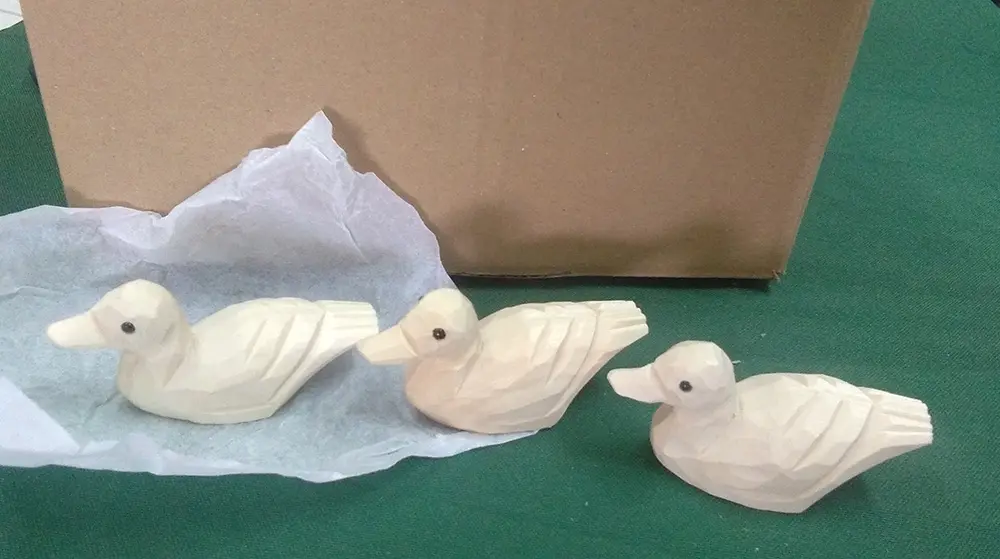
Job 1 is the registry milestone piece: the largest blank shape, name plus year on the side panel, kitted one per colour box, priced as a keepsake. Job 2 is the shower favour: the smallest shape in bulk counts, one shared tag card per event, priced per piece. Job 3 is the childhood keepsake: a mid-size piece that follows the child out of the nursery, graded for handling and carried in a bag, priced between the two.
A range that covers all three jobs photographs as one line and prices as three, because each job carries a different mark, a different pack and a different tier. Buyers who blend them into one SKU find at the counter that the favour price cannibalises the registry margin.
What a Birth Year Mark Can Carry
The mark is the product in this segment, and the mark has a physical budget. A carved or painted body offers at most one flat-ish panel; on our blank shapes a year fits most panels, a year plus name fits three of four, and a full dedication fits none. The budget is published per shape from a physical sample in the shipped font, and the registry field enforces it at checkout rather than negotiating it at the bench.
Font and depth matter as much as length: a shallow mark on a handled piece fades under years of thumbs, while a deep mark on a thin panel weakens it. Both decisions belong in the first-article approval, not in production.
Engraving Budget: Name, Date, Dedication
Engraving stays a production step with frozen inputs: name lists freeze at order date, marks are checked against the approved first article, and a personalised keepsake never opens its box twice after packing. The route that carries frozen lists and first articles is our custom product manufacturing process, shared with every other personalised programme we run.
Dedications deserve a separate quotation rather than a longer field: a dedication that does not fit the panel becomes a second line on the box lid or an insert card, and pricing that substitution up front prevents the most common personalised-order dispute.

Species and Finish for Pieces Meant to Last
Keepsake horizons punish weak species choices. Our range stays inside 4 species, basswood, pinewood, rubber wood and birch, selected for carving behaviour and stable movement rather than exotic appeal; moisture is recorded at 8 to 12 percent per batch before wrapping, because a keepsake’s second decade begins in the packing room.
Finish choice follows the handling story: clear finishes show grain and hide nothing, painted finishes carry the colour story a nursery starts with, and both must survive the same thumb test. Claims stay inside what we hold, and no finish carries a food-contact or teething promise.
Segment Table: Job, Piece, Pack, Tier
The table is the planning sheet we fill per range; quantities and tiers are first-party, while shelf prices remain the retailer’s own decision.
| Job | Typical piece | Mark | Pack | Proof tier |
|---|---|---|---|---|
| Registry milestone | Largest blank, flat side panel | Name plus year | Kitted 1 per colour box from 500 pcs | 100 pcs, USD 500 MOA, air DDP 20-30 days |
| Shower favour | Smallest shape, rounded edges | Event date on shared card | Bulk 6 to 12 per inner, 1 tag card per event | 100 pcs trial then event quantity |
| Childhood keepsake | Mid-size, bag-carryable | Name or year, one line | Wrap per piece, 6 to 12 per inner | 300 pcs, USD 3,000 MOA, sea 60-90 days |
Grading: The Child Outlives the Nursery
A keepsake graded only for shelf life will be handled by a child within months, so grading follows the child rather than the display. Any piece small enough for a stroller bag meets the small-part probe and cord rule for the age band it can reach, and pieces marketed for children carry the toy safety expectations of their market; in the United States the CPSC publishes the starting point for those obligations at its Safer Products Start Here business page.
The practical rule is one line per order: pieces that can reach a child’s hands are graded as toys on the tag, and pieces graded as decor carry a decorative-use line and stay above reach in the recommended placement note.
What We Supply Into Birth Year Programs
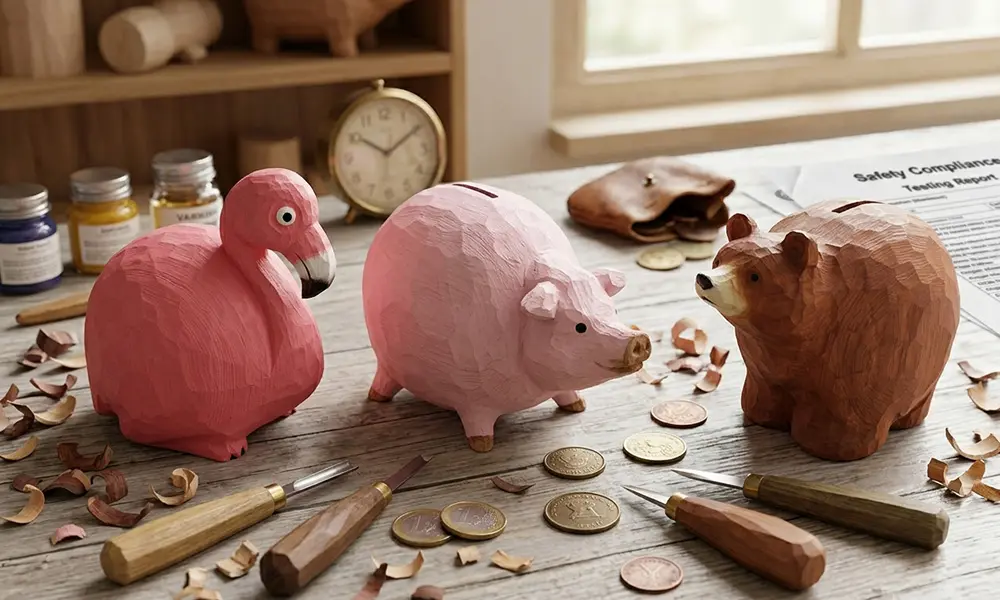
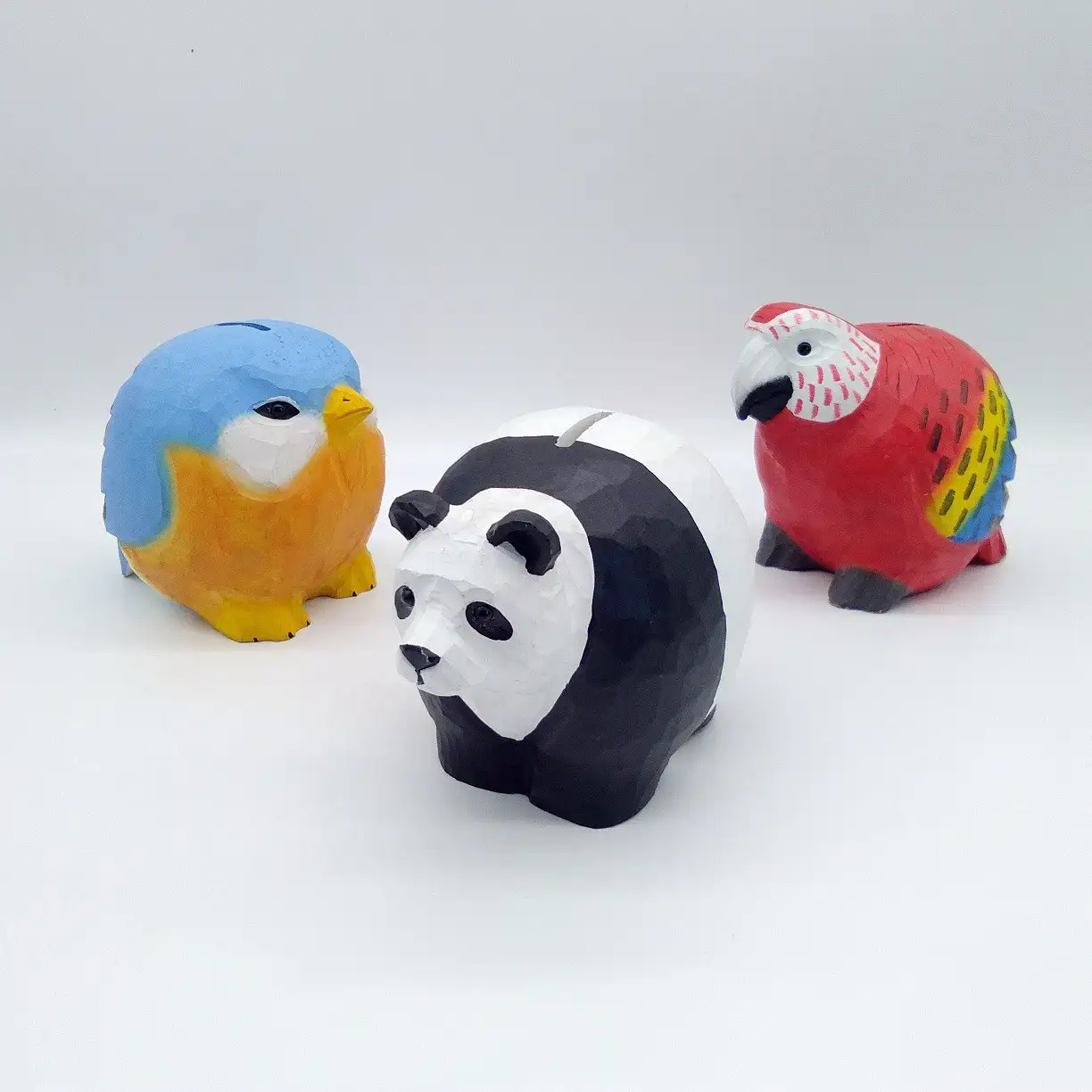
- We supply: carved and painted blanks in 4 species, in 3D carving from 5 to 40 cm and 2D pieces to 80 cm, with the personalisation budget published per shape.
- We supply: name, year and event-date marking in engraving or print, quoted per method with setup shown separately and lists frozen at order date.
- We supply: kitted colour boxes from 500 pieces for registry lines and bulk inner boxes of 6 to 12 pieces for favour lines, tested to ISTA 3A.
- We do not supply: electronics, hinges, magnets or springs inside keepsake pieces, and no teething, food-contact or soothing claim on any tag.
The piggy bank and money-gift side of the segment, including retail programme maths, sits in our wooden piggy bank programme page, which carries the same first-party tiers used in this guide.
Which Job Fits Which Buyer
Baby-goods retailers should lead with the registry job and carry the favour job as an event counter line, because their customers arrive with a list and a date. Gift shops should lead with the childhood keepsake job, where walk-in buyers want a named piece today and accept a one-line mark. Corporate and hospital programmes, where gifting meets discharge packs, fit the favour job with a shared card rather than per-piece personalisation.
Buyers serving two jobs should keep two specification sheets: the registry line needs kitted boxes and frozen lists, the favour line needs bulk counts and one card per event, and blending them costs margin on both. Registry buyers who also carry memory-box programmes can pair this guide with our wooden keepsake boxes wholesale uses page, since the box and the piece often ship as one gift.
What We Check Before a Keepsake Order Ships
- Moisture at 8 to 12 percent recorded per batch before wrapping, since a keepsake’s longest risk is a checked joint in year three.
- Mark proof check at setup and mid-run against the approved first article, with name lists reconciled line by line before packing.
- Edge and point inspection on the sampling plan after drop simulation for any piece a child can reach.
- Claims limited to what we hold: CE, UKCA, EN71 where the piece is marketed as a toy, BSCI and ISO 9001.
Every figure above is first-party and checkable against an inspection report or a certificate we hold; the job split and mark budgets are programme design, not statistics. The company and its specification library sit at ewoodarts.com.
End to End: A Registry Plus a Shower Line
A baby-goods retailer wants two programmes from one range: a registry milestone piece with a published personalisation budget, and a shower favour line at per-piece cost for its events counter, both carrying the season’s birth year mark.
Split at specification. The registry piece takes the largest blank with name plus year on the side panel and a kitted colour box; the favour takes the smallest shape in bulk counts of 6 to 12 per inner box with one shared tag card per event. Two drawings, two tag stacks, one species and finish family so the range photographs as one line.
Proof and commit. Both programmes prove on the trial tier at 100 pieces and a USD 500 minimum order value, air express DDP in 20 to 30 days; the registry line then commits on the wholesale tier at 300 pieces and a USD 3,000 minimum order value, sea freight at 60 to 90 days to port, timed to the retailer’s spring registry push. Payment runs T/T with a 30 percent deposit and 70 percent before shipment against photos and video.
Close the loop. Name lists freeze with each order and reconcile at packing; the favour line’s event dates print on the shared card at packing rather than on the piece, so unsold favour stock carries no dead date into next season. Buyers extending the segment into money gifts can continue into our money management kids gift marketing page.
Build a birth year range that prices as three jobs, not one
Registry pieces, shower favours and childhood keepsakes quoted from one specification library.
FAQ
How much text fits on a birth year piece?
On our blank shapes a year fits most flat panels, a year plus name fits three of four, and a full dedication fits none; the budget is published per shape from a physical sample in the shipped font.
Should shower favours carry per-piece dates?
No. Event dates print on the shared tag card at packing, so unsold favour stock carries no dead date into the next season and the piece stays sellable.
Which moisture range keeps a keepsake sound for years?
8 to 12 percent recorded per batch before wrapping; pieces packed outside that band are the ones that check at a joint in a humid attic a few years later.
When must a keepsake be graded as a toy?
Whenever it is small enough to reach a child’s hands and is presented as suitable for children; then toy safety expectations apply and the tag carries the grading line.
Can one SKU serve registry and favour jobs?
It can but should not: the registry job needs kitted boxes and frozen name lists while the favour job needs bulk counts and a shared card, and one SKU prices both badly.