Skip to content

Himalayan salt blocks are solid slabs of natural pink salt, valued for their ability to conduct heat evenly and impart a subtle mineral flavour. Used for grilling, chilling, or elegant plating, they appear in professional kitchens, spa retail and gift catalogues alike. This guide is written for the buyer side of that order: the structural checks that separate a block which survives repeated heating from one that splits inside the carton, how our grading pass runs, and what the three order tiers actually contain. Retail price sheets move with freight rates and stone grade, so we quote per carton rather than print a number here.

Key Takeaways
- 3 order tiers instead of 1 price list: 100 pieces at MOA USD 500 for a trial, 300 pieces at MOA USD 3,000 for wholesale or custom work, 500 pieces for colour boxes.
- Sample approval comes before the pallet is cut: 1 master block anchors colour, thickness band and edge finish for the whole run.
- Rectangular plates in the 8 x 12 inch class cover most grill, oven and plating use, which is why they make up the bulk of shipped cartons.
- Every block is read on 3 points before packing: visible fissures, edge soundness, face flatness.
- Freight decides the carton: air in 20-30 days needs less moisture buffering than sea in 60-90 days to port.
- 2 documents travel with each shipment: mining and export paperwork for the stone, and a carton-level packing list.
In This Guide
How to Choose Himalayan Salt Blocks: The Checks That Matter
Buying a Himalayan salt block is about more than appearance. The block’s purity, structure, and design determine how it performs under heat and how long it lasts. Whether you plan to grill seafood, chill desserts, or create a decorative platter, knowing what to look for ensures confident purchasing and lasting value both online and in-store.
Material Quality and Authenticity
Genuine Himalayan salt sourced from the Khewra Salt Mine in Pakistan guarantees authentic mineral content and stability. Inspect each block for uniform pink tones and minimal fissures—signs of superior structural integrity during high-temperature cooking. Blocks with inconsistent coloring or artificial mixes may fracture easily and compromise taste. Ask each supplier which mine the stone comes from and how the block is cut and dried before packing. True Khewra salt withstands repeated heating and cooling cycles, which is what makes it durable across a service life rather than only on day 1.
Size, Shape, and Thickness Options
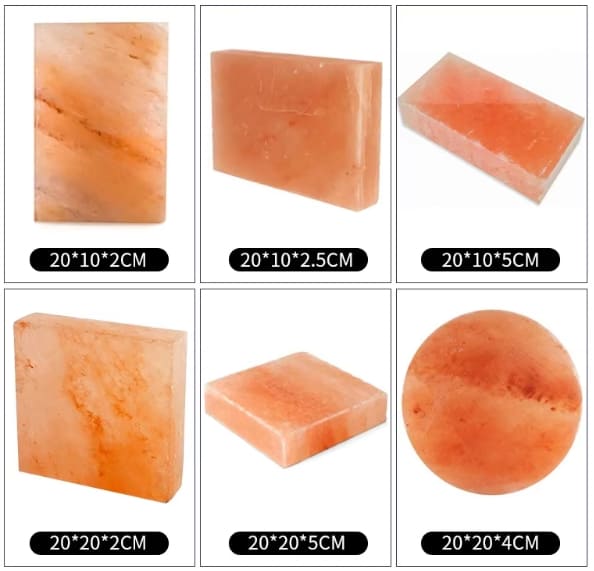
Proper dimensions are critical for efficient use. A rectangular block measuring roughly eight by twelve inches is the most versatile—it fits most grills, ovens, and stovetops while providing generous surface space for searing or presentation. Thicker blocks retain heat longer for steady cooking temperatures but add extra weight, reducing portability. Round plates or smaller planks serve specialised purposes such as sushi presentation or fruit chilling. On a wholesale order, weigh handling comfort, usable surface area and storage footprint before standardising on one format across the range.
Importance of Accessories and Holders
Quality accessories enhance both safety and convenience. A sturdy iron or stainless-steel holder secures the block and protects cooking surfaces from direct heat exposure. Many online bundles include practical tools such as cleaning brushes and serving trays that simplify care and extend lifespan. For hospitality buyers, a holder and brush in the same carton removes two separate SKUs from the order. Judge a kit on whether the accessories are the right gauge for the block, not on how many items the listing can count.
Himalayan Salt Blocks for Sale: The 3 Order Tiers We Actually Quote
Listings for these blocks vary by pack size, holder inclusion and freight cost, which is exactly why we do not publish a per-unit price here. What we do publish is how an order is structured, because that is the part a sourcing manager can plan against.
| Tier | Minimum | Typical buyer | Freight and timing |
|---|---|---|---|
| Trial order | 100 pieces, MOA USD 500 | New importers testing the category before committing shelf space | Air, 20-30 days |
| Wholesale or custom run | 300 pieces, MOA USD 3,000 | Distributors, hospitality groups, spa and wellness chains | Sea, 60-90 days to port |
| Colour box programme | 500 pieces | Retail brands that need shelf-ready artwork and barcodes | Sea, 60-90 days to port |
Quote the tier, the format and the accessory set and you get a usable per-carton number within 2 working days. Changing the block size later changes carton count, and with it the freight, so lock the format before the sample is approved. The Himalayan salt products wholesale page lists what currently leaves the cutting floor.
Sample First: What We Check Before a Pallet Is Cut
A block that photographs well and a block that performs on a service line are not the same object. The sample stage exists to close that gap before 1 pallet is committed, and it is the stage most buyers skip.
1. Fissure and inclusion scan
Pink salt carries natural veining, and veining is where a block opens under thermal load. Each candidate is read under raking light: pale mineral seams are acceptable, dark or open lines that a fingernail catches are not. That single distinction explains most of the crack claims a buyer sees on returns, and it is the reason our cracked versus solid salt block breakdown exists.
2. Heat and chill cycles on the approved sample
The approved master block is brought up from room temperature, used, cooled and reheated across several service cycles. Blocks that bloom new surface powder or develop edge spalling at this stage are rejected before a machine is set. A buyer who wants to run the same cycles should do it on the trial carton, not on a container.
3. Face flatness and edge squareness
A cupped face contacts the grill unevenly and heats unevenly; an out-of-square edge chips first. Both are measured against the master sample rather than a brochure figure, which is how the tolerance band stays honest across a production run.
Authenticity belongs in the same pass. Mineral claims are easy to print and hard to verify, so the how to spot fake Himalayan salt checks are run on the sample: colour evenness under light, dissolve behaviour in warm water, and the paperwork that comes with the stone.

Cooking Grade, Serving Grade and Decor Grade
The same rock halite is sold into 3 different jobs, and each job grades it on different points.
Cooking grade
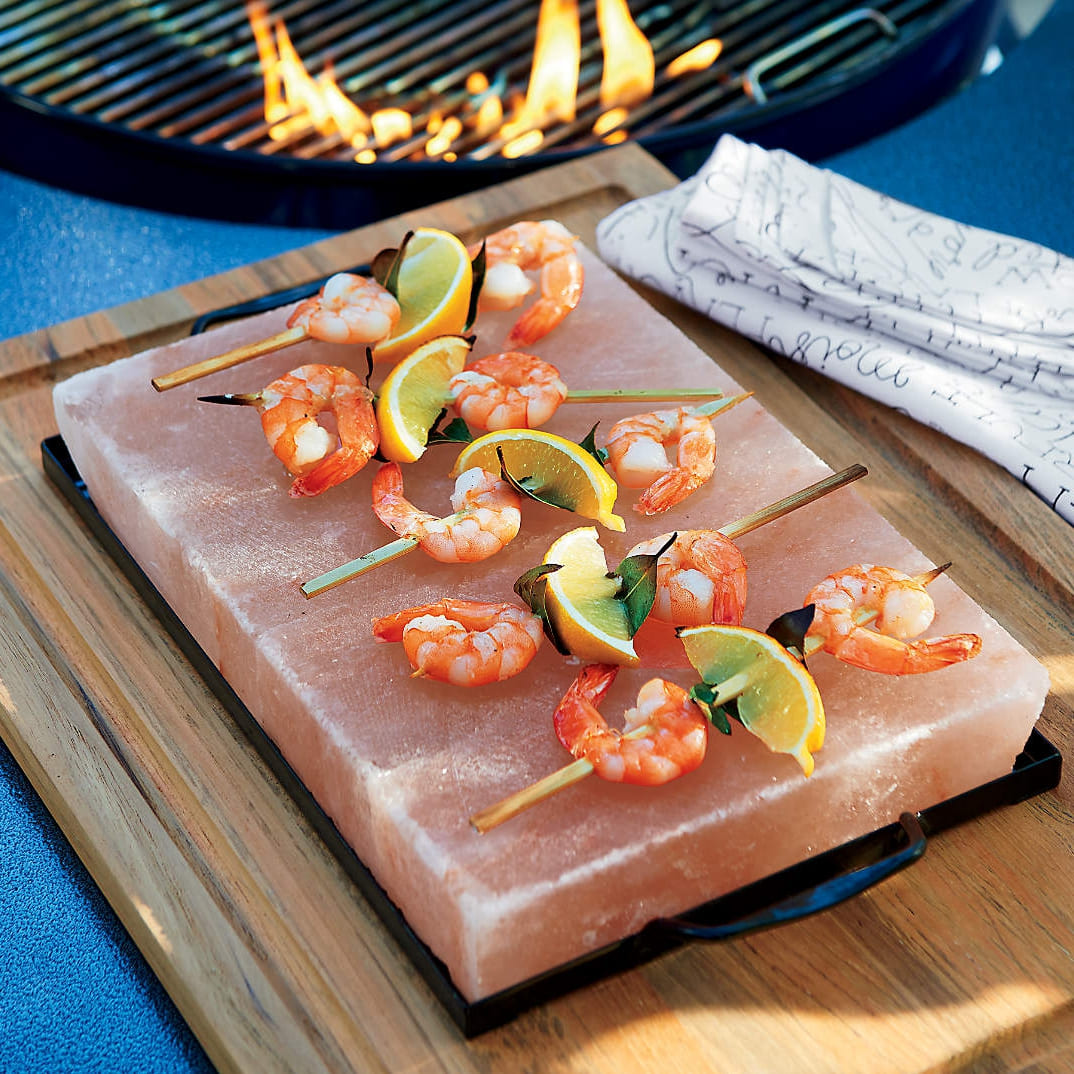
Thermal shock resistance and flatness come first, because the block lives on a heat source. Rectangular plates in the 8 x 12 inch class dominate here: they sit on standard grills and oven racks and give enough surface to sear without crowding. Thicker material holds heat longer but takes longer to come up to temperature, which matters on a service line with back-to-back covers. Blocks cut for restaurant use are covered in our professional kitchen salt block notes.
Serving and chilling grade
Presentation grade is selected on colour evenness and edge finish rather than thermal behaviour. A chilled block carries sushi, cheese, charcuterie or desserts and is judged on how it photographs on the table, so veining that would be rejected for cooking grade is often the selling point on a serving platter.
Decor and animal-mineral grade
Rugged blocks with a coarser finish leave the same cutting line for two other markets: lamp and decor stone, and mineral licks for livestock. Neither needs a flat cooking face, which is why both are sold on weight per carton rather than usable surface. Engraved and personalised formats are handled separately on the custom engraved salt block line.
Packaging for a 60-90 Day Ocean Crossing
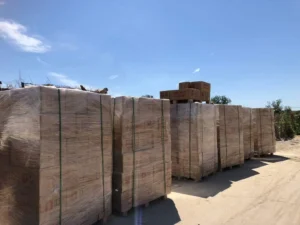
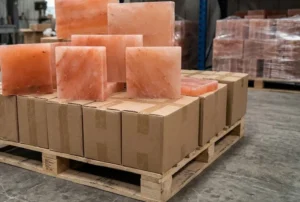
Salt is hygroscopic. A block that leaves the floor dry can arrive dull and powdery if the carton was built for a shelf rather than for a container hold, where humidity swings far above anything a warehouse sees. Packing spec follows the freight decision, not the product photo.
- A moisture barrier between the stone and the board, so the block does not eat through the carton wall.
- Individually bedded faces, because damage on a salt block is a chipped corner, not a scuffed box.
- Master cartons stacked to a pallet pattern that keeps weight off polished or engraved faces.
- Packing list and export paperwork produced per carton, so a claim ties back to 1 batch instead of 1 shipment.
For a trial order moving by air in 20-30 days the barrier can be lighter, and the same spec on that lane is over-engineering that costs carton space. Tell us the lane and we build the carton for it. Transport packaging is usually validated by the forwarder against ISTA drop and vibration test protocols before a container is booked, which is a practical way to test a carton spec without risking a full load.
For buyers who want the raw-material side of the file, salt production and origin data sit in the USGS mineral commodity summary on salt, which is a better reference than a supplier brochure.
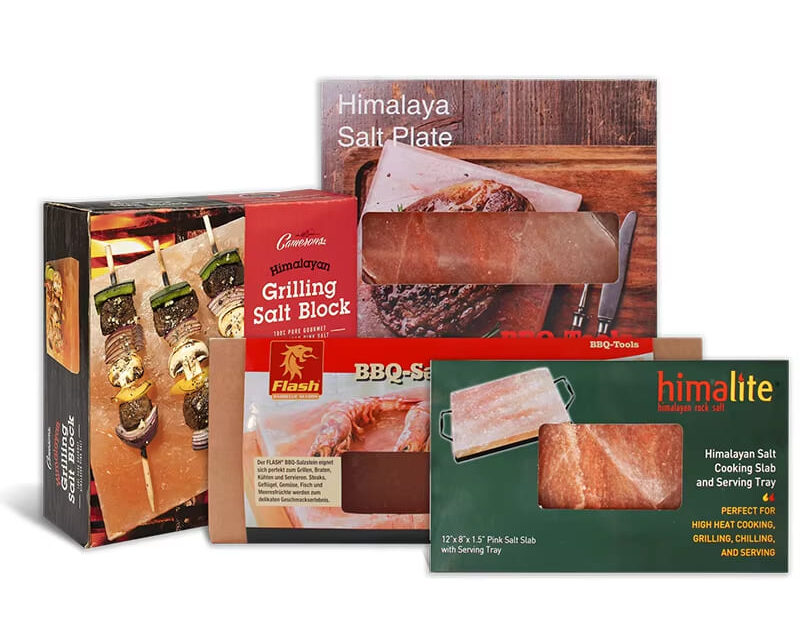
Care and Maintenance Tips for Longevity
Proper maintenance ensures a Himalayan salt block remains both functional and attractive for years. Because salt naturally absorbs moisture and flavor, careful cleaning and storage are essential to prevent cracking and preserve its cooking surface.

- After each use, gently wipe the block with a lightly damp cloth to remove food residue. Avoid soap or detergents, as they can dissolve the salt and affect its natural taste.
- Allow the block to dry thoroughly before storage. Putting it away while damp can cause surface damage or microbial growth.
- Use a soft brush or non-abrasive pad to smooth the surface without scratching or gouging the salt.
- Store the block in a cool, dry environment away from humidity or direct contact with water to maintain its structural stability.
Consistent care protects the salt block investment and ensures every cooking or serving session delivers reliable performance and lasting flavour quality. A block that has been stored damp should be dried slowly at room temperature before it meets heat again, not put straight onto a grill to boil the moisture off.
Final Thoughts Before You Order Himalayan Salt Blocks
Choose the grade first, then the format, then the order tier. A cooking programme needs flatness and fissure screening; a serving programme needs colour evenness and a finished edge; a decor or mineral-lick programme needs weight per carton. Most of the disappointed buyer stories behind these blocks come from ordering 1 grade for all 3 jobs.
Ask for the sample before the pallet, run your own heat and chill cycles on it, and put the trial carton on the freight lane you actually intend to use. That sequence costs 20-30 days by air and a small MOQ, and it removes most of the risk from a wholesale run of 300 pieces or more.
The block formats we keep cut for stock sit in the wholesale Himalayan salt blocks line.
Current catalogues, carton counts and order thresholds are on the Ewoodarts homepage.
Himalayan Salt Blocks for Your Next Order
Start from a trial order of 100 pieces with a minimum order amount of USD 500, approve 1 master block against it, then move to a 300-piece wholesale or custom run at MOA USD 3,000. Colour box programmes begin at 500 pieces.
Frequently Asked Questions About Himalayan Salt Blocks
Do you publish a price list for Himalayan salt blocks?
No. Retail-style price lists move with freight rates, stone grade and carton count, so a printed number would be out of date within a season. Send the format, the accessory set and the order tier, and we quote per carton within 2 working days. A trial order starts at 100 pieces with a minimum order amount of USD 500.
What separates a cooking-grade block from a serving platter?
Cooking grade is selected on flatness and fissure screening, because the block sits on a heat source and an open vein becomes a crack. Serving grade is selected on colour evenness and edge finish. The same stone can pass one test and fail the other, which is why the 2 grades are sorted separately.
How do I stop a salt block cracking?
Three habits cover most of it: bring the block up to temperature gradually instead of putting it onto full heat, keep it dry in storage, and never wash it in a sink. Salt is hygroscopic, so a block that has sat in a humid kitchen will pit on its first reheat. Our cracked versus solid breakdown goes through the failure modes in detail.
Can a buyer test quality before a wholesale order?
Yes, and we prefer it. A trial carton of 100 pieces moves by air in 20-30 days, which is long enough to run service tests in your own kitchen before a wholesale or custom run of 300 pieces at MOA USD 3,000 is scheduled. Colour box programmes begin at 500 pieces.
What paperwork comes with a shipment?
The mining and export paperwork for the stone, plus a carton-level packing list, which is what allows a claim to be tied back to 1 batch. The facility operates under BSCI and ISO 9001 audits, and applicable lines carry CE, UKCA, EN71 and RoHS documentation. Timber traceability on our carved ranges runs through official felling and transport permits rather than an FSC product claim.