Skip to content
In the wholesale market, the debate between a cracked vs. solid salt block isn’t about finding creative recipes for broken pieces. For importers, food distributors, and hospitality buyers across the US and Europe, a cracked block represents one thing: lost profit. When a container arrives with high breakage rates, it destroys retail margins and triggers customer complaints.
Why do some salt blocks survive ocean freight and intense culinary heat, while others shatter instantly? The secret lies long before the cooking starts—it comes down to mineral density grading, cutting precision, and export-engineered packaging. This factory-direct guide breaks down the core differences between premium solid slabs and low-grade cracked blocks, giving you the exact QC standards needed to secure your next bulk order.
Cracked vs. Solid Salt Block: The B2B Sourcing Reality
While consumers might repurpose a cracked block into finishing salt, B2B buyers must source salt blocks that stay solid under pressure. Here is how premium solid blocks compare to compromised inventory.
| Sourcing Metric | Low-Grade / Cracked Salt Block | Premium Solid Salt Block |
|---|---|---|
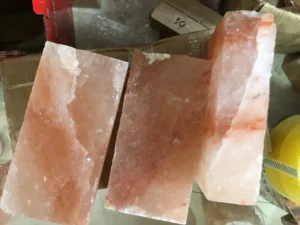
| Raw Material Origin | Often cut from cheaper, surface-level salt veins with high moisture content and hidden fault lines. | Carved exclusively from deep-vein, high-density Khewra salt crystals with superior structural integrity. |
| Thermal Shock Resistance | Fails under rapid heating. Invisible micro-cracks expand, causing the block to shatter on a grill. | Distributes heat evenly up to 500°F (260°C). Highly resistant to thermal shock when preheated properly. |
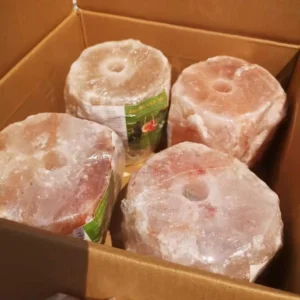
| Ocean Freight Survival | High breakage rates due to thin corrugated boxes and lack of moisture-barrier packaging. | Near-zero defect rate. Protected by EPE foam, shrink wrap, and reinforced 5-ply master cartons. |
| Retail Value | Results in heavy returns. Salvaged pieces are relegated to low-value bath salts. | Commands premium pricing for culinary gifts, high-end BBQ tools, and professional kitchens. |

Why Do Salt Blocks Crack? The Factory Truth
“A salt block doesn’t just spontaneously break. 90% of the time, the failure originates in the factory due to poor density selection or aggressive blade cutting that creates invisible micro-fractures.”
1. The Danger of Invisible Micro-Cracks
Himalayan salt is a natural crystal with inherent cleavage planes. When cheap suppliers use fast, aggressive band saws to increase production speed, the vibration causes microscopic fractures inside the block. These micro-cracks are invisible to the naked eye during packing. However, once the end-consumer heats the block on a grill, the trapped moisture turns to steam, expands against the fracture, and shatters the block completely.
2. Poor Density Selection: Cooking vs. Construction Grade
Not all Himalayan salt is meant for the grill. Surface-level salt tends to be brittle and porous, which is fine for building decorative salt walls in a spa, but disastrous for cooking. To manufacture a true culinary block, a factory must selectively grade and carve from high-density, deep-vein salt deposits.
This is exactly why our professional sales team will always confirm your intended application before quoting. Culinary-grade grilling blocks and construction-grade salt bricks require completely different density standards, price points, and packaging methods. If a supplier never asks what you are using the blocks for, you are likely receiving lower-grade decorative salt.
Source High-Density Culinary Salt Blocks
Partner with Jilin Ever Creation. Operating under strict ISO9001 standards since 2013, we select only premium, food-grade Khewra salt. Enjoy custom dimensions, OEM color boxes, and shock-absorbent EPE packaging designed to eliminate ocean freight breakage.

How We Protect Your Inventory: The Ocean Freight Standard
Shipping heavy, brittle salt crystals from Asia to Europe, the US, or the UK requires aggressive logistics planning. A solid block won’t stay solid if it is bouncing around in a loose box for 30 days at sea. Here is our factory standard for preventing transit cracks:
- Shrink Wrapping (Moisture Control): Salt is highly hygroscopic (it absorbs moisture). We heat-shrink every block to prevent humidity from weakening the crystal structure during ocean transit.
- EPE Foam Corners: Instead of cheap bubble wrap, professional culinary blocks are braced with high-density EPE pearl cotton to absorb mechanical shocks.
- 5-Ply Master Cartons & Secure Pallets: Goods are packed tightly into double-wall export cartons and rigidly strapped to pallets, ensuring zero shifting inside the container.
B2B Quality Control: The “Light Test”
If you are evaluating a new supplier, how can you tell a solid block from one waiting to crack? Use the light test.
Hold a strong flashlight behind the salt block. A premium, high-density block will have a warm, relatively uniform translucent glow, revealing natural, smooth mineral veins. If the light reveals sharp, jagged dark lines running deeply through the center, those are major fault lines. That block will likely fail upon its first high-heat searing.

B2B Buyer FAQ: Salt Block Sourcing
What is your defect rate for cracked blocks during shipping?
Thanks to our strict density grading and EPE foam packaging standards, our historical breakage rate for ocean freight shipments remains consistently under 0.5%.
Are your solid salt blocks food-grade certified?
Yes. Our Himalayan salt is 100% natural, unrefined, and processed in our ISO9001-certified facility, meeting global food-contact safety standards for cooking and curing.
Can you customize the size and shape of the salt blocks?
Absolutely. As a source factory, we offer full OEM services. Whether you need standard 8x12x1.5-inch rectangular slabs, round pizza stones, or custom-engraved branding, we can manufacture it.
What if a block cracks in a retail customer’s home?
Salt is a natural crystal, so eventual degradation over years of heavy use is normal. You can advise customers to safely repurpose clean broken pieces for grating into finishing salt, making brines, or using as chilled serving platters.
Final Thoughts: Source Stability, Not Just Salt
The difference between a solid and cracked salt block comes down to the supplier you choose. While broken pieces might hold Pinterest appeal for DIY home cooks, commercial retailers need high-margin, reliable inventory that stays intact from the factory floor to the final BBQ grill.
By insisting on high-density materials, proper saw-cutting techniques, and heavy-duty moisture-proof packaging, you protect your investment and build a premium brand reputation.
We maintain a stable year-round inventory in Changchun and specialize in exporting premium Himalayan salt products to the US, Europe, and Australia. Experience our quality firsthand—test our durability with a low-risk $500 trial order. Get in touch with our sales team today to secure your quote!