
Many hospitality suppliers, small manufacturers, and eco-conscious brands are rethinking their finishing materials as customers demand safer, cleaner products. Conventional solvent-based coatings can release more than 200 g/L of VOCs and leave behind hazardous waste that increases disposal costs. For items like coasters used in cafes and kitchens, those emissions don’t just affect workspace air—they can compromise the safety of food-contact surfaces and the comfort of guests and staff.
This article explores today’s most reliable eco-friendly finishes for coasters. We’ll compare VOC levels, look at certifications such as Green Seal and GREENGUARD, and review how water-based systems can cut fossil resource use by roughly 24%. You’ll also find practical application tips and performance insights to help you choose finishes that align with sustainability goals without giving up durability or design quality.

Non-Toxic & Eco-Friendly Finishes list
Quick Comparison: Top Picks
| Type of finishes | Location | Core Strength | Verdict |
|---|---|---|---|
| Pure Tung Oil | Industry Wide | Wood finishes for coasters, cutting boards | A natural, non-toxic, food-safe finish that penetrates deeply and enhances wood grain—ideal for eco-conscious users seeking durable protection. |
| Hemp Oil | Industry Wide | Natural wood oils for finishes | A sustainable, quick-drying, low-VOC wood finish that is biodegradable and food-safe—perfect for eco-friendly woodworking projects. |
| Shellac | Industry Wide | Resin-based wood sealers | A classic natural resin finish offering quick-drying, glossy protection with excellent adhesion—ideal for furniture and decorative woodwork. |
| Beeswax | Industry Wide | Wax polishes and finishes | A fully biodegradable, food-safe wax providing subtle sheen and easy maintenance—excellent for natural wood care and artisanal crafts. |
| Soy-Based Stains | Industry Wide | Plant-based wood colorants | An eco-friendly stain that delivers even color with low VOCs and strong compatibility with natural finishes—great for green woodworking projects. |
Pure Tung Oil
Pure Tung Oil is a natural, non-toxic finish derived from tung tree nuts. It penetrates deeply into wood, enhancing the natural grain and providing lasting water resistance. Once cured, it’s completely food-safe, which makes it a strong choice for those who value sustainable and health-conscious options in wood care.
Used across industries for wood finishes like coasters and cutting boards, Pure Tung Oil protects surfaces while maintaining an organic look. Its eco-friendly durability appeals to both artisans and homeowners aiming for natural, safe finishes without synthetic additives.
At a Glance:
- Core Strength: Wood finishes for coasters, cutting boards
- Key Markets: Eco-friendly wood protection, health-focused home goods
Why We Picked Them:
| ✅ The Wins | ⚠️ Trade-offs |
|---|---|
|
|
Hemp Oil
Hemp oil, derived from hemp seeds, serves as a sustainable, non-toxic wood finish alternative to petroleum-based coatings. It nourishes and protects wood surfaces while promoting a natural matte look. Because it’s biodegradable, low in VOCs, and safe for food contact, it’s an attractive option for furniture makers and sustainable home decor projects.
Used across the industry, hemp oil helps manufacturers meet environmental standards without sacrificing durability. Its quick-drying nature and minimal environmental impact make it a reliable choice for craftspeople aiming to reduce chemical dependency in their finishing process.
At a Glance:
- Core Strength: Natural wood oils for finishes
- Key Markets: Sustainable woodworking, non-toxic home decor
Why We Picked Them:
| ✅ The Wins | ⚠️ Trade-offs |
|---|---|
|
|
Shellac
Shellac is a natural resin derived from lac bugs and dissolved in alcohol to produce a biodegradable, non-toxic, and quick-drying finish. It gives wood surfaces a glossy seal that enhances clarity and protection while maintaining safety for indirect food contact.
Used widely across the furniture and decorative wood industry, shellac’s repairability and reliable adhesion make it a preferred choice among manufacturers. Its consistent performance supports both small-scale artisans and large production lines seeking sustainable coating options.
At a Glance:
- Core Strength: Resin-based wood sealers
- Key Markets: Furniture finishing, decorative wood items
Why We Picked Them:
| ✅ The Wins | ⚠️ Trade-offs |
|---|---|
|
|
Beeswax
Beeswax is a natural wax produced by honeybees, known for its purity and gentle protection. It is used widely as a non-toxic, food-safe finish that offers water resistance and enhances the natural depth and color of wood. Its soft sheen and smooth texture make it a favorite among craftsmen and eco-conscious users alike.
Found across many industries, beeswax-based polishes and finishes are easy to apply and maintain. Regular reapplication keeps wood surfaces nourished and lustrous, while the biodegradable nature of the material aligns well with sustainable production goals across the wood care and artisanal craft markets.
At a Glance:
- Core Strength: Wax polishes and finishes
- Key Markets: Natural wood care, artisanal crafts
Why We Picked Them:
| ✅ The Wins | ⚠️ Trade-offs |
|---|---|
|
|
Soy-Based Stains
Soy-Based Stains use soybean oil as a pigment carrier, creating an eco-friendly alternative to traditional chemical wood stains. They penetrate deeply into the wood for even color and provide long-lasting protection. Because they are safe for indoor use and biodegradable, they suit woodworkers and builders focused on sustainability and air quality.
These stains have gained popularity across the woodworking industry for their compatibility with natural finishes such as oils or waxes. Their composition reduces harmful volatile organic compounds, helping workshops maintain cleaner air while producing rich, natural tones on wood surfaces.
At a Glance:
- Core Strength: Plant-based wood colorants
- Key Markets: Green woodworking, custom maker projects
Why We Picked Them:
| ✅ The Wins | ⚠️ Trade-offs |
|---|---|
|
|
The Problem with Conventional Wood Finishes
Air Quality and Health Concerns
Solvent-based finishes such as oil-based polyurethane and lacquer release high amounts of volatile organic compounds (VOCs) during and after application. These gases can linger indoors for months, reducing air quality and triggering irritation or headaches, especially in well-sealed homes. Conventional formulations often exceed 200 g/L VOC, while low-VOC finishes remain at or below 200 g/L and zero-VOC products contain no more than 5 g/L.
Environmental and Waste Impacts
Solventborne coatings rely on petrochemical solvents and resins that raise greenhouse emissions and use non-renewable fossil resources. Studies show that water-based polyurethane systems can lower fossil resource depletion by around 24% compared to solvent-based formulas. Leftover product, cleaning solvents, and rags from these finishes are often flagged as hazardous waste, driving up disposal costs and adding regulatory hurdles for small operations.
Performance and Sustainability Trade‑offs
Conventional finishes offer strong durability but expose users to high-VOC emissions during application. Advances in water-borne formulations now achieve equal or better abrasion resistance, challenging the notion that solvent-rich coatings are needed for performance. Even natural oils like boiled linseed can include metal driers or petroleum additives, and while unmodified oils are safer, they usually require more upkeep and provide less moisture resistance.
Understanding VOCs and Food Safety
Volatile organic compounds (VOCs) are volatile carbon-based chemicals that can evaporate into air from finishes or paints. They influence indoor air quality, can migrate to food-contact areas, and are regulated through VOC content and emission limits to keep kitchens and household surfaces safe.
What VOCs Are and Why They Matter for Food Safety
VOCs are carbon-based substances that can easily become vapor at room temperature. They are found in coatings, adhesives, and paints used on furniture, kitchenware, and packaging. Indoors, they contribute to smog formation outdoors and can also impair indoor air quality. This is why regulations limit both VOC content and emission levels, particularly for materials used near food or children’s items.
These compounds can cause respiratory irritation, headaches, or allergic responses in sensitive individuals, especially when used in sealed spaces or in products that are not fully cured. Managing VOC emissions is central to ensuring that food and kitchen surfaces remain safe for daily contact.
How VOCs From Finishes Can Reach People and Food
When finishes cure, they emit VOCs into the surrounding air, particularly during the drying stage. Off‑gassing levels decline over time, but exposure is most significant right after application. In kitchens, countertops, or toys that come into contact with the mouth, un‑cured or unsuitable coatings can transfer chemical residues either by air or direct touch.
Adequate ventilation, proper curing time, and selection of food‑safe or explicitly low‑emission coatings are key to protecting users. Products not rated for food contact should never be used on surfaces like cutting boards or storage containers that interact with food or drinks.
Regulations, Testing, and Safer Alternatives
National and state regulations limit VOC content in consumer and architectural coatings, measured in grams per liter. For example, low‑VOC interior finishes are typically capped at 50 g/L, while some eco‑labels verify products that achieve even lower numbers. Testing methods such as EPA Method 24 and ASTM D6886 are used to measure VOC content and emissions quantitatively over time.
Programs like Green Seal and GREENGUARD combine low content limits with real‑world emission tests to certify healthier coatings. Their criteria help ensure not only lower solvent content but also fewer off‑gassed chemicals after drying. Water‑based systems, plant‑oil blends, or mineral‑based paints are safer alternatives, offering good performance while keeping food‑adjacent environments cleaner and more breathable.
Eco-Friendly Wooden Coasters in Bulk
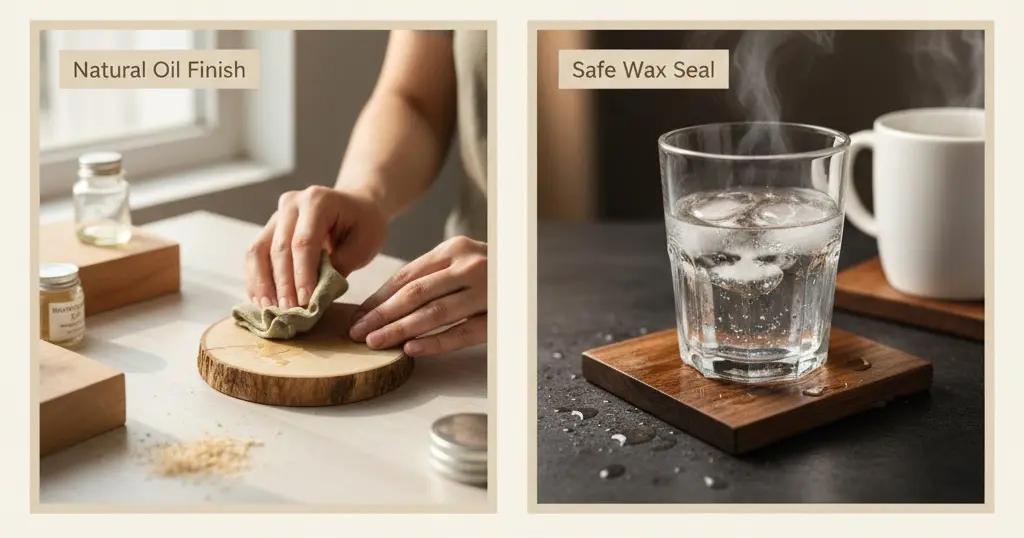
Application Tips for Natural Finishes
Surface Preparation and Dust Control
Sand wood progressively up to 180–220 grit to achieve a smooth surface where oils or waxes can absorb evenly. Clean all sanding residue with a vacuum and wipe with a tack cloth or a slightly damp microfiber cloth. A clean, enclosed yet ventilated workspace limits airborne dust that could mar low- or zero-VOC coatings and supports consistent absorption and curing of natural products.
Apply Thin Coats and Allow Full Penetration
Penetrating oils like linseed or tung need to soak into the wood rather than form a surface film, so use thin applications. Allow a brief period for the finish to absorb, then wipe away any excess to prevent tacky spots and uneven sheen. Heavy or pooled coatings cure slowly and sometimes retain odor, even if they are low in VOC content.
Respect Curing Conditions and Timing
Curing time for natural or water-based finishes depends on temperature, humidity, and air movement. Follow manufacturer recommendations for drying and curing intervals before placing items into service or exposing them to heavy use. Meeting these timing requirements ensures full hardness, color stability, and resistance to moisture while minimizing any remaining scent or emissions.
Choose Low- or Zero-VOC, Child- and Food-Safe Options
Select coatings marked as low- or zero-VOC and specifically rated safe for use on children’s furniture or surfaces that come into contact with food. Many natural plant-based oils and waxes avoid heavy metals or petrochemical additives, maintaining safety without compromising performance. These formulations suit eco-aware families aiming to lower chemical exposure indoors.
Use Water-Based Topcoats or Gentle Maintenance Products
Add a low- or zero-VOC water-based topcoat if additional durability or moisture resistance is necessary, since these finishes dry quickly and produce fewer emissions than solvent varnishes. Maintain finished wood with plant-based soaps or refresher oils rather than harsh chemical cleaners. Gentle, compatible upkeep keeps surfaces looking natural and prevents buildup that can dull the finish over time.
Frequently Asked Questions
What is the most natural wood finish?
Natural oil finishes such as tung oil, linseed oil, and beeswax are among the most natural and eco-friendly options. These plant-based oils deeply penetrate the wood, highlighting the grain while staying biodegradable and free from synthetic additives. Tung oil offers strong water resistance, while linseed oil suits food-contact surfaces. Beeswax adds a gentle shine. These finishes may need more than one coat but maintain a warm, organic look compared to synthetic sealers.
Is shellac waterproof?
Shellac resists small spills and light moisture but is not waterproof. It can soften or turn cloudy when exposed to water for long periods. It performs well for indoor furniture or decorative pieces that stay dry. Adding more coats can improve resistance, and when desired, applying a protective topcoat makes it more durable. Avoid using shellac in wet or high-humidity areas such as kitchens or bathrooms.
Does hemp oil change the wood color?
Yes, hemp oil slightly darkens and warms up the wood tone. It brings out grain detail and can make light woods appear richer. The degree of color change varies by species and how dry the wood is. The effect is usually strongest just after application and settles into a soft, natural sheen after curing. It works well on eco-friendly furniture, toys, and kitchen items because it is food-safe and low in chemical emissions.
Are these finishes safe for kids?
Once fully cured, water-based and natural finishes—like pure tung oil, linseed oil, beeswax, and mineral oil blends—are considered safe for children. Always check that the product is labeled as non-toxic, low- or zero-VOC, and suitable for food contact or toy safety standards such as EN‑71. During application and drying, children should stay away from the area until all odors have dissipated and curing is complete.
Final Thoughts
Choosing non-toxic and eco-friendly finishes for coasters makes a noticeable difference in air quality, personal health, and long-term sustainability. Natural oils, waxes, and water-based coatings provide durable protection without the heavy chemical load of solvent systems. They bring out the wood’s texture and warmth while keeping VOC emissions and waste low, making them a smart choice for homes that prioritize both comfort and responsibility.
By pairing safe materials with mindful application—like proper ventilation, thin coats, and full curing—you create coasters that look great and remain safe for everyday use. Each small decision, from the finish you select to how you maintain it, supports a cleaner home and reduces your ecological footprint without sacrificing performance or style.