Skip to content
Sourcing profitable Christmas bird decor wholesale requires planning around the 60–90 day production cycle for hand-carved wood. Missing the late-August order deadline guarantees your inventory will arrive after the holiday, eliminating seasonal revenue and leaving you with obsolete stock.
Key Takeaways
- Hand-carved wooden birds are moving into holiday retail as a durable, gift-priced alternative to injection-moulded plastic ornaments.
- Wholesale and custom bird orders run on a 60 to 90 day sea programme from purchase order to port, which is why the Christmas cut-off sits in late August.
- OEM winter-bird collections let retailers build region-specific assortments: cardinals for North America, robins and bullfinches for the UK, chickadees and nuthatches for garden centres.
- Three display formats outperform single-product shelving: species habitat vignettes, price-ladder trees and gift-ready end caps.
- Finishes are non-toxic water-based paint worked to the EN71 series, with UKCA and RoHS documentation on the lines where those schemes apply.
- Windowed gift boxes and species insert cards raise the ceiling of a bird range; custom printed colour boxes start at 500 pieces.
- Trial orders start at 100 pieces with a USD 500 minimum order value by air, and wholesale or custom runs start at 300 pieces with a USD 3,000 minimum by sea.
Table of Contents
- Why Wooden Birds Are Replacing Plastic Ornaments
- Designing a Winter Bird OEM Collection
- The Christmas Bulk Order Cut-Off Calendar
- Gold-Leaf and Glitter Accents
- Gift-Set Packaging
- Family and Pet Safety in Retail
- Resale and Collectible Value
- Retail Display Strategies
- Which Retail Channel It Suits
- What We Check Before Shipping
- Frequently Asked Questions
This B2B guide gives you the ordering calendar, the OEM decisions and the display formats behind a winter-bird range. It is written for a buyer who has to put a Christmas line on the shelf in November and still be able to reorder it.
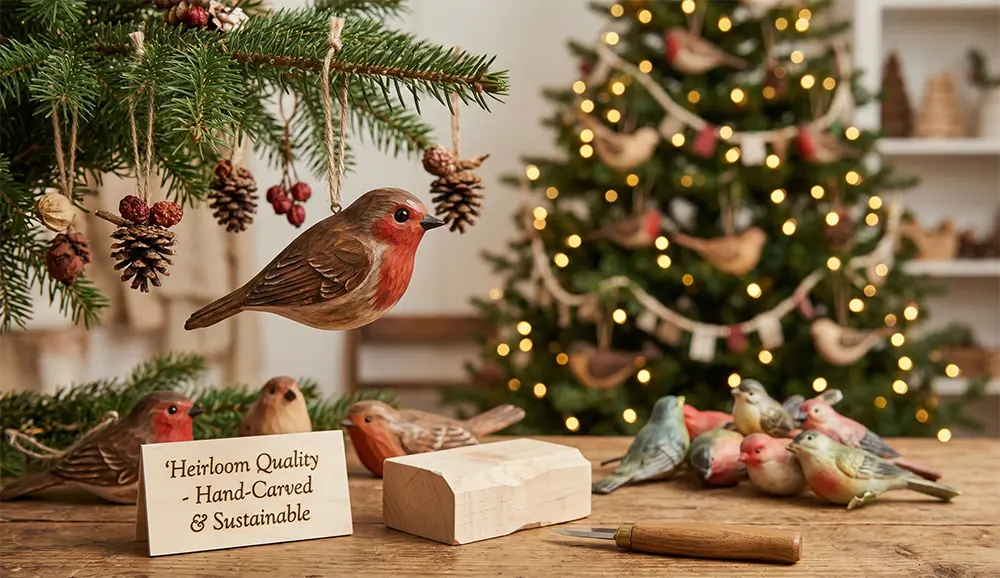
Why are wooden birds replacing plastic ornaments in Xmas retail?
Consumers now prefer wooden bird ornaments over plastic for their durability, natural aesthetic, and heirloom quality. This shift reflects a growing demand for sustainable, handcrafted decorations.
A Shift Toward Longevity and Natural Aesthetics
Retail buyers are seeing a clear move away from disposable plastic decorations. Wooden ornaments are positioned as durable, heirloom-quality items designed to last for generations, not just a single season. This gives them a perceived value that mass-produced plastic simply can’t match.
The material itself is a major driver. Wood provides a natural warmth and rustic character that fits perfectly with popular decor themes like farmhouse and woodland. While plastic can be molded into any shape, hand-carved wood offers a tangible connection to natural materials, making it a premium choice for consumers looking for authenticity.
The Appeal of Eco-Conscious Craftsmanship
This trend isn’t just about looks; it’s about the story behind the product. Each bird is crafted from ethically sourced, premium Basswood, which provides a sustainable and authentic feel. This addresses a key concern for environmentally aware shoppers.
The process itself sets these products apart. A 100% hand-carved and hand-painted process, using non-toxic water-based paints that meet safety standards like EN71, is a significant selling point. This “Hand-sculpted Authenticity” offers a unique, artisanal alternative to uniform, machine-molded plastic, where slight variations are a mark of quality, not a defect.
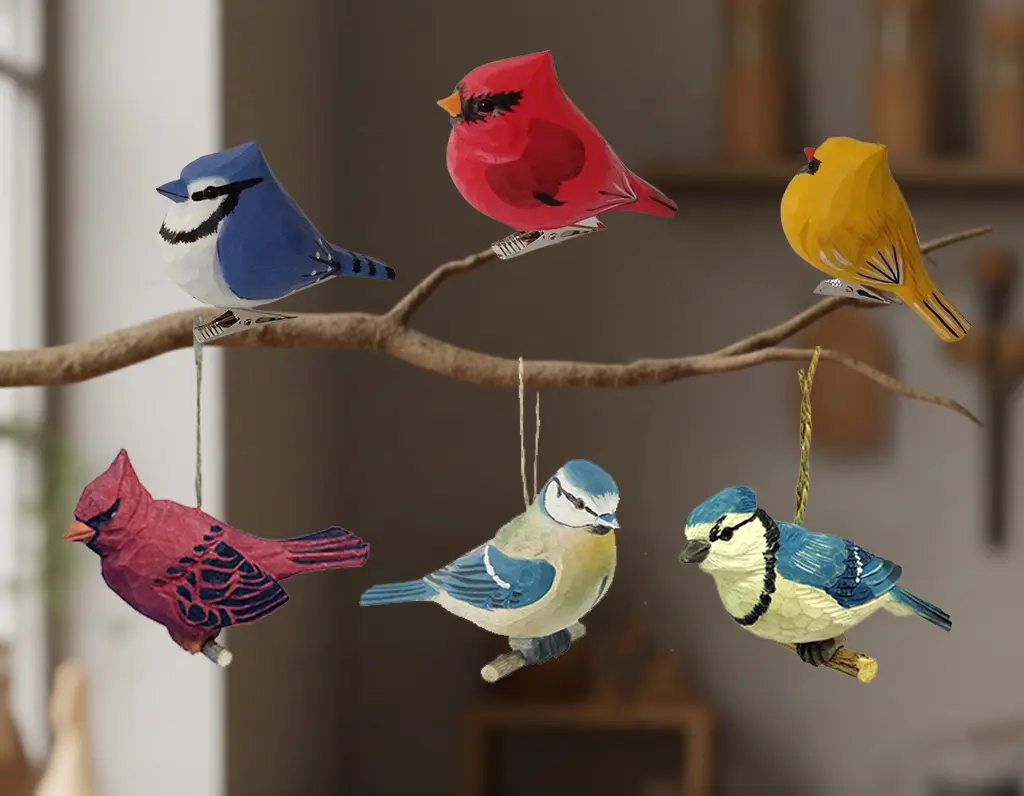
How to design a “Winter Bird” collection for your OEM project?
Start by defining the theme with specific birds and product formats. Then, leverage manufacturing for localized, ornithologically accurate, hand-carved pieces that target your specific market.
Defining the Collection’s Scope and Theme
The first step is to establish a clear concept. This defines what you’re selling and who you’re selling it to. A focused collection is easier to market than a random assortment. Get specific about the species, how they will be displayed, and what story they tell.
- Select Curated Species: Focus on a core set of birds with strong winter associations. Think cardinals, blue jays, robins, or chickadees. This creates a cohesive and recognizable theme.
- Choose the Product Format: Decide how the end customer will use the products. Are they hanging ornaments for Christmas trees, standing figurines for mantels and shelves, or bundled gift sets for seasonal sales?
- Add Value with Educational Content: Consider including small, illustrated cards with each bird, detailing its name and a few facts. This small touch elevates the product from a simple decoration to a collectible piece.
Utilizing Localized Species Customization
This is where working with a specialized factory pays off. Instead of generic designs, you can create products with strong regional appeal. This moves your collection from a commodity to something that resonates directly with a local customer base, giving you a clear market advantage.
- Localized Species Customization: We can produce birds specific to your target market. If you’re selling in the EU, a collection featuring the European Robin will outperform one with only North American species. This capability allows for precise market targeting.
- Ornithologically Accurate Designs: Every design captures the unique markings, colors, and silhouettes of real songbirds. This accuracy appeals to bird lovers and collectors, adding a layer of authenticity that mass-produced items lack.
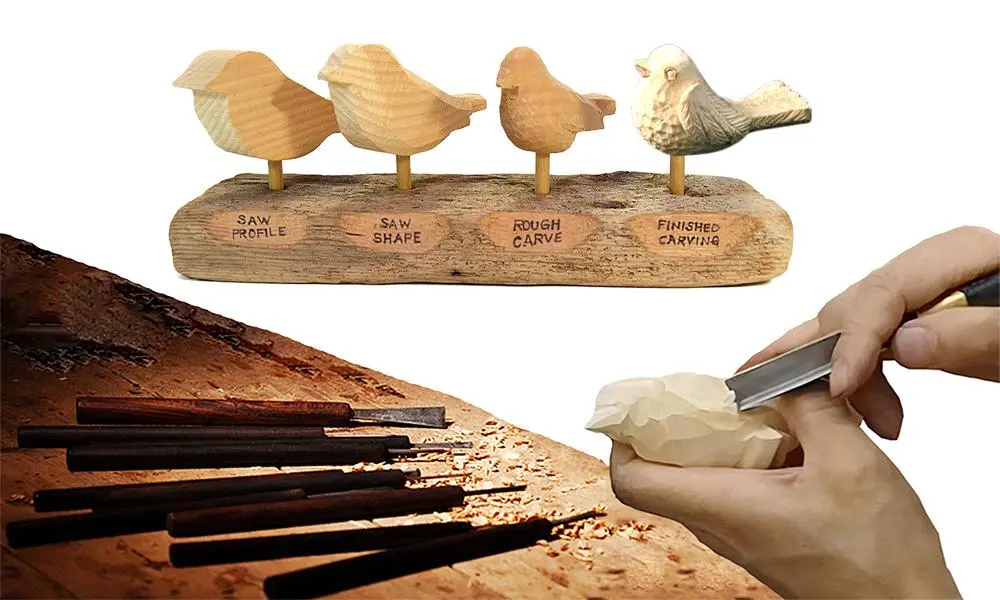
- Hand-sculpted Authenticity: Each piece is carved by an artisan from a solid block of premium basswood. We do not use machine molding. This process ensures every bird has a unique, handcrafted feel that justifies a higher price point in retail.
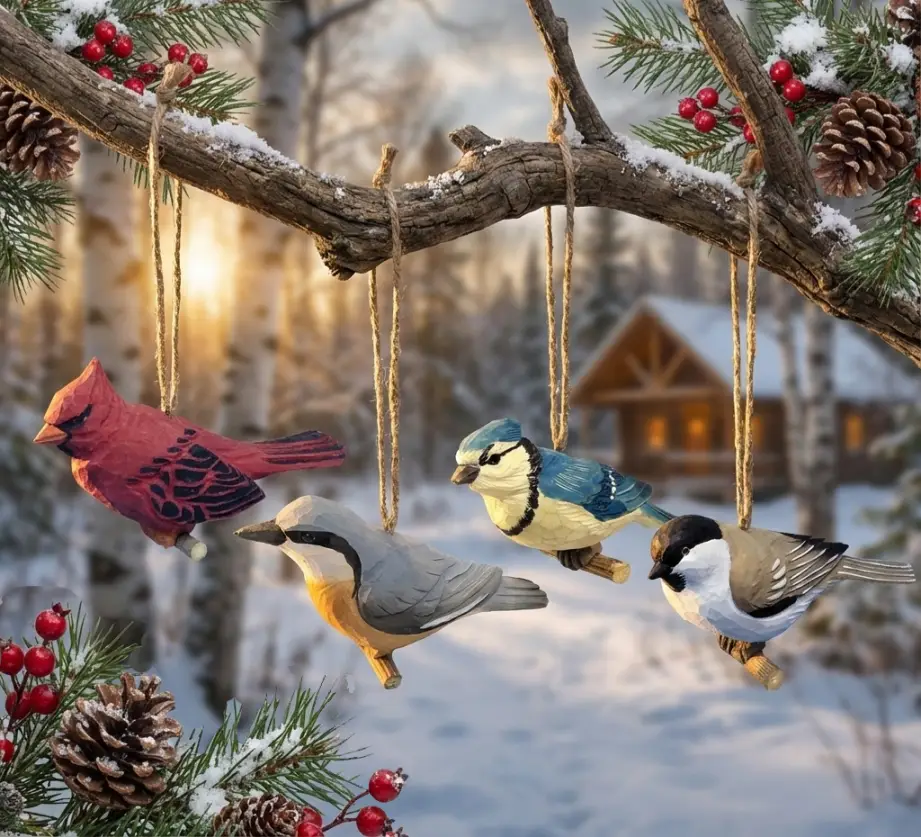
Unlock High Margins with Artisan-Crafted Birds

When is the ideal cutoff date for Christmas bulk orders from China?
For a Christmas shelf date, place sea freight orders by late August. This timeline accounts for our 60–90 day production cycle, ocean transit, and critical customs buffers.
| Milestone | Deadline for the Next Holiday Season | Primary Reason |
|---|---|---|
| Place Order & Finalize Designs | Late August – Early September | Locks in production slot before the pre-holiday rush. |
| Production Window | September – November | Accounts for our standard 60–90 day lead time. |
| Goods Ready for Shipment | Early to Mid-November | Prepares cargo before peak port congestion. |
| Critical “Avoid” Window | Mid-January onward | Chinese New Year factory shutdowns begin, delaying orders until March. |
Key Factors Behind the Holiday Ordering Timeline
The Christmas ordering calendar isn’t about the holiday itself. It’s about working backward from non-negotiable logistics. Ocean freight to the US, EU and UK is the longest leg of the 60 to 90 day sea programme we quote from purchase order to port. That is your starting point, and you cannot shrink the sailing.
Next, add a mandatory buffer of two to four weeks for customs clearance and potential port congestion. Delays are not an “if,” they’re a “when.” Skipping this buffer is the most common mistake importers make. Finally, the entire timeline is dictated by the Chinese New Year (CNY) shutdown. Factories start winding down in mid-January. Any order not shipped before then risks sitting idle until March, completely missing the season.
Our Standard 60-90 Day Production Lead Time
Our factory’s schedule aligns directly with this industry reality. Wholesale and custom orders for our hand-carved products require a 60 to 90-day production window for sea shipments. This is the time our artisans need to deliver the consistent quality you expect, especially for bulk orders.
Placing your order by our late-August deadline ensures your production run completes well before the pre-CNY shipping chaos begins. This gives us ample time for rigorous quality control and gets your products on a vessel before the end-of-year logistics bottleneck squeezes container availability and drives up rates.
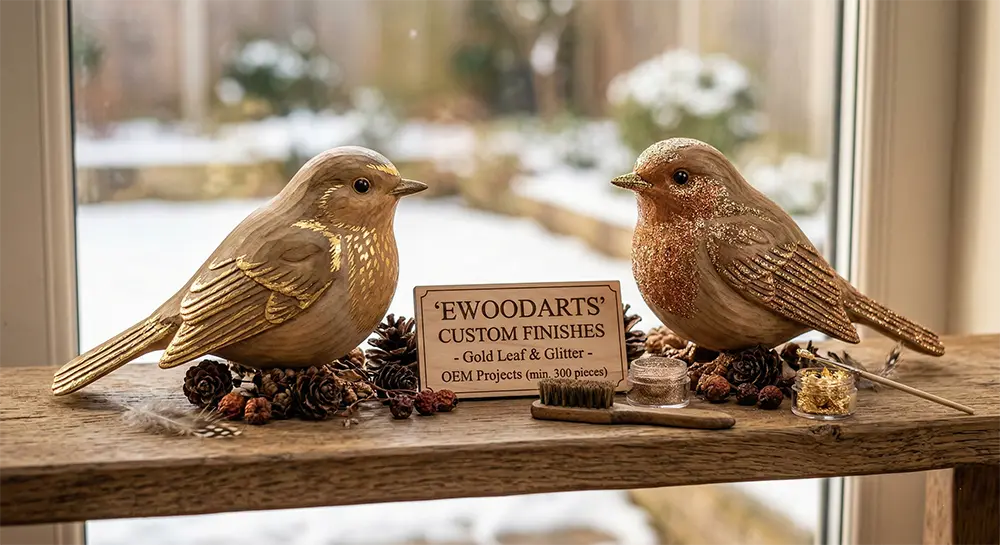
Can we add gold-leaf or glitter accents to hand-carved birds?
Yes, adding gold-leaf and glitter are established techniques for premium finishes. Gold leaf provides a classic, elegant look, while glitter offers a contemporary sparkle for custom orders.
Adding special finishes is a common request for wholesale holiday decor, and we handle these customizations regularly. The choice between gold leaf and glitter depends entirely on the aesthetic your brand wants to achieve. Both are effective ways to increase the perceived value of hand-carved basswood birds.
Gold Leaf vs. Glitter: Understanding the Finishes
The two primary decorative options create very different visual effects. One delivers a timeless, classic feel, and the other provides a modern, festive look.
- Gold Leaf: This application creates an elegant, traditional look that works perfectly for classic holiday and high-end decor collections.
- Glitter Accents: This provides a contemporary, sparkly finish. It’s often applied with precision to highlight specific areas like the wings, beak, or tail feathers.
Both techniques are proven methods for adding premium aesthetic appeal to our hand-carved basswood birds.
Integrating Accents via OEM Customization
Requesting these finishes is straightforward. All specialized work like gold leaf or glitter application is handled through our comprehensive OEM/ODM custom manufacturing services. During the design and sampling phase, your team specifies the exact placement and type of accent needed for the bulk order.
The minimum order for custom projects, which includes any specialized finishes, starts at 300 pieces per design. This ensures we can manage the production workflow and material sourcing efficiently for your project.
How to package birds for the high-end holiday gift-set market?
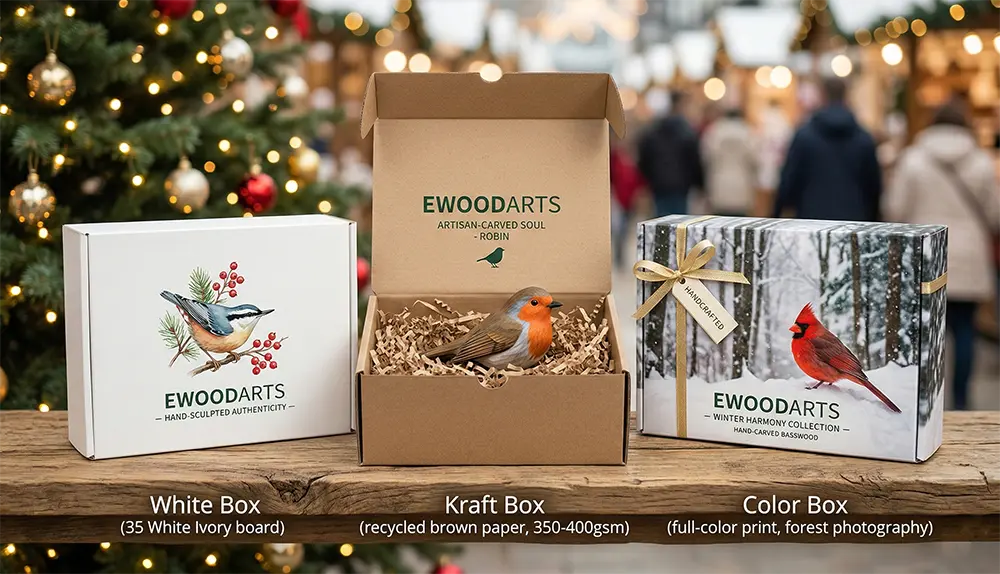
For the high-end holiday market, packaging must be a premium unboxing experience. Use Kraft, white, or color boxes to reflect the artisan quality of the hand-carved birds inside.
Beyond Protection: Creating a Premium Unboxing Experience
For premium gift sets, the box isn’t just for protection; it’s the first chapter of the product’s story. The packaging needs to communicate the ‘Artisan-Carved Soul’ of the bird before the customer even touches it. A cheap or generic box immediately devalues the work inside.
The unboxing experience must align with the product’s ‘Hand-sculpted Authenticity.’ When a buyer pays a premium for a hand-carved item, they expect the presentation to match. This attention to detail justifies the product’s market position and builds brand loyalty with wholesalers and retailers who serve discerning customers.
Material and Design Options: Kraft, White, or Full-Color Boxes
We offer three primary custom box solutions, each tailored to a different brand aesthetic and market. The minimum order quantity for any custom box is 500 pieces.
- Kraft Box: This is a popular choice for handcrafted products. The recycled brown Kraft paper emphasizes the natural origin of the wood. It’s ideal for wholesalers focused on sustainability and eco-conscious consumers. We typically use 350-400gsm paper with minimalist 1-color printing.
- White Box: A clean white box provides a high-contrast background that makes the vibrant colors of hand-painted birds pop. Made from 350g White Ivory board, it’s a great fit for modern gift shops, boutiques, and Scandinavian-style decor brands.
- Color Box: For high-impact visual marketing, a full-color box is best. It’s designed for retail shelves where the packaging needs to sell the product. This option allows for full-bleed printing with forest photography or watercolor illustrations, making it perfect for large retail chains and museum shops.
Are wooden birds safe for family-centric retail (pets/children)?
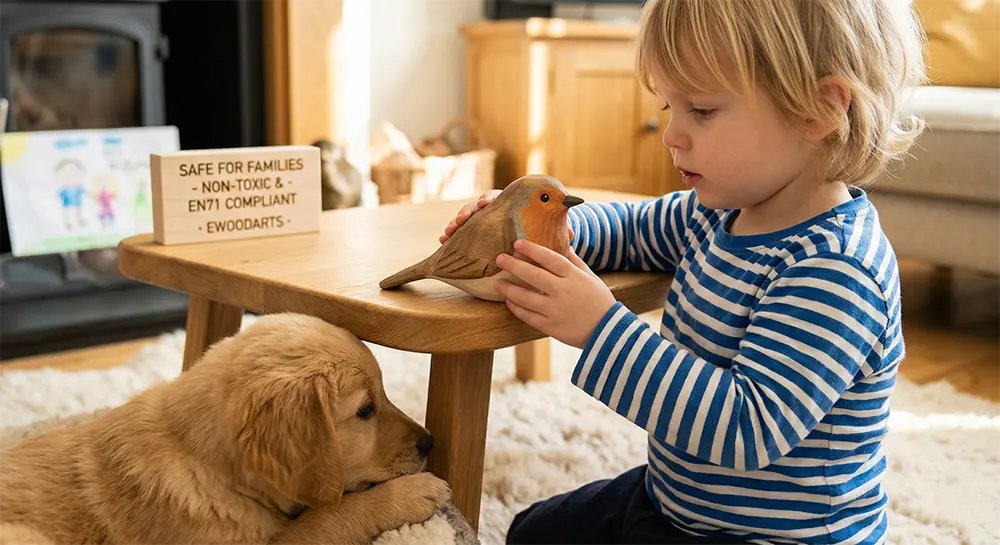
Yes, our wooden birds are made with family safety as a priority. We use non-toxic basswood and eco-friendly, water-based paints that meet international toy safety standards like EN71 and UKCA.
Material and Design Risks in Wooden Decor
Not all wooden products are safe for homes with children or pets. The type of wood is critical. Some woods, like cedar or oak, contain compounds that can be harmful if chewed by animals. This is why we exclusively use premium, non-toxic basswood, a material recognized for its safety in family-centric products.
Physical design also plays a major role. Any small, detachable parts or sharp edges can become choking or injury hazards for curious kids and pets. Our designs are intentionally robust, avoiding these risks to ensure they are suitable for display in any home environment.
Certified Safety with EN71-Compliant Finishes
To eliminate chemical risks, we finish every bird with non-toxic, eco-friendly water-based paints. This removes any concern about harmful coatings often found on mass-produced decor.
Our commitment to safety is documented, not asserted. The materials and finishes we use are worked to the European EN71 series of toy safety standards and to the UKCA mark for the British market, alongside RoHS substance limits on coated lines. The EN71 requirements sit inside the wider EU toy safety framework, which the European Commission summarises on its toy safety sector page; ask us for the declaration set that matches your destination market before you print a shelf card.
What is the resale value of limited-edition holiday wooden birds?
The resale value of limited-edition wooden birds varies widely. Scarcity of the run, maker recognition, material quality and condition are the factors that decide whether a piece holds its price or climbs.
The secondary market for collectible wooden birds can be surprisingly active, but no factory can quote a resale figure in advance. What you can control is which tier the piece belongs to: an open catalogue line, a numbered seasonal release, or a maker-signed edition. The four drivers below are what dealers and collectors actually look for.
Primary Drivers of Collectible Value
A few core factors separate pieces that simply hold their value from those that appreciate over time. Understanding these drivers is key to assessing any collection’s long-term worth.
- Production Scarcity: Pieces from a restricted or discontinued run hold their position far better than an open catalogue line, because the supply stops while the design stays remembered.
- Maker Recognition: Carvings from a named workshop or an identified carver command more than anonymous stock, which is why a maker mark and a provenance note belong on the box of any premium edition.
- Condition and Materials: A buyer inspects the wood—fine-grained basswood with crisp, unfaded hand-painting—and a chip, a water mark or a broken perch reduces what the piece is worth.
- Documentation: Signed, dated or numbered editions hold up far better, because proof of authenticity is what makes a resale transaction possible at all.
How Hand-Sculpted Details Enhance Long-Term Worth
The difference between a decorative object and a true collectible often comes down to craftsmanship. Hand-sculpted details provide tangible proof of quality that machine-made replicas can’t match.
This Hand-sculpted Authenticity guarantees each piece is unique. Slight variations in carving or painting, what we call Artisanal Variance, are not defects. They are the hallmark of an item made by a person, not a machine, which enhances its collectible nature.
Features like expressive eyes, textured feathers, and lifelike avian postures show Meticulous Detailing. This level of master craftsmanship is a primary factor for serious collectors and directly contributes to a piece’s ability to command a higher price on the resale market.
Frequently Asked Questions
What are your Minimum Order Quantities (MOQs) for wholesale wooden songbirds?
We have two tiers. For trial orders using our in-stock inventory, the minimum is 100 pieces with a USD 500 minimum order value. For larger wholesale and custom OEM orders, the minimum is 300 pieces with a USD 3,000 minimum order value. If you need custom branded boxes, the MOQ for the packaging itself is 500 pieces.
Do you offer customization for your wooden birds?
Yes, we offer full OEM/ODM services. A popular option is our “Localized Species Customization,” where you can request bird species specific to your local market. We can work from your designs to adjust the wood type, shape, color, and packaging to develop products that are ready for your customers.
Are the paints used on your hand-carved birds non-toxic and safe?
Absolutely. We use a non-toxic, eco-friendly water-based paint. It complies with the European toy safety standard EN71 and the UKCA mark, and we work to RoHS substance limits on coated lines. This makes our products suitable and safe for family-focused retail environments.
What are the standard packaging specifications for wholesale orders?
Each bird is wrapped in protective silk paper and placed in 3-ply inner boxes. These are then packed into reinforced, 5-ply master cartons built for both air and sea freight. We also provide custom packaging, including Kraft, White, or full-color retail boxes for clients who need brand-ready solutions.
Are your wooden birds available in different styles, like standing or hanging versions?
Yes, our catalog features multiple styles for different display purposes. We make standing birds designed to sit on shelves or mantels, along with hanging birds that work well as ornaments. Both styles are produced with the same hand-carved detailing.
Final Thoughts
While mass-produced decor offers a lower unit cost, our standard of hand-carved basswood and EN71-compliant finishes protects your brand’s reputation. This “Hand-sculpted Authenticity” justifies a premium retail price and secures repeat business from customers seeking heirloom quality.
Verify our craftsmanship for yourself. We recommend a 100-piece trial order to confirm our quality and test market response. Contact our team to plan your next season’s OEM collection with our “Localized Species Customization” service.
While you are comparing styles, the North American songbird list shows which species carry a recognised Christmas narrative in US and Canadian stores.
Our wooden bird factory page covers the wider species range beyond winter birds, including cardinals, owls, ducks and robins.
Retail Display Strategies for Christmas Bird Decor
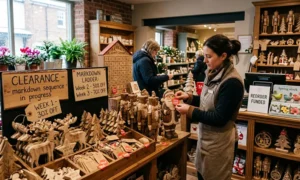
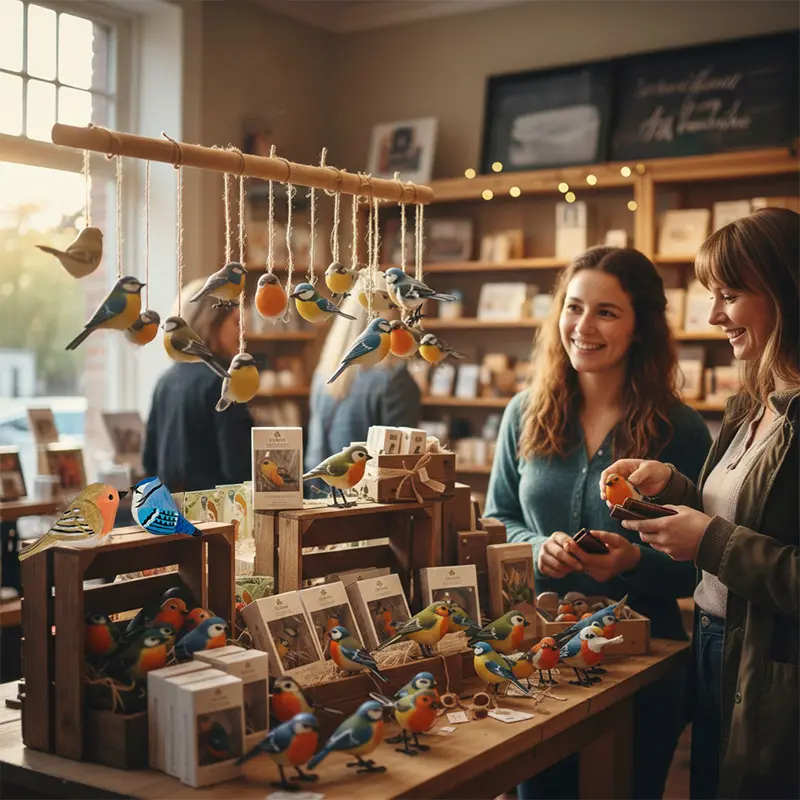
Hand-carved wooden birds perform better at retail when shown in themed groupings rather than isolated on a shelf. Three display formats consistently outperform single-product placement in independent gift shops and garden centres during the holiday season.
Species Habitat Vignette. Group birds by habitat: a winter woodland scene with cardinals, chickadees and woodpeckers arranged on a birch-log riser. Customers buy the set rather than one bird. A small printed sign naming each species reinforces the nature narrative. This format works especially well in garden centres where the story aligns with the store brand.
Price-Ladder Tree. A tiered display tree with three bands: entry-level ornaments at eye level, mid-range perching birds on the middle tier, and a premium hand-carved centrepiece at the top. The visual price ladder lets customers self-select their spending level and often results in a basket of mixed price points rather than a single item.
Gift-Ready End Cap. Dedicate one end cap to pre-packaged gift sets: a carved bird paired with a coordinating ornament and a gift box, priced as a bundle. Position near the checkout during November and December. Bundled displays routinely lift average transaction value compared to single-SKU browsing.
Is Christmas Bird Decor Right for Your Retail Channel?
| Best for | Not ideal for |
|---|---|
| Gift shops and garden centres with a nature or seasonal product focus | Discount retailers competing solely on unit price |
| Museum stores and visitor centres seeking region-specific bird species | Retailers requiring next-day delivery without buffer stock |
| Online marketplaces with curated artisan and handmade categories | Channels that cannot support a 300-piece-per-design MOQ |
| Corporate gifting programmes needing branded, eco-friendly client presents | Buyers who need returns flexibility on seasonal merchandise |
What We Check Before Shipping Christmas Bird Orders
Every order of hand-carved Christmas birds passes through a defined quality-control sequence at the factory before the container is sealed. These checks are part of the standard production workflow, not an optional add-on.
- Wood blank inspection: every basswood blank is checked for knots, cracks and grain direction before carving begins. Blanks with surface defects are rejected at this stage.
- Carving consistency check: the first five pieces from each production batch are measured against the golden sample for wing detail, beak shape and overall silhouette. Batches that fall outside the golden sample on wing detail or silhouette are reworked before the run continues.
- Paint adhesion test: a cross-hatch tape test on one sample per 100 pieces confirms that the EN71-compliant paint layer bonds to the wood surface without flaking.
- Assembly and perch fit: for birds with separate perches or stands, the fit is tested on a random sample of 5% of units; loose perches are re-glued before packing.
- Final AQL inspection: a Level II, 2.5 AQL sampling checks for paint coverage, eye alignment, packaging integrity and barcode scannability. The inspection report ships with the packing list.