Skip to content

Understanding future wood crafts is a margin question, not a trend question. Stocking machine-moulded replicas opens a direct path to price wars, because a product that any factory can press in volume has no defensible price and no story to sell. The buying decision that protects a retail line is which manufacturing partners can still deliver work a machine cannot.
This guide looks at where woodworking research is going, why hand-sculpted product holds value while automated decor does not, and what a buyer should verify on a supplier before committing to a season of inventory.
Key Takeaways
- 3 sourcing checks matter more than forecast talk: hand-carved execution, documented timber origin, and a carton spec that survives ocean freight.
- 100 pieces with a minimum order amount of USD 500 is the trial tier, by air in 20-30 days.
- 300 pieces at MOA USD 3,000 covers wholesale and custom work, by sea in 60-90 days to port.
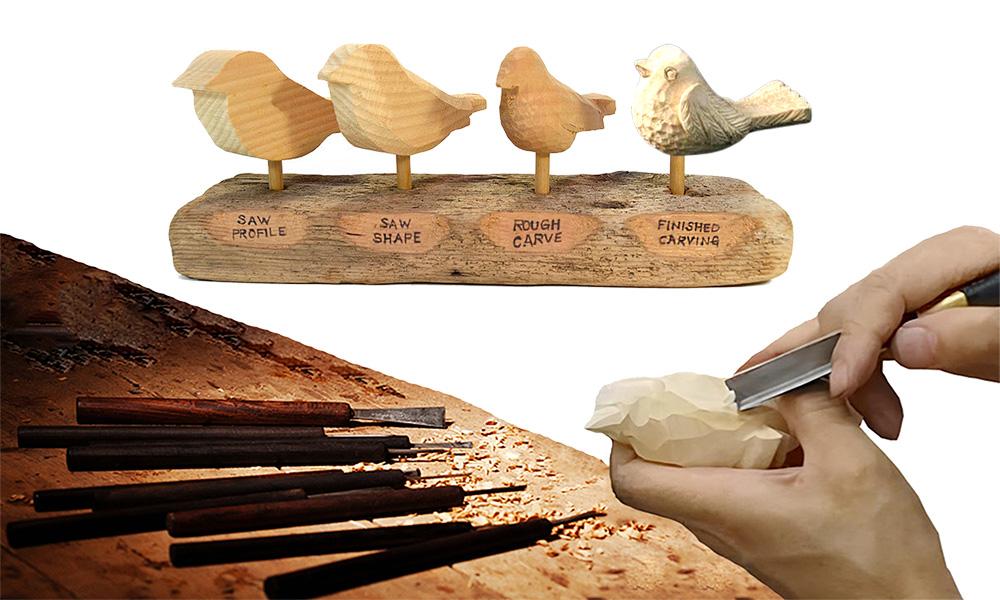
- 2 production routes now coexist: digitally assisted roughing for consistency, hand finishing for the detail that sells.
- 5 buyer-facing marks to ask a supplier for on decor: ISO 9001, BSCI, CE, RoHS and EN 71, matched to the destination market.
- 1 warranty-free signal of a mature partner: pre-shipment photographs and video of the finished goods before the balance falls due.
In this guide
- Why the human touch became a premium commodity
- How research in wood craftsmanship is splitting in two
- Can carving survive a digital-first retail world?
- Future wood crafts: how to protect retail inventory
- Will demand for natural materials keep rising?
- What our tiered order minimums signal
- Why long-term artisan partnerships pay now
- Frequently asked questions
Why the Human Touch Became a Premium Commodity
As automated interaction gets more common, genuine human judgement gets scarcer, and consumers pay for the difference. That applies to physical goods as much as to service.
The Scarcity of Authenticity
Buyers are tired of impersonal chatbots and suggestions that miss the mark, and higher-end brands have responded by selling an experience rather than an object. That experience depends on empathy and real understanding. Younger luxury spenders reward cultural relevance and transparency well above pure automation, which is why a product with a traceable maker outperforms a product with only a specification sheet.
Hand-Sculpted Work as a Tangible Asset
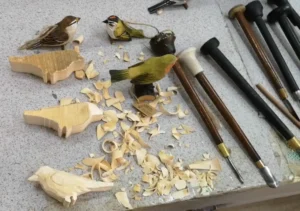
Our wooden songbirds are a direct rejection of machine-moulded replicas. Every piece is carved from basswood by hand and finished by hand, and the small differences between two birds are the point. We call that Artisanal Variance: not a defect, but the evidence that a person made the object. For a retailer it is the difference between stock that can be price-compared and stock that has to be seen.
How Research in Wood Craftsmanship Is Splitting in Two
Craft R&D now runs on two fronts at once: digital tools that remove repetitive error, and hand technique refined for bespoke, higher-margin demand.
The field is not moving toward one method. It is splitting into two complementary directions, one using technology to improve precision and cut waste, the other doubling down on what only a hand can do.
Hybrid Integration of Digital Tools and Hand Skills
The dominant pattern is partnership, not replacement. Accessible tools like CAD and laser cutters handle repetitive, high-precision work, which improves consistency and reduces material waste while the craftsperson keeps assembly, finishing and detail. The same logic applies to materials: reclaimed stock and low-VOC finishes have become standard, and classic joinery is being adapted to a digitally assisted workflow without losing its structural behaviour.
The goal is never to remove the maker. It is to remove the errors a maker should not be paid to absorb. Our OEM process is written around that split, with machined roughing where repeatability helps and hand work where it does not.
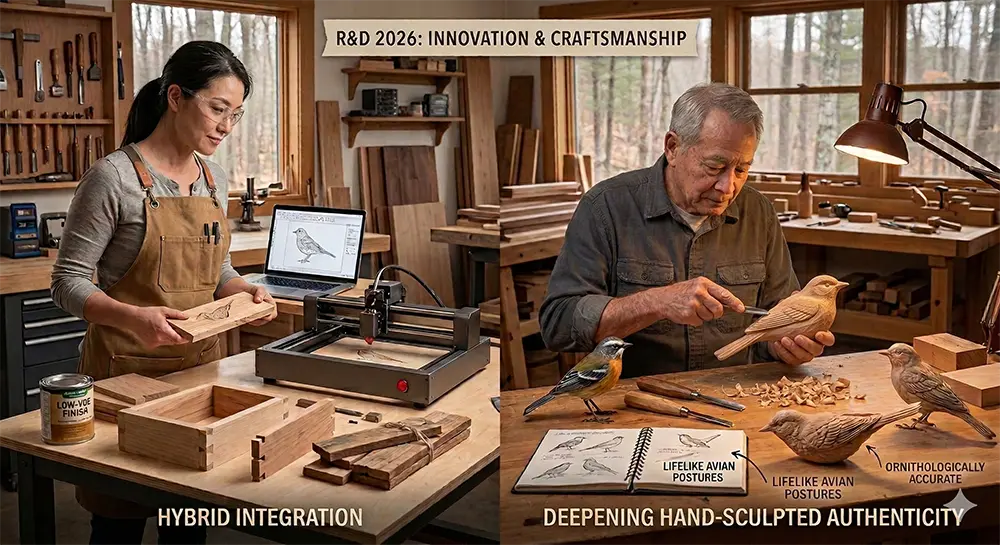
Deepening Hand Technique for Bespoke Markets
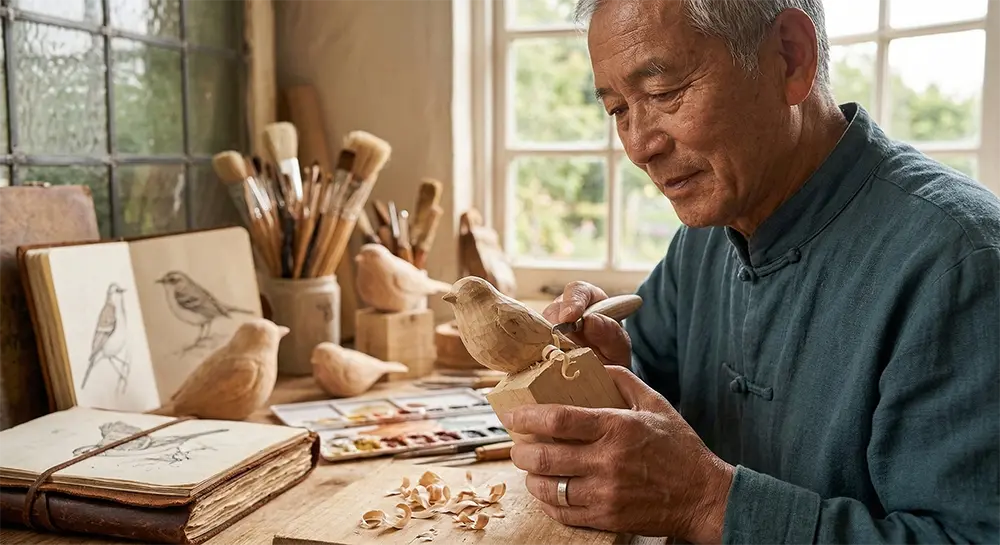
As automation becomes ordinary, the market for genuinely handmade goods grows. For a specialised factory, development means refining hand-carving and hand-painted detail rather than buying equipment – capturing realism a production line cannot, and building slight variance into the product rather than grinding it out.
Can Traditional Carving Survive a Digital-First Retail World?
Carving is not being displaced by digital retail; it is being redistributed by it. E-commerce gives a workshop direct reach to buyers worldwide.
The Hybrid Model
The assumption that digital tools replace carvers misunderstands the market. Online platforms and social channels give an artisan access to a global audience without a distributor in between, and the demand for wood construction and material standards style documentation reflects buyers who research before they purchase. For business buyers, digital tools shorten the design-and-approval cycle on custom orders, which is a production advantage, not a threat to the craft.
Why Hand-Sculpted Work Is the Differentiator
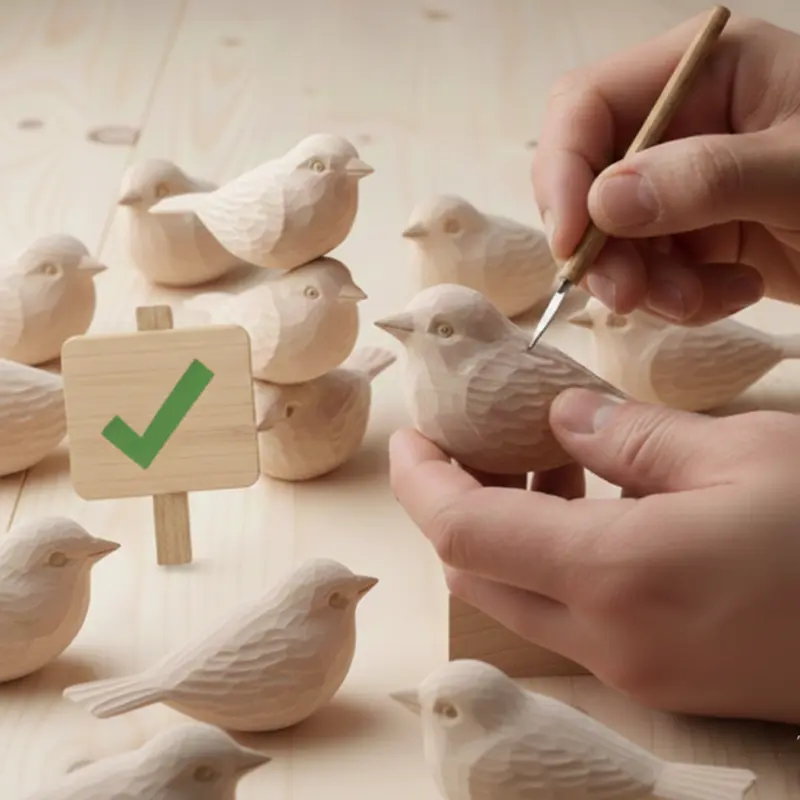
Saturated markets push customers toward products with a real story behind them. Our line is 100% hand-carved and hand-finished in fine-grained basswood from documented, legally harvested timber in Jilin Province, with felling and transport permits held on file. That combination is what automated pressing cannot imitate, and it is the reason a carved piece can be priced above a moulded one without argument.
Stock Unique Hand-Carved Birds at Factory Prices
Each piece is hand-carved from basswood with permits on file and finished by hand. Factory-direct pricing, full customisation, and a trial tier of 100 pieces at a minimum order amount of USD 500.
Future Wood Crafts: How to Protect Retail Inventory Against Automation
The defensible strategy is two-track: automate the back end of inventory, and stock the product category automation cannot replicate.
| Strategy Focus | Core Technologies / Products | Business Outcome |
|---|---|---|
| Operational efficiency | Demand forecasting, predictive analytics, RFID stock visibility | Less overstock, automated reordering, live view of the supply chain |
| Product differentiation | Hand-carved goods whose variation is documented, not hidden | Immunity to machine replication, higher perceived value |
| Sourcing discipline | Timber permits, finish documentation, pre-shipment inspection | Fewer returns, defensible claims at the shelf |
The Back-End Half
Competitive retailers remove manual guesswork from stock decisions: forecasting models tuned to their own sell-through, reorder points set by data rather than habit, and live visibility from factory to shelf. None of this replaces buying judgement; it stops that judgement being spent on paperwork.
The Product Half
The second track is stocking a category immune to automation. Position variance as the premium feature rather than apologising for it, and source from factories that can show how a piece is made. The quality control on carved decor we run before shipment is what makes that claim repeatable across 300-piece orders instead of true for one sample.
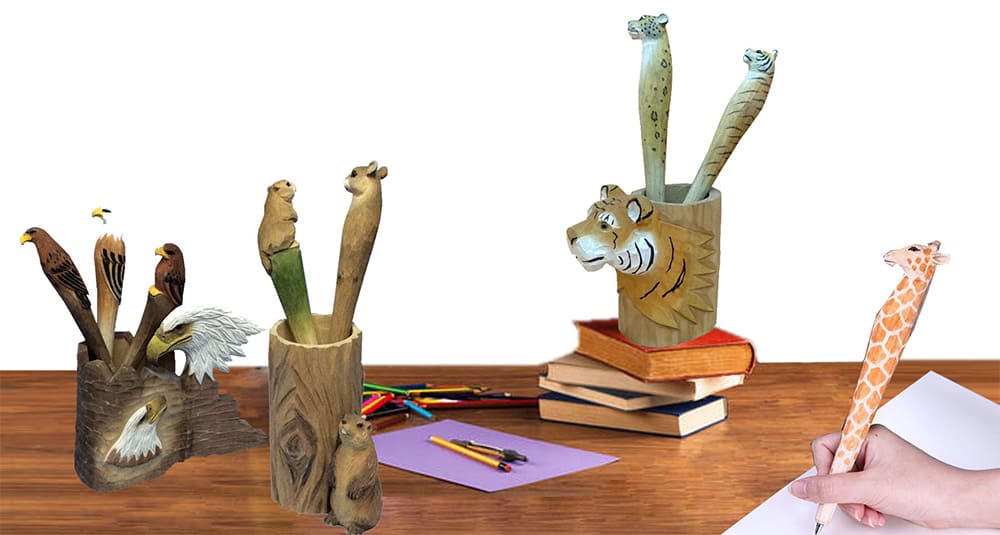
For a retail buyer assembling a wider natural-materials assortment, the wholesale wooden crafts range is where the current stocked categories and lead times are listed.
Will Demand for Natural Materials Keep Rising?
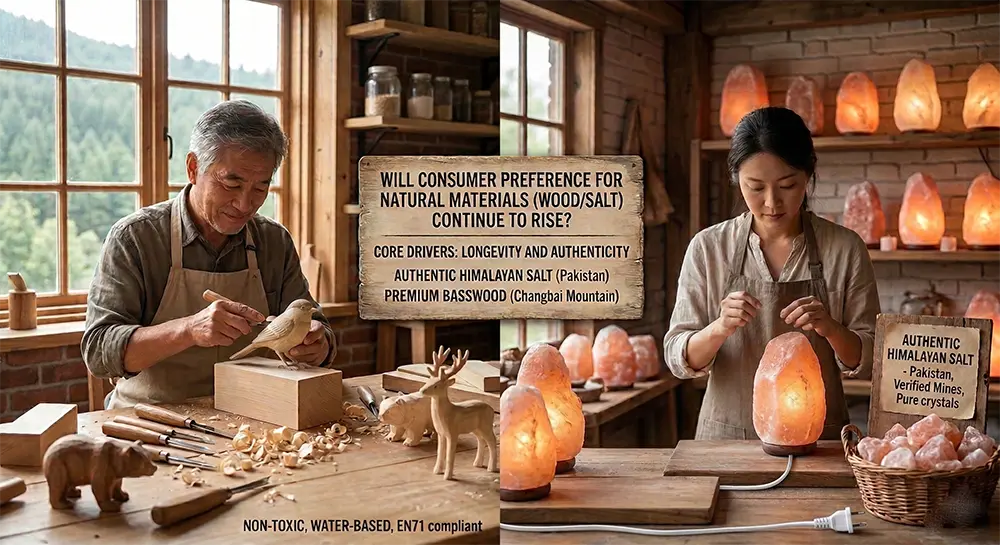
Demand for wood and salt products is holding, driven by durability, traceable origin and a taste for visible handwork rather than by a forecast number.
What Buyers Are Actually Asking For
- Longevity. Shoppers prioritise durability and repairability, buying pieces meant to last years rather than one season.
- Authentic character. Grain, tool marks and slight asymmetry read as quality in a natural material, and they improve with age rather than dating badly.
- Craft-forward design. Hand-worked objects have moved from a rustic niche into mainstream interior specification, which changes who a retailer is selling to.
Sourcing Integrity
For Jilin Ever Creation, meeting that demand starts at the material. Basswood for carving comes from legally harvested timber with felling and transport permits on file, and finishes are water-based and documented to EN 71 for the markets that require it. Salt lines are sourced from named mines with origin paperwork on request. We do not hold a chain-of-custody timber certification on the carving stock and we do not claim one; the permits are the honest document to ask for.
What Our Tiered Order Minimums Signal
Commercial terms reveal a factory’s strategy more honestly than a trend forecast. Two tiers exist because two different buyers need two different things.
From Mass Production to Small-Batch Flexibility
The business model in this category has shifted from enormous single-SKU runs toward flexible small-batch work, which suits retailers carrying less inventory risk. As automated goods saturate shelves, handmade product holds a premium precisely because the maker’s time cannot be compressed. Diversifying from carving into complementary natural materials such as salt and wellness accessories also lets a buyer consolidate suppliers and keep one aesthetic across two lines.
The Two Tiers
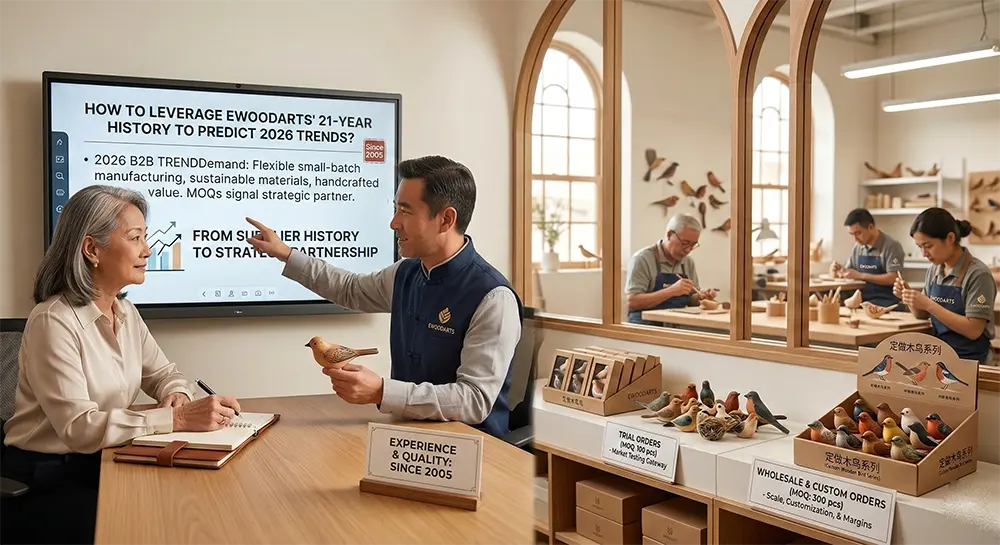
- Trial orders (100 pieces, minimum order amount USD 500, air freight 20-30 days): built for market testing, so a boutique can validate a concept before committing to depth.
- Wholesale and custom (300 pieces, MOA USD 3,000, sea freight 60-90 days to port): full customisation, colour boxes from 500 pieces, and the volume pricing that supports private-label development.
Payment runs on 30% deposit and the balance before shipment, with photographs and video of finished goods released before that balance. The structure matters because it tells a buyer which partner can absorb a small first order without treating it as an inconvenience.
Why Long-Term Artisan Partnerships Pay Now
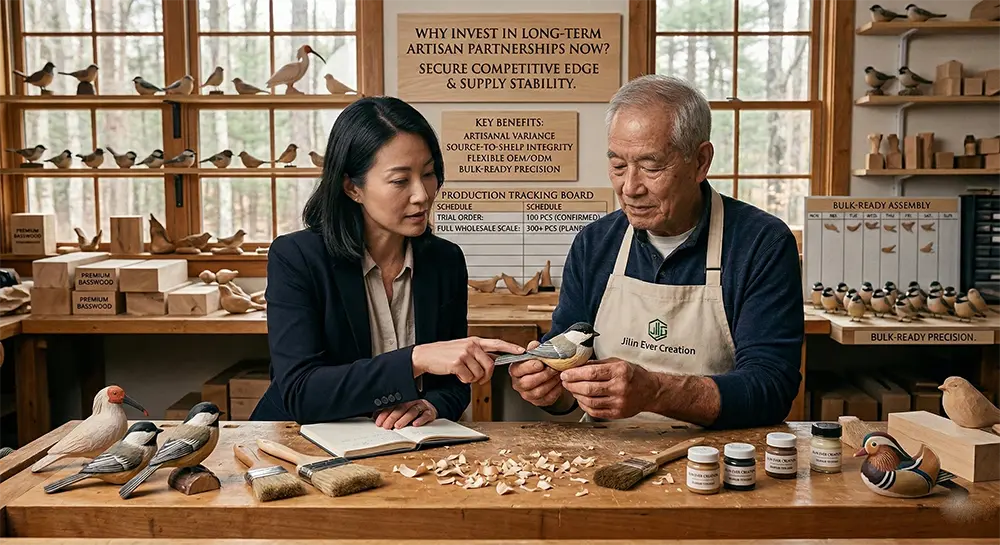
A standing relationship with the source factory buys three things a trading intermediary cannot: production transparency, direct quality control, and development capacity.
When shelves fill with automated goods, authenticity becomes the differentiator a brand can defend. Buying direct from the manufacturer turns a transaction into joint product development, and it puts the inspection step on the line where the product is actually made rather than in a third-party office reading a photograph. That is the practical value of buying from the factory that carves it rather than from an office that re-sells it.
For a wholesaler worried about consistency, the answer is not less handwork but documented handwork: an agreed tolerance on variance, a pre-production sample held against the batch, and the same inspection record on every carton.
Final Thoughts
Machine-moulded replicas cost less on the invoice and more on the shelf, because they leave a retailer exposed to price comparison and to the same buyer fatigue that makes handmade work sell. The durable position is inventory whose making can be shown and explained. Current ranges, order thresholds and carton specifications are listed on the Ewoodarts homepage.
If a specific species, size band or finish is missing from the catalogue, ask for it before the season is locked. Talk to our team about a 100-piece trial run and we will quote the tier that fits your order calendar rather than a generic minimum.
Frequently Asked Questions
What are the major trends shaping future wood crafts?
Three forces matter for a buyer: responsible sourcing of the species you actually carve, demand for personalised pieces, and a production model that blends hand skill with digitally assisted roughing. The first two change what sells; the third changes what a supplier can deliver on time.
What is the difference between hand-carved and AI-generated wood art?
Hand-carving is a person removing material from a block, deciding grain and proportion as they go. AI image work produces a picture of a carved object and nothing you can ship. Confusion starts when a supplier photographs a moulded piece and calls it hand-carved, so check tool marks and variance on a physical sample.
Is wood carving a dying craft?
No, and the honest evidence is on the shop floor rather than in a market report. Custom carved work is the part of the category that grows, because it is the part automation cannot absorb. What is shrinking is undifferentiated volume carving sold on price alone, which competes with pressed imports and always has.
What wood do you use for carved decor, and where does it come from?
Fine-grained basswood is the main carving stock, chosen because it takes a sharp edge and holds paint without blotting, alongside pine, rubber wood and birch for other lines. Basswood is bought from legally harvested timber with felling and transport permits held on file, which is the document a serious buyer should ask for.
How small can a first order be before a factory takes it seriously?
A trial order runs at 100 pieces, minimum order amount USD 500, by air in 20-30 days – enough for a boutique shelf test. Wholesale and custom work starts at 300 pieces with MOA USD 3,000 and 60-90 days by sea to port.