
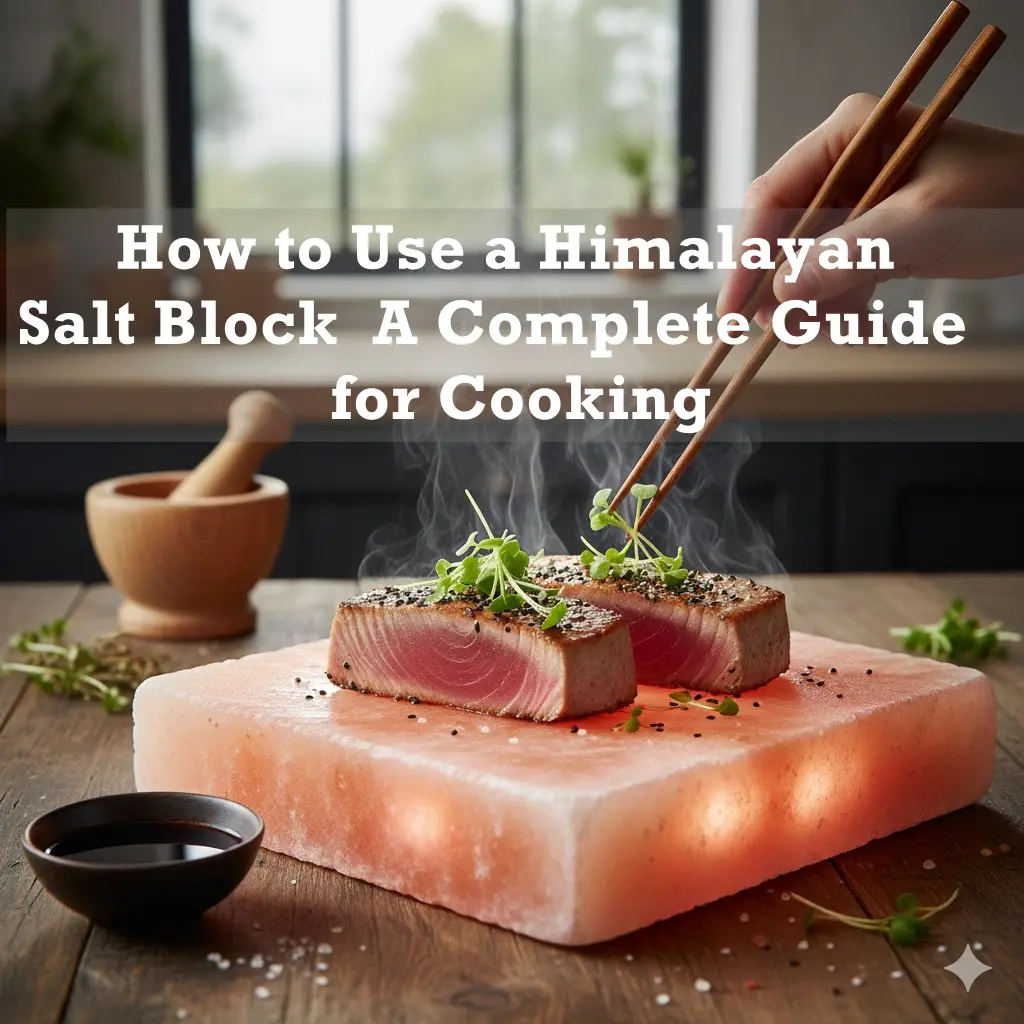
A Himalayan salt block is a solid slab of pink salt used as a versatile surface for cooking, curing, and serving food. It imparts a subtle, complex salinity and trace minerals, while its high heat retention ensures a perfect sear. Its natural antimicrobial properties also simplify cleaning and food safety. This guide details proper tempering, heating, cooking techniques, and maintenance protocols to maximize the block’s lifespan and culinary performance.
Essential Tools and Materials
Proper equipment is required for safe handling and optimal results. Each item plays a specific role in protecting the operator and the cooking surface.
| Item | Purpose/Specification |
|---|---|
| Himalayan salt block | Authentic pink salt slab, 1.5–2 inches thick, for even heat distribution and natural seasoning. |
| Heat source | Gas grill, charcoal grill, or stovetop with a metal ring for gradual, controlled heating. |
| Metal spatula or tongs | For safe handling of food. Plastic tools will melt at high temperatures. |
| Heat-resistant gloves | For handling the hot salt block safely. Standard oven mitts may not provide adequate protection. |
| Heatproof surface or trivet | To place the block without damaging countertops or tables and to prevent thermal shock to surfaces. |
| Damp sponge and metal spatula | For cleaning. Scrape residue and wipe gently without submerging in water. |
The 5-Step Cooking and Handling Process
Step 1: Tempering the Block for First Use
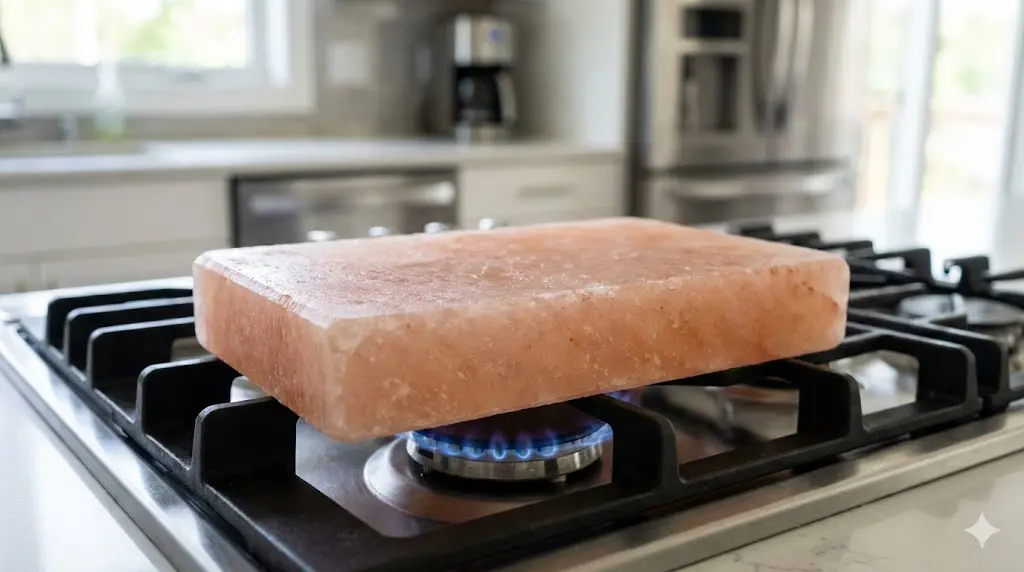
Before its first use, a new salt block must be tempered to prevent cracking. Ensure the block is completely dry, as any trapped moisture can cause it to shatter when heated. Place it on the heat source and begin at a low temperature, approximately 100–125°C. Increase the temperature by 25–50°C every 20 minutes over a 2–3 hour period. This process removes residual moisture from the salt’s crystalline structure, strengthening its integrity against thermal shock.
Step 2: Heating the Block for Cooking
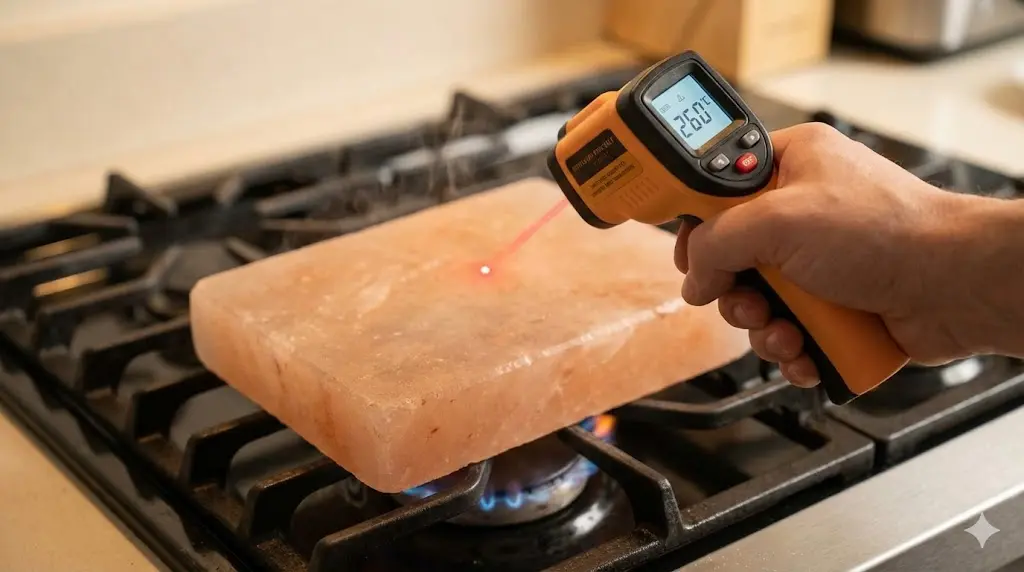
For every use, heat the block gradually to prevent thermal shock. Start on low heat for 15–20 minutes to allow the temperature to distribute evenly. Move to medium heat for another 15–20 minutes before increasing to high. The target cooking temperature is 230–260°C (450–500°F), which typically takes 40–60 minutes to reach. This procedure is critical for preserving the block’s structure.
Step 3: Searing and Cooking
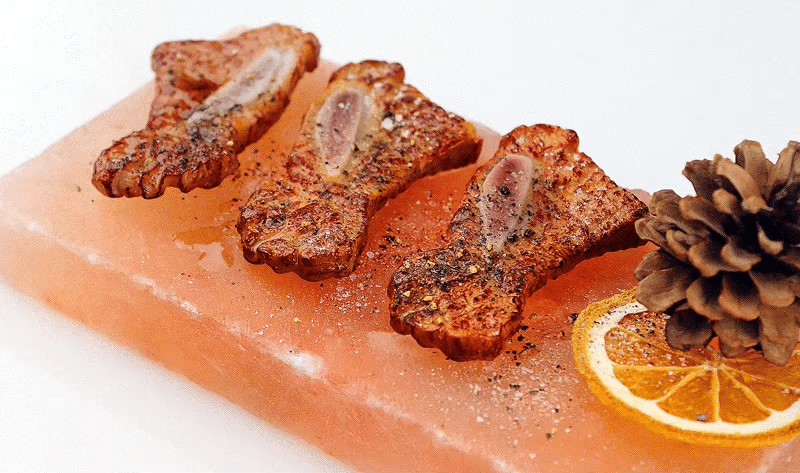
Test the block’s temperature by sprinkling a few drops of water on the surface; if they sizzle and evaporate instantly, the block is ready for cooking. Place food directly on the block. Thin cuts like shrimp or thinly sliced steak require 1–2 minutes per side, while thicker items like burgers or rib eyes need 4–5 minutes per side. Avoid marinated proteins, which draw excess salt and can oversalt the food. Use metal utensils and move food to different spots on the block to ensure even searing.
Step 4: Using the Block for Cold Service
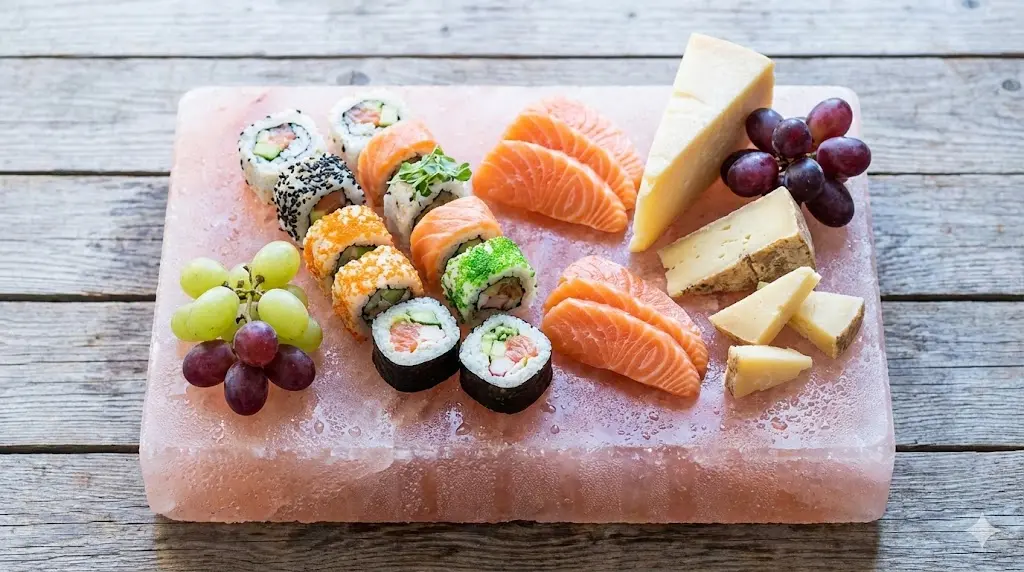
The block also functions as a chilled serving platter. Refrigerate it for several hours before use. This method is ideal for serving sushi, sliced fruit, cheese, or charcuterie, as it keeps the food cool while imparting a subtle salinity. For desserts, the block can be frozen to serve ice cream or sorbet. The salt’s natural antimicrobial properties are beneficial for these applications.
Step 5: Cleaning and Storing
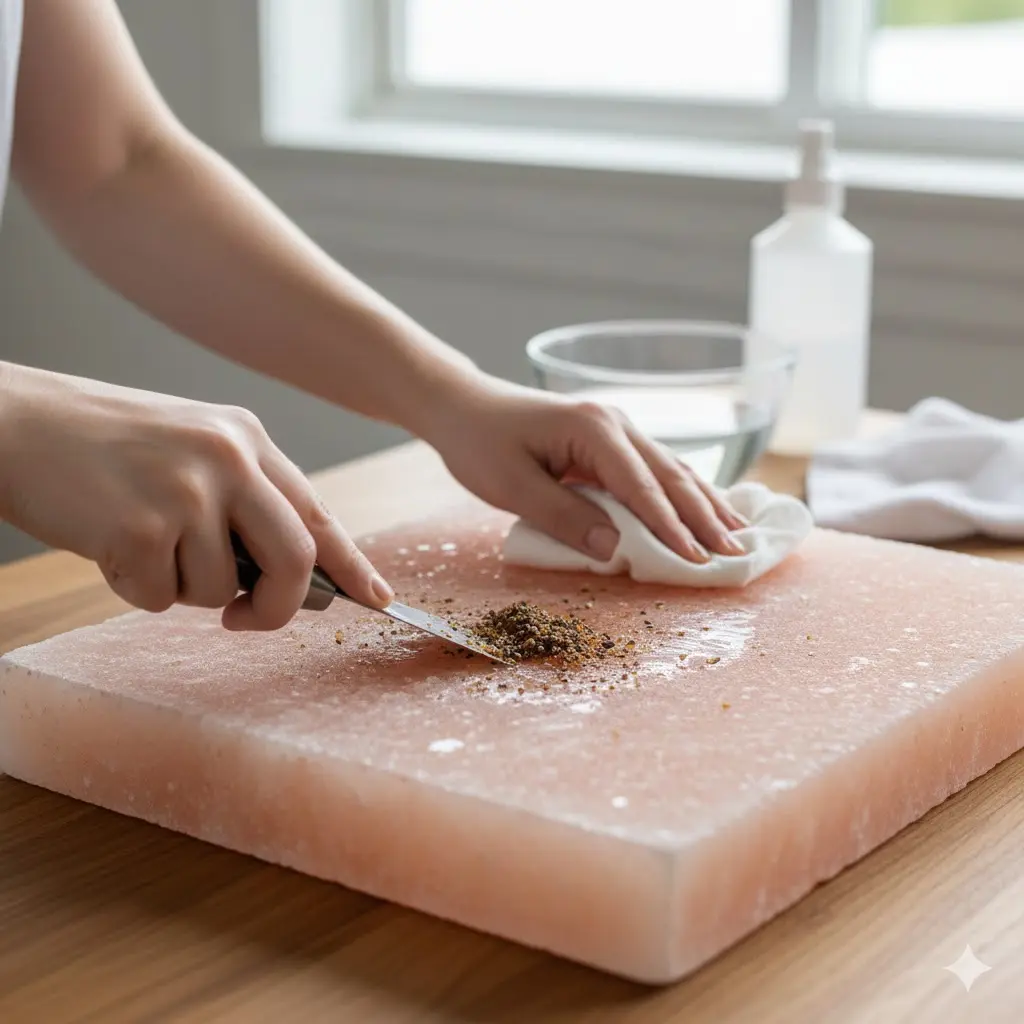
Allow the block to cool completely to room temperature before cleaning. Scraping food residue with a metal spatula and wiping the surface with a damp sponge is sufficient. Never run water over a hot block or submerge it, as the rapid temperature change will cause it to crack. Avoid detergents; the block’s antimicrobial nature inhibits bacterial growth. Let it air dry completely before storing in a dry location to prevent moisture absorption.
Key Operational Differences: Salt Block vs. Conventional Surfaces
| Feature | Himalayan Salt Block | Cast Iron Griddle | Stainless Steel Griddle |
|---|---|---|---|
| Primary Function | Sear, season, and flavor foods; serve and present | Cook food with gradual seasoning buildup | Cook food with no flavor imparted from surface |
| Durability | Brittle; prone to cracking with rapid temperature changes | Extremely durable with proper care; long lifespan | Very durable; highly resistant to damage |
| Maintenance | Simple wipe and scrape; no detergents needed; must dry thoroughly | Requires regular seasoning and thorough drying | Dishwasher safe; minimal effort to clean |
| Versatility | Hot cooking, cold serving, curing, freezing | Primarily hot cooking; limited cold uses | Hot cooking only; best for everyday use |
Common Operational Mistakes and Solutions
Understanding common pitfalls extends the block’s operational life and ensures consistent results.
| Common Mistake | Solution |
|---|---|
| Heating too quickly | Always heat in gradual stages: low, medium, then high, for 15–20 minutes each. This prevents thermal shock that can shatter the block. |
| Using plastic utensils | Use metal spatulas and tongs exclusively. Plastic melts on contact with the hot surface, which can damage tools and contaminate food. |
| Immersing block in water | Let the block cool completely before cleaning. Wipe it with a damp sponge and scrape off residue; never submerge or rinse under running water. |
| Cooking heavily marinated foods | Avoid pre-marinated or brined meats. Excess moisture accelerates block degradation and makes food overly salty. Use dry proteins and vegetables. |
| Ignoring handling safety | Use heavy, heat-resistant gloves and place the hot block on a stable, heatproof surface or trivet. The block retains extreme heat and can cause serious burns. |
Premium Himalayan Salt Blocks for Culinary and Hospitality Needs
Partner with Jilin Ever Creation to source authentic pink Himalayan salt blocks that add natural flavor and elegance to your offerings. Custom sizes, packaging, and private labeling support diverse B2B needs across food service, retail, and hospitality worldwide.
Frequently Asked Questions
Do I need to temper a new salt block?
Yes, tempering is essential for first-time use. Heat the block slowly over 2–3 hours, gradually increasing the temperature. This process drives out residual moisture and strengthens the block’s structure, reducing the risk of cracking.
How do I heat the block without cracking it?
Always heat it gradually in stages: low, then medium, then high. A rapid temperature change causes thermal shock, which is the primary cause of cracking. This applies to both heating and cooling.
Can a salt block be used on an electric or induction stovetop?
Electric stovetops can be used if a metal ring is placed between the block and the heating element to ensure even heat distribution. Induction cooktops are not compatible, as salt blocks are not magnetic. Gas and charcoal grills are the most effective heating methods.
Will food cooked on the block taste too salty?
No. The block imparts a mild, balanced seasoning. Salinity transfer depends on moisture content and cooking time, giving the user control over the final flavor. Cooking dry foods quickly results in minimal salt absorption.
What foods should be avoided?
Avoid marinated or brined meats, as they will become oversalted. Highly acidic or wet foods can also accelerate the block’s erosion. Dry proteins and fresh vegetables yield the best results.
How long does a salt block last?
With proper care—including gradual heating, gentle handling, and thorough drying—a salt block can last for many years. Its lifespan is directly related to how well it is protected from thermal shock and moisture.
Summary: Key Principles for Salt Block Use
Success with a Himalayan salt block depends on respecting its physical properties. Adherence to a few core principles will ensure safety, longevity, and consistent culinary performance.
First, prioritize gradual temperature control. Slow, staged heating and complete cooling before cleaning are mandatory to prevent thermal shock and structural failure. Second, manage the surface properly by using metal utensils, avoiding wet or heavily marinated ingredients, and cleaning with a damp sponge only. Finally, leverage its versatility for both high-heat searing and chilled presentations to maximize its value as a multi-functional culinary tool.
Experience the quality firsthand with our trial order – an easy way to test these high-margin products with just a $500 investment. Get in touch to start your trial order today!