A Himalayan salt block is a crystalline slab used for cooking, chilling, and serving that naturally seasons food with trace minerals. It provides distinct advantages over traditional surfaces, including superior heat retention, natural antimicrobial properties, and a unique visual presentation. This comparison examines both options across key factors like thermal performance, flavor impact, durability, and maintenance to inform your choice.
Core Differences at a Glance
Understanding how Himalayan salt blocks compare to standard cooking surfaces helps you make an informed choice. The table below highlights the functional and practical distinctions between these two approaches.
| Feature | Himalayan Salt Block | Traditional Cooking Surface |
|---|---|---|
| Primary Function | Cooking, chilling, curing, and serving with natural mineral infusion from dozens of trace elements including magnesium and calcium | Cooking, searing, and roasting without adding minerals or trace elements to food |
| Heat Retention | Retains heat longer than metal cookware, maintaining warmth for extended serving and consistent cooking temperatures | Varies by material; metal surfaces typically cool faster once removed from heat source |
| Surface Antimicrobial Properties | Naturally antimicrobial due to low moisture retention and salt composition, inhibiting bacterial growth | No inherent antimicrobial properties; relies on cleaning and sanitization for hygiene |
| Flavor Impact | Infuses food with mild, balanced seasoning through surface contact rather than sprinkling, creating a full-bodied salt profile | No direct seasoning unless salt is added separately; flavor comes entirely from food and applied seasonings |
| Durability | Brittle and vulnerable to thermal shock; requires gradual heating and gentle handling to prevent cracking | Generally rugged and resilient; metal and ceramic options withstand impacts and temperature variations better |
| Maintenance | Wipe clean with a damp cloth; avoid soaking or detergents as moisture causes dissolution and shortens lifespan | Straightforward cleaning with soap and water; many surfaces are dishwasher safe for convenience |
| Presentation | Doubles as a striking serving platter, adding visual drama and gourmet appeal to table settings | Standard cookware appearance; food is typically transferred to separate serving dishes |
What Is a Himalayan Salt Block?
A Himalayan salt block is a thick, flat slab carved from natural pink salt, primarily sourced from the ancient Khewra Salt Mine in Pakistan. This dense crystalline surface serves as both a cooking tool and serving platform, valued for its ability to naturally season food while enhancing presentation.
The block contains numerous trace minerals—including magnesium, calcium, and potassium—that subtly infuse into dishes as they cook. Unlike conventional seasoning methods, this mineral transfer happens gradually through direct contact, creating a balanced flavor profile without the risk of oversalting.
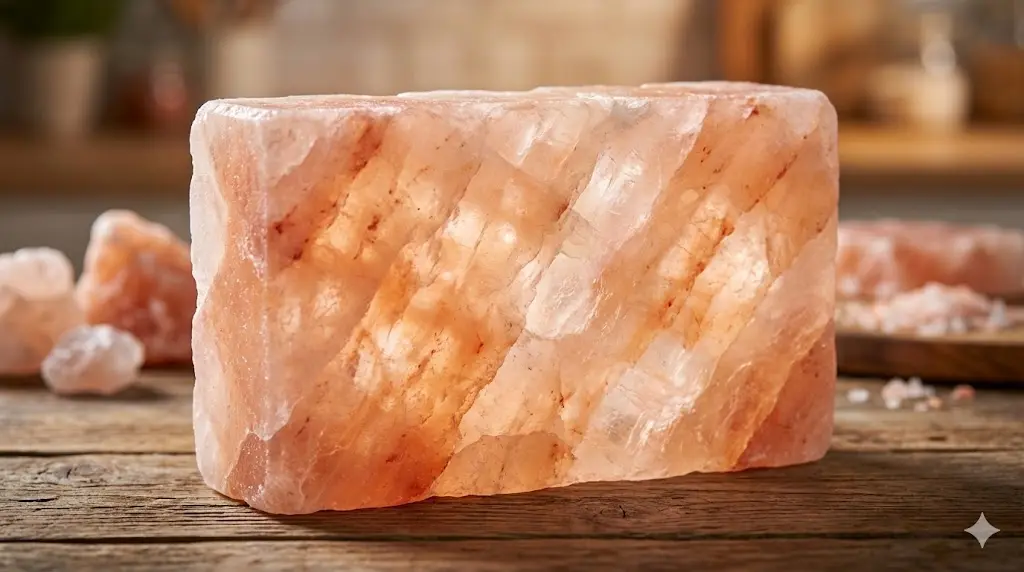
The primary differentiator for salt blocks is their thermal performance. They distribute heat evenly across the entire surface and retain that warmth far longer than metal cookware, making them ideal for searing proteins, chilling desserts, curing fish, or keeping appetizers warm during service. This versatility makes it a multi-functional kitchen asset.
Proper care is essential. Gradual heating prevents thermal shock and cracking, while gentle cleaning—no soaking or detergents—preserves the block’s integrity. With mindful use, these slabs can withstand repeated high-heat sessions, slowly wearing down over time as they season your meals naturally.
What Is a Traditional Cooking Surface?
Traditional cooking surfaces encompass the familiar tools most home and professional kitchens rely on: metal grills and griddles made from stainless steel or cast iron, ceramic pizza stones, and other heat-resistant cookware designed for direct cooking applications. These surfaces excel at searing steaks, roasting vegetables, and baking breads, focusing purely on applying heat without introducing additional minerals or flavor compounds to your food.
Built for durability and ease of maintenance, traditional surfaces like stainless steel griddles handle temperature swings well and clean up quickly—many are even dishwasher-safe. Cast iron retains heat admirably for consistent cooking, while ceramic stones deliver the crisp crusts required for ideal pizza crusts. Each material offers distinct heat retention and distribution characteristics that suit specific cooking tasks.
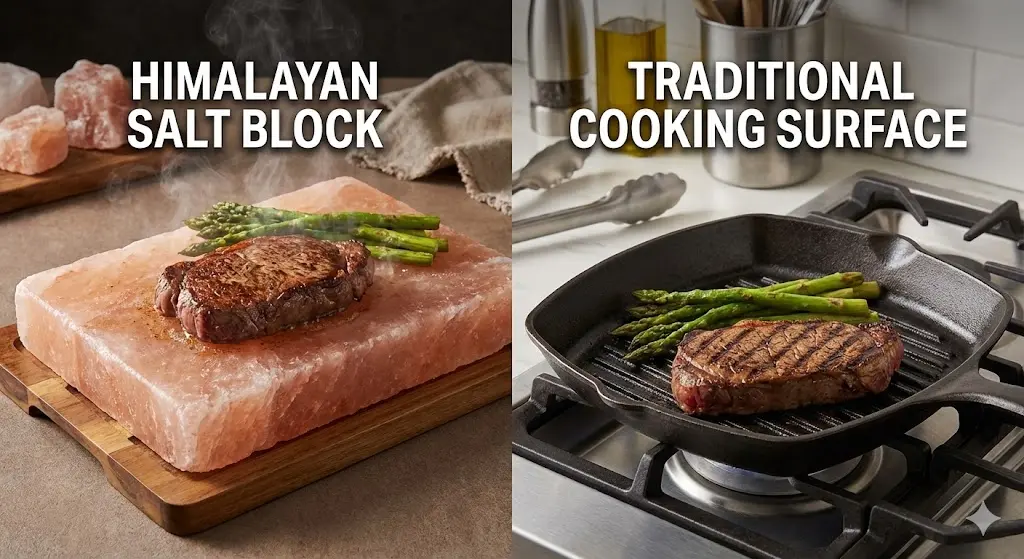
Unlike salt blocks, traditional surfaces do not provide a naturally antimicrobial environment or subtle mineral infusion. They’re designed as neutral cooking platforms, which means you control seasoning entirely through added salt, spices, and marinades. For everyday cooking needs—grilling burgers, baking cookies, or pan-searing fish—these conventional options remain practical, affordable, and widely accessible choices.
Natural Himalayan Salt Blocks for Culinary & Hospitality
Partner with Jilin Ever Creation for premium pink Himalayan salt blocks sourced from the Khewra Salt Mine. Perfect for grilling, serving, or chilling, our customizable salt products elevate flavor and presentation across food service, retail, and hospitality sectors. Enjoy flexible order quantities, private labeling, and reliable global delivery.
Heat Distribution & Retention Compared
Salt blocks and traditional cookware each have distinct thermal behaviors that directly affect your results—from achieving an ideal crust to keeping food warm through service.
Evenness of Heat
Himalayan salt blocks spread heat uniformly across their entire surface, which eliminates the hot spots often encountered with metal grills or ceramic stones. This consistent temperature zone means delicate proteins like scallops or thin-cut vegetables cook at the same rate from edge to center, producing reliable searing and browning.
Traditional metal surfaces tend to develop temperature variations depending on where the flame or heating element sits underneath. Cast iron can also form hot spots unless preheated carefully. For foods that need gentle, steady warmth—like thinly sliced fish or quick-cooking greens—the salt block’s even thermal field offers a distinct advantage.
This uniformity also reduces the need to constantly shift food around during cooking. This allows ingredients to be placed without needing constant repositioning.
Heat Retention Duration
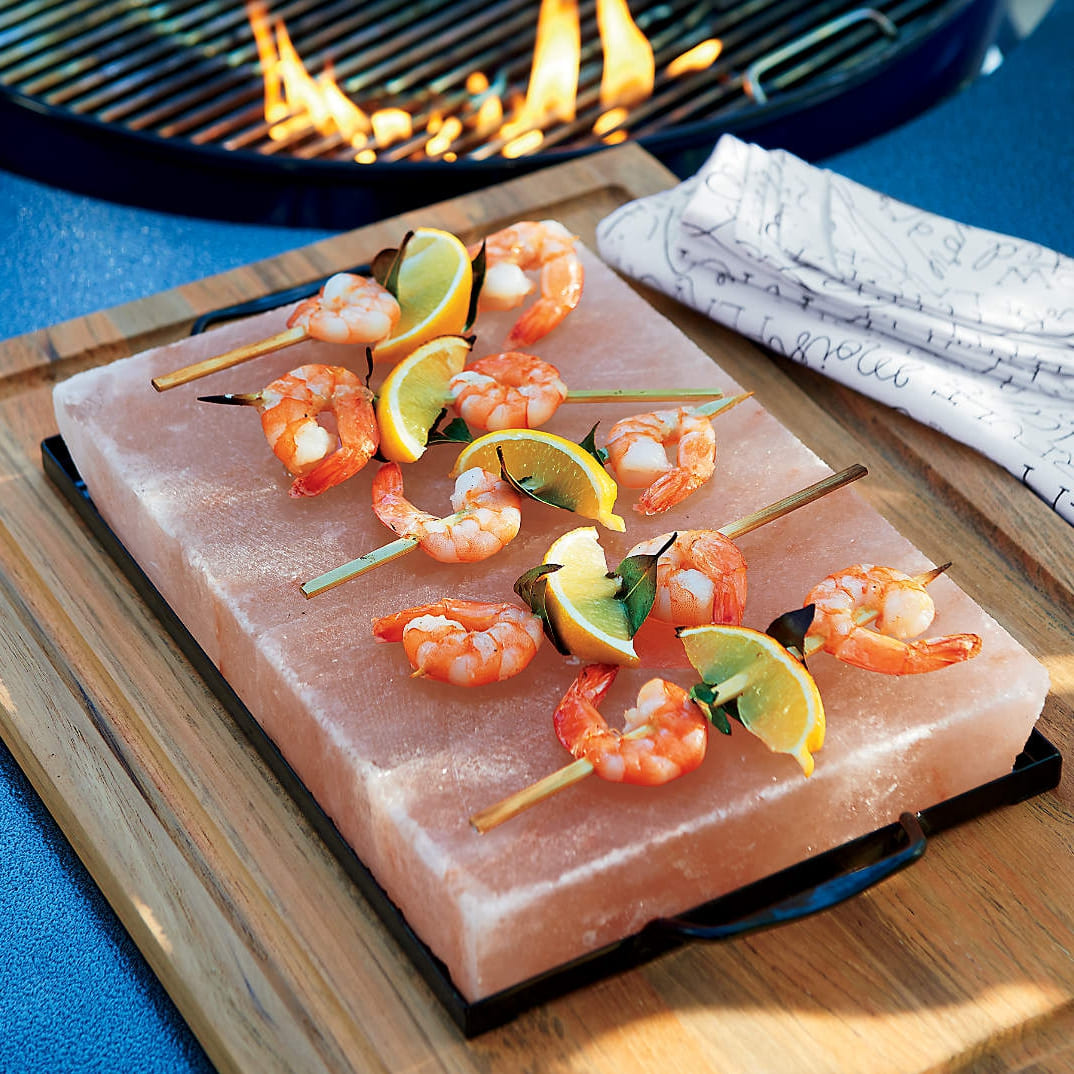
Once a salt block reaches temperature, it holds that heat significantly longer than most metal griddles or grill grates. This extended retention means you can remove the block from the heat source and continue cooking or serving directly on its surface, keeping dishes warm without additional equipment.
The prolonged warmth makes salt blocks especially useful for entertaining. For example, a heated block brought to the table can continue to cook food or maintain serving temperature. Traditional surfaces cool down quickly, often requiring warming trays or preheated plates to prevent food from turning lukewarm.
This thermal endurance allows for a more controlled cooking pace without the need to compensate for rapid temperature drops.
Flavor and Health Benefits of Himalayan Salt Cooking
Cooking on a Himalayan salt block introduces trace minerals into food, such as magnesium, calcium, potassium, and iron, which standard cookware does not provide. This process adds subtle complexity to flavor while offering a modest nutritional contribution.
A key health benefit is improved portion control of salt. The block seasons food perfectly, helping you use less processed table salt in your overall diet. Because the salt infuses gradually through contact and moisture, dishes gain a balanced, full-bodied flavor without the excessive salting that is common with manual application. This gentler approach makes it easier to enjoy well-seasoned meals while reducing sodium intake from refined sources.
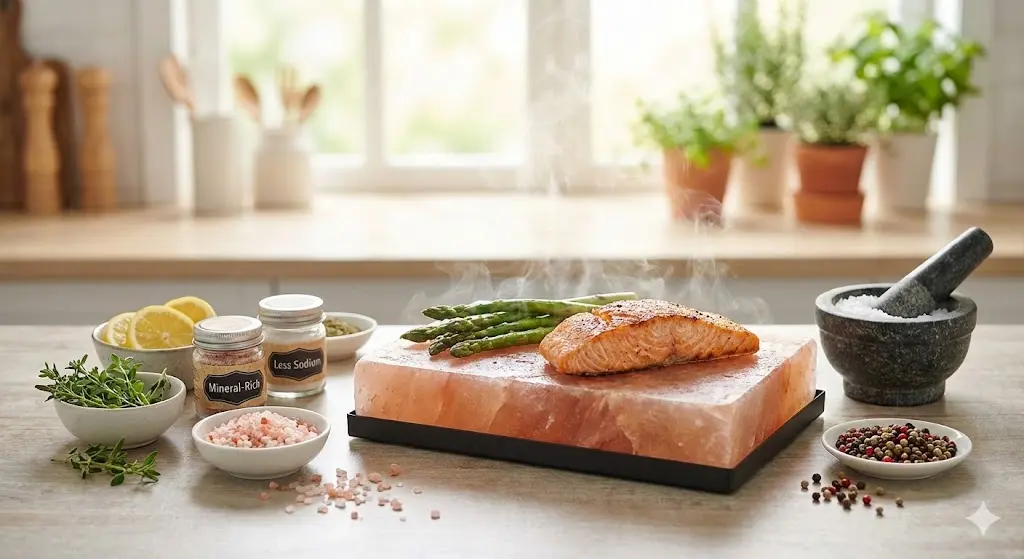
Himalayan salt’s natural composition and low moisture retention create an antimicrobial cooking surface that inhibits bacterial growth. This property sets it apart from traditional wood or plastic cutting boards, offering a cleaner environment for both cooking and serving without relying on chemical treatments or constant deep cleaning.
Durability and Maintenance: Handling Salt Blocks vs. Traditional Cookware
Salt blocks require more careful handling than metal or ceramic cookware. Their crystalline structure makes them brittle—sudden temperature changes can cause them to crack or break. They must be heated gradually over a significant period and allowed the same slow cooldown after cooking. Traditional cookware, by contrast, handles rapid temperature swings without issue and tolerates rougher handling during storage and use.
Cleaning protocols differ significantly as well. Salt blocks can’t be soaked or scrubbed with detergent—moisture accelerates their dissolution. Instead, wipe the surface with a damp cloth after it cools, then let it air dry completely. Most conventional cookware goes straight into the dishwasher or withstands vigorous scrubbing without degradation. This ease of maintenance makes everyday use far simpler for busy kitchens.
Lifespan expectations also vary. A well-maintained salt block typically lasts through multiple cooking sessions before wearing down enough to retire. Each use removes microscopic layers of salt, gradually thinning the block until it becomes too fragile or uneven for safe cooking. Stainless steel griddles and ceramic stones, when properly cared for, can last for years or even decades without meaningful wear. If you value longevity and low-maintenance tools, traditional options deliver better long-term value despite the salt block’s unique flavor advantages.
Presentation and Versatility in Cooking and Serving
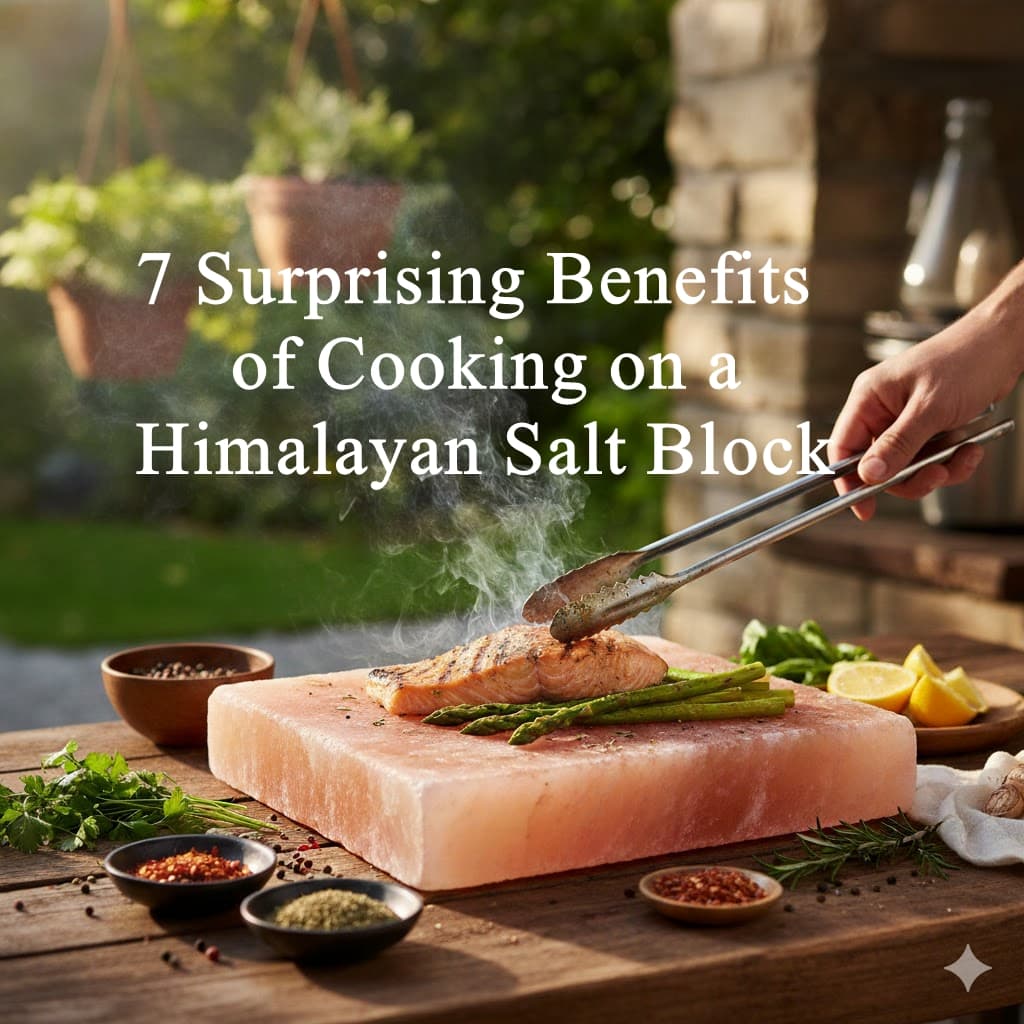
The naturally translucent pink surface of a Himalayan salt block provides a visually appealing surface for grilled proteins, chilled desserts, or cured fish—all while actively seasoning the food. You can sear steaks at high heat, then immediately pivot to serving sushi or fruit on the same block after chilling it in your freezer. This multifunctional approach appeals to home cooks and professionals focused on presentation.
Traditional cooking surfaces prioritize function over form. Metal griddles and ceramic stones excel at their core tasks—achieving reliable heat and cooking food evenly—but they rarely add visual interest to your table. If your kitchen routine focuses on efficient weeknight meals rather than presentation-driven gatherings, these tools deliver practical value without the learning curve or fragility concerns that come with salt blocks.
The choice depends on your cooking style. Wellness enthusiasts and culinary enthusiasts often embrace the salt block’s unique blend of artistry and trace mineral infusion, while everyday cooks may prefer the straightforward reliability of conventional equipment that handles temperature swings and frequent use without special care protocols.
Frequently Asked Questions
Does cooking on a Himalayan salt block provide significant mineral content?
While the block does infuse food with trace amounts of minerals like magnesium and calcium, the quantities are modest and shouldn’t replace a balanced diet. The real advantage is controlled seasoning that prevents oversalting, which can reduce your reliance on processed table salt over time.
Is it healthier to cook on salt blocks compared to regular salt or conventional cookware?
The health benefit comes from portion control rather than mineral supplementation. Because the block seasons food gradually through contact, you’re less likely to over-season compared to sprinkling loose salt. This natural moderation helps maintain a better sodium balance in your cooking.
Is the Himalayan salt block surface naturally clean and antimicrobial?
Yes, salt’s natural properties and low moisture retention create an inhospitable environment for bacterial growth. After use, simply wipe the block clean with a damp cloth and let it air dry—never soak it or use detergents, as this will damage the structure.
Are there any health benefits of Himalayan salt beyond cooking effects?
Claims about broader wellness benefits lack scientific backing. The block’s value lies in its cooking performance—exceptional heat retention, even temperature distribution, and balanced flavor delivery. Focus on these practical advantages rather than unproven health promises.
What are the potential risks or downsides of cooking on a salt block?
The main risk is thermal shock—rapid temperature changes can crack the block, so always heat it gradually. Additionally, the block retains high temperatures for extended periods, requiring careful handling with protective gear. With proper care and slow heating, it can be reused many times before wearing down.
The Final Verdict: Which One Should You Choose?
Your cooking priorities determine the best choice. If you want to naturally season dishes with essential minerals while enhancing presentation, a Himalayan salt block delivers on both fronts. The antimicrobial surface and balanced flavor infusion make it ideal for health-conscious cooks who value presentation as much as taste.
Traditional surfaces excel when durability and daily convenience matter most. Metal griddles handle temperature fluctuations without risk of cracking, and ceramic stones offer reliable performance for routine meal prep. These options require less careful handling and tolerate frequent cleaning with standard methods.
For entertaining guests or exploring specialty cooking techniques like curing or cold plating, the salt block stands out as a versatile tool that doubles as serveware. But if you need dependable equipment for weeknight dinners and prefer straightforward maintenance, stick with conventional cookware.
Experience the quality firsthand with our trial order – an easy way to test these high-margin products with just a $500 investment. Get in touch to start your trial order today!