Skip to content
Key Takeaways
- Offer wooden coasters with a branded engraving option and a reorder guarantee to lock in hospitality accounts.
- Specify a sealed, water-resistant finish for bar and restaurant use; unsealed coasters absorb spills and stain.
- Price per table, not per coaster, with a minimum order that covers one venue in one delivery.
A hotel bar that goes through fifty coasters a night needs a different product than a gift shop that sells a set of four once a week. Hotel restaurant coaster programs are not a retail line scaled up; they are a separate product channel with their own durability requirements, branding expectations, and reorder dynamics. This guide explains how to build a coaster programme that serves the hospitality channel profitably and reliably.
The hospitality coaster is a consumable, not a keepsake. It is used, stained, discarded, and reordered. The wholesale buyer who understands the consumable nature of the product will stock a different specification, price it differently, and manage the reorder cycle differently than the buyer who treats it as a retail gift item. The hospitality programme is a volume-and-reorder business; the retail programme is a gift-and-display business. The successful buyer runs both from the same supplier.
The Hospitality Specification: Finish, Size & Branding
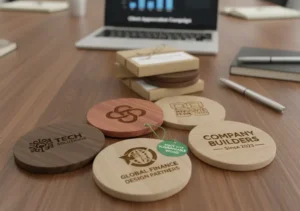
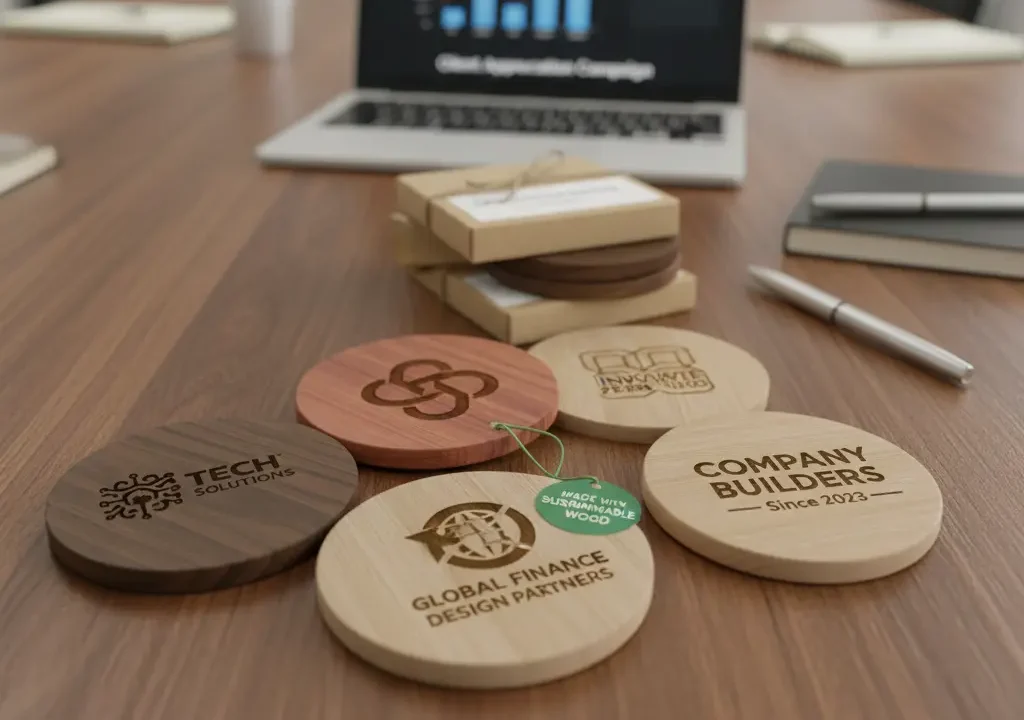
A hospitality coaster must meet three requirements that a retail coaster does not. First, the finish must be sealed, water-resistant, and capable of surviving repeated contact with wet glasses, spilled drinks, and bar-top wiping. An unsealed or oil-finished coaster will absorb moisture, stain, and warp within weeks. Second, the size must accommodate standard bar glassware, typically 10-12 cm diameter for round coasters or a comparable area for square ones. Third, the coaster must accept branding, either laser engraving for the venue logo or a printed design, and the branding must survive the same wet conditions as the coaster. The wooden coasters wholesale programme should include a hospitality-grade specification with a sealed finish, a standard bar size, and a branding option as standard.
Pricing: Per Table, Not Per Coaster
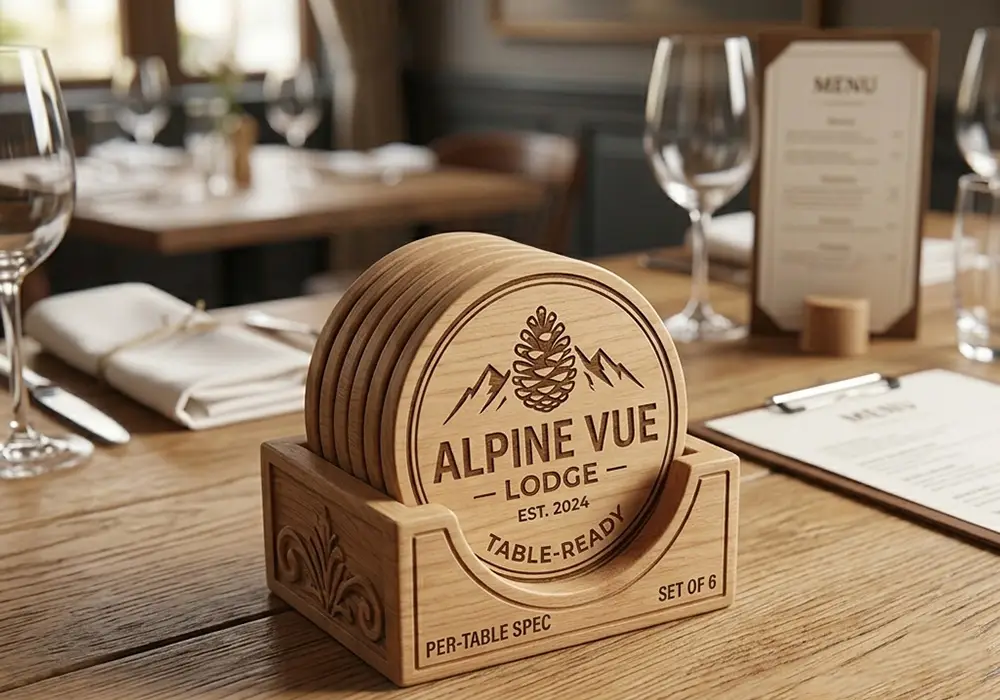
The hospitality buyer prices by the table, not by the coaster. A venue with twenty tables needs roughly 120 coasters in circulation at any time, allowing for six per table plus spares for cleaning and replacement. The wholesale buyer should quote a per-table price that includes the coasters, the branding, and an initial order quantity that covers the venue for a season. The per-table price makes the comparison to other tabletop consumables intuitive for the venue manager: coasters are cheaper per table per season than napkins, menus, or table tents, and the comparison justifies the investment. The custom manufacturing programme should include a hospitality pricing module that calculates the per-table cost based on the venue specifications.
The Reorder Guarantee: Why It Wins Accounts
The reorder guarantee is the most powerful sales tool in the hospitality coaster programme. The guarantee promises that the venue can reorder the exact same coaster, with the exact same branding, at the exact same price, for a defined period. The guarantee removes the venue manager’s fear of running out of branded coasters and being unable to replace them. The supplier should hold a buffer stock of the blank coasters and the branding file, and should be able to fulfil a reorder within a defined lead time. The guarantee should be included in the initial quotation, and the terms should be clear: the price holds for the defined period, the branding file is stored securely, and the reorder minimum is the same as the initial order minimum. The wholesale wooden crafts supplier who offers a reorder guarantee will win the hospitality accounts that the supplier who does not will lose. Verify the reorder capability on a factory tour.
Durability Testing for Hospitality Coasters
The hospitality coaster must pass durability tests that a retail coaster would fail. The sealed finish should be tested by submerging a sample coaster in water for an hour and checking for swelling, delamination, or finish failure. The branding should be tested by rubbing the engraved or printed area with a wet cloth fifty times and checking for wear. The coaster should be drop-tested at table height onto a hard floor to confirm it does not crack or chip. These three tests simulate the actual use the coaster will see in a bar or restaurant, and the supplier should provide the test results with the first order. The wooden coasters wholesale supplier should include a durability test report as part of the hospitality specification.
The durability specification also affects the material choice. Basswood is suitable for indoor hospitality use with a sealed finish. Birch or maple is better for heavy-use bars because the harder wood resists denting and scratching. The buyer should specify the wood species based on the venue type: basswood for hotel bars and restaurants, birch for high-volume pubs and nightclubs. The supplier should be able to produce the hospitality coaster in both species and should provide the durability test results for each.
The hospitality coaster is a consumable, and the durability specification determines the replacement rate. A coaster that lasts six months in a busy bar is a good coaster. A coaster that lasts three weeks is a problem. The buyer who specifies the right species, the right finish, and the right durability tests will have a coaster that the venue reorders, not one that the venue replaces with a competitor’s product.
Logistics: Delivering to Multiple Venues
The hospitality programme must handle delivery to multiple venues, often in different cities, with different order sizes and different reorder cycles. The buyer should partner with a supplier who can drop-ship directly to the venue, because the buyer who receives the coasters, warehouses them, and reships them adds cost and time. The supplier should be able to pack a venue order in a single carton, label it for the venue, and ship it directly. The custom manufacturing programme should include a drop-ship module that handles the logistics of multi-venue delivery.
The reorder cycle for a hospitality coaster is continuous. A venue that uses coasters will reorder when the stock runs low, and the reorder should be a simple email or web form, not a new purchase order. The supplier should hold the branding file on file, maintain a buffer stock of the blank coasters, and fulfil the reorder within days. The simpler the reorder process, the more likely the venue is to reorder from the same supplier. The complexity of the reorder process is the single biggest reason venues switch suppliers, and the supplier who makes it simple keeps the account.
The hospitality coaster programme is a logistics exercise as much as a product exercise. The buyers who master the logistics, the drop-ship capability, and the simple reorder process will own the hospitality channel. The buyers who treat it as a retail product will struggle with the multi-venue delivery and the continuous reorder cycle. The factory tour should include a review of the drop-ship capability and the reorder process, because the logistics determine the profitability of the programme more than the product cost.
The hospitality coaster programme is a volume-and-reorder business that rewards the buyer who masters the product specification, the per-table pricing, the reorder guarantee, and the multi-venue logistics. The buyers who build all four pillars will own the hospitality channel in their market. The buyers who build only one or two will struggle with the continuous reorder cycle and the multi-venue complexity. The programme is a system, and the system is what makes it profitable.
The hospitality coaster is a consumable, and the consumable nature of the product is what makes the programme valuable. The venue that uses coasters will reorder them, and the reorder cycle is the recurring revenue that sustains the programme. The buyers who master the reorder cycle, the simple reorder process, and the drop-ship logistics will have a programme that compounds with every venue they add.
Frequently Asked Questions
What finish do hospitality coasters need?
A sealed, water-resistant finish that survives wet glasses, spills, and bar-top wiping. Unsealed or oil-finished coasters stain and warp within weeks.
How many coasters does a typical venue need?
Roughly six per table plus spares. A twenty-table venue needs about 120 coasters in circulation at any time.
Should I price by the coaster or by the table?
By the table. A per-table price that covers the coasters plus branding is intuitive for venue managers and compares favourably to other tabletop consumables.
What is a reorder guarantee?
A promise that the venue can reorder the same coaster with the same branding at the same price for a defined period. It removes the fear of being unable to replace branded coasters.
Can hospitality coasters be used outdoors?
With a heavy-duty sealed finish and a UV-resistant coating, yes. Standard hospitality coasters are designed for indoor bar and restaurant use.
Build a Hospitality Coaster Programme with a Reorder Guarantee
Source sealed, branded wooden coasters with per-table pricing, a reorder guarantee, and consistent supply for hotels, restaurants, and bars.
Explore Wooden Coasters →