Skip to content
Key Takeaways
- When importing wooden animal figurines, EN71 compliance is mandatory in the EU, covering mechanical/physical hazards (Part 1), flammability (Part 2), and chemical migration (Part 3) for products marketed to children under 14.
- Hand-carved wooden animal figurines face specific safety risks: small parts detachment (choke hazard), sharp carving edges, heavy-metal migration from paints, and flammability.
- Reputable factories use eco-friendly non-toxic paints that pass EN71-3 chemical migration limits, performing pull tests and sharp-edge checks across production stages.
- Retailers must verify EN71 test reports cover the specific product and material combination—not just a generic factory certificate.
- Compliance documentation (EN71, CE, UKCA, BSCI, ISO 9001) is essential for onboarding with major European retailers and hospitality brands.
Hand-carved wooden animal figurines are among the most popular items in the home decor and gift retail categories. Their artisanal character, natural material appeal, and wide design range—from 5 cm songbirds to 40 cm owl sculptures—make them attractive to both adult collectors and families shopping for children’s rooms. But the moment a wooden figurine is marketed or “foreseeably used” as a children’s product in the European Union, it falls under the Toy Safety Directive 2009/48/EC and must comply with EN71.
For importers and retailers, EN71 compliance is not optional. Major EU retailers will not onboard suppliers without verified test reports. Amazon EU requires EN71 documentation for toy-category listings. And under the UK’s post-Brexit regime, UKCA marking with equivalent standards applies. This guide walks through exactly what retailers must check when sourcing hand-carved wooden animal figurines for markets that enforce toy safety regulations.
What EN71 Covers: The Three Parts That Matter
EN71 is a multi-part standard. For wooden animal figurines, three parts carry the most practical weight:
EN71-1: Mechanical and Physical Properties. This part addresses the physical structure of the toy. For wooden figurines, the key tests include small parts resistance (can a child detach a carved ear, wing, or tail and swallow it?), sharp points and edges (does the carving process leave any pointed tips or razor-thin wood splinters?), and structural integrity (does the figurine survive drop and compression tests without breaking into hazardous fragments?). The standard applies different requirements based on age grading: products intended for children under 36 months face the strictest scrutiny, particularly around small parts that fit into the “small parts cylinder” test fixture (31.7 mm diameter).
EN71-2: Flammability. Wooden figurines must not ignite rapidly or sustain flame propagation beyond specified rates. For basswood—the primary material used in hand-carved decor—this is generally less of a concern than for textile or foam products, because solid wood is inherently slow to ignite. However, if a figurine includes any textile accessories (fabric wings, ribbon bows, felt bases), those components must separately pass flammability thresholds. Surface finishing coatings (paints, lacquers, stains) are also tested for flame spread.
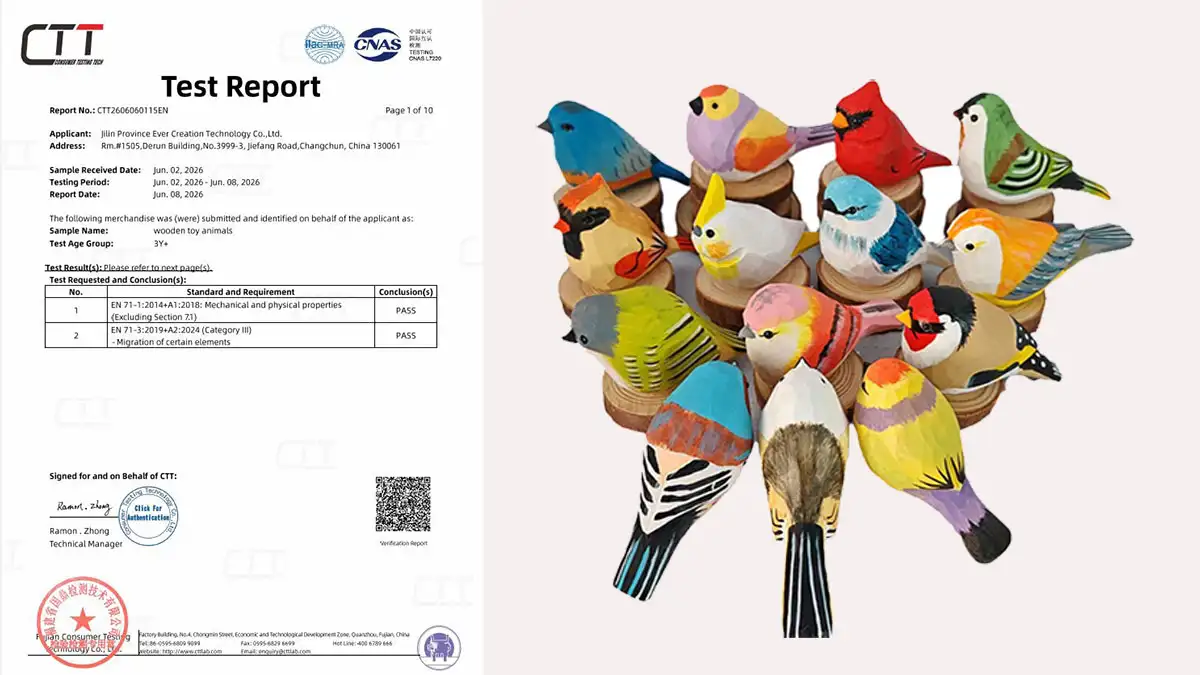
EN71-3: Migration of Certain Elements. This is the part that trips up many importers. EN71-3 limits the migration of 19 heavy metals and other hazardous substances from toy materials, including lead, cadmium, chromium, mercury, arsenic, barium, selenium, and antimony. The limits differ by material category: Category I (dry, brittle, powder-like, flexible) has the strictest thresholds, Category II (liquid or sticky) is intermediate, and Category III (scraped-off material) has slightly higher allowances. For painted wooden figurines, both the wood substrate and the paint coating are tested separately.
Why Hand-Carved Wooden Figurines Face Unique Compliance Challenges
Mass-produced injection-molded plastic toys have consistent geometry and uniform material properties. Hand-carved wooden figurines are fundamentally different—and that difference creates compliance considerations that importers must understand.
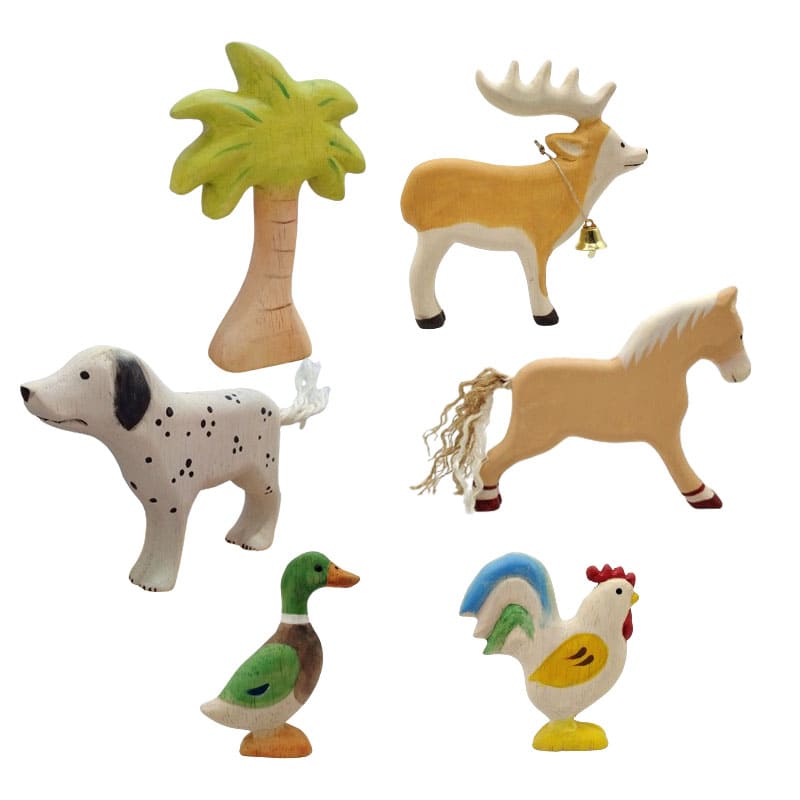
Each piece is individually carved from basswood or pine wood, sanded, and hand-painted. This artisanal process means no two pieces are perfectly identical. A carved protruding element—say, the beak of a wooden puffin or the antler of a wooden deer—may vary slightly in thickness between pieces. Quality control must account for this natural variation while ensuring every piece in a batch meets the same mechanical resistance thresholds.
The anti-cracking log treatment process used by quality manufacturers involves kiln-drying basswood to a specific moisture content before carving. This prevents cracking during international shipping and in different climate conditions. But the drying process also affects wood density and brittleness, which in turn influences how the figurine behaves under EN71-1 mechanical stress tests. Properly dried basswood is remarkably durable; insufficiently dried wood may splinter under impact.
Paint and Coating: The Critical Control Point
The single highest-risk element in a painted wooden figurine is the coating. Children put things in their mouths. A child sucking on a wooden penguin’s painted wing could ingest trace amounts of heavy metals if the paint is not properly formulated. EN71-3 sets specific migration limits for each regulated element, and these limits are measured in milligrams of substance per kilogram of material—parts-per-million territory.
At Jilin Ever Creation, all paints and coatings used on wooden figurines are eco-friendly and non-toxic, specifically formulated to meet EN71-3 migration limits. The factory applies multiple thin coats rather than one thick coat, allowing each layer to fully cure before the next is applied. This approach not only produces better visual results but ensures that no uncured paint residue remains on the surface that could migrate when tested.

What Retailers Must Verify Before Placing an Order
Requesting an EN71 certificate from a supplier is not enough. The document must be scrutinized for specificity. Here is what retailers need to check:
| Verification Point | What to Look For | Red Flag |
|---|---|---|
| Product specificity | Test report references the exact product type, material, and finishing | Generic certificate covering “wooden toys” without product detail |
| Testing laboratory | Accredited lab (ISO 17025 accreditation); recognized by EU notified bodies | In-house test results without third-party lab validation |
| Material coverage | Both wood substrate and paint/coating tested separately under EN71-3 | Only one material category listed on the report |
| Date validity | Test report is current (within the last 2-3 years); no material changes since testing | Report older than 5 years or predating a material/paint change |
| Age grading | Report specifies age grading (e.g., “suitable for ages 3+” or “0-36 months”) | No age grading stated; one-size-fits-all claim |
| Batch traceability | Test report can be traced to the specific production batch or material lot | Certificate covers “all products” without batch linkage |
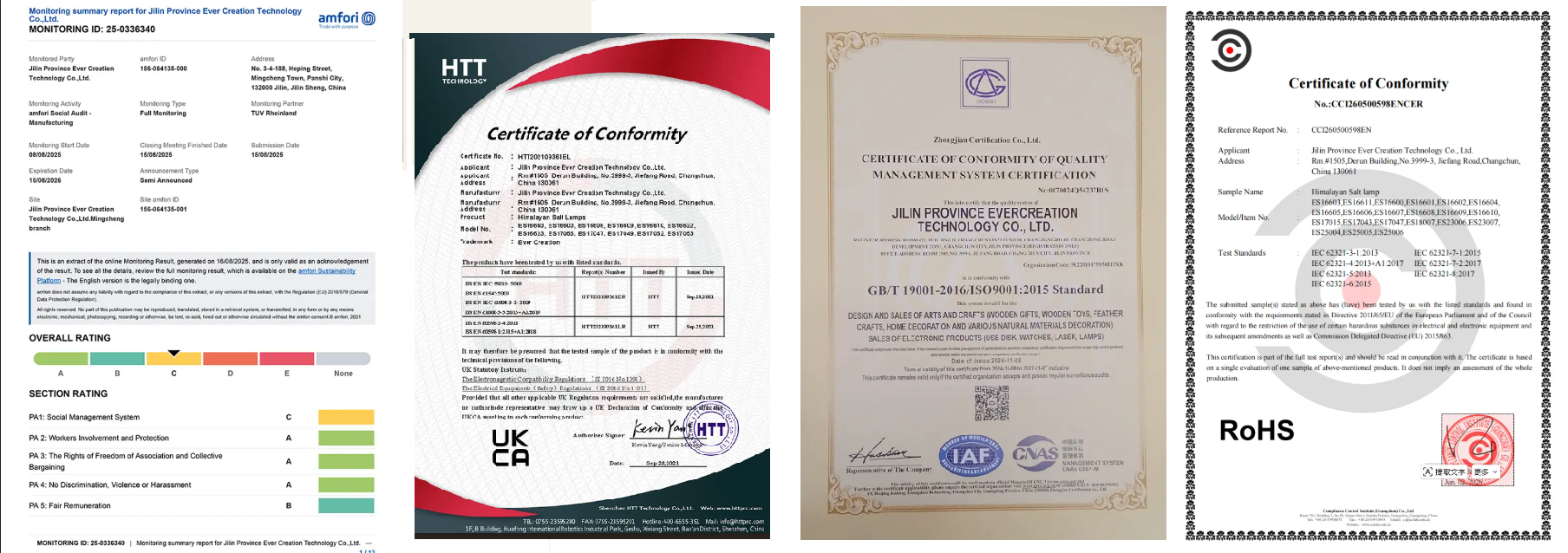
Jilin Ever Creation holds EN71-1, EN71-2, and EN71-3 test reports, along with CE marking (EU), UKCA marking (UK), ISO 9001 quality management certification, and a BSCI social compliance audit report. The factory can provide these documents to serious buyers upon request. Additionally, all timber is sourced with official felling and transport permits, ensuring full supply-chain traceability from forest to finished product.
Age Grading and Its Impact on Product Design
Age grading is one of the most consequential decisions in wooden figurine compliance. The EU Toy Safety Directive draws a hard line at 36 months (3 years). Products intended for or “foreseeably used” by children under 3 face dramatically stricter requirements, particularly around small parts.
For wooden animal figurines, this creates a practical design consideration. A 5 cm hand-carved songbird is charming on a shelf, but if it can fit entirely into a child’s mouth, it cannot be sold as a toy for under-3s without passing the small parts cylinder test. Many manufacturers therefore age-grade their smaller figurines as “3+” or “decorative items not intended as toys”—the latter classification removes EN71 obligations but also limits the product’s marketable use cases.
Larger figurines (15 cm and above) generally pass the small parts test more easily, but protruding elements like carved beaks, ears, or tails still need to withstand pull and torque tests. At Jilin Ever Creation’s factory, 3D carvings range from 5 cm to 40 cm, giving retailers the option to stock larger sizes in markets where children’s product regulations are strict, and smaller sizes for decorative or collector segments.
Beyond EN71: Other Certifications Buyers Should Request
EN71 is the baseline for EU toy safety, but serious buyers typically need a broader compliance portfolio:
| Certification | What It Covers | Why It Matters |
|---|---|---|
| CE Marking | EU general product safety compliance declaration | Legally required for toys sold in the EU; the manufacturer’s declaration that the product meets all applicable directives |
| UKCA Marking | UK equivalent of CE, required post-Brexit | Mandatory for toys sold in Great Britain (England, Scotland, Wales); Northern Ireland still accepts CE |
| RoHS | Restriction of Hazardous Substances (lead, mercury, cadmium, etc.) | Originally for electronics, increasingly requested for all consumer products by ESG-focused retailers |
| ISO 9001 | Quality management system certification | Demonstrates the factory has systematic quality processes, not just one-off product testing |
| BSCI | Social compliance audit (labor standards, ethics, working conditions) | Required by major EU retailers (supermarkets, department stores) as a supplier onboarding condition |
Jilin Ever Creation holds all five of these certifications. The BSCI audit report, in particular, is increasingly important—major European retailers require their suppliers to maintain current BSCI or equivalent social compliance documentation. Without it, a factory cannot even enter the supplier evaluation process.
Practical Steps: From Compliance Check to Purchase Order
Retailers sourcing hand-carved wooden animal figurines for markets with toy safety regulations should follow a structured compliance workflow:
First, define the product’s intended use and age grading before approaching suppliers. A figurine marketed as “children’s room decor” may still be “foreseeably used” as a toy if its design appeals to children. The safest approach: if the product looks like a toy, treat it as a toy for compliance purposes.
Second, request EN71 test reports from potential suppliers before sampling. Verify that the reports cover the specific material combination (wood species + paint type) of the product you intend to order. A test report for pine wood with water-based paint does not cover basswood with solvent-based paint.
Third, order a pre-production sample and independently verify it against the test report. Check for sharp edges, pull resistance on protruding elements, and coating adhesion. If the sample raises concerns, request corrective action before approving bulk production.
Fourth, include compliance clauses in your purchase agreement. Specify that all goods must match the tested sample, that paint batches must be from the same formulation as the EN71-tested batch, and that the factory must notify you of any material or process changes before implementation.
Fifth, consider periodic re-testing. If you reorder the same design every quarter, testing the initial batch is necessary but not sufficient. Paint formulations change, wood batches vary, and production staff rotate. Annual re-testing or random batch sampling protects your brand and your customers.
The Cost of Non-Compliance: What Retailers Risk
Selling a non-compliant wooden figurine as a children’s product in the EU is not a minor paperwork issue. Market surveillance authorities in EU member states can issue product recalls, impose fines, and ban importers from bringing the product to market. Under the General Product Safety Regulation (GPSR), effective since December 2024, the obligations on distributors and importers have increased—retailers can be held directly liable for placing non-compliant products on the market, even if the manufacturer is overseas.
Beyond legal liability, non-compliance destroys buyer trust. A recall notification to customers, a negative review from a parent who received a product with a sharp protruding element, or a failed customs inspection that delays an entire shipment—these are operational and reputational costs that far exceed the price of doing compliance due diligence upfront.
Source EN71-Compliant Wooden Animal Figurines
Jilin Ever Creation produces hand-carved wooden animal figurines from fine-grained basswood, with full EN71-1/-2/-3 compliance, CE/UKCA marking, and BSCI-certified social accountability. MOQ from 100 pieces. OEM custom designs welcome.
Explore Our Wooden Carving CollectionFrequently Asked Questions
What is EN71 and why does it matter for wooden animal figurines?
EN71 is the European standard for toy safety, covering mechanical/physical properties (Part 1), flammability (Part 2), and chemical migration (Part 3). Any wooden figurine marketed as or foreseeably used as a children’s product in the EU must comply. Non-compliance can result in product recalls, fines, and market bans under the EU Toy Safety Directive and General Product Safety Regulation.
Are hand-carved wooden figurines safe for children under 3?
Small wooden figurines (under 5 cm) with detachable parts or sharp protruding elements are generally not suitable for children under 36 months due to choking hazards. Larger figurines (15 cm+) with robust carved elements can pass EN71-1 mechanical tests for younger age groups, but each design must be individually tested. Many manufacturers age-grade smaller figurines as 3+ or as decorative items.
What paint certifications should I verify for wooden toys?
Verify that the paint used on wooden figurines passes EN71-3 migration limits for the 19 regulated heavy metals and hazardous substances. The test report should cover both the wood substrate and the specific paint formulation used. Eco-friendly, non-toxic paints are the standard at compliant factories, but always request documentation rather than relying on verbal assurances.
Do I need EN71 compliance if I sell wooden figurines as decor, not toys?
If a wooden figurine is clearly marketed and designed as a decorative item (e.g., a shelf ornament, wall art, or collector’s piece) and is not “foreseeably used” as a toy, EN71 does not strictly apply. However, the line is subjective—if the product looks like a toy, regulators may treat it as one. The safest approach for retailers: if there is any ambiguity, ensure EN71 compliance anyway.
How often should EN71 testing be repeated for reorders?
Initial testing is mandatory. Re-testing frequency depends on your risk tolerance and supply chain stability. Annual re-testing is recommended for high-volume products. At minimum, re-test whenever the factory changes paint supplier, wood species, or production process. Batch-level spot checks provide ongoing assurance between formal re-tests.