Skip to content
Key Takeaways
- Mastering the museum vs gift shop selection process requires understanding that a museum store buyer evaluates a wooden bird carving against a different standard than a gift shop buyer. The museum buyer asks “does this connect to an exhibit, an educational mission, or a cultural story?” before asking about price. The gift shop buyer asks “will this sell at $25?” first. Both are valid, but they lead to completely different product selections from the same supplier catalog.
- Museum stores can support higher retail price points ($25–$60 for wooden decor) because the museum context adds perceived value — the customer believes the product is more “authentic” and “curated” than an identical item in a gift shop. This price premium is earned through product storytelling, not product quality alone.
- The museum channel requires supplier documentation that gift shops rarely request: species provenance, artisan background, cultural significance statements, and educational content for display cards. Suppliers who cannot provide this documentation cannot serve the museum channel regardless of product quality.
The Selection Filter: What Museum Buyers Ask That Gift Shops Do Not
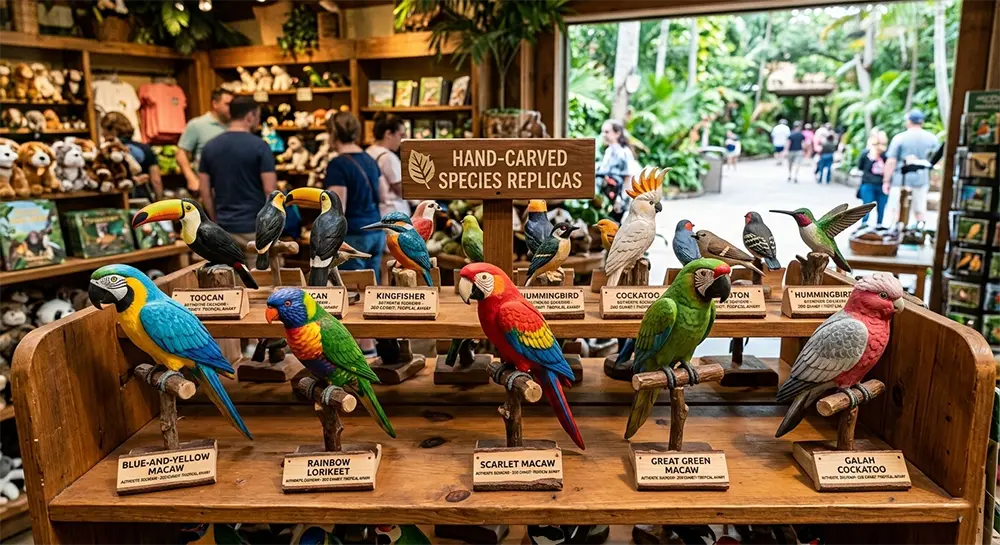
The museum store buyer’s selection process starts with a question that almost never arises in a commercial gift shop: “What is the educational or cultural connection between this product and our institution?” A wooden bird carving is not just a decorative object — it must connect to an ornithology exhibit, a regional wildlife theme, or a conservation message. A product that is beautiful but disconnected from the museum’s mission will be rejected regardless of its commercial potential.
| Criterion | Museum Store | Gift Shop |
|---|---|---|
| Primary Filter | Educational/cultural connection | Commercial potential |
| Price Sensitivity | Moderate — premium accepted with story | High — price-competitive with local market |
| Documentation Need | Artisan background, provenance, species info | Basic — care instructions, country of origin |
| Product Story Format | Display card with educational content | Price tag, minimal description |
Price Architecture: Why Museum Stores Can Charge More
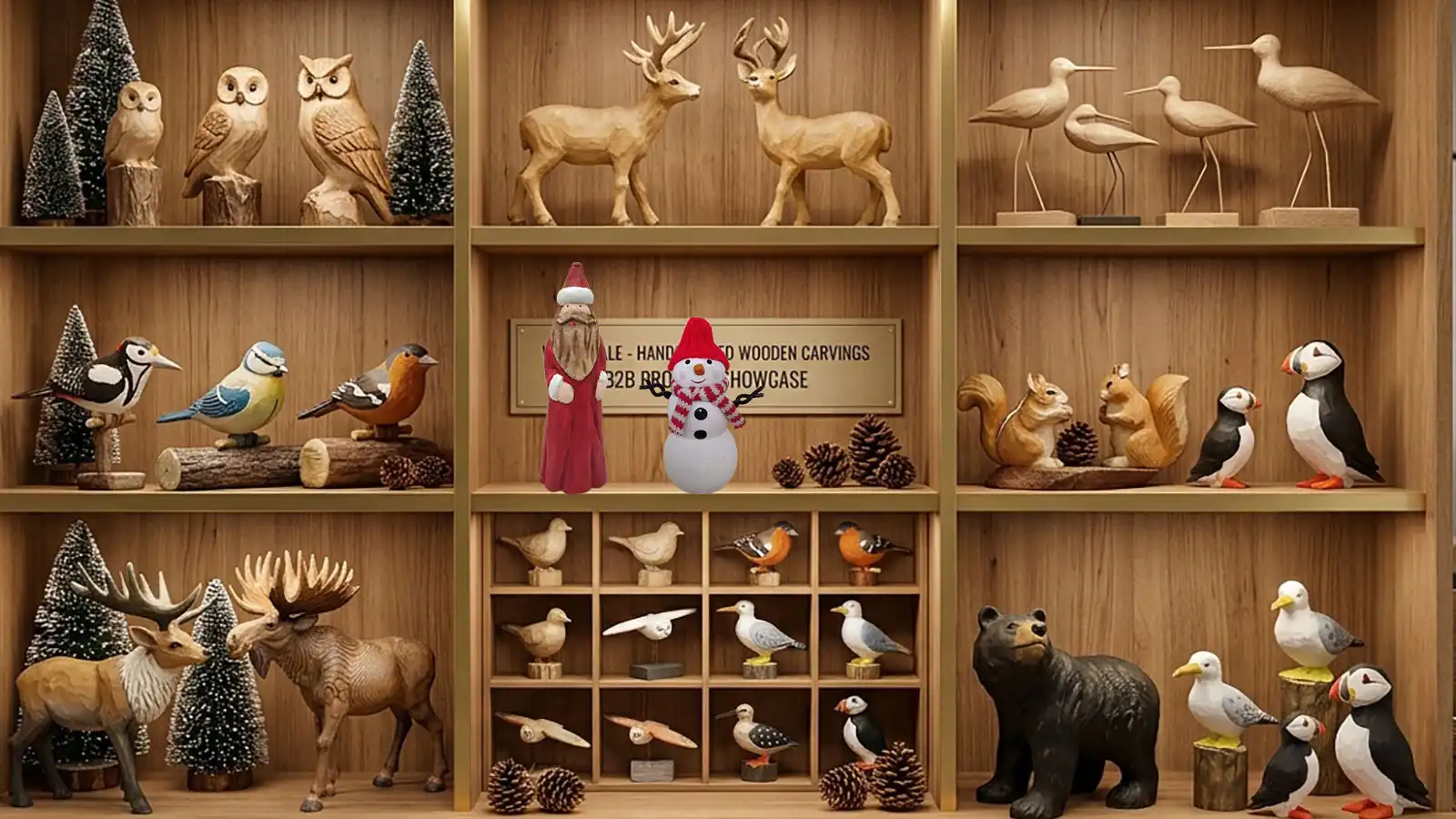
The museum retail price premium — typically 15–30% above gift shop pricing for identical wooden products — is supported by three factors unique to the museum channel. First, the museum’s institutional credibility transfers to the product: “I bought this at the Natural History Museum” carries social proof that “I bought this at a gift shop” does not. Second, the museum visit is a discretionary leisure experience, and customers in that mindset have higher willingness-to-pay than customers running routine errands. Third, museum stores face less direct price competition — there is no competing gift shop next door in the museum lobby.
Recommended Price Bands for Museum Wooden Decor
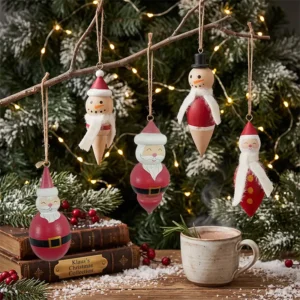
Entry-level museum items (wooden keychains, mini birds, small ornaments) should start at $8–$15 — slightly above gift-shop impulse pricing to reflect the museum context. Mid-range items (life-size songbirds, educational ornament sets, carved animal figures) should occupy the $18–$35 band where museum customers browse comfortably. Premium items (large carved birds, collector sets, signed artisan pieces) at $40–$80 serve as aspiration pieces that elevate the perceived value of the entire wooden decor section. The key difference from gift-shop pricing is the floor, not the ceiling — museum stores should not compete on the lowest price point because doing so undermines the institutional brand.

Product Storytelling: The Display Card That Justifies the Price
The single most effective sales tool in a museum store is not the product display — it is the 3″x5″ display card next to the product. This card answers the question the museum customer is silently asking: “Why should I buy this here instead of somewhere else?” The answer must connect the product to the museum’s mission, the artisan’s story, or the material’s significance. A wooden bird without a story card is a decorative object. A wooden bird with a card explaining how it was hand-carved from basswood and pine wood by artisans in a family workshop with 20 years of tradition is a museum-worthy acquisition.
What Ewoodarts Provides for Museum Buyers
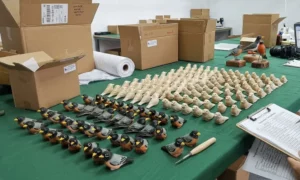
For museum store buyers, Ewoodarts provides a product story kit with every order: artisan background (name, years of experience, carving specialty), wood species information (scientific name, harvest region, official logging permits, phytosanitary certificates, and trading entity FSC certification), production process overview (carving, sanding, painting, QC steps), and suggested display card copy that the museum can adapt for its own voice and branding. This kit eliminates the research burden that often prevents museum buyers from adding new product categories — the supplier provides the content, and the museum’s retail team edits for institutional fit.
Museum-Quality Wooden Decor with Product Stories
Supplying Both Channels: How Ewoodarts Serves Museum and Gift Shop Buyers from One Catalog
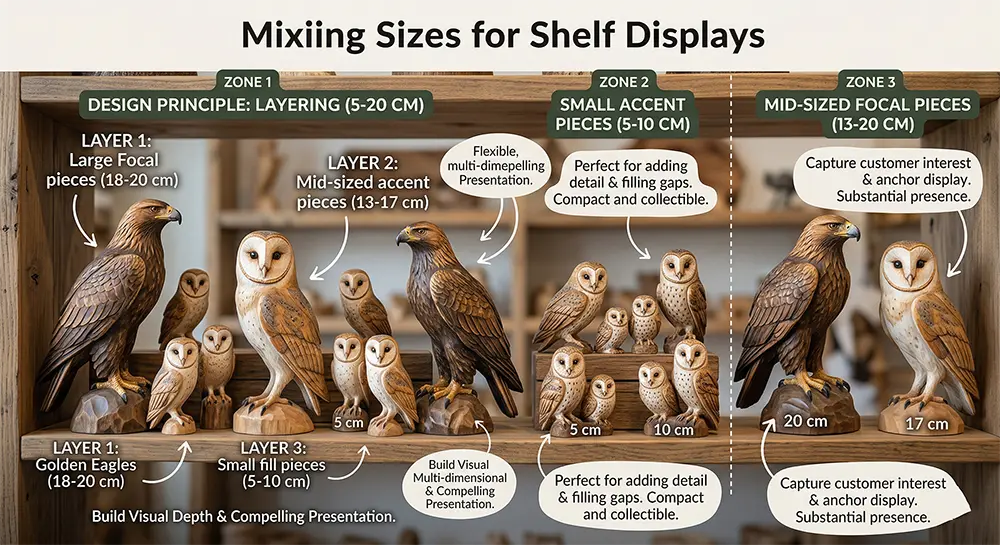
Ewoodarts serves both museum stores and commercial gift shops from the same production facility, but the ordering experience differs. Museum buyers receive the product story kit, species documentation, and display card copy described above. Gift shop buyers receive streamlined ordering with faster turnaround, bulk-packaging options, and reorder simplicity. The products themselves — the carved birds, ornaments, and miniatures — come from the same artisan hands, the same basswood and pine stock, and the same quality control process regardless of which channel orders them. The difference is in the packaging, documentation, and pricing structure, not the product quality.
How to Order for Your Channel
When placing your first order, specify your retail channel — museum store, commercial gift shop, garden center, or specialty retailer — and we configure the order accordingly. Museum orders include the documentation kit, display-ready individual packaging, and net-30 invoicing for qualified institutions. Gift shop orders include bulk-ready packaging, reorder cards for your staff, and standard payment terms. Garden center orders include weather-resistant hangtags and outdoor-display recommendations. The channel specification takes one line on the order form and ensures you receive the support materials appropriate for your customer base without having to request each item separately. If your store serves multiple channels — for example, a botanical garden with a retail shop that functions as both a museum store and a garden center — we can split the order with mixed documentation and packaging to serve both customer segments from a single shipment.
The Museum Store as a Repeat Buyer Channel
Museum stores that carry Ewoodarts wooden birds typically reorder 2–3 times per year: a spring order for the peak visitor season (April–September), a holiday order for the gift-buying season (October–December), and a smaller restock order for best-selling species that sell through faster than projected. The reorder cycle differs from commercial gift shops — museum stores order with exhibit-season cycles in mind, timing inventory peaks to coincide with major temporary exhibits and school-holiday periods when visitor traffic spikes. Understanding this visitor-driven demand pattern lets us help museum buyers plan inventory levels that match their attendance calendar rather than a generic retail calendar, reducing the risk of overstocking during slow months and understocking during blockbuster exhibits.
The museum retail channel rewards suppliers who understand that a wooden bird in a museum store is never just a wooden bird — it is an extension of the institution educational mission, a tangible connection between the visitor and the exhibit experience, and a lasting reminder of a day spent learning. Suppliers who approach museum buyers with this understanding, providing the documentation, storytelling materials, and channel-specific support that museum retail demands, build relationships that last for decades and span multiple exhibit cycles and institutional leadership changes.
Frequently Asked Questions
Do you provide species-accurate bird carvings for natural history museum stores?
Yes. Our bird carvings are painted with species-accurate coloration including field marks, wing bars, eye rings, and seasonal plumage variations. We can provide ornithological reference documentation for each species upon request — useful for museum stores that want to include scientific accuracy statements on display cards.
Can you create custom products tied to a museum exhibit theme?
Yes. We have produced custom wooden bird collections for museum exhibits on migration, conservation, and regional wildlife. Custom projects start with a design consultation, include exhibit-theme alignment review, and ship with museum-branded packaging and display materials. Lead time is 10–14 weeks including design and production.
Do you offer consignment or net-60 payment terms for nonprofit museum stores?
We offer net-30 payment terms for established museum accounts with purchase history. Net-60 terms are available for orders over a specified threshold. Consignment is not available, but our refundable sample program lets museum buyers test products with their audience before committing to a full production order.
What is the minimum order for museum-specific products?
Standard catalog items have a 100-piece minimum. Custom museum-specific designs require 300 pieces with exhibit-theme alignment included in the development process. Smaller museums can combine orders with other institutions through our museum collective program for lower minimums.
Do you provide official logging permits and compliance documentation for museum retail?
Yes. We provide official logging permits, phytosanitary/quarantine certificates, and BSCI audit credentials with every museum order. These documents support the museum’s own institutional compliance reporting and can be referenced in grant applications for exhibit-related retail programs.