Skip to content
The decision to dropship salt lamps centers on the conflict between low-capital entry and the complex logistics of moisture-sensitive minerals. While zero-inventory models lower initial risk, the extreme weight and hygroscopic nature of Himalayan salt lead to frequent shipping damage and electrical failures that erase retail profits through return claims.
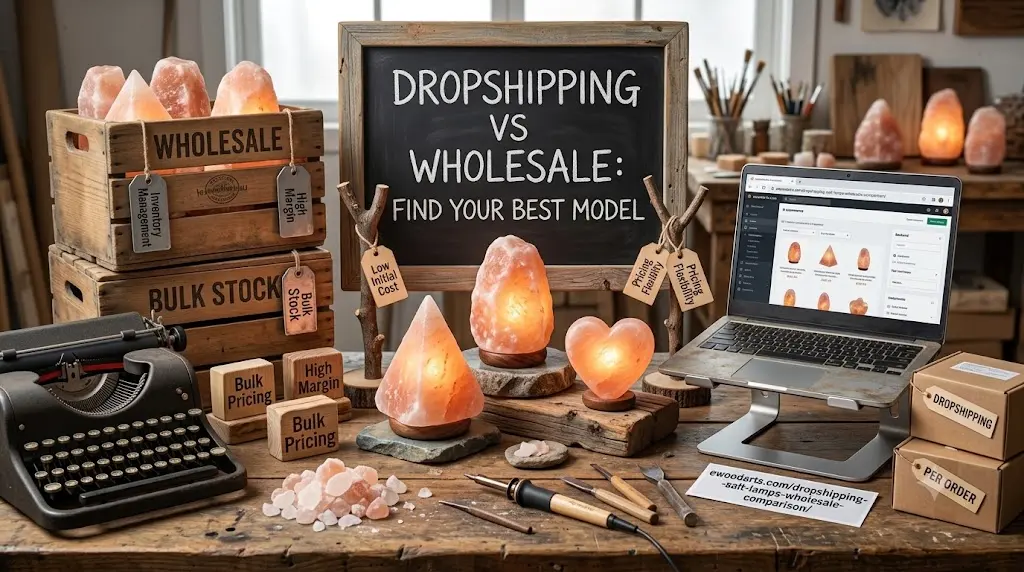
This comparison evaluates bulk warehousing against direct fulfillment using export-engineered 5-ply packaging and UL/CE safety compliance as benchmarks. We examine how sourcing authentic Khewra mine crystals and utilizing trial MOQs of 100 units help both novices and veterans stabilize supply chains against high-markup logistics fees.
The Heavy Logistics of Himalayan Salt
Himalayan salt’s heavy weight and moisture-absorbing nature demand robust packaging to survive global sea and air freight from Pakistan.
Shipping Heavy, Moisture-Sensitive Minerals
The journey for Himalayan salt begins deep inside the Khewra Mine in Pakistan. From there, it travels across continents, creating a complex logistics challenge. Two core properties of the salt dictate how it must be handled: its weight and its hygroscopic nature.
The sheer density of the salt rock directly impacts freight costs and requires durable handling equipment every step of the way. Salt is also a hygroscopic mineral, meaning it naturally absorbs moisture from the air. Without proper protection, this can degrade the product, cause “sweating,” and damage the lamp’s electrical components during transit.
Export-Engineered Protective Packaging
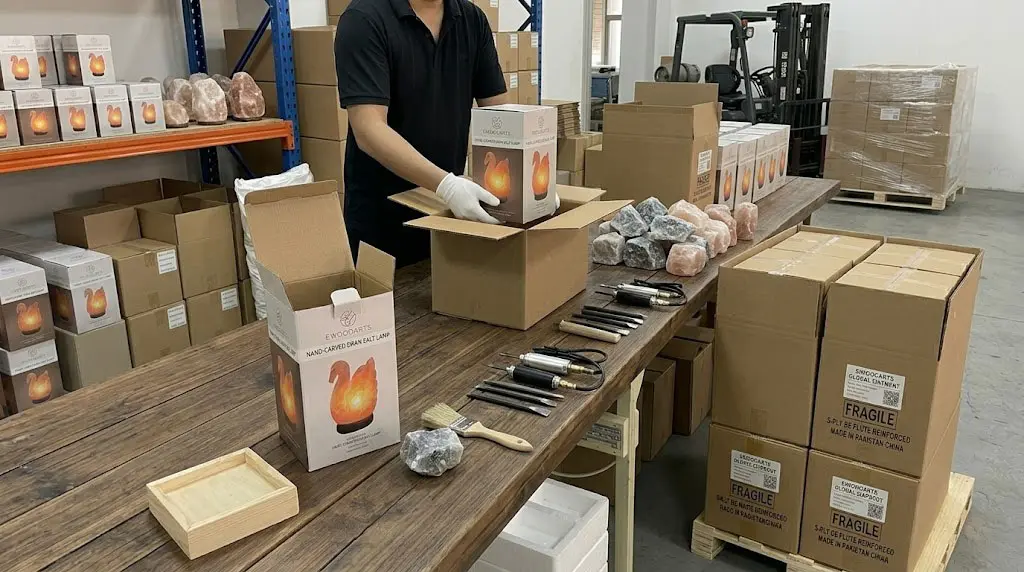
To manage these risks, we developed a multi-layered packaging system built for international shipping. First, we place each individual lamp into a 3-ply box with precision-cut foam supports. This prevents movement and absorbs impact during handling.
Next, these individual boxes are packed into 5-ply reinforced corrugated master cartons. These cartons are engineered to handle the structural stress of long-distance sea transportation. This system creates a critical barrier against moisture and ensures the product’s integrity from our factory to your warehouse.
Pros and Cons of Dropshipping Salt Lamps
Dropshipping offers low startup costs but carries major risks from poor quality control, shipping damage, moisture issues, and liability for uncertified, hazardous electrical components.
The Appeal: Low Startup Costs and No Inventory
The main draw of dropshipping salt lamps is financial accessibility. You avoid the significant upfront capital needed to purchase inventory, especially for a product that is heavy and bulky. This model eliminates the cost and complexity of warehousing, freeing you from managing physical stock.
You don’t have to handle the logistics of packing and shipping. The supplier does it for you. This allows you to offer a wide range of lamp sizes, from a 2-3kg best-seller to a 150kg statement piece, without any financial risk tied to unsold goods.
The Risks: Liability for Breakage, Moisture, and Safety
While the entry is easy, the risks are substantial. You are completely dependent on your supplier’s packaging. If they don’t use export-grade, 5-ply cartons with proper foam support, breakage rates will be high, leading to customer disputes and losses. You can’t oversee quality control.
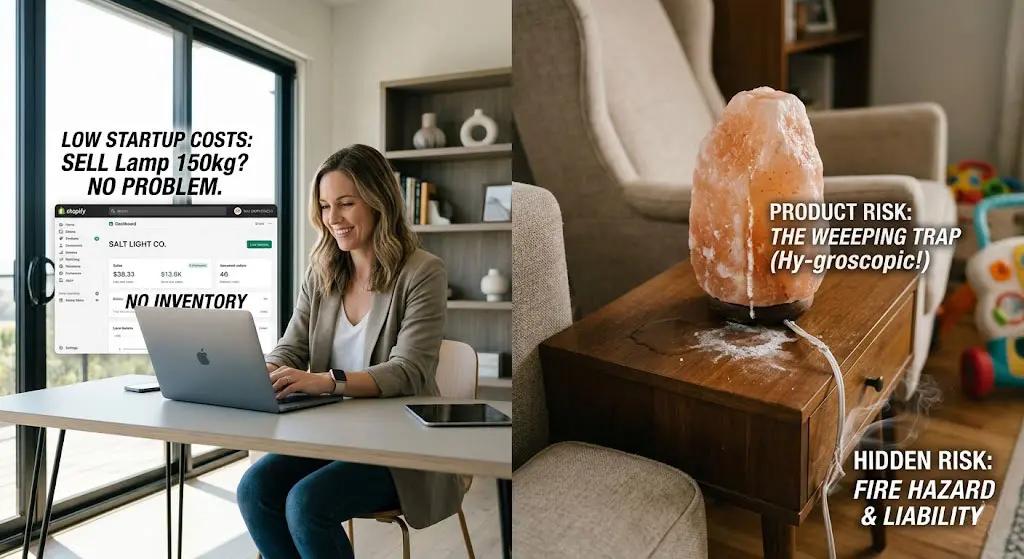
Salt lamps are hygroscopic—they naturally attract and absorb moisture from the air. When this happens, they can “weep” or leak salty water, potentially damaging a customer’s furniture. As the seller, you are liable for these property damage complaints, which are difficult to manage from a distance.
The biggest risk is safety. Faulty wiring and cheap dimmer switches are common fire hazards in low-quality lamps. Without direct oversight, you can’t verify if the electrical components meet mandatory safety standards for your market, like UL/ETL for North America, CE for Europe, or SAA for Australia. Selling a non-compliant product puts your business at serious legal and financial risk.
Handling returns and quality control for a unique, heavy, natural product is a logistical nightmare. Each lamp has a unique crystal structure and color. What a supplier considers acceptable might be a defect in your customer’s eyes, and you’re caught in the middle.
Premium Factory-Direct Himalayan Salt Lamps Wholesale
The Margin Advantage of Bulk Warehousing
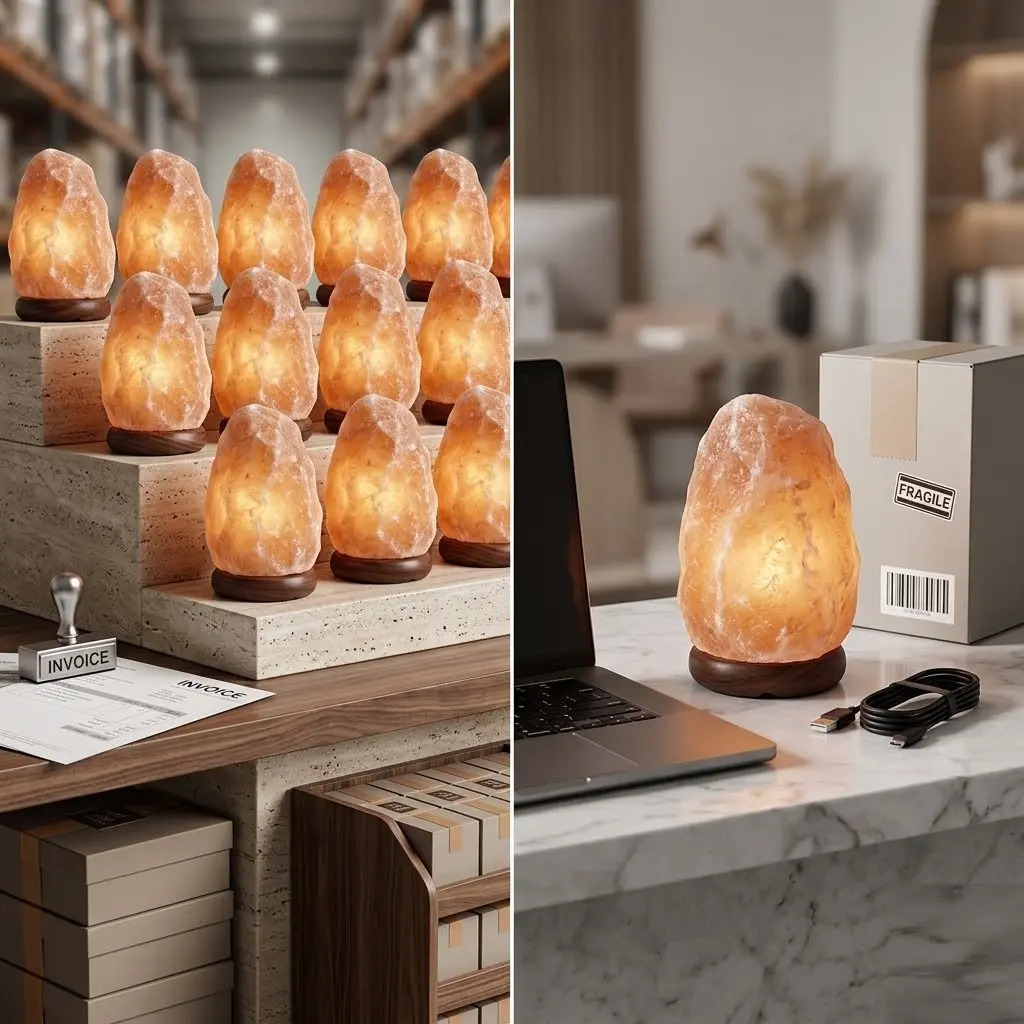
Bulk warehousing boosts margins by letting you buy at low wholesale prices and sell at retail. This model gives you direct control over product quality and shipping logistics.
For businesses serious about profitability, the fulfillment model is just as important as the product itself. While dropshipping offers a low-barrier entry, purchasing Himalayan Salt Lamps in bulk and warehousing them provides a clear path to higher profit margins. The strategy is simple: control your inventory to control your costs and customer experience. This approach moves you from a passive reseller to an active manager of your supply chain, directly impacting your bottom line.
| Feature | Bulk Warehousing | Dropshipping |
|---|---|---|
| Cost Per Unit | Low (Wholesale factory pricing) | High (Supplier’s markup included) |
| Potential Profit Margin | High (40-60% is achievable) | Low (Compressed by fees) |
| Product Quality Control | Direct control over inventory | None; reliant on the supplier |
| Branding & Packaging | Full control over custom packaging | Limited or requires extra fees |
| Upfront Investment | High (Requires capital for stock) | Low (Minimal financial risk) |
Maximizing Profit Through Wholesale Pricing
The core economic advantage of bulk purchasing is straightforward: you buy inventory at low factory-direct prices and sell it at retail, capturing the spread as gross profit. For specialty lighting products like authentic Himalayan Salt Lamps, gross margins can reach 40-60%. Owning your inventory also gives you complete control over product quality inspections, custom branding, and the final customer unboxing experience—all factors that build a defensible brand and justify premium pricing.
Leveraging Export-Grade Packaging for Cost Savings
Logistics costs can erode margins, especially with heavy products like salt lamps. We address this with optimized packaging designed for bulk freight. Our solutions protect your investment and reduce per-unit shipping expenses.
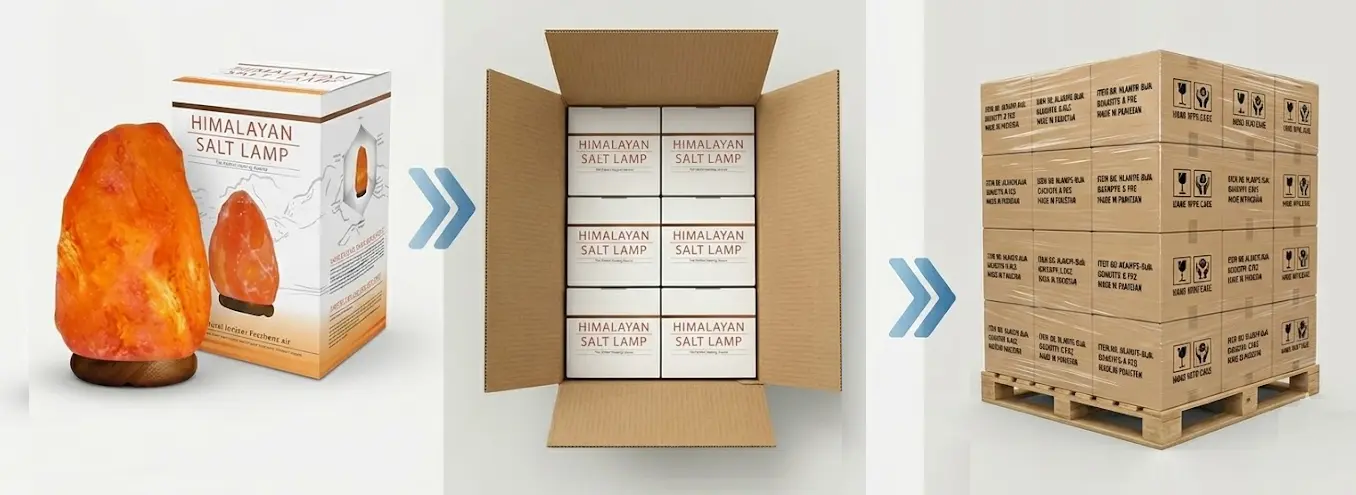
- Optimized Carton Counts: Our top-selling 2–3kg lamps are packed 6 pieces per master carton to maximize container space and lower the shipping cost for each lamp.
- Durable Materials: We use 5-Ply Reinforced Corrugated Cartons, specifically engineered to endure the stresses of long-distance sea freight and prevent costly damage.
- Cost-Effective Shipping: For wholesale orders with a minimum of 300 pieces, palletized sea freight is the most economical method, ensuring your margins remain healthy.
Handling Breakage and Returns
A clear policy requiring photo evidence of damage within 48 hours is standard. The real solution is preventative; our multi-layer, export-grade packaging minimizes shipping damage from the start.
Standard Protocols for Damage and Return Claims
When a salt lamp arrives broken, the process needs to be fast and clear. The industry standard is a tight 48-hour window for customers to report shipping damage, and they must provide photographic evidence. Without pictures, claims are typically denied. For general returns—if a customer simply changes their mind—the window is usually between 7 and 30 days, but the product must be unused and in its original box. Successfully managing a claim involves clean coordination between the customer, your retail operation, and us as the supplier to get a replacement or credit issued.
Reducing Breakage with Export-Engineered Packaging
The best way to handle returns is to prevent them. Salt lamps are heavy and fragile, so we built our packaging to withstand international freight. Each lamp is secured inside its own 3-ply box, locked in place with protective foam supports that absorb impact and stop movement. These individual boxes are then consolidated into 5-ply reinforced corrugated master cartons. This multi-layer system is specifically engineered for the pressures of sea and air transit, which directly lowers your rate of damage claims and protects your profit margins.
Blind Dropshipping and Custom Invoices
Blind dropshipping uses our factory to ship directly to your customers under your brand. This hides our identity, protects your customer list, and builds a professional experience.
How Blind Dropshipping Protects Your Brand
This fulfillment method ensures all shipments leave our facility looking like they came directly from you. Your brand name and logo appear on the packaging and invoices, while our factory identity remains completely hidden. This prevents customers from bypassing you to purchase from the source. A professional, branded unboxing experience builds immediate trust and secures your customer relationships for the long term.
Custom Packaging and Labeling Services
We provide the services needed to create a seamless brand presentation for your customers. Our capabilities are designed for brand owners, gift shops, and e-commerce sellers.
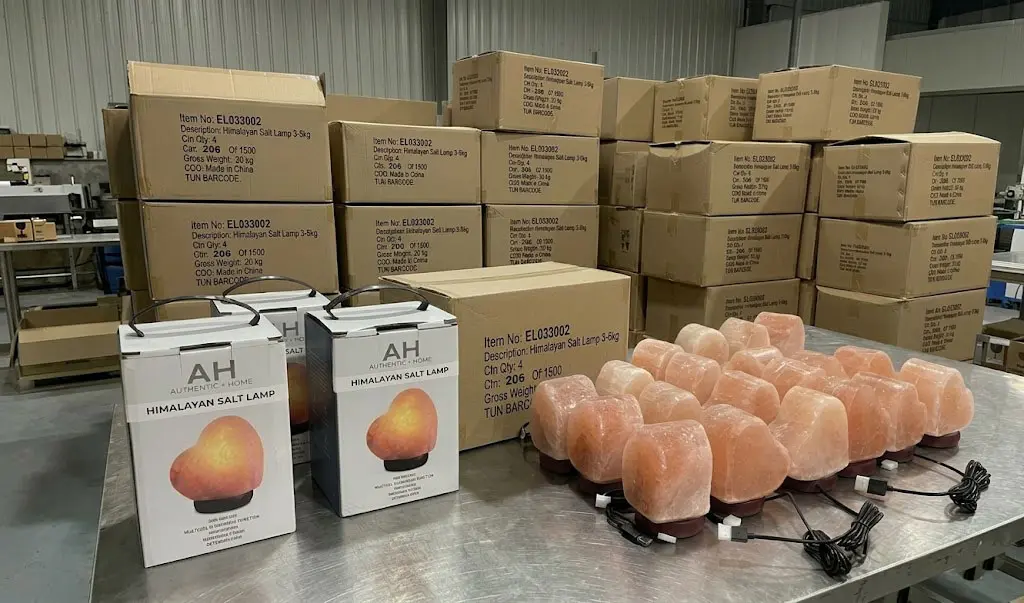
- Custom Individual Packaging: We offer custom-printed color boxes and specialized gift packaging. The minimum order quantity for custom color boxes is 1,000 pieces.
- Complimentary Labeling Services: We apply your barcode stickers and inner box labels at no additional cost.
- Customized Shipping Marks: Master cartons are marked with your required shipping details to streamline your receiving and logistics operations.
These services ensure every product arrives as a clean extension of your brand, creating a consistent and professional customer journey from checkout to unboxing.
MOQ Differences Between the Models
Minimum Order Quantity (MOQ) for our salt lamps is set by the order type, not the specific lamp model. Trial orders start at 100 units; full wholesale begins at 300.
When sourcing Himalayan salt lamps, the minimum order isn’t tied to a specific size or style. We structure our MOQs around your business needs—whether you’re testing the market or placing a full container order. This approach provides more flexibility for our partners.
Trial Orders for In-Stock Products
For new clients looking to sample product quality and test market demand, our trial order is the ideal entry point. It provides access to our ready-to-ship inventory with a minimal commitment, perfect for verifying quality before committing to a large volume.
- Minimum Order Quantity (MOQ): 100 pieces.
- Minimum Order Amount (MOA): USD $500.
- Product Selection: Choose from our diverse range of in-stock inventory.
Wholesale and Custom Production MOQs
Once you’re ready to scale, our wholesale and custom production tiers offer full access to our manufacturing capabilities. This includes our entire catalog and complete OEM/ODM services for branding and custom designs.
- Standard MOQ: 300 pieces for full wholesale or custom orders.
- Minimum Order Amount (MOA): USD $3,000 for sea freight shipments.
- Custom Printed Color Boxes: Have a separate MOQ of 1,000 pieces.
Choosing the Right Supplier for Your Model
Verify suppliers source authentic salt from Khewra, Pakistan with market-specific safety certifications (UL, CE, UKCA). A reliable partner offers transparent operations, including ISO 9001 certification and robust export packaging.
Verifying Product Authenticity and Safety Standards
Product quality is non-negotiable. Before committing to a supplier, you need to confirm the fundamental integrity of the lamps themselves, from the salt’s origin to the safety of every electrical component.
- Source Material: Confirm the salt is 100% authentic crystal sourced directly from the Khewra Mine in Pakistan. This is the only legitimate origin for true Himalayan salt lamps.
- Electrical Safety Certifications: Ensure all electrical components are certified for your target markets. Key certifications include UL/ETL for North America, CE/RoHS for the EU, UKCA for the United Kingdom, and SAA for Australia.
- Build Quality: Assess the physical materials. Look for high-density salt crystals, which are more durable and less prone to breakage. Bases should be stable, using solid materials like natural rosewood or premium marble.
Finding a Partner with Transparent B2B Operations
A good product is useless without a reliable operational partner. Focus on manufacturers who demonstrate a commitment to quality management, logistics, and clear communication.
- Factory Certifications: Look for internationally recognized standards that prove a commitment to quality control and ethical practices. Key examples are ISO 9001 for quality management systems and BSCI for social compliance.
- Export-Engineered Packaging: Your supplier must use packaging designed for international freight. This means 5-ply reinforced master cartons with internal foam support to protect each lamp during long-distance transit.
- Transparency Assurance: Trustworthy partners provide verification before you make the final payment. Ask for high-resolution photos and videos of your finished goods as standard practice for pre-shipment inspection.
Frequently Asked Questions
Is dropshipping Himalayan salt lamps profitable?
Yes, dropshipping salt lamps can be profitable due to strong market demand and minimal startup costs. However, their heavy weight results in high shipping fees, which can impact margins. A successful strategy requires careful pricing to account for these logistics expenses.
Who pays if a dropshipped salt lamp arrives broken?
The seller (dropshipper) is initially responsible for providing the customer with a refund or a free replacement. The seller can then recover this cost by filing a damage claim with the shipping carrier, who is typically liable for items broken during transit.
Which has better profit margins: bulk buying or dropshipping?
Bulk buying offers significantly higher profit margins because purchasing in large quantities lowers the per-unit cost. Dropshipping is excellent for testing products with low risk, while bulk ordering is better for scaling once you have validated customer demand.
Can Chinese factories dropship directly to US customers?
Yes, this is a common and well-established practice. Many Chinese manufacturers and suppliers use platforms like Alibaba or work with intermediaries to dropship products directly to customers in the United States.
Can I use custom branded packaging for my dropshipped orders?
Yes, many dropshipping suppliers support custom packaging. You can send your branded boxes, inserts, or stickers to your supplier, and they will use them to ship your products. This helps create a professional brand experience for your customers.
What is a typical Minimum Order Quantity (MOQ) for wholesale?
There is no single standard MOQ, as it varies widely by supplier and product. It can range from 20–50 units for small brands to over 250 units or a minimum spend of $5,000 for larger distributors. It’s important to find a supplier whose MOQ aligns with your budget and sales forecasts.
Final Thoughts
Dropshipping provides a low-capital market test, but long-term scaling requires the 40-60% margins found in bulk wholesale. We safeguard your investment by using export-engineered 5-ply reinforced cartons and 100% authentic Khewra salt, eliminating the common risks of breakage and “sweating”. Our UL, CE, and SAA certifications ensure your inventory meets global safety standards, protecting your business from the legal liabilities of uncertified electrical components.
We integrate these quality benchmarks into every ewoodarts order to ensure your transition from dropshipping to wholesale is seamless and profitable. To understand how our bulk supply chain supports a professional sourcing strategy, please consult our [Ultimate Guide to Sourcing Wholesale Himalayan Salt Lamps]
We recommend starting with a 100-piece trial order from our [Salt Lamps Wholesale] collection to verify our signature amber glow and multi-layered packaging firsthand. For dealers ready to scale, we provide full OEM support, including custom-branded color boxes and professional labeling. Please [Reach out to our team] today to request our current catalog or to discuss a tailored logistics plan for your warehouse.