A Himalayan salt block is a solid slab of pure mineral salt used for cooking, chilling, or serving food. Because it naturally attracts moisture from the air, improper handling can cause cracking or surface erosion. When kept completely dry, it maintains its structural integrity and continues to perform as intended. This article explains the essential steps—cleaning, drying, and proper storage—to help you preserve your salt block’s quality and extend its lifespan between uses.

Prerequisites: Tools & Materials Needed
Before storing your Himalayan salt block, prepare a few essential items to keep it clean, dry, and protected from moisture. Each material plays a role in preventing humidity from damaging the block’s surface and structural integrity.
- Clean, dry cloth or sponge for wiping the salt block before storage.
- Soft brush or non-abrasive scourer for removing stubborn residue without adding moisture.
- Dry towel for patting the block completely dry after cleaning.
- Breathable wrapping materials such as a clean cotton towel or paper towels.
- A cool, dry, and well-ventilated storage area away from direct sunlight and humidity.
Having these items ready simplifies the storage process and helps preserve the salt block’s texture, durability, and visual quality between uses.
Step-by-Step Guide to Properly Store a Himalayan Salt Block
Step 1: Clean the Salt Block Thoroughly
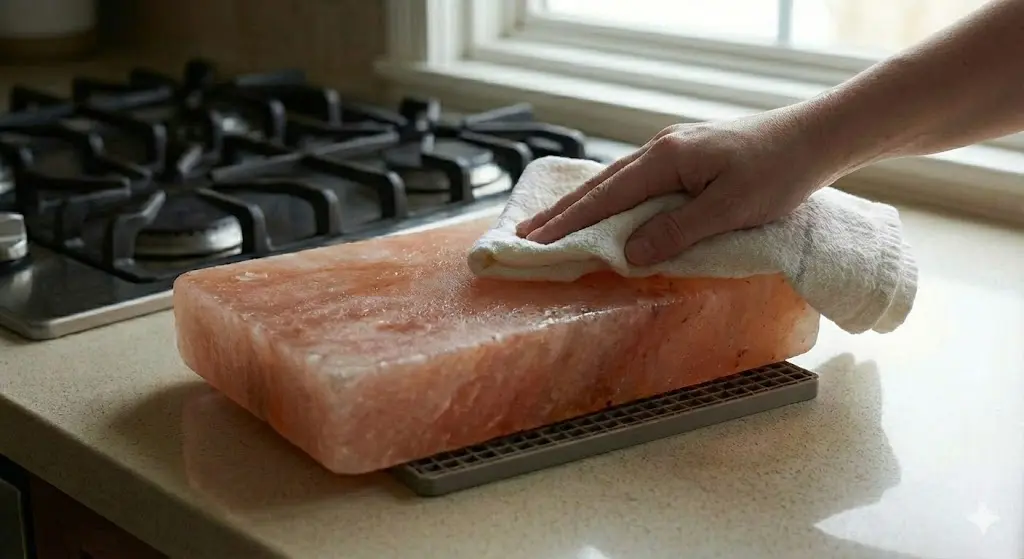
Before storing your Himalayan salt block, ensure it’s fully cool to the touch. Cleaning while warm can cause small cracks. Once cooled, gently wipe the surface with a slightly damp sponge or soft cloth. Avoid soap—salt is naturally antimicrobial and doesn’t require chemical cleaners. For tougher residue, use a firm brush on only the affected area, minimizing moisture. Never soak or submerge the block; salt dissolves quickly in water, and excessive contact will shorten its lifespan.
Step 2: Dry the Block Completely Before Storage
After cleaning, pat the block dry with a soft towel to remove all surface moisture. Set it in a cool, dry area with good airflow and allow it to air-dry fully—this can take several hours, depending on humidity. The goal is zero residual dampness before storage. Even minor moisture retention can lead to pitting or structural weakening over time.
Step 3: Wrap the Salt Block Carefully
Once fully dry, wrap the block in a breathable material such as a clean cloth or paper towel. This prevents dust accumulation while allowing air circulation to keep the surface dry. If you choose plastic wrap, ensure there’s no trapped condensation. Avoid airtight wrapping, which can hold moisture and accelerate salt erosion. The purpose is to protect the block while allowing it to “breathe.”
Step 4: Select the Right Storage Location
Store the salt block in a consistently dry environment with stable temperature—such as a pantry, cupboard, or open shelf away from sinks and stovetops. Avoid basements, outdoor areas, and any spot with fluctuating humidity. Direct sunlight or abrupt temperature changes can also cause fracturing. For added insulation, place the block on a wooden board, cork pad, or silicone mat to prevent contact with damp surfaces.
Step 5: Monitor the Block During Storage
Check the salt block periodically while in storage. Rotate it every few weeks for even air exposure and to prevent warping. During inspection, look for wet spots, cloudiness, or texture changes that signal moisture absorption. Always handle the block with clean, dry hands to avoid leaving oils or residue. Consistent care preserves the block’s integrity and extends its usable life.
Premium Himalayan Salt Blocks for Culinary Excellence
Partner with Jilin Ever Creation to source natural, food-grade Himalayan salt blocks designed for professional cooking and serving applications. Benefit from global delivery, custom sizing, private labeling, and a full range of accessory options tailored to your brand’s requirements.

Understanding the Aging and Lifespan of a Himalayan Salt Block
Over time, a Himalayan salt block naturally evolves in both appearance and texture. As it undergoes repeated heating and cooling, a thin translucent patina forms on the surface—evidence of use and seasoning that enhances visual depth without affecting performance. Concurrently, the pink hue deepens and becomes more opaque, reflecting its gradual maturation.
Thermal cycles cause slight expansion and contraction within the salt structure, which can produce fine cracks or surface flaking. These are normal signs of age rather than failure. With proper care—gentle cleaning and consistent dry storage—the block retains stability and utility for an extended period.
Eventually, the block may harden or show signs of crumbling. At that stage, it remains useful: intact sections can be chilled for plating or serving, while smaller pieces can be ground into finishing salt. With mindful maintenance, every phase of its lifespan offers continued value in the kitchen.
Common Storage Mistakes and How to Avoid Them
Improper storage can quickly reduce a Himalayan salt block’s lifespan. Even small oversights—like storing it in a damp area or wrapping it too tightly—can lead to cracking or surface erosion. The table below outlines the most frequent storage errors and how to prevent them, keeping your salt block clean, dry, and ready for future use.
| Common Mistake | Solution / How to Avoid |
|---|---|
| Storing in humid or damp areas | Keep the block in a cool, dry, and well-ventilated place away from moisture sources. |
| Submerging or soaking the block in water | Clean only with a slightly damp cloth and never immerse the block to prevent dissolution. |
| Wrapping in airtight plastic with no ventilation | Use breathable materials or wrap loosely to allow any residual moisture to evaporate. |
| Placing the block on cold, moisture-retaining surfaces | Rest the block on a wooden, cork, or silicone mat to insulate it and promote air circulation underneath. |
| Handling with wet or oily hands | Always use clean, dry hands when moving or inspecting the block to protect its surface. |
By keeping your salt block dry, minimizing water exposure, and using breathable wrapping on stable surfaces, you help preserve its structure and extend its lifespan. Consistent, careful storage ensures this natural mineral block remains durable and ready for use whenever needed.
Frequently Asked Questions About Storing Himalayan Salt Blocks
Do I need a special bag to store my salt block?
No special bag is required. Wrap the salt block in a breathable material such as a clean cloth, paper towel, or thin cotton bag to shield it from dust while allowing airflow. Avoid sealed plastic bags unless the block is completely dry, as trapped moisture can lead to surface damage.
Is it okay to leave the salt block out on the counter?
Leaving the salt block on the counter exposes it to temperature and humidity changes. Store it instead in a cool, dry cabinet or pantry where conditions remain stable. This prevents unwanted moisture absorption and helps preserve a smooth, even surface.
What is the worst place to store a salt block?
Humid or damp areas are the most harmful. Avoid basements, spaces near sinks, or locations prone to condensation. Ongoing moisture exposure dissolves salt crystals, reducing both durability and appearance.
Can I store it in the original box?
The original box is suitable if stored in a cool, dry location. Wrap the block first to prevent dust and moisture contact, and keep the box off floors or surfaces that might retain humidity.
What should I do if my salt block gets wet during storage?
If the salt block becomes wet, gently wipe it and allow it to air-dry completely in a low-humidity environment. Once dry, rewrap it to protect against further moisture exposure. Water causes salt to dissolve and can weaken the block if not addressed promptly.
Final Thoughts
Maintaining a Himalayan salt block in excellent condition requires consistent attention rather than complex upkeep. Begin by cleaning it properly, ensuring complete dryness before storage. Wrapping it in a breathable cloth or clean bag offers extra protection from dust and moisture without trapping humidity.
Store the block in a cool, dry environment away from sunlight to preserve its structure and natural hue. Occasionally rotate and inspect it to allow even airflow and prevent condensation from forming.
Through careful cleaning, thorough drying, and regular monitoring, your salt block will remain durable, functional, and visually distinctive for many years of cooking and serving.
Experience the quality firsthand with our trial order – an easy way to test these high-margin products with just a $500 investment. Get in touch to start your trial order today!