Skip to content

Key Takeaways
- Selecting Montessori wooden toys runs on 3 gates: method fit, toy-safety grading and finish chemistry; a piece that passes only 2 of the 3 is a decor piece, not a classroom piece.
- Age bands drive size: the small-part probe decides the 0 to 3 band, and 3 is the age line most small-part rules turn on.
- Finish chemistry is a migration question, not a colour question: migration limits apply to every painted surface a child mouths, and 0 teething or food-contact claims belong on any tag.
- Moisture stays at 8 to 12 percent per batch, because a classroom piece cycles through humid rooms and a checked edge becomes a removed piece.
- Pack for classroom life: 6 to 12 pieces per inner box with white-paper wrap per piece, so a shelf refill opens without bruised edges.
- First orders prove on the 100-piece trial tier at a USD 500 minimum order value, air express DDP in 20 to 30 days, before the 300-piece wholesale tier carries a season.
Montessori wooden toys are the fastest-growing label in the wooden toy category, and the least regulated: any supplier can print the word on a box, because the method is a teaching tradition rather than a certification a factory can hold. For a wholesale buyer that gap is the whole job of selection, since the pieces must satisfy two masters at once, a safety regime that is legally enforceable and a method practice that is commercially enforceable through increasingly literate parents and schools. This guide sets out how we grade Montessori wooden toys for wholesale buyers: which pieces fit the method, which checks the safety file must carry, and how a first order is sized without overbuying a label.
Scope note: age-band mechanics and probe details live in our age grading guide, merchandising of educational lines in a separate article, and material comparisons in the materials guide; this page is the selection decision only, written for buyers placing wholesale orders rather than for classrooms arranging shelves.
In this guide
- Why the Label Is Not the Specification
- Montessori Wooden Toys: How Selection Differs
- Age Bands: Size, Probe and Weight
- The Safety File: What EN71 Paper Must Carry
- Finish and Moisture: The Two Lines a Classroom Tests
- Selection Table: Age Band to Piece to Check
- Personalisation Versus Method Purity
- What We Supply Into Montessori-Labeled Lines
- Which Buyer Should Buy Which Band
- What We Check Before a Toy Order Ships
- End to End: A Subscription Box First Season
- FAQ
Why the Label Is Not the Specification
A Montessori-labelled piece sells on a promise about how a child will use it: self-chosen, self-correcting, real-purpose activity at child scale. Nothing in that promise is testable by a customs lab, which is why the label travels easily and the specification must travel separately. Buyers who purchase on the label inherit two risks at once: a safety file that does not cover the age band the marketing implies, and a method mismatch that literate parents return within a month.
The workable discipline is to treat the label as marketing and the specification as two documents: a toy-safety file graded per age band, and a method-fit sheet describing scale, purpose and self-correction. A supplier who can hand over both is selling a programme; a supplier who can hand over only the label is selling a word.
Montessori Wooden Toys: How Selection Differs
Method fit narrows the range quickly. Pieces show real purpose rather than fantasy roles: pouring, stacking, fitting, threading, matching. They sit at child scale and child weight, so a three-year-old can carry and return the piece unaided. They self-correct, meaning the child sees the error without an adult ruling on it, which is why fitted puzzles and graded cylinders travel well under the label while open figurines travel as imagination play instead.
Method fit also excludes features: no batteries, no sounds, no lights, and no plastic windows dressed as wood. Each exclusion is a selection line, because each feature converts a self-directed piece into a directed one and parents read that conversion instantly.
Age Bands: Size, Probe and Weight
The 0 to 3 band is governed by the small-part probe: anything that fits it, or that breaks into pieces that fit it under torque and drop testing, cannot be marketed to that band. The 3 to 6 band opens the range to smaller fitted pieces and threading work, while the 6-plus band adds fine-motor precision pieces that would frustrate a younger child. Weight matters as much as size at the low end, because a piece a child cannot return to the shelf unaided breaks the method even when it passes the lab.
Band assignment is a documented decision per shape, not per range: the same animal silhouette can grade into two bands depending on size and whether detachable parts exist. Our puzzle age grading and safety guide walks the probe and torque sequence we record per shape.
The Safety File: What EN71 Paper Must Carry
For the European market the reference regime is the EU toy safety framework and its EN71 standards, maintained under the European Commission’s toy safety sector page. A usable file names the tested shape, the age band claimed, the mechanical results for small parts, edges and torque, and the migration results for every painted or coated surface. A file that tests the range rather than the shape is a file that will fail the first customs question.
Buyers should also read the file’s date against the production batch: a test older than the current finish specification describes a different product. Our own file structure and claim limits are summarised in the wooden learning toys EN71 page, which lists exactly what we test per shape.
Finish and Moisture: The Two Lines a Classroom Tests
Classrooms test finishes by mouth and edges by hand, daily and without sampling plans. Painted surfaces must meet migration limits for the age band claimed, and clear finishes must stay intact under repeated handling rather than chalking off onto sleeves. Edge rounding at teeth height is inspected after drop simulation, not only as-made, because the classroom drop is the real test event.
Moisture is the second line: wood held at 8 to 12 percent survives humid rooms and winter heating cycles, while a batch packed wet checks at the edges within a season and leaves the shelf as a complaint. We record moisture per batch before wrapping and print it on the batch sheet, so a buyer can match a complaint to a batch in one lookup.

Selection Table: Age Band to Piece to Check
The table is the selection sheet we fill per shape; buyers can request it populated for any quoted range.
| Age band | Typical piece formats | Governing check | Pack emphasis |
|---|---|---|---|
| 0 to 3 | Large grasp pieces, simple two-part fittings | Small-part probe plus torque and drop | Wrap per piece, 6 per inner |
| 3 to 6 | Fitted puzzles, threading, graded stacking | Edge and point plus migration on paint | Wrap per piece, 6 to 12 per inner |
| 6 plus | Precision fitting, multi-piece construction | Mechanical plus finish adhesion | Kit per set, shared insert card |
Personalisation Versus Method Purity
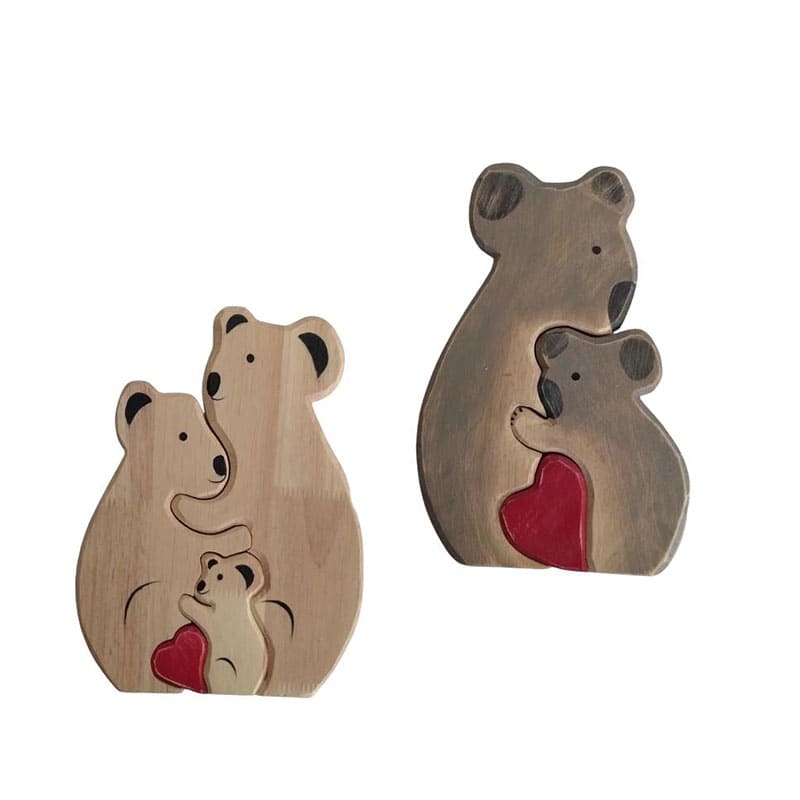
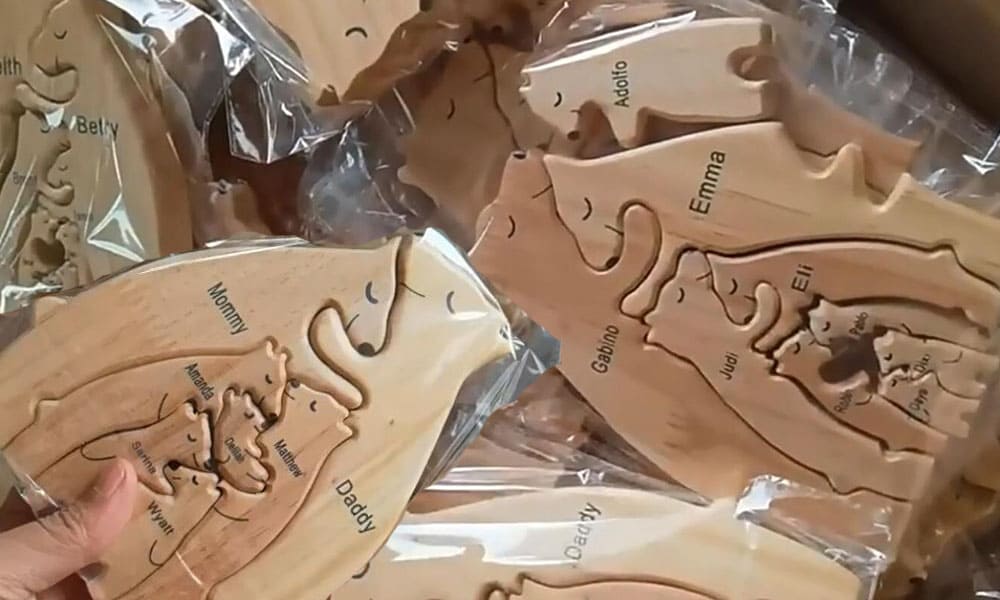
Personalised pieces and method pieces serve different buyers and should not share a line. A name-engraved puzzle is a gift object: its value is the name, and its buyer is a relative. A classroom piece is a working object: its value is the activity, and an engraved name turns a shared shelf piece into a claimed one, which the method explicitly avoids.
We run both programmes but keep them separate at specification: gift lines carry engraving and kitted boxes, method lines carry plain finishes and classroom packing. Buyers mixing the two in one order get two drawings and two tag stacks, one species and finish family so the range still photographs as one line. The route that carries frozen name lists and first articles for the gift line is our custom product manufacturing process, shared with every other personalised programme we run.

What We Supply Into Montessori-Labeled Lines
- We supply: carved and finished wooden pieces in 4 species, basswood, pinewood, rubber wood and birch, in 3D carving from 5 to 40 cm and 2D pieces to 80 cm, graded per shape against the band claimed.
- We supply: the safety file per shape with mechanical and migration results, and moisture recorded at 8 to 12 percent per batch before wrapping.
- We supply: classroom packing with white-paper wrap per piece and 6 to 12 pieces per inner box, plus kitted gift boxes from 500 pieces for personalised lines.
- We do not supply: electronics, magnets, hinges or springs inside pieces for the 0 to 3 band, and no teething, food-contact or soothing claim on any tag.
Which Buyer Should Buy Which Band
Schools and daycare chains buy the 3 to 6 band deepest, because fitted puzzles and threading carry the daily curriculum; their loss driver is edge damage, so they should weight the drop-simulation result heaviest. Gift retailers buy the 0 to 3 band as personalised keepsakes and should weight engraving proof and kitting instead. Subscription boxes buy across bands in small counts and should weight pack configuration, because their model opens every inner box monthly.
A buyer serving two of these channels should place two orders with two specification sheets rather than one blended order, since the tag stack and packing differ even when the species and finish family do not.
What We Check Before a Toy Order Ships
- Moisture at 8 to 12 percent recorded per batch before wrapping, matched to the batch sheet the buyer receives.
- Edge and point inspection after drop simulation on the sampling plan, with band-critical shapes tested at the band’s torque level.
- Migration results on every painted surface in the quoted finish family, filed per shape rather than per range.
- Claims limited to what we hold: CE, UKCA, EN71 where the piece is marketed as a toy, BSCI and ISO 9001.
Every figure above is first-party and checkable against an inspection report or a certificate we hold; the method-fit readings on this page are programme design, not statistics. The company and its specification library sit at ewoodarts.com.
End to End: A Subscription Box First Season
A subscription box wants six shapes across two age bands for its first season, with monthly drops and a low tolerance for edge complaints because every box is opened on camera.
Proof. The box proofs on the trial tier at 100 pieces and a USD 500 minimum order value, air express DDP in 20 to 30 days, and runs one monthly drop from the proof stock while the season order travels. Count sheets per drop replace the assumed complaint rate before the second order is sized.
Season. The season order moves to the wholesale tier at 300 pieces and a USD 3,000 minimum order value, sea freight at 60 to 90 days to port, with inner boxes configured to the box’s monthly pick so the warehouse opens masters rather than inners. Payment runs T/T with a 30 percent deposit and 70 percent before shipment against photos and video.
Close. The first season’s complaint and count data re-price the edge inspection level for year two, and the method-fit sheet is revised where parents used a piece differently than the shelf card implied. Buyers starting from a first range can open the same specification library through our wooden family puzzle programme page.
Select Montessori-labeled pieces on file and fit, not on the label
Per-shape safety files, method-fit sheets and classroom packing from one specification library.
FAQ
Can a supplier certify a piece as Montessori?
No. The method is a teaching tradition, not a product certification; suppliers can document method fit and toy-safety grading, and buyers should treat the label as marketing unless both documents exist.
Which age band needs the strictest mechanical testing?
The 0 to 3 band, because the small-part probe plus torque and drop testing govern everything a child under three can grasp, break or mouth.
Should classroom pieces carry engraved names?
No. An engraved name converts a shared working piece into a claimed one, which the method avoids; personalisation belongs to gift lines with their own specification sheet.
What moisture range should a batch sheet show?
8 to 12 percent recorded per batch before wrapping; batches outside that band check at the edges under classroom humidity cycles and leave the shelf as complaints.
How should a first order be sized?
On the trial tier at 100 pieces and a USD 500 minimum order value by air, so one season of count and complaint data sizes the wholesale tier before sea quantities are committed.