Skip to content
For B2B toy buyers evaluating catalogues and supplier proposals, the choice between wooden puzzles and cardboard puzzles extends well beyond aesthetics. Material selection directly affects product lifespan, customer satisfaction, return rates, and the brand story your business tells. As retailers and distributors face growing pressure to stock products that satisfy both conscious consumers and stringent safety regulators, the wooden puzzles vs cardboard debate has become a strategic sourcing decision rather than a simple cost calculation.
This comparison examines both materials across the criteria that matter most to commercial buyers: durability in real-world use, environmental credibility, safety compliance, customization potential, and total landed cost. Whether you supply gift shops, educational retailers, or museum stores, understanding the genuine trade-offs between wood and cardboard will help you build an assortment that protects margins and strengthens your market position.
Durability: Wooden Puzzles vs Cardboard
Durability is where the wooden puzzles vs cardboard comparison reveals the most significant divergence. A cardboard puzzle, even one produced from high-grade chipboard, begins degrading from its first use. Pieces bend at the tabs, corners tear under repeated handling, and the printed surface wears as oils from hands accumulate. In a household with young children, a cardboard puzzle may show meaningful wear within weeks. For retail environments where customers handle display models, cardboard can look shop-worn after just a few days.
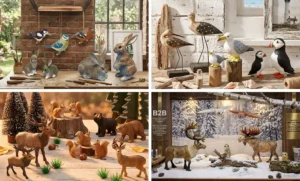
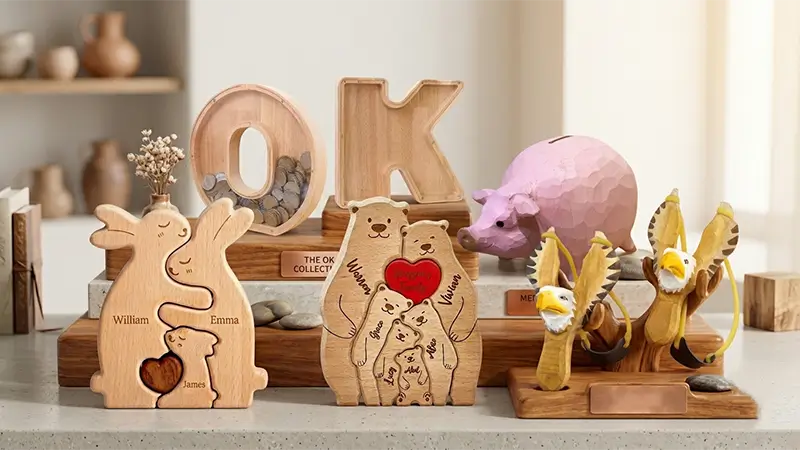
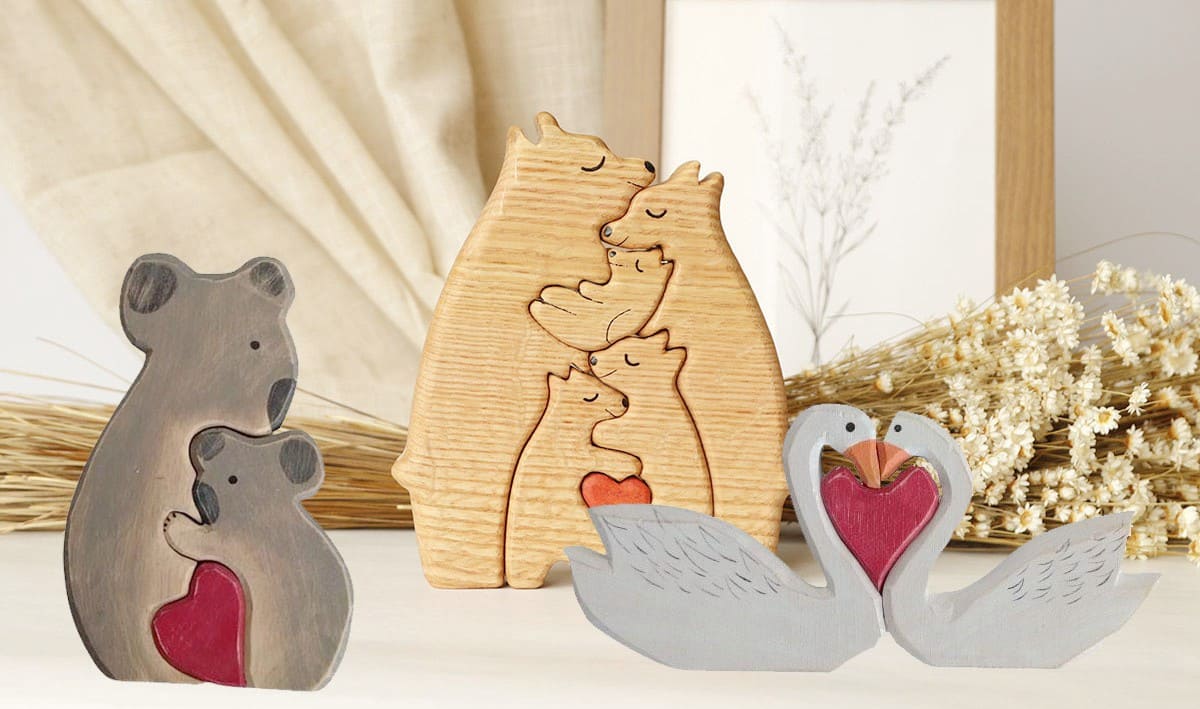
Wooden puzzles, by contrast, are built for years of use. Hand-carved basswood holds its shape through thousands of interactions. Pieces do not bend, corners do not tear, and the material resists the moisture damage that destroys cardboard. A wooden puzzle dropped on a hard floor will typically survive without damage; a cardboard puzzle subjected to the same impact may crease, crack, or lose pieces entirely. At our factory, every wooden puzzle is hand-carved from solid basswood and finished with multiple coats of eco-friendly, non-toxic paint that seals the surface against everyday spills and humidity.
The longevity difference also extends to moisture resistance. Cardboard is inherently hygroscopic. Exposure to humidity, accidental spills, or damp storage conditions causes warping, swelling, and eventual structural failure. Wooden puzzles, particularly those finished with quality non-toxic sealants, tolerate moisture far better. For buyers shipping to tropical or high-humidity markets, this is not a minor consideration, it is the difference between products that arrive in sellable condition and those that do not.
From a retail perspective, durability translates directly into customer satisfaction and repeat business. A wooden puzzle that survives years of play becomes a keepsake, something families preserve and even pass down. That emotional resonance is virtually impossible for a cardboard product to achieve, and it is a key reason why wooden puzzles consistently earn higher customer reviews in the puzzle category.
Sustainability & Environmental Impact
Sustainability considerations have moved from a niche concern to a central factor in toy purchasing decisions. Retailers with published ESG commitments need supply chains that can substantiate environmental claims, and the wooden puzzles vs cardboard comparison offers clear distinctions for buyers evaluating materials against corporate responsibility targets.
Cardboard is often presented as the sustainable option because it is widely recyclable and made from wood pulp, a renewable resource. However, the reality is more nuanced. Cardboard recycling involves pulping, which shortens fibres and limits the number of times the material can be reprocessed. Many cardboard puzzles are coated with inks, laminates, or adhesive layers from die-cut pieces that complicate recycling streams. Once a cardboard puzzle is damaged or missing pieces, it typically enters general waste rather than the recycling chain.
Wood, when Ethically Sourced from managed forests with proper timber felling and transport documentation, offers genuine renewability. At ewoodarts, this commitment is maintained through documented supply chain practices outlined in the wooden family puzzles buyer guide, supporting Source-to-Shelf Integrity across the production chain. More importantly, a well-made wooden puzzle resists the damage that sends cardboard products to landfill. A product that lasts decades rather than months inherently reduces waste per use.
When a wooden puzzle does eventually reach end of life, untreated wood biodegrades naturally. Cardboard, while technically biodegradable, often carries chemical residues from inks and coatings that slow decomposition. For retailers pursuing credible waste-reduction narratives, the longevity and end-of-life profile of wooden products offers a stronger sustainability position than cardboard’s recycling-dependent model. The company holds an FSC certificate, and while FSC claims cannot be applied at individual product level, the underlying commitment to responsible forestry sourcing is documented and verifiable.
Safety & Compliance
Safety compliance is non-negotiable in the toy industry, and the material choice between wood and cardboard affects how easily manufacturers can meet regulatory requirements. Both wooden and cardboard puzzles sold in Europe and the UK must comply with EN71 standards covering mechanical and physical properties, flammability, and chemical migration. The European Commission’s toy safety framework sets rigorous thresholds that apply regardless of base material.
For cardboard puzzles, compliance presents specific challenges. The material can tear unpredictably, potentially creating sharp edges that fail EN71-1 mechanical testing. Thin cardboard pieces may delaminate, producing small parts that pose choking hazards for children under the specified age grade. The inks and adhesives used in cardboard production require careful monitoring for heavy metal migration, and batch-to-batch consistency can be difficult to guarantee across high-volume runs.
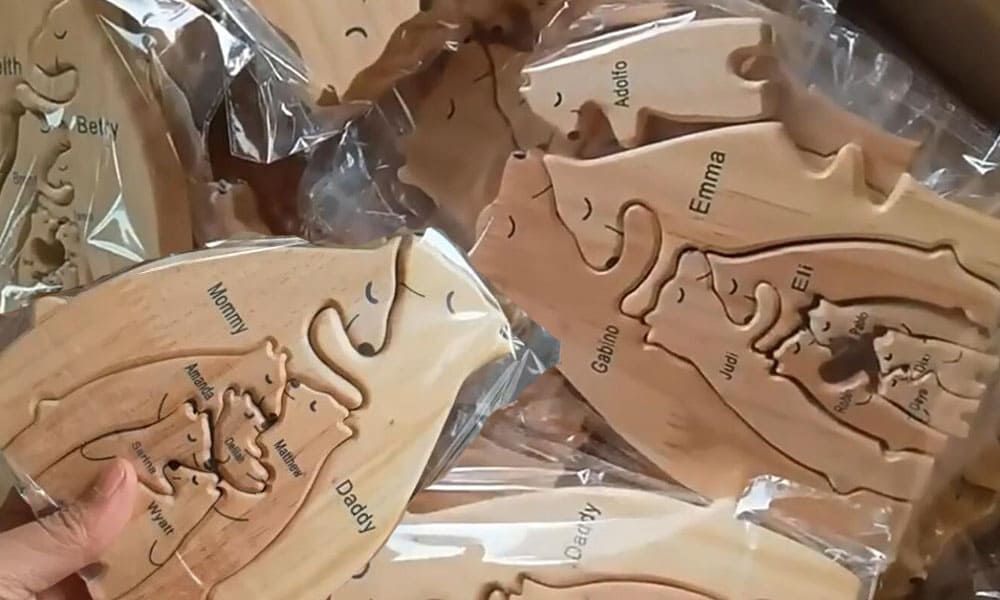
Wooden puzzles, particularly those manufactured with Rigorous Quality Control protocols, offer inherent safety advantages. Basswood produces smooth finishes that resist splintering when properly sanded and sealed. Solid wood construction means no delamination risk, and hand-painted surfaces using certified non-toxic paints provide reliable EN71-3 chemical compliance. At ewoodarts, all wooden puzzles carry EN71-1, EN71-2, and EN71-3 certifications alongside CE and UKCA marking, with BSCI audit reports and ISO9001 quality management providing additional assurance for wholesale buyers.
Age grading is another area where material matters. Cardboard puzzles marketed for younger children face heightened scrutiny because the material’s vulnerability to tearing can create unintended small parts. Wooden puzzles, with their superior structural integrity, maintain their intended form through normal use, making age-grade compliance more straightforward to demonstrate and defend during regulatory audits.
Customization & Branding Options
Both materials offer customization, but the nature and perceived value of that customization differ substantially. Cardboard excels at full-colour offset printing, making it suitable for photographic reproductions, licensed character artwork, and complex graphic designs. For short production runs requiring vibrant imagery, cardboard’s printing economics are difficult to match.
However, cardboard’s customization ceiling is low when it comes to texture, dimension, and perceived craft. You cannot laser-engrave cardboard with meaningful depth. You cannot create three-dimensional sculptural pieces. And the printed surface, regardless of quality, always reads as printed paper.
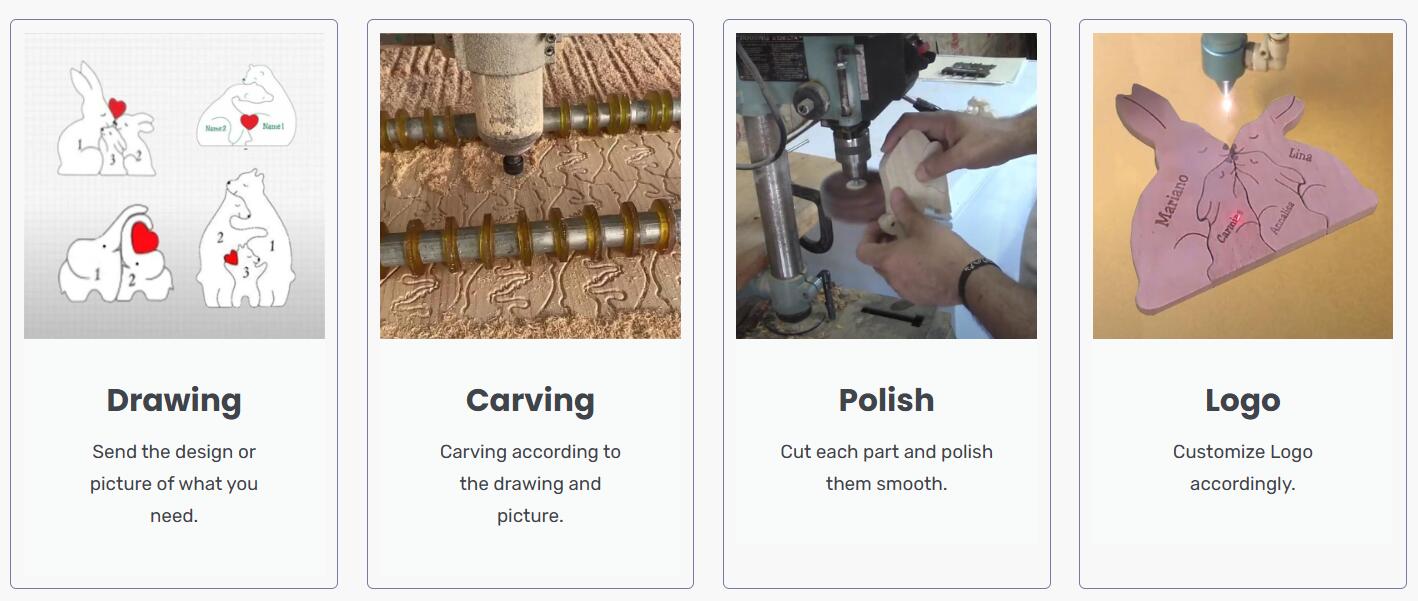
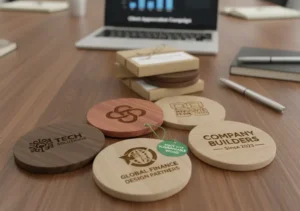
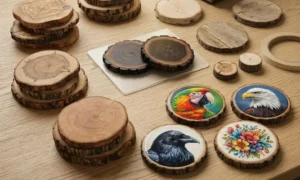
Wooden puzzles open a fundamentally broader customization palette. Laser engraving produces precise, permanent branding that sits flush with the wood surface. Hand-carving adds tactile depth that no printing process can replicate. Custom shapes can incorporate three-dimensional elements, with ewoodarts producing 2D carvings from 10cm to 40cm. The natural grain of basswood provides visual warmth that varies subtly from piece to piece, an Artisanal Variance that mass-produced cardboard cannot simulate.
For brands seeking to develop exclusive product lines, wood supports custom colour matching with non-toxic paints, bespoke packaging design, and the integration of brand elements directly into the product rather than merely onto its surface. Retailers stocking handmade home decor collections understand that material authenticity drives perceived value. A hand-carved wooden puzzle with a brand’s logo engraved into its surface communicates craftsmanship and permanence in ways that a printed cardboard box simply cannot.
Cost Analysis: Unit Price, Shipping & Breakage
Any honest wooden puzzles vs cardboard comparison must address cost directly. Cardboard puzzles are cheaper to produce. The raw material costs less, the printing and die-cutting processes are faster, and the finished product is lighter, reducing per-unit shipping costs. On unit price alone, cardboard wins decisively.
However, unit price is only one component of total landed cost, and for commercial buyers, the broader financial picture tells a different story. Wooden puzzles, while heavier, are dramatically more resistant to shipping damage. Cardboard puzzles are vulnerable to corner dents, edge crushing, and moisture exposure during transit. It is not unusual for cardboard puzzle shipments to experience breakage rates that require over-ordering to fulfil actual demand. Wooden puzzles arrive in the condition they left the factory.
Consider also the cost of customer returns and complaints. A cardboard puzzle that breaks within weeks of purchase generates replacement costs, refund requests, and negative reviews. Wooden puzzles rarely fail outside of extreme misuse, reducing post-sale costs significantly. When you factor in margin per unit, wooden puzzles command premium retail pricing that often exceeds the differential in unit cost. A cardboard puzzle might retail at three to four times its wholesale price, but a hand-carved wooden puzzle can retail at five to eight times wholesale, with the customer perceiving genuine value at that level.
For buyers reviewing the wooden family puzzles buyer guide, ewoodarts offers accessible entry points: 100-piece trial orders at $500 DDP air freight, 300-piece wholesale orders at $3,000 via sea freight, and custom packaging from 500 pieces. With lead times of 7-15 days for stock items, 20-30 days for trials, and 60-90 days for bulk custom orders, the total cost of doing business in wood is structured to minimize risk for buyers testing the category.
Market Positioning: Which Material Suits Your Retail Segment?
The final consideration in the wooden puzzles vs cardboard comparison is strategic. Each material serves distinct retail segments, and choosing correctly means aligning product material with customer expectations and price positioning.
Cardboard puzzles dominate the mass market, budget retail, and high-volume promotional segments. They suit price-led channels where customers expect low price points and accept limited product lifespan. Cardboard is the default for jigsaw puzzles sold in supermarkets, for disposable activity packs, and for licensed character products where the image carries more value than the material.
Wooden puzzles occupy the premium, gift, and educational segments. They suit retail environments where customers are willing to pay more for quality, tactile experience, and durability. Gift shops, museum stores, Montessori and Waldorf educational suppliers, and boutique toy retailers all benefit from wooden puzzles’ higher perceived value. Corporate buyers seeking branded merchandise find wooden puzzles particularly effective: the material communicates quality and permanence, making it suitable for client gifts, employee recognition, and promotional products that recipients actually keep.
The strategic insight for buyers is that wooden and cardboard puzzles are not interchangeable. They serve different customers, different price points, and different brand positions. Retailers who shift assortment toward wooden puzzles often find they can differentiate from competitors locked in cardboard price wars, reduce the churn of low-margin disposable products, and build a reputation for curating products with genuine quality. For buyers ready to explore this segment, explore our wooden family puzzle collection to see how hand-carved basswood construction and EN71 compliance support premium retail positioning.
Explore Handcrafted Wooden Family Puzzles
Ever Creation produces EN71-certified wooden family puzzles in basswood, hand-carved and painted with non-toxic finishes. Available from 100-piece trial orders with custom packaging.
View Wooden Puzzles →Frequently Asked Questions
Are wooden puzzles more durable than cardboard puzzles?
Yes. Solid basswood resists bending, tearing, and moisture damage that degrades cardboard. Hand-carved wooden puzzles last years with regular use, while cardboard puzzles typically show wear within months.
Do wooden puzzles cost more than cardboard puzzles for wholesale buyers?
Unit prices are higher, but total landed cost accounts for lower breakage rates, fewer returns, and premium retail margins that cardboard cannot match across the product lifecycle.
Can wooden puzzles be customized with our brand logo?
Absolutely. Wooden puzzles support laser engraving, hand-carving, custom shapes, and bespoke colour matching. Brand logos can be permanently engraved into the wood surface for lasting visibility.
What safety certifications should I require from a wooden puzzle supplier?
Require EN71-1, EN71-2, and EN71-3 for European markets, plus CE or UKCA marking. Verify BSCI audit reports and ISO9001 certification for manufacturing quality assurance.
Are wooden puzzles more environmentally friendly than cardboard?
When sourced from managed forests with proper documentation, wood offers superior longevity and natural biodegradability, reducing waste per product compared to short-lifespan cardboard alternatives.