Skip to content
Since expanding our Himalayan salt product line in 2016, we have witnessed countless importers and Amazon FBA sellers hemorrhage their profit margins over a completely avoidable after-sales issue: End-users destroying their salt blocks through improper cleaning, leading to dissolved salt, thermal shock cracking, and skyrocketing Return Merchandise Authorization (RMA) rates.
For B2B buyers supplying luxury steakhouses, commercial kitchens, or premium retail channels, “how to clean a salt block” is not a simple domestic chore. It is a critical quality control process rooted in mineral density, application-specific thickness engineering, and OEM consumer education. This whitepaper breaks down how importers can drastically reduce return rates by sourcing the right salt blocks and utilizing custom after-sales care cards directly from the factory.
The Commercial Kitchen Challenge: Zero Water, Physical Scraping
A commercial kitchen turns tables dozens of times a night. Executive chefs cannot wait for a block to cool completely just to wipe it gently with a damp sponge. They require industrial-grade salt blocks engineered to withstand aggressive metal scraping.
Application-Specific Thickness & Density Engineering
In salt manufacturing, thinner does not necessarily mean lower quality—it simply dictates the application. A 2.5cm (1-inch) block is engineered perfectly for architectural salt walls, dry-aging meat rooms, or cold serving platters. However, supplying these thinner presentation blocks for high-heat cooking and heavy washing is a primary cause of cracking and retail returns.
At our manufacturing facility, we execute strict boulder selection. For commercial culinary orders, we specify high-density crystals and process them into heavy-duty 4cm to 5cm (1.5 – 2 inches) cooking blocks. This extreme density translates to very low porosity, granting the block superior resistance to moisture penetration and the structural integrity needed to survive high-frequency commercial cleaning.
Commercial-Grade Waterless Scraping
For restaurant and heavy-use clients, education must focus on abandoning water entirely. Our thick-cut cooking blocks are designed to endure the brute force of a heavy metal spatula or grill brush. Once the block has cooled down to a safe temperature, chefs can aggressively scrape off carbonized food and rendered fats directly. This waterless protocol preserves the salt’s natural antibacterial surface while entirely eliminating the risk of water absorption that leads to thermal shock explosions during the next heating cycle.

Factory-Direct Commercial Cooking Salt Blocks
Partner with Jilin Ever Creation. ISO9001 certified since 2013, we deliver precision-cut, high-density food-grade salt blocks tailored for specific applications. Cut your retail return rates with our custom OEM packaging and dedicated Care Instruction inserts. Validate your market securely with our flexible $500 trial order program.

The Ultimate Return Rate Killer: OEM Care Instruction Inserts
If you supply consumer retail markets (like Amazon FBA or large supermarkets), product loss rarely stems from poor manufacturing quality. It is almost always a lack of consumer education. Uninformed users habitually place salt blocks in dishwashers or soak them in soapy sinks, literally dissolving the product down the drain before demanding a full refund.
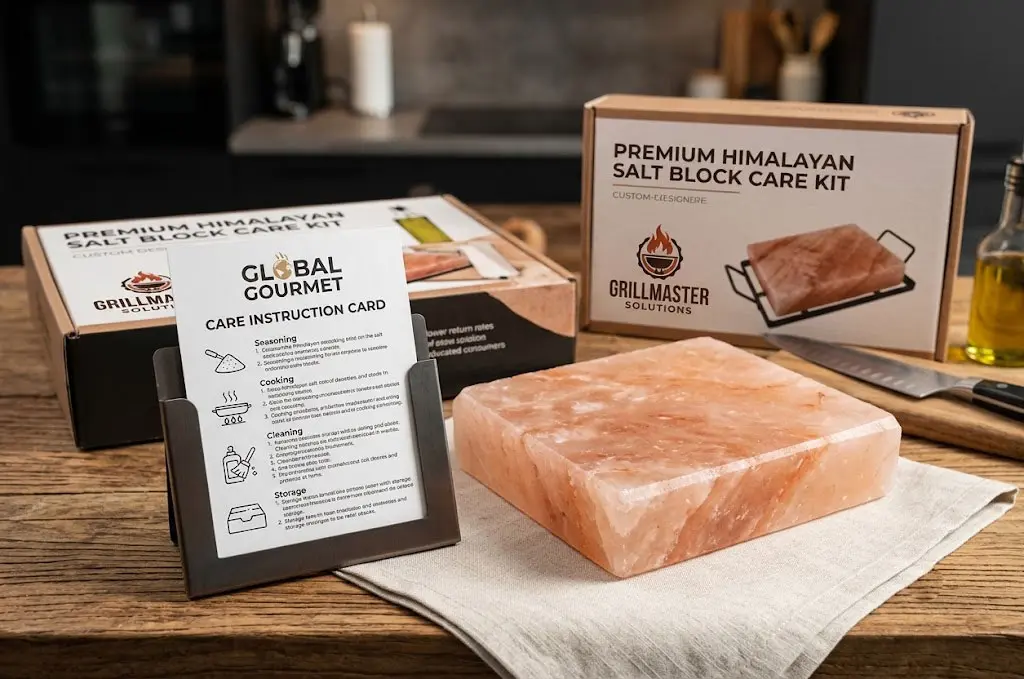
As a professional B2B manufacturer, we offer importers a turnkey solution to slash RMAs. We design and include Custom Care Instruction Inserts directly inside your retail packaging. By clearly warning consumers of the three cardinal sins of salt block maintenance, our clients routinely see damage-related negative reviews drop by over 80%:
| Consumer Cleaning Error (Cause of Return) | OEM Insert Warning & Instruction | Value to the Importer |
|---|---|---|
| Using soap or chemical detergents | No soap allowed! Salt is naturally antibacterial. Porous absorption of soap will ruin the flavor of future meals. | Prevents 1-star reviews claiming the block “made steaks taste like dish soap.” |
| Submerging or soaking in water | Never soak! Use a slightly damp sponge, immediately pat dry with a towel, and air-dry thoroughly. | Eliminates “product melted away” complaints and structural collapse returns. |
| Washing while still hot (Thermal Shock) | Must cool for several hours to room temp. Cold water on hot salt causes instant shattering. | Drastically reduces “defective/cracked” warranty claims due to thermal shock. |

Storage & Moisture Prevention: Securing the Supply Chain
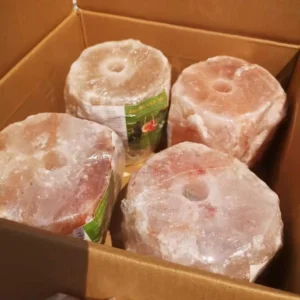
Himalayan salt is highly hygroscopic. Even when not being washed, prolonged exposure to ambient humidity will cause the surface to “weep” or dissolve. To protect your bulk inventory, our factory applies industrial-grade shrink-wrap to every single block before dispatch, complete with heavy-duty silica gel desiccant packets. This guarantees your shipment remains perfectly dry, even traversing oceans for weeks.
Simultaneously, our OEM Care Cards clearly instruct the end-user to store their fully air-dried block in a sealed ziplock bag or airtight container. A comprehensive chain of education is the ultimate moat for your profit margins.
B2B Buyer FAQ & Quality Control Support
Can your commercial salt blocks withstand heavy-duty metal scrapers?
How do we prevent retail customers from washing and ruining the blocks?
Are color changes or micro-fissures after cleaning considered a defect?
Final Thoughts: Securing Margins with Supply Chain Quality
Implementing the correct “waterless scraping” method extends the commercial lifespan of a Himalayan salt block. More importantly, it shields your brand’s reputation from unjustified negative reviews. By sourcing application-specific thickness blocks with low porosity, and deploying our OEM Care Instruction Cards, you build an impenetrable barrier of quality control.
Ready to upgrade your supply chain? Validate our high-margin salt products and OEM packaging capabilities risk-free through our “Test-to-Scale” trial order program. Get in touch with our factory team today to receive your custom wholesale quote!