Skip to content
As the BBQ and outdoor grilling season peaks across the US, Europe, and Australia, retailers are seeing a massive surge in demand for Himalayan salt blocks. Consumers are shifting from traditional cast-iron griddles to these mineral-rich cooking slabs to achieve clean, high-heat sears on vegetables and meats. However, for importers and distributors, sourcing the wrong salt block can lead to high RMA (return) rates due to cracking under heat.
To demonstrate the thermal stability and culinary performance of our premium cooking slabs, we use the classic “Asparagus vs. Zucchini” test. This comparison highlights how our high-density salt blocks handle different moisture levels and extreme grilling temperatures without compromising structural integrity. This guide provides wholesale buyers with the technical specifications needed to secure a reliable, retail-ready supply chain.
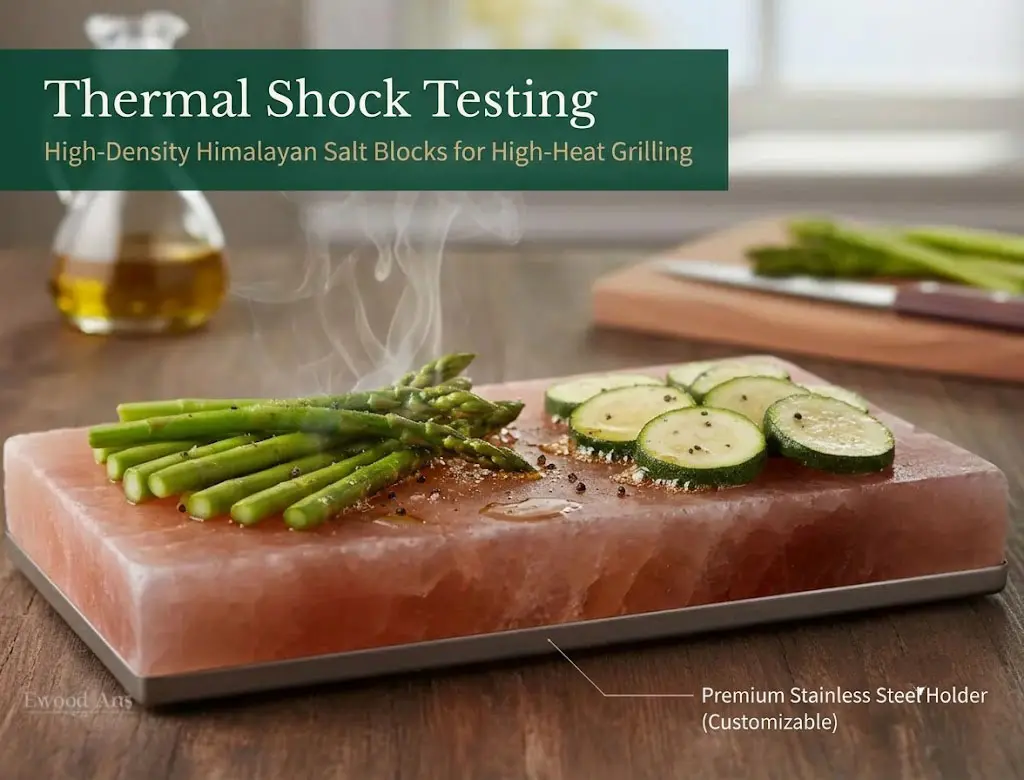
1. Thermal Performance Matrix: Handling Different Vegetable Moisture Profiles
For retail buyers, the biggest concern with salt blocks is cracking when exposed to the moisture of fresh vegetables at 500°F (260°C). Our salt blocks are carved from deep-vein Khewra mine crystals, offering exceptional density. Here is how they perform under distinct culinary stress tests:
| Performance Metric | The Asparagus Test (Low Moisture) | The Zucchini Test (High Moisture) |
|---|---|---|
| Thermal Challenge | Requires prolonged, steady heat (10 mins) for thorough roasting. | Releases rapid moisture upon contact, threatening thermal shock. |
| Block Reaction | Maintains consistent radiant heat without surface degradation. | High-density crystal structure prevents rapid moisture absorption and cracking. |
| Culinary Result (End-User Value) | Crisp-tender texture with an earthy, lightly salted char. | Soft, caramelized center without turning mushy. |
2. Why High-Density Salt Blocks Matter for Retail Margins
Selling low-grade, porous salt blocks destroys brand reputation. When consumers grill high-water-content vegetables like zucchini, inferior blocks absorb the liquid, dissolve rapidly, and eventually shatter on the grill.

We eliminate this risk at the manufacturing level. By selecting blocks with optimal structural density and cutting them to a strict 1.5 to 2-inch thickness, we ensure maximum Thermal Shock Resistance. This allows the block to withstand the aggressive searing of asparagus and the sudden moisture release of zucchini without fracturing. For distributors, this means drastically reduced customer complaints and a higher rate of repeat purchases.
Source Factory-Direct Cooking Salt Blocks
Secure your BBQ season inventory with a trusted manufacturing partner. With a dedicated salt production line established in 2016 and rigorous ISO9001 quality control, Jilin Ever Creation supplies high-density, food-grade salt blocks tailored for global retail, hospitality, and culinary distributors.
- 100% Food-Grade / FDA / LFGB Compliant
- Custom Sizing & Private Label Packaging
- Flexible MOQ for Initial Market Testing

3. Retail-Ready Packaging: Preventing Moisture Damage During Transit
Himalayan salt is highly hygroscopic (it attracts moisture). If improperly packaged, a container of salt blocks traveling by ocean freight will absorb humidity, causing the blocks to arrive “weeping” or degraded.
To ensure zero-damage logistics and immediate shelf-readiness, we employ an aggressive export packaging strategy:
- Industrial POF Shrink Film: Every single cooking block is vacuum-sealed in thick polyolefin (POF) shrink wrap, entirely isolating it from atmospheric moisture during shipping and warehouse storage.
- Anti-Shock Protection: Heavy blocks are housed with custom corrugated dividers or EPE foam to eliminate edge chipping.
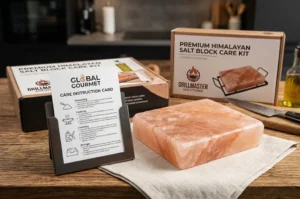
- Retail Customization: We offer customized full-color retail boxes complete with cleaning and care instructions to educate end-users and minimize returns.
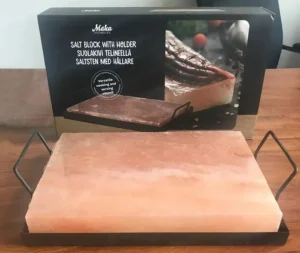
💡Pro-Tip for Importers: The Stainless Steel Tray Add-on
Boost your average order value (AOV) by sourcing our salt blocks with customized Stainless Steel Holders. This accessory allows end-users to safely transport a 500°F salt block from the BBQ to the dining table, elevating the customer experience while generating higher retail margins for your brand.
B2B FAQ: Sourcing & Quality Control
Are your cooking salt blocks certified food-grade?
Yes. We only select raw materials from the deepest, purest veins of the Khewra mine. Our blocks bypass chemical processing and comply strictly with international food-contact safety standards, ensuring they are safe for direct grilling and curing.
How do you address the risk of blocks cracking in transit?
Breakage is mitigated through rigorous density sorting before cutting, followed by our 5-ply export master carton packaging. Individual blocks are shrink-wrapped and cushioned, keeping our historical transit damage rate below 1%.
Can end-users cook raw meat and vegetables on the same block?
While Himalayan salt is naturally antimicrobial, we advise retailers to instruct consumers to use separate zones (or clean the block between uses) to prevent flavor transfer between heavy proteins and lighter vegetables like zucchini.
Secure Your BBQ Season Supply
The difference between a successful retail SKU and a logistical nightmare lies in the structural integrity and packaging of the salt block. By utilizing strict density testing and moisture-proof POF shrink wrapping, Jilin Ever Creation delivers a product that survives both the harsh conditions of ocean freight and the extreme heat of a backyard grill.
To discuss custom dimensions, request sample testing, or place a low-risk trial order, contact our manufacturing team today and ensure your shelves are stocked before the peak grilling season begins.