Skip to content
Three years ago, a woman named Karen called me from her shop in Cape Cod. She’d been buying our sandpipers five at a time — literally, five birds, reorder, five more, reorder — and she was frustrated.
“They sell out fast,” she told me. “But I’m constantly running back to place another order, and the shipping on small batches is eating me alive.”
I asked her how she was displaying them.
“Single birds. Scattered around the store. One on this shelf, one near the register, one by the window.”
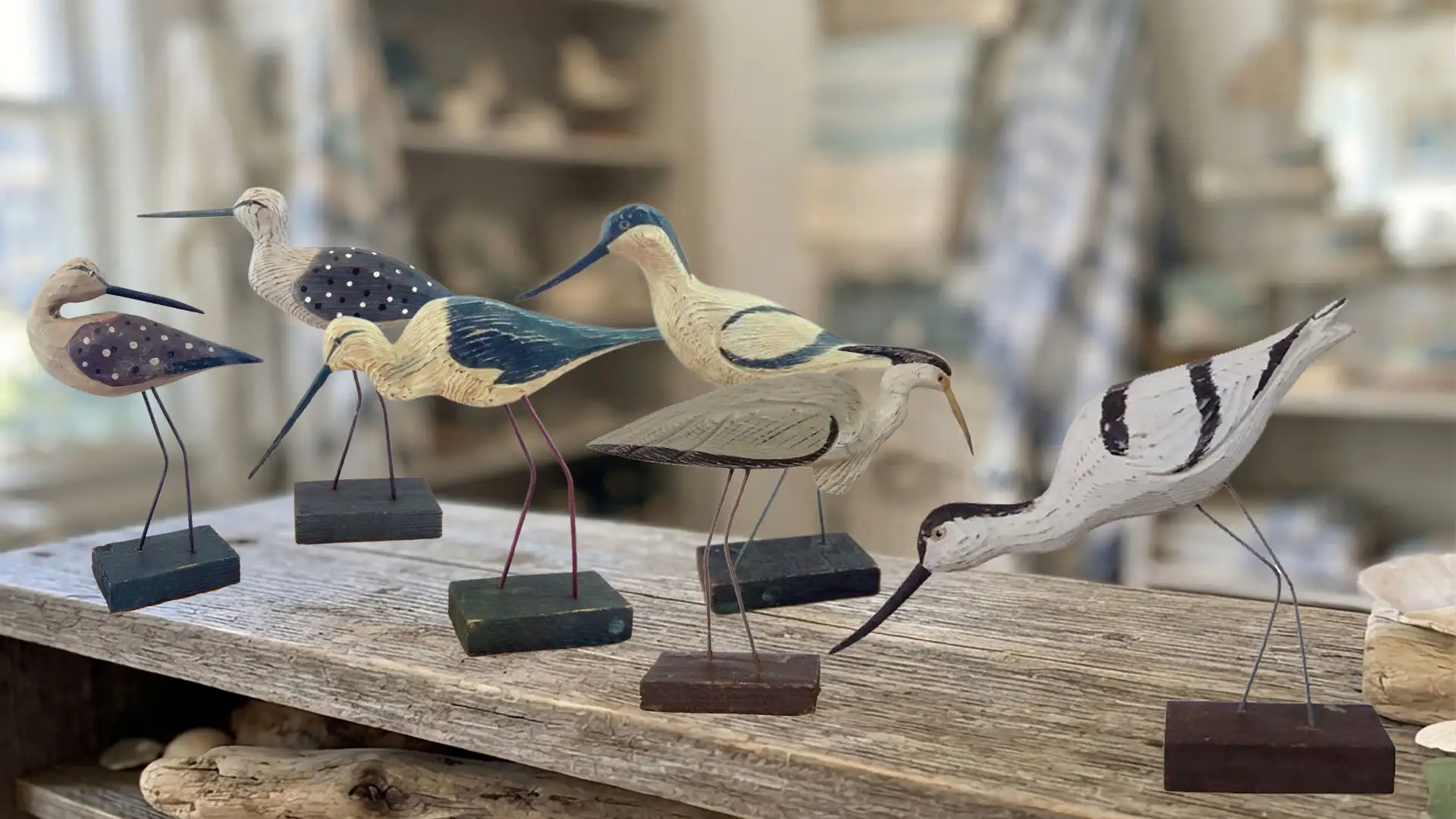
“Karen,” I said, “you’re leaving money on the table. Stop scattering them. Group them together — mix the sizes. A pair here, a trio there, maybe a family of four on your best shelf. Small, medium, large, facing the same direction, like they’re actually walking along a shoreline. Then watch what happens.”
She tried it. Her next order was 150 pieces. The one after that, 400.
That’s the thing about wooden sandpipers. They’re not the flashiest item in the catalog. They don’t grab attention like a $15 pelican or trigger an impulse buy like a $2 keychain. But they’re the ones that actually pay your rent.
Let me explain why.
The Flock Effect — Why Grouped Birds Outperform Singles Every Time
Here’s something I’ve learned after 20 years of shipping carved birds to gift shops across North America and Europe: a single wooden bird on a shelf looks like a product. Two or three birds together, facing the same direction? That looks like a scene.
There’s a reason for that. When a customer sees one sandpiper, their brain files it under “knick-knack.” When they see a group — a pair, a trio, or a family of four, all in different sizes, like they’re actually walking along a shoreline — their brain files it under “decor.” And “decor” commands a higher price than “knick-knack.”
Karen’s numbers proved it. Selling singles at $5 each, her average transaction was $8 — most people grabbed one bird and maybe a keychain. Once she started grouping them — a pair of mediums at $9.95, a trio of S+M+L at $14.95, a family of four on the feature shelf at $19.95 — her average transaction jumped to $23. Customers were buying the group, then adding a second item.
The math is simple. You sell two, three, or four birds instead of one. Your customer feels like they got a curated collection instead of a random trinket. And your average order value doubles or triples.
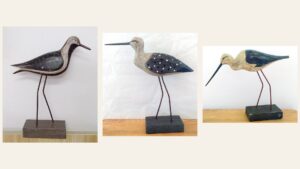
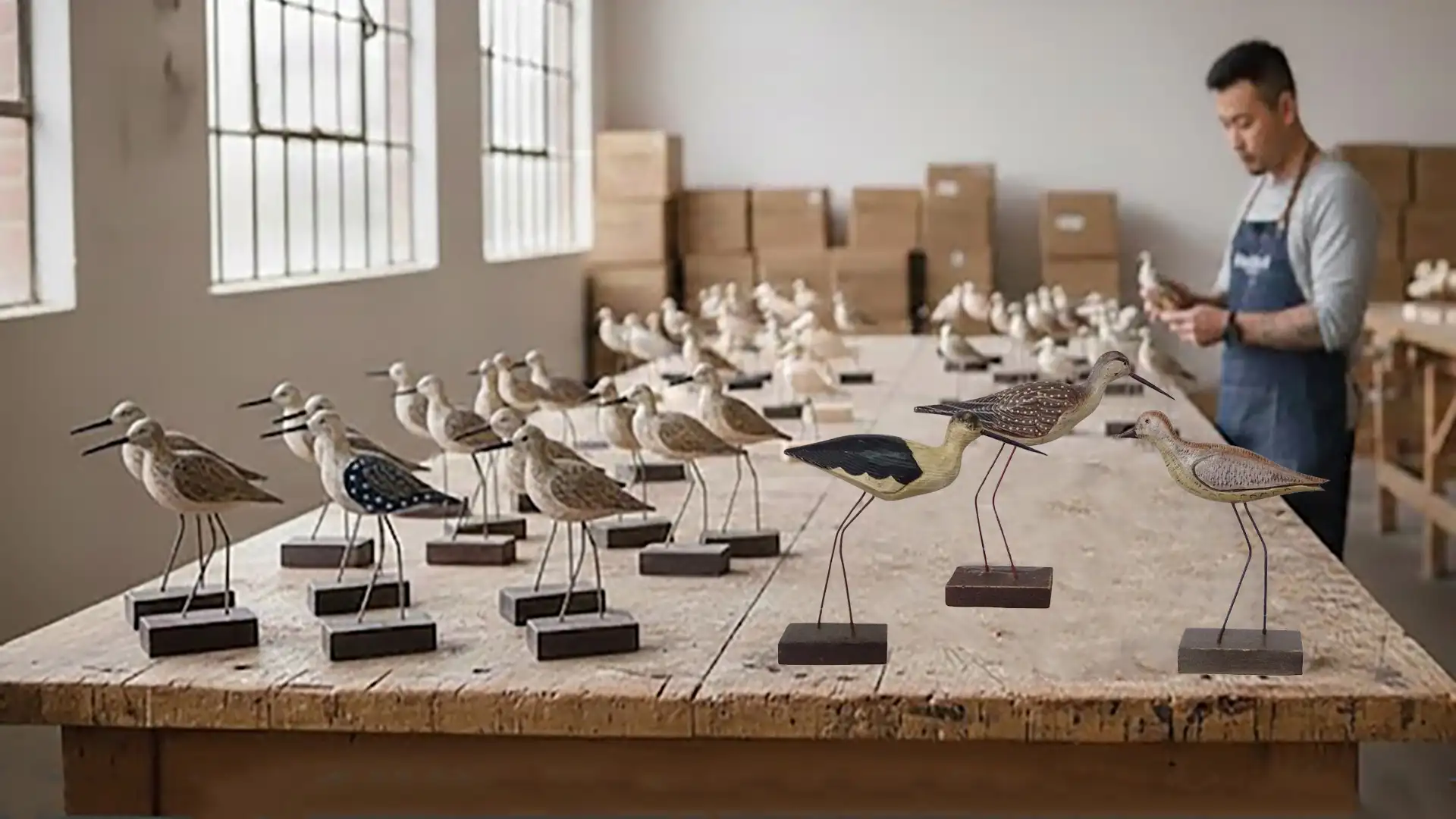
We cut our sandpipers in three standard sizes, and you can mix them however your customers respond best:
- Small: 4 inches — the “baby” of the group
- Medium: 6 inches — the core piece
- Large: 9 inches — the statement
Three Sizes, Endless Combinations
Small
4 in / 10 cm
Medium
6 in / 15 cm
Large
9 in / 23 cm
Mix freely within your 300-piece MOQ — pairs, trios, or families of four. Your shelf, your rules.
Some retailers sell pairs. Some do trios. Some create a “family of four” as their premium shelf piece. There’s no wrong combination — the point is that grouped birds outsell singles by 40–60%, and you get to decide what mix works for your shop. We’ll even customize the inner box packaging to match your set configuration — whether that’s a 2-bird gift box, a 3-bird window carton, or a 4-bird collector’s set with your branding on it.
The $5 Sweet Spot: Why Sandpipers Are Your Core Profit Engine
Every product line has a workhorse. The item that’s not the cheapest, not the most expensive, but the one that moves consistently week after week, season after season.
For coastal gift shops, that workhorse is the $5 wooden sandpiper.
Here’s why the price point matters. A $2 keychain is an impulse buy — great for volume, but it doesn’t build your brand. A $15 pelican is a statement piece — beautiful, but it sits on the shelf for weeks waiting for the right buyer. The $5 sandpiper sits in the sweet spot: affordable enough that a customer doesn’t need to “think about it,” but substantial enough that it feels like a real purchase.
I tell every new shop owner the same thing: your sandpipers are your bread and butter. Your pelicans get people in the door. Your keychains get them to the register. But your sandpipers? Those are what they actually buy.
In most coastal gift shops we supply, sandpipers consistently outsell every other wooden bird category. Not because they’re the most exciting item. Because they’re the most buyable.

Metal Legs, Not Wood — The Engineering Detail That Saves You Returns
Now here’s where I get technical, because this is the question every experienced buyer asks me, and it’s the one thing that separates a quality sandpiper from a headache.
The legs.
A sandpiper’s legs are thin. Very thin. If you carve them from wood — even good, kiln-dried basswood — they will snap. Not maybe. They will. A customer picks up the bird, holds it by the legs, and crack. Now you’ve got a return, a bad review, and a customer who thinks wooden crafts are fragile.
So we use metal wire legs. Rust-proof, powder-coated, inserted into a pre-drilled channel in the body and secured with industrial epoxy. The legs can be gently adjusted — bent a few degrees to tweak the bird’s stance — without breaking.
I had a buyer in Oregon switch to us after his previous supplier’s “all-wood” sandpipers had a 12% breakage rate in the first month on his shelves. Twelve percent. That’s not a product, that’s a liability.
Our breakage rate on metal-leg sandpipers? Under 0.5%. And most of those are shipping damage, not shelf failures.
If you’re sourcing sandpipers and the supplier doesn’t mention leg construction, ask. It’s the single biggest quality indicator for standing bird carvings.
Finishes That Tell a Story
We offer three standard finishes on sandpipers, and each one targets a slightly different customer:
Natural basswood, clear sealed. This is for the “quiet luxury” crowd. The grain shows through, the shape is minimalist, and it fits into a Hamptons-style beach house without screaming “tourist shop.” Retailers in upscale coastal towns love this one.
Hand-painted, species-accurate. Real sandpiper coloring — the mottled browns, the pale belly, the slightly darker wing feathers. This is the classic look. It’s what most gift shops order, and it’s what museum and aquarium gift shops prefer because it’s educational.
Distressed, weathered white. This is the “been sitting in a beach cottage for 30 years” look. Intentionally chipped paint, sanded edges, a slightly worn feel. Retailers who carry it often price it above the standard painted version because customers see it as more artisanal. And honestly? It is. Each piece is hand-distressed, so no two are identical.

Can we match a custom color? Yes. If you’ve got a specific palette for your store or a branded collection, send us a Pantone code. We’ll match it. Minimum 300 pieces for custom colors.
Ordering Logistics: What You Actually Need to Know
Let me save you the back-and-forth emails. Here’s what most buyers want to know:
| Detail | Spec |
|---|---|
| MOQ | 300 pcs per design. Mix S/M/L sizes freely within that 300 (e.g., 80S + 150M + 70L). Mix finishes across 600+ pcs. |
| Set packaging | Custom inner boxes to match your set config — 2-bird, 3-bird, or 4-bird gift boxes with your branding. Standard: individual tissue wrap. |
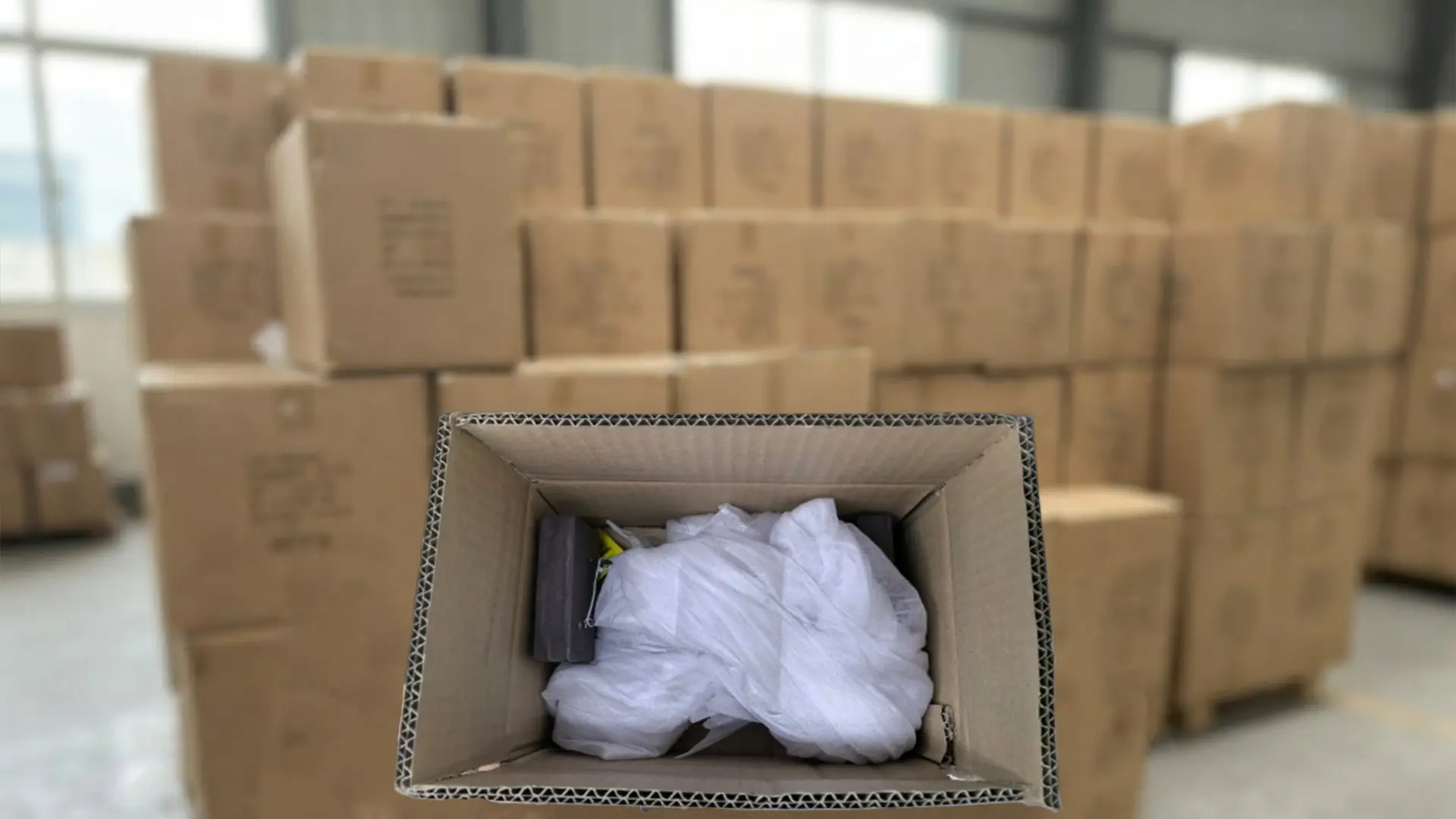
| Master carton | 72 pcs/carton (6 inner × 12). Double-walled corrugated, foam dividers. Most clients ship LCL — no need to fill a container. |
| Lead time | 60–90 days depending on order quantity. Some best-selling designs may have partial stock for quicker dispatch — ask when you inquire. |
| Bases | Ships assembled — bird mounted on base, ready to display. K/D (unmounted) only on specific request. Optional upgrades: round wood base or metal pin mount. |
| Samples | Sample sets available — cost fully credited against your first bulk order. Contact us for current sample pricing. |
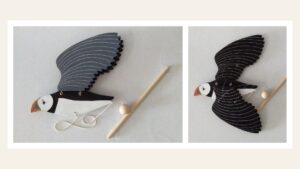
Sandpipers are the backbone of the 60% core tier in our 20/60/20 merchandising framework — reliable volume sellers that keep shelves turning month after month. If you’re building a multi-species section for northern markets, puffins pair naturally alongside them. And before committing to any first order, verify your supplier’s quality control process — consistency across 300 pieces is where most factories fall down.
Ready to Stock Your Best-Selling Shorebird?
See our full sandpiper collection — three sizes, three finishes, factory-direct pricing.
No middleman. No guessing. Just birds that sell.

Frequently Asked Questions
Do I have to order sandpipers in fixed sets?
No. Our MOQ is 300 pcs per design, and you choose the size ratio — mix small, medium, and large however your customers respond best. Some retailers sell pairs, some do trios, some create a family of four as a premium shelf piece. We also customize inner box packaging to match your configuration: 2-bird gift boxes, 3-bird window cartons, or 4-bird branded sets with your logo.
Are the sandpiper legs made of wood or metal wire?
Metal wire — rust-proof, powder-coated, and epoxy-set into the body. Wood legs on a bird this size snap too easily, especially when customers pick them up in-store. Our metal legs can be gently adjusted to tweak the bird’s stance without breaking. If a supplier doesn’t mention leg construction, ask — it’s the single biggest quality indicator for standing bird carvings.
What kind of retail markup can I expect?
That’s entirely up to you — we don’t dictate retail pricing. Most of our clients mark up 3–7× over wholesale, depending on their market, location, and display strategy. Grouped sets and distressed finishes tend to command the highest margins. We’ll provide factory-direct wholesale pricing based on your quantity and specifications — just send us an inquiry.
Do the birds come pre-mounted on bases?
Yes. Standard orders ship fully assembled — bird mounted on its base, ready to display straight out of the box. We only ship K/D (knock-down, unmounted) if you specifically request it, which honestly, for medium-sized sandpipers, almost nobody does. The assembled packaging protects the bird better in transit anyway, and your staff just opens the box and shelves them.
How many pieces fit in a master carton?
72 pieces per master carton (6 inner boxes × 12 pieces), double-walled corrugated with foam dividers. Most of our clients ship LCL (less than container load), so you don’t need to fill a whole container to get factory pricing. We’ll help you calculate the right volume for your budget.
Do you offer distressed paint finishes?
Yes. Our weathered-white distressed finish is hand-applied — each piece is individually sanded and chipped for an authentic aged look. No two are identical. It adds some extra production time, so plan accordingly if you’re ordering for a specific season. Custom Pantone color matching is also available (300 pcs minimum).