Skip to content

Rising costs and unreliable supply chains plague procurement managers and wholesalers, often forcing tough trade-offs between quality and affordability. Sourcing directly from a wood carving factory can resolve that dilemma—compressing expenses while keeping the craftsmanship intact.
Take Jilin Ever Creation, carving handcrafted wooden goods in Jilin, China since 2004. Buying direct removes middlemen layers, delivering predictable pricing and consistent supply for businesses. This article breaks down how a factory partnership affects cost structure, quality evidence, and logistics—using the terms we publish on every quote.
Key Takeaways
- Direct factory sourcing removes stacked trader markups—you pay production cost plus one margin, not a chain of them.
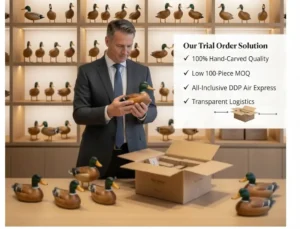
- Trial tier: MOQ 100 pieces, minimum order $500, delivered 15-20 days by air express DDP.
- Wholesale tier: MOQ 300 pieces, minimum order $3,000, with 60-90 days production optimized for sea freight.
- Quality evidence beats promises: ISO 9001 facility practices, EN71/ASTM-compliant water-based paints, and wood lots documented by official timber felling and transport permits.
- Every order ships only after photo and video approval—the 70% balance is requested after you confirm the finished goods.
- Over 90% of our production exports to North America and European markets.
Table of Contents
Cost Structure of Sourcing from a Wood Carving Factory
Sourcing directly from a wood carving factory changes where the money goes. Instead of paying a chain of intermediaries, businesses pay the production cost plus one margin—and that difference compounds across a season of reorders.
Eliminating Middlemen: How Direct Sourcing Lowers Costs
When you buy through traders, each layer adds its own markup, handling fee, and margin cushion. A factory like Jilin Ever Creation, based in Jilin, China, handles everything from carving to shipping under one roof, so your quote reflects the product—not a sequence of markups. This keeps budgets in check without skimping on craftsmanship, and it shortens the communication chain: specification changes reach the carving bench in one message instead of three relays.
Economies of Scale: Ordering Around the Tier, Not Around the Habit
Factories are built for repetition. Carving, sanding, painting, and packing lines run most efficiently when similar pieces move in batches, which is why volume pricing exists. But the savings come from planning orders to the tier your demand actually fits—testing species with a trial run before committing a container—rather than from buying more than you can sell.
How Our Pricing Tiers Work
Every Jilin Ever Creation quote uses the same two published tiers. The trial tier exists so a first-time buyer can verify the carving quality before risk capital goes into a container; the wholesale tier is built for seasonal stock and custom production runs.
| Order Tier | Minimums | Lead Time | Freight Mode |
|---|---|---|---|
| Trial Order | MOQ: 100 pcs / MOA: $500 | 15-20 days, ready shipment | Air express (DDP)—customs and door delivery handled by us |
| Wholesale Order | MOQ: 300 pcs / MOA: $3,000 | 60-90 days production | Sea freight—lowest landed cost for seasonal stock |
Factory vs. Trader: Where the Fees Actually Sit
Traditional suppliers often add storage, handling, and margin layers that never appear as line items on a quote—you pay them inside the unit price. A factory invoices production, freight, and documentation separately, which means each layer is negotiable and auditable. When you evaluate how to choose a wood carving factory for bulk orders, ask for that transparent split—pricing, tier terms, and certification evidence—before comparing unit rates. Our production and shipping terms sit on the record at the factory-direct wholesale carvings page.

Ensuring Quality Through Certified Craftsmanship
When sourcing from a wood carving factory, quality is the second concern after price—and the first risk that keeps reorders from happening. Factories answer that concern with documented processes; independent makers usually cannot.
Certifications That Matter: ISO 9001, EN71, UKCA, and ASTM Explained
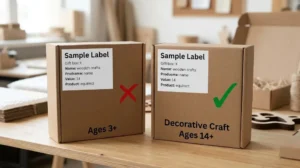
Certifications aren’t decorative letters—they’re audit trails. ISO 9001 means the factory follows a managed quality system across production. EN71 (Europe) and ASTM (US) put the water-based paints through toy-safety testing, which matters for gifts and kids’ room décor. UKCA covers UK market entry, and BSCI audits social compliance on the line. One honesty note that pays you back: our company holds an FSC certificate, but our carved product lines are documented through official timber felling and transport permits at lot level rather than sold under product-level FSC claims—traceability you can actually show a buyer, instead of a label you’d have to defend.
The Craftsmanship Process: From Raw Wood to Finished Product
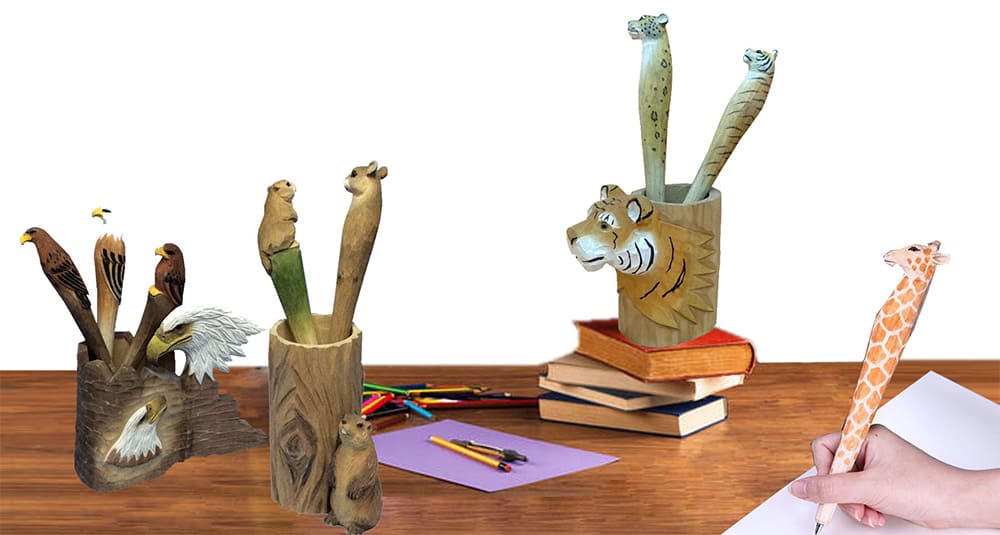
Quality starts with raw material. We select linden (basswood) and Mongolian pine for strength and carving behavior—our breakdown of wood for handicrafts covers why species choice decides how fine a detail survives the knife. Skilled artisans then carve and paint each piece by hand, turning blocks into bird figurines, ducks, pens, and ornaments before anything ships.
Quality Control in Action: The Pre-Shipment Approval Process
Instead of asking buyers to trust a defect-rate promise, we make acceptance a documented step. Each order passes multi-stage checks during carving and painting, then pauses before packing: we send high-resolution photos and videos of your actual finished goods, and request the 70% balance only after you approve them. The evidence of quality travels with the order, not just the invoice.
| QC Stage | What Is Checked | When |
|---|---|---|
| Material intake | Grain, knots, moisture limits; felling and transport permit documentation | Before carving |
| In-process | Carving symmetry, sanding smoothness, paint coverage and adhesion | During production |
| Pre-shipment | Photo and video approval by buyer; packing and marking spec check | Before balance payment |
Streamlining Supply Chains with Factory Partnerships
For wholesalers juggling big orders, reliability is the whole game. A factory that owns its own carving lines, paint line, and packing floor removes the handoffs where schedules get lost.
Global Export Experience: Over 90% of Production Ships Abroad
Jilin Ever Creation exports over 90% of its production to North America and Europe. That is two decades of documentation practice—commercial invoices, packing lists, and freight bookings handled the same way every container—so your bulk order arrives on schedule instead of learning customs at your expense.
Matching Lead Time to Demand: Air DDP or Sea Freight
Two channels cover almost every scenario. A trial or fill-in order of 100 pieces moves air-express DDP in 15-20 days with customs and door delivery handled on our side. Seasonal stock belongs on the wholesale tier: 60-90 days of production, sea freight, and the lowest landed cost per piece. Planning Q4 holiday inventory means placing that tier inside Q3—see our holiday-seasonal line for the calendar-sensitive categories, and the packaging guidelines that keep carvings whole through a 40-day ocean crossing.
One Factory, One Chain of Custody
When carving, packing, and shipping sit under one roof, a specification question has one answer desk, a rework has one owner, and a delay surfaces days earlier than it would across a trader relay. That single chain of custody is the unglamorous advantage behind every “reliable supplier” review—it is less about heroics and more about there being fewer seams to fail. Retail buyers assembling mixed seasonal orders usually start from the wholesale wooden crafts catalog for exactly this reason.

Where Customization Meets Sustainability
Today’s wholesalers need a factory that delivers both custom solutions and defensible eco practices. Here is how the two fit together on the same production line.
Sample-Based Customization: From Your Photo to Our Bench
Jilin Ever Creation works from samples, sketches, and spec sheets—bird mobiles, pens, piggy banks, and ornament lines built to your design, with logo, color, and packaging customization following the documented manufacturing process. Because the tooling is a knife and a brush rather than an injection mold, a custom species or a new finish doesn’t force a new tooling cost onto your order.
Sustainable Materials: Linden and Pine, Documented at Lot Level
We carve premium basswood (linden) and Mongolian pine from the Changbai Mountain region. Each wood lot is documented by official timber felling and transport permits—the paperwork that actually proves legal, managed harvest, consistent with the sustainability framework the FAO’s forestry programme tracks worldwide. Paints are non-toxic, water-based, and EN71/ASTM-tested, as detailed on our non-toxic paint page. Eco-conscious buyers increasingly ask for that documentation, and a lot-level paper trail answers the question a generic “green materials” claim cannot.
Balancing Customization with Cost Discipline
Custom work gets expensive when every change re-runs sampling and re-mixes small paint lots. We keep bespoke orders competitive by grouping custom runs behind shared base carvings—one blank shape, many finishes—so your differentiation lives in paint, packaging, and detail work instead of an entirely new mold-to-market cycle.

Strategic Advantages of Long-Term Factory Partnerships
A one-off container teaches you about one product. A standing factory relationship compounds: each season’s reorders run on knowledge the line already has about your tolerances, colors, and packing spec.
Building on Two Decades of Practice
Since 2004, the same carving teams have handled retail programs across North American gift chains and European boutiques. Repeating with a known factory means the QC spec, approved paint lots, and packing format are already on file—your second order starts from a confirmed baseline rather than a blank sample sheet.
Diversifying Product Lines Without New Vendors
One supplier relationship can stock several shelves: our wooden bird factory line feeds gift programs, the same hands carve bird gift collections and garden ducks, and functional categories like the wooden slingshot round out toy aisles. Mixing categories across one PO also stretches a sea container economically—assortments ship better than single-SKU pallets.
Next Steps: Starting with a Trial, Scaling on Evidence
Start small and verifiable: a 100-piece trial at $500 minimum, air DDP, photographed before it leaves the factory. Evaluate the finish, the packing, and the communication, then move seasonal volume to the wholesale tier if the line proves itself. That sequence—evidence, then commitment—is the practical version of “due diligence” for a first-time importer, and it is how we recommend structuring any factory relationship, including ours. More about how the workshop runs is on our about page.

Conclusion
After two decades in the wooden crafts business, one pattern holds: sourcing direct from a carving factory changes the economics and the evidence. You trade stacked markups for one production margin, vague quality promises for documented checkpoints, and trader relays for a single chain of custody.
The practical move is small and testable. A trial tier order—100 pieces, $500 minimum, 15-20 days air DDP—puts the finish, packing, and communication in your hands before any container commitment. If the line holds up, seasonal volume follows on the wholesale tier.
Put the Factory Line to the Test
Trial orders from 100 pieces with pre-shipment photo and video approval. See what two decades of carving lines produce for your shelf.
Frequently Asked Questions
What are the benefits of sourcing from a wood carving factory?
Direct pricing with one production margin instead of stacked trader markups, a documented quality chain, tiered MOQs (100-piece trials up to container wholesale runs), and customization that shares base carvings across designs.
How do I choose a wood carving factory for bulk orders?
Ask for the pricing split (production, freight, documentation), the tier terms, certification evidence, and a pre-shipment approval process. Then verify with a trial order before committing seasonal volume.
What materials are commonly used in wood carving?
Linden (basswood) and Mongolian pine are the carving-shop staples—soft, fine-grained, and knot-light enough to hold detail. We document every lot with official timber felling and transport permits.
Can I negotiate prices with wood carving manufacturers?
Yes—volume tiers and repeat-program baselines are where the movement happens. Negotiate against order size, category mix in one container, and reorders that reuse an approved spec instead of starting new samples.
What quality assurance processes should a wood carving factory have?
Intake checks on grain and moisture, in-process inspection of carving and paint, buyer photo-and-video approval before the balance payment, and compliance-tested finishes such as EN71 and ASTM water-based paints.